
Maritime Agencies
HUGE IRONY: Nigerians Battle Hunger, Seme Customs Confiscates Beans For Export.

By Izuchukwu Ozoemena
The Nigeria Customs Service (NCS) has once again reminded Nigerians that the Customs Act 2023 forbids illegal exportation of grains or any other food item as any activity that contravenes this provision especially in the face of crushing hunger attracts stiff sanctions.
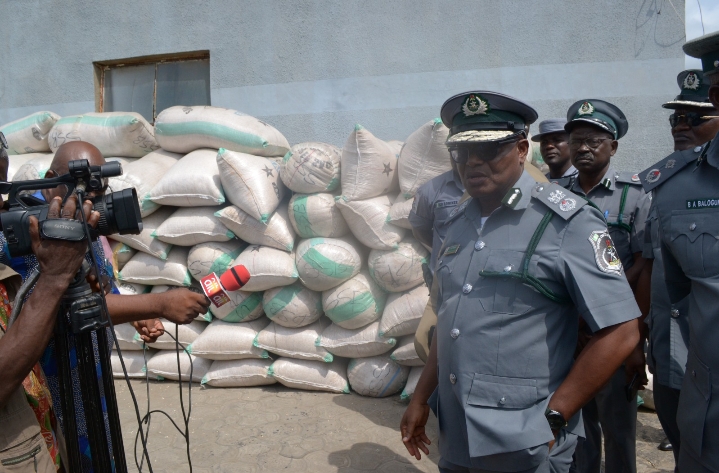
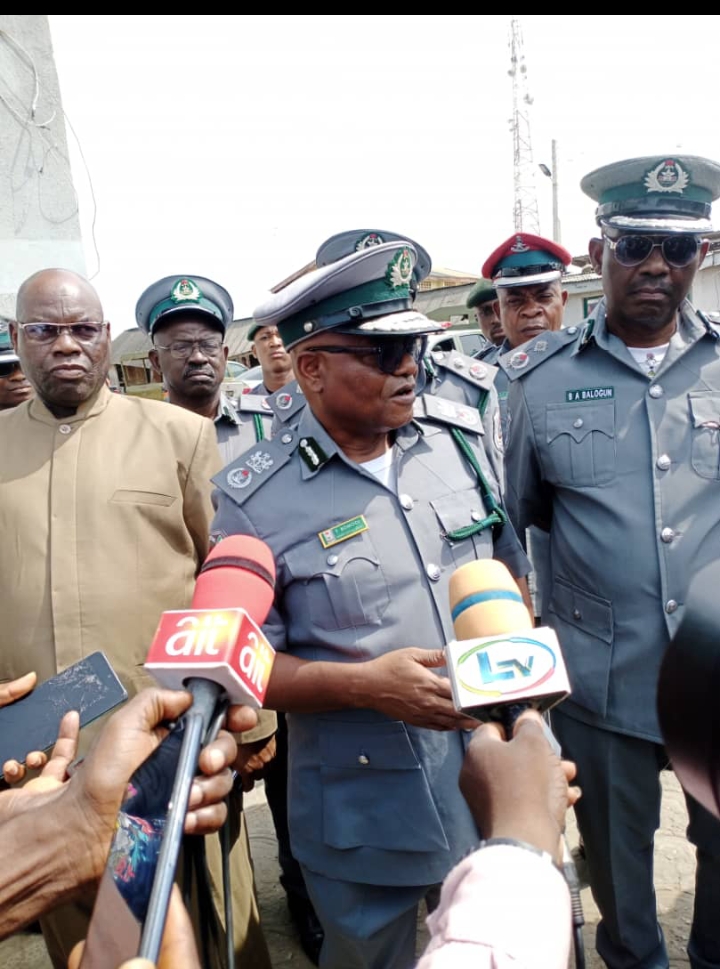
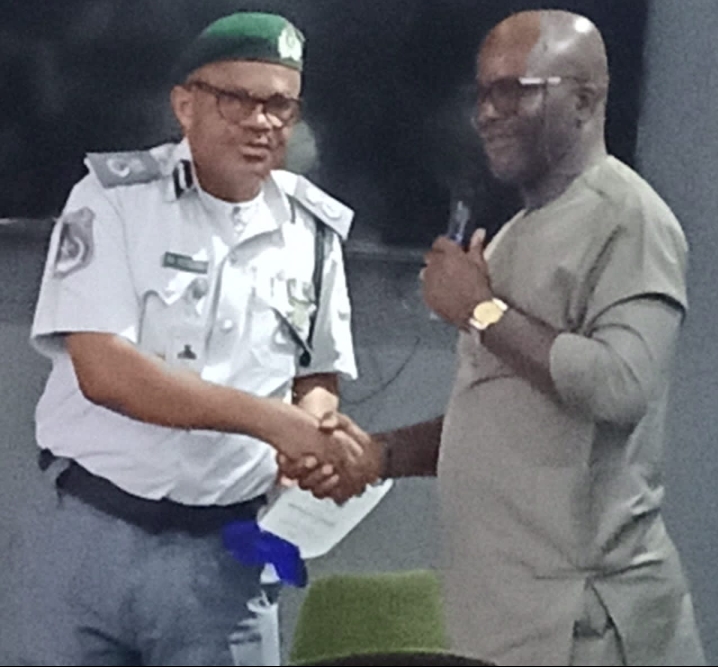
Customs Area Controller (CAC), Seme-Krake Joint Border Command, Comptroller Timi Bomodi reiterated this,Tuesday, while showcasing 400 bags of intercepted beans whose networth value is N61.45million billed for illegal exportation from Nigeria to the Republic of Benin.
He recalled that as per Federal Government’s stand on this, “we need to ensure that what is being produced locally stayed within the country before we export. The new Customs Act says grains can’t be moved out of the country and when it’s done, there is a procedure which includes NXP, CCI, among others. When that is not done, any attempt to do it illegally will face the wrath of the law,” he emphasized.
“The current market price for beans is put at N120,000 or so per bag. So, if we use that as the Duty Paid Value (DPV), then we will be talking about over N61 million worth of beans. By the time we go to the market, we will be discounting for selling these and it will be sold to the members of the public at a considerably reduced price.”
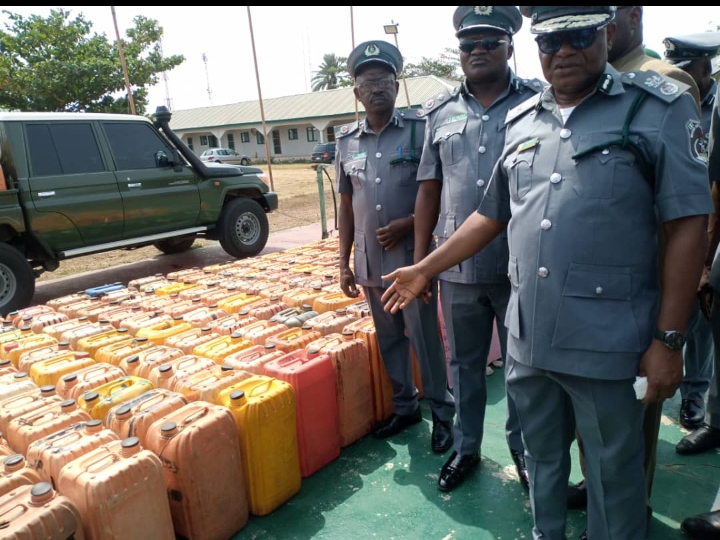
The Command also showcased a total of 400 kegs of Premium Motor Spirit (PMS), an equivalent of 12,000 litres with a DPV of N8,347,680. These were intercepted along the creeks on March 2, 2024.
Acting on credible intelligence, the CAC explained, the Command was swift in deploying gallant officers to the creeks to monitor real time, attempts to move those items by boat with the aim to intercept and recover the illicit products.
“They were actually being brought in in large sacks. So, we have to move them and bring them here and of course, put them back into kegs that will make them stable. We know that because of the nature of petroleum products, it’s not something that we can warehouse over a long period of time. Very shortly, we’ll start auctioning these items to members of the public, some of whom I see hanging around.
“When the auctioning takes place, the money will be paid into the coffers of the Federal Government just to account for the sale of these items.”
Bomodi regretted the challenge of tackling smugglers on water.
“Anytime they are tackled on land, they have the tendency to move to the water. We have limited capabilities on water. Even though there are resources that are there but you are talking about a very wide body of water. You are not just talking about the creeks, you are talking about the whole Atlantic and it is often difficult. But we are still ready to put all the resources we have at our disposal to ensure that practices of this nature are discouraged and discontinued.”
The CAC gave thumbs-up to leaders within the Badagry area for showing exemplary conduct.
“They have managed to create a buffer for us – the agencies of government – and the communities by explaining to them what the intentions of the government are and how they should, indeed, make efforts to cooperate with us to see that these items that pose a threat and danger to Nigeria and Nigerians do not either leave the country or come in.”
Reacting to concerns on the possibility of the smugglers fighting back as the illegal products are being evacuated, Bomodi said it is natural.
“It’s a normal practice. Anytime you have to evacuate products either PMS, rice or any other thing, there’s a threat and we are not just talking about those that are actively involved in it. Sometimes, we have certain communities that present hostile faces to us.
On the confiscated bags of beans, Comptroller Timi Bomodi disclosed that they are safe in government warehouse and would be sold to the public at a discounted rate.
Once the Customs Headquarters approves, he assured, the items would be moved to the market for sale at discounted price.
“Ordinarily, these things shouldn’t be leaving the country when we have food crisis in the country. We must ensure that that which is being produced within Nigeria is used up within Nigeria.”
“The citizens of this country come first and the government of the day is prioritizing the needs of the people and that is why the Nigeria Customs Service has undertaken this bold step to make this arrest and to ensure that these goods eventually end up at the market places where they will be distributed to Nigerians at a cost that is affordable”.


By Izuchukwu Ozoemena
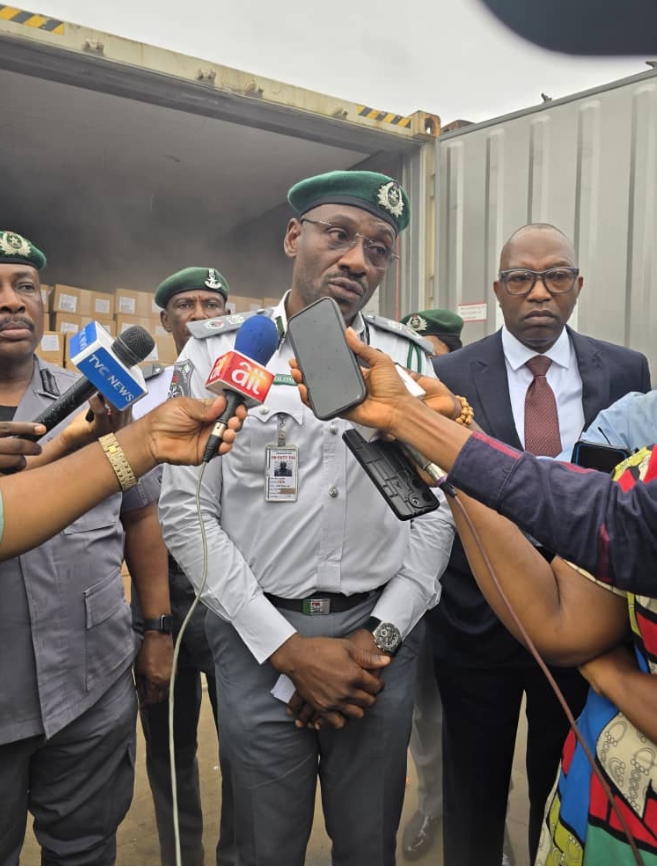
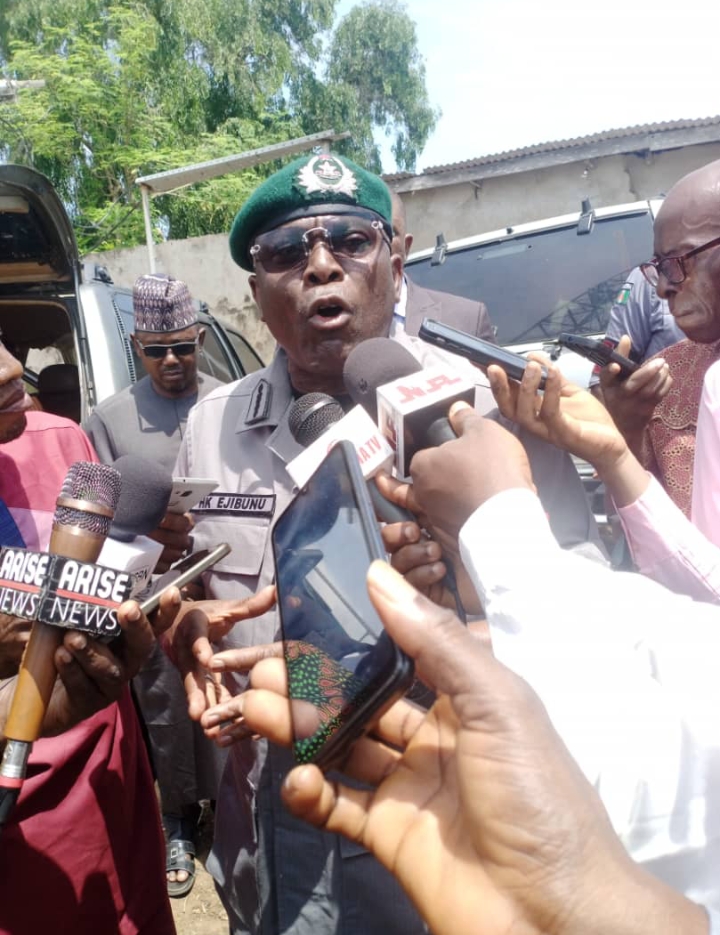
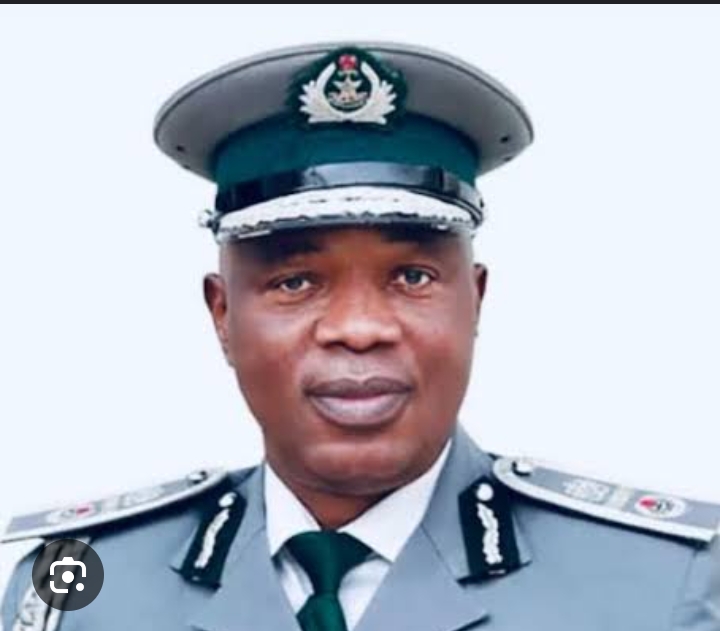
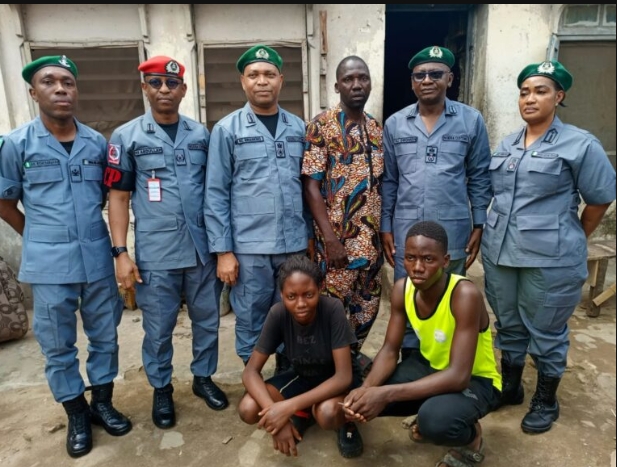
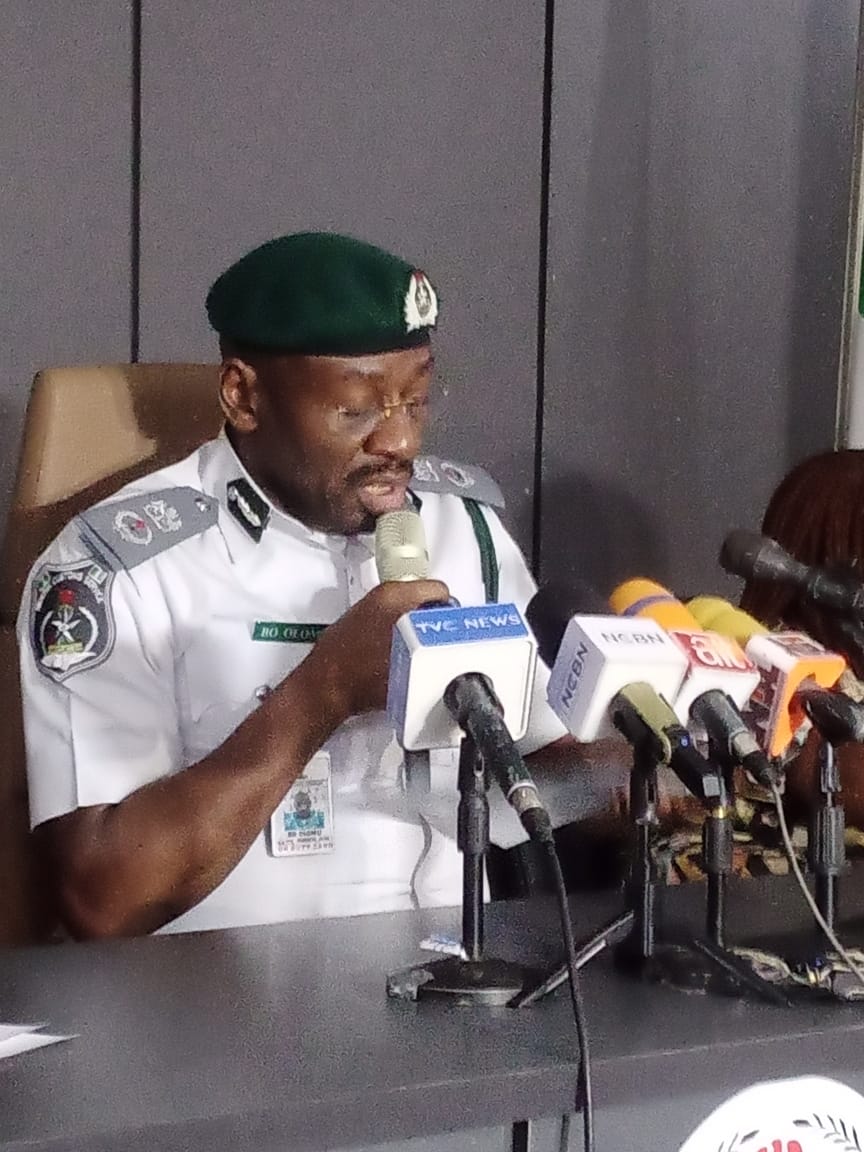
Under the guidance of the Comptroller General of the Nigeria Customs, the Apapa Command is liaising with the Nigerian Railway Corporation (NRC) and other stakeholders on developing a standard operating procedure (SOP) for the movement of goods by rail from Apapa Port to other states.
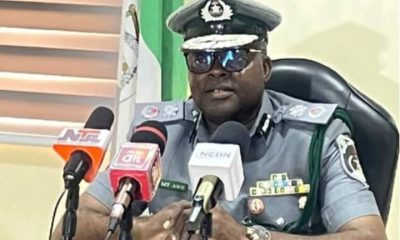
The Customs Area Controller (CAC), Comptroller Babatunde Olomu, PhD, disclosed this while presenting his 2025 revenue half year report.
”| am pleased to express that the talks have shown prospects for success with pledges of support and anticipation for robust participation by all concerned”, he stated.
According to him, the effort to revive cargo movement by rail aims to decongest the port, reduce pressure on the Apapa roads, and provide a viable and cost-effective option for cargo movement by importers, exporters, freight forwarders, haulage operators and licensed
customs agents.
He revealed that in the first six months of 2025, the Command achieved a monumental revenue collection of N1,378,059,019,245.20, representing a 35% increase above the record of N1,023,663,842,255.63 collected in the same period in 2024. He attributed this feat to efforts of diligent officers and compliant traders.
”On my watch and under the direction of the CGC Bashir Adewale Adeniyi, MFR, psc (+), we have always insisted on maximum collection of government revenue by preventing leakage.”
In the area of trade facilitation, the CAC said the Unified Customs Management System (UCMS), also known as B’Odogwu, has gone live in the Apapa Command with laudable milestones.
Emphasizing the diligence of the command, he announced that in addition to the issuance of the Pre Arrival Assessment Report (PAAR) being issued using the homegrown technology, the Command achieved issuance of the first Single Goods Declaration on May 9, 2025 using the B’Odogwu platform, a significant shift towards faster, more reliable cargo handling.
”We have created a robust platform that facilitates trade and ensures the swift clearance of cargo.
”We are addressing challenges such as poor network connectivity, delays, and congestion associated with the former system.
The CAC showcased nine (9) containers comprising unregistered pharmaceuticals, used clothing, expired margarine, wild animals’ skin and codeine syrup which form part of the twenty-seven (27) containers seized between January-June 2025 with a duty paid valve of (DPV) of N9,267,443,966.00.
”These seizures are a fallout of our efforts at preventing Nigerians from unwholesome foods and drugs, stopping illicit trade, and protecting
our local industries.
”As a standard, we will never compromise the health, well-being, and safety of Nigerians on the altar of trade facilitation. Every consignment passing through our port undergoes a diligent check through scanning and physical examination when required.
Unregistered pharmaceuticals are most prominent on the list of twenty-eight (28) seizures made by the command during the period under review. The seizures comprise controlled drugs, used clothes,
codeine syrup, wild animals’ skin, and other sundry items.
”It is pertinent to note that the trafficking of wild animals contravene the Convention on Trade in Endangered Species (CITES), to which Nigeria is a signatory. Equally, on the detention list is a container of matches imported without the required End User Certificate (EUC) as provided for in our extant laws.
In a smart move to neutralise smugglers, CAC Olomu added, the Command sealed three bonded terminals.
One of the terminals has already been charged to court, while investigations are ongoing regarding the remaining two.
He affirmed the commitment of his Command to sanitize the port environment and maintain strict adherence to customs regulations by all stakeholders.
“As a result of our robust anti-smuggling efforts, three bonded terminals have been sealed. One is already undergoing prosecution in court, and we are currently investigating the others,” Olomu declared.
Maritime Agencies
SAFETY ON WATER: FG Donates Life Jackets To Ogun State Government, Emphasizes Safety
By Izuchukwu Ozoemena
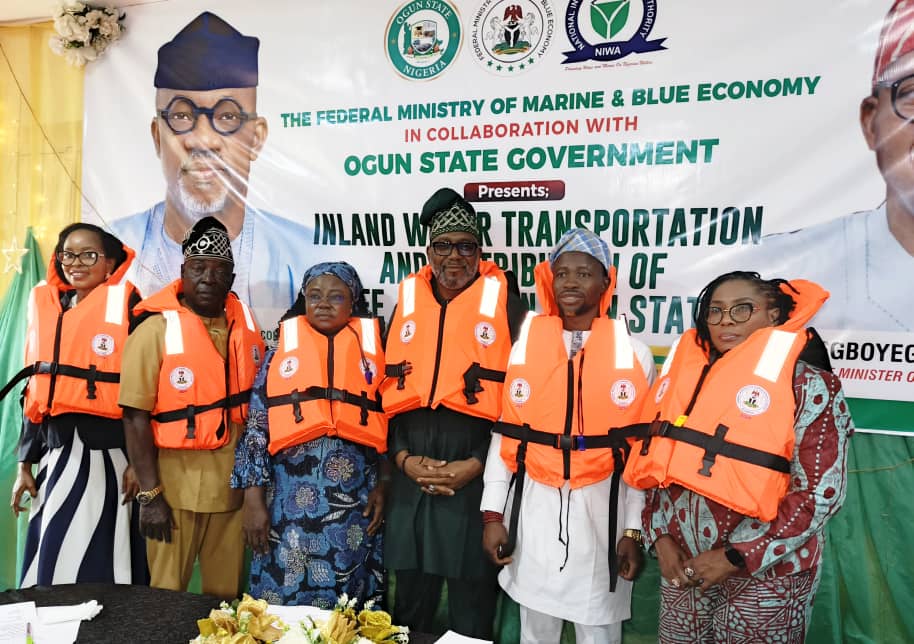
Minister of Marine and Blue Economy, HE Adegboyega Oyetola, says his Ministry will stop at nothing in her efforts to address incessant loss of lives on the nation’s inland waterways.
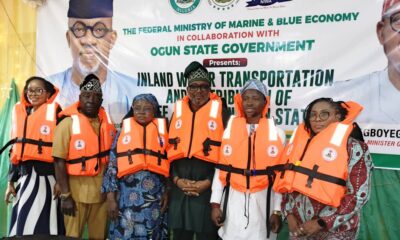
The Minister made the pledge, Tuesday, during the handing -over of 3500 life jackets to the Ogun State government for distribution to inland waterway operators in the area as part of a nationwide effort to promote safety awareness and savet lives during navigation.
The Minister who was represented by Dr Mercy Ilori, the Director of Maritime Services in the Ministry of Marine and Blue Economy, said the campaign which is ongoing is part of a deliberate national strategy to institutionalize the culture of safety and the willingness of waterway users to voluntarily submit to safety rules and regulations on the inland waterways.
“This is one of the most comprehensive Federal government responses in recent times to the persistent loss of lives on Nigeria’s waterways.
“Consequently, there have been successful handovers of safety life jackets at Niger, Bayelsa, Anambra, Akwa Ibom, Delta, Taraba, and Lagos States.
He said the train was now in Ogun State to sustain the momentum and reveal the government’s unwavering commitment to protecting the lives and livelihoods of the people of the State.
“You will all agree with me that the frequency and tragic consequences of boat mishaps across the country are deeply concerning.
It is in recognition of this menace, he stated, that the Federal Ministry of Marine and Blue Economy aligned with the Renewed Hope Agenda of President Bola Ahmed Tinubu, to prioritize life-saving interventions to bring about tangible change.
He stressed that the government’s commitment to end the needless loss of lives on waterways is anchored on strict enforcement of the Inland Waterways Transportation Regulations 2023; continuous public education and sensitization campaigns and provision of critical safety equipment, notably life jackets, to waterway users.
“It is worthy to note that the National Inland Waterways Authority (NIWA), a key agency under the Ministry, plays a pivotal role in ensuring the success of this strategy.
“NIWA continues to lead in regulation, monitoring compliance, and supporting education and enforcement efforts on our inland waters,” he remarked.
Accepting the donation, Governor Dapo Abiodun assured the Minister that the life jackets would be equitably distributed to registered operators across the state.
Represented by the State Commissioner for Transportation, Engr. Gbenga Dairo, the Governor stated that safety on the nation’s waterways wasn’t a privilege but a right of everyone in Ogun State.
He also assured that the State is ever willing to support and sustain the momentum of enhanced inland waterways safety.
“Safety on the waterways is not a privilege, it is a right.
” Every life jacket handed over today represents a life potentially saved, a family preserved, and a future secured.
” This initiative aligns with the human capital development pillar of our administration’s ISEYA agenda ensuring that people remain at the heart of our progress.
“Ogun State values the synergy we have fostered with the Ministry of Marine and Blue Economy and applauds their dedication to the development of marine infrastructure, safety standards, and the blue economy as a whole.
He beckoned on waterway users including boat operators, fishermen, and residents of riverine communities to cultivate the habit of using life jackets.
” But more importantly, the knowledge and awareness you will gain from this sensitization effort will serve as your daily companion, protecting you and helping you protect others.
“Ogun State hereby assures the Federal Ministry of Marine & Blue Economy and NIWA that these life jackets will be equitably distributed to verified and recognised operators across the state’s waterways, from Iwopin to Ebute-Ero, from Agbara to Tongeji, Imakun Omi to Ode-Omi, and other active riverine corridors.
” A strict monitoring and maintenance protocol will be enforced to ensure sustainability and accountability.”
The State Governor, however, warned that State actors would not allow preventable tragedies define the nation’s waterways
“As we continue to embrace innovation and development in transportation, we must also embrace accountability and responsibility.
“Let us not allow preventable tragedies to define way of life, let us instead champion the principles of safety, respect for life, and collective vigilance.”
In his.submission,the Managing Director of NIWA, Mr. Bola Oyebamiji recalled several tragic incidents that claimed lives in hundreds and warned that the issue of safety on the inland waterways cannot be overstressed.
“The issue of safety can never be over-emphasized. In June 12, 2023, a wooden boat carrying wedding guests returning from a marriage ceremony from Niger State capsized in Jeva Channel Lake, in River Niger in Kwara State, owing to overloading and a submerged tree.
“The boat was reported to be carrying over 200 guests despite having the capacity of carrying just less than 100 passengers.
“More than 200 lives were lost, among which a father and four of his children were involved. So you can imagine the kind of tragedy that befell the family.
“Again, in October 1, 2024, a wooden boat carrying mostly women and children traveling for religious festive occasions capsized in Niger State.
“The boat was reported to be carrying over 300 passengers even though it has the capacity of carrying less than 100 passengers. More than 100 lives were lost.”
NIWA Managing Director, who was represented by Engr. Elsie Egwuatu, Head of Marine at the Lagos Area Office, observed that in the respective cases the boats were heavily overloaded, sailed at night without the proper navigational aids and conveyed passengers without life-jackets.
“So if you think safety is expensive, try disaster. Over 90 percent of accidents that happen on our waterways are caused by human error.
“In most cases, it is caused by captain’s negligence. The newly gazetted Marine and Transport Regulations Codes, which spells out offences and punishments, ranging from fine to imprisonment, mandates the compulsory use of life jackets for all waterways users sailing on our waterways,” she added.
Also speaking, the National President of the Association of Tourist Boat Operators and Water Transporters of Nigeria (ATBOWATON), Alhaji Tarzan Balogun called for intensified regulatory efforts to prioritize safety and infrastructural development on Nigerian waterways.
Alhaji Balogun commended the government for its efforts in promoting safety across the country’s inland waterways, even as he assured that the life jackets would be used judiciously.
“There must be a firm policy — no life jacket, no entry. I’ve witnessed several cases where passengers refuse to wear them. That should not be allowed. Safety must come first,” he said.
Balogun also praised the federal government, particularly President Tinubu and the Minister of Marine and Blue Economy, for their commitment to maritime safety and for recognizing the importance of life-saving gear in water transport.
“If you’re drunk or perceived to be a threat to others onboard, operators must have the authority to refuse you entry.
” There is also the problem of bringing animals onboard, especially dogs who can scare passengers onboard and make boats capsize,” he stated.
Balogun also called on the Ogun State Government to emulate Lagos by setting up a dedicated waterways authority and constructing jetties in collaboration with local boat operators.
Maritime Agencies
Dangote Lauds NPA’s One-Stop Shop Committee, Donates Coaster Bus To Ease Operations
By Izuchukwu Ozoemena
The Nigerian Ports Authority (NPA) has received commendation for demonstrating tact and economic sense in the way and manner it implemented the Federal Government’s policy on domestic sale of crude oil and refined petroleum products in Naira.
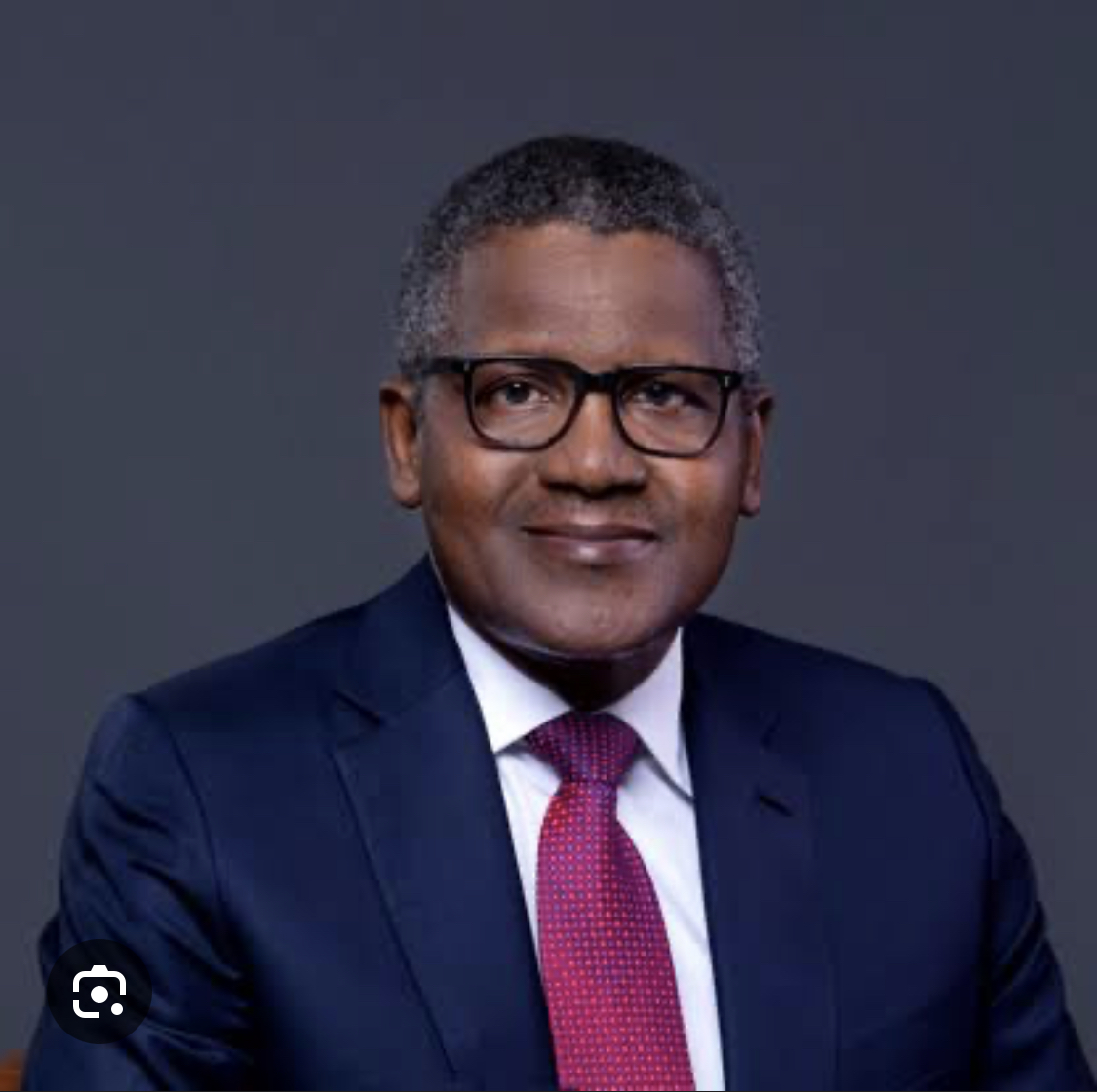
The President/ Chief Executive Officer of Dangote Group, Alhaji Aliko Dangote made the commendation while donating a brand-new Coaster bus to the One-Stop Shop (OSS) Committee to further ease her operations.
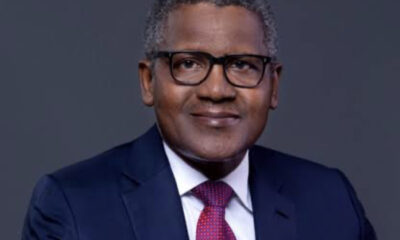
In a letter he personally signed, Alhaji Aliko Dangote assured that his organisation would continue to explore ways to support the NPA-led committee to sustain its successes in the implementation of the presidential directive on the sale of crude and refined products.
“In recognition of the enormous responsibility placed on the shoulders of the One Stop Shop (OSS) by the President and Commander in Chief of the Armed Forces, and our commitment to ensuring the committee delivers on its mandate”, the letter stated, “I am pleased to donate to the committee one (1) brand new Coaster bus to facilitate the daily discharge of their operations.”
“We believe this bus will be used productively by the committee as we continue to look for ways to support and appreciate the efforts of this noble committee.

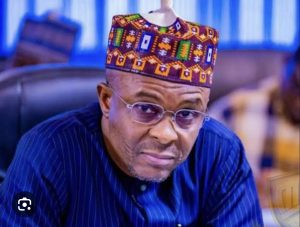
Mr Zach Adediji, Executive Chairman, Federal Inland Revenue Services
It is recalled that during a recent visit to NPA, the Chairman, Technical Sub-Committee on the implementation of the Federal Government’s policy on domestic sale of crude oil and refined products in Naira, Zach Adedeji,
commended the One-Stop-Shop (OSS) Team, led by the Nigerian Ports Authority (NPA) for ensuring smooth operations of the directive. Adedeji is the Executive Chairman, Federal Inland Revenue Service (FIRS).
He lauded the team led by NPA for playing a pivotal role in the successful implementation of the presidential directive on the domestic sale of crude oil and refined products in Naira.
Adedeji said: “We recognize that this pioneering effort is a significant achievement, and no doubt reflects your commitment and patriotism”.
“Thus, we encourage you to maintain the hard work and dedication that has made this initiative a success.
“We also extend our gratitude to all participating agencies for their invaluable cooperation and support,” Adedeji stated.


Apapa Customs Revives Rail Haulage of Cargo, Shuts Three Bonded Terminals

SAFETY ON WATER: FG Donates Life Jackets To Ogun State Government, Emphasizes Safety

Dangote Lauds NPA’s One-Stop Shop Committee, Donates Coaster Bus To Ease Operations

Release Approved N200bn Capital Projects Fund To MAN, Oron, House of Representatives Charges NIMASA .

NPA Berths Nigerian-Owned Container Vessel,”MV OCEAN DRAGON,” To Boost Incountry and Regional Trade,

NIGERIAN PORTS AUTHORITY BERTHS FIRST WHOLLY NIGERIAN-OWNED CONTAINER VESSEL.

HALF-YEAR REVENUE DISPOSITION: Apapa Customs Hits N1.38Trillion, Confiscates Prohibited Goods Worth Billions.

PORTBIZNESS Celebrates Excellence in Customer Service Delivery, Holds Special Awards Night

Kebbi Customs Command Introduces Health Screening, Mandatory Sports To Ensure Work-life Balance

CG Adeniyi Commends Ogun II Command for Massive Revenue Increase.
Container Movement To Seaports: NPA Meets With APM Terminals, Shipping Lines, for Coordination.

ANTI-SMUGGLING OPERATIONS: FOU, Zone ‘A’ Ups the Ante, Confiscates Bulletproof Vests, Cannabis Sativa,etc, worth N1.2bn

INLAND WATERWAYS SAFETY: Oyetola Flags Off 3,500 Life Jacket Distribution Campaign in Lagos.

Dangote Hits Another First, Named “Most Admired African Brand” in Addis Ababa.

NPA Secures Approval to Dredge Lekki Deepsea Port Channel To 19 Metres

Apapa Customs , International Network and NDLEA Collaborate to Confiscate Unregistered Pharmaceuticals.

APFFLON Seeks Immediate Reform of CRFFN, Replacement of Registrar.

OMIS AWARDS, 2022: Greg Ogbeifun, Industry Gurus For Special Recognition.

FG Set To Re-establish National Shipping Line, To Take Advantage of $10 bn Annual Ship Charter Market.

2023 ELECTIONS:CILT Hosts Seminar on Logistics & Electoral Process

INLAND WATERWAYS OFFERS NIGERIA ALTERNATIVE REVENUE SOURCE, Says Sambo

MAN, ORON: It’s Encomiums Galore From International Seabed Authority (ISA).

MAN, Oron, Kick-starts Simulator-based Training, Commends FG, NIMASA.

Photo News: Salah Celebration

MUAZU SAMBO: Showcasing Nigeria’s Maritime Potentials At The Global Arena

Lilypond Export Command Is Meeting Expectations, Handles 70% of Nigeria’s Total Tonnage of Export Cargo, says CAC Odusanya.

PHOTO NEWS: Maritime Capacity Development

BENIN SEAPORT UPDATE: Edo State Government, Host Communities, Conduct Bidders To Inspect Project Site.

MARAN Salutes DCG Adeniyi On His Elevation As Customs Comptroller-General.

WAR AGAINST OIL THEFT: Tompolo’s Company Nabs VLCC Laden With Crude Oil

PUBLIC RELATIONS: New Image Maker Mounts the Saddle at NPA.

SIFAX GROUP: Ojeniyi Becomes Sky Capital GMD, Omajuwa Strategy Director.

-
 Maritime Agencies2 weeks ago
PORTBIZNESS Celebrates Excellence in Customer Service Delivery, Holds Special Awards Night
-
 Maritime Agencies2 weeks ago
Kebbi Customs Command Introduces Health Screening, Mandatory Sports To Ensure Work-life Balance
-
 Maritime Agencies5 days ago
NPA Berths Nigerian-Owned Container Vessel,”MV OCEAN DRAGON,” To Boost Incountry and Regional Trade,
-
 Maritime Agencies6 days ago
HALF-YEAR REVENUE DISPOSITION: Apapa Customs Hits N1.38Trillion, Confiscates Prohibited Goods Worth Billions.
-
 Maritime Agencies1 day ago
Dangote Lauds NPA’s One-Stop Shop Committee, Donates Coaster Bus To Ease Operations
-
 Maritime Agencies15 hours ago
Apapa Customs Revives Rail Haulage of Cargo, Shuts Three Bonded Terminals
-
 Maritime Agencies5 days ago
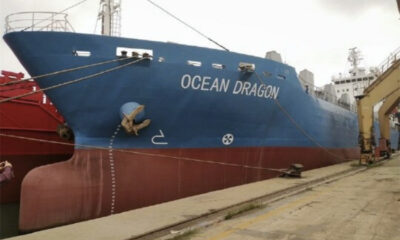
NIGERIAN PORTS AUTHORITY BERTHS FIRST WHOLLY NIGERIAN-OWNED CONTAINER VESSEL.
-
 Maritime Agencies17 hours ago
SAFETY ON WATER: FG Donates Life Jackets To Ogun State Government, Emphasizes Safety