
Transport
MUAZU SAMBO: Showcasing Nigeria’s Maritime Potentials At The Global Arena

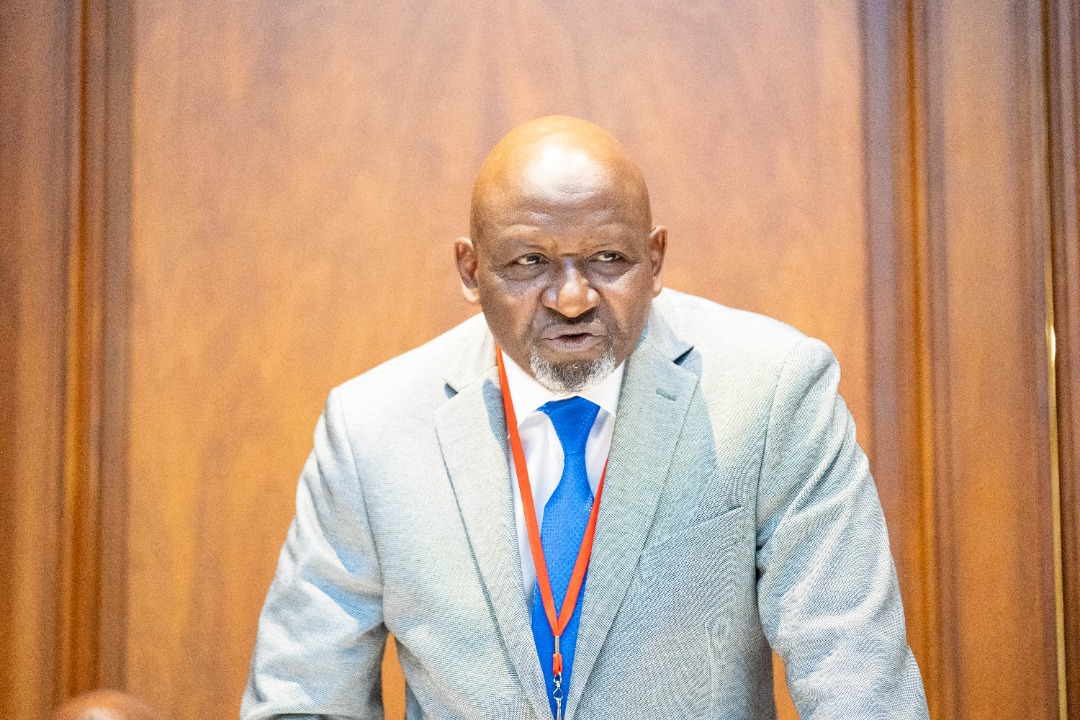
By Izuchukwu Ozoemena
Barring the unforeseen, coupled with the body language of Engr Muazu Jaji Sambo as the new Transportation Minister, Nigerians may be on the sure path to witness a reversal of the second-class status the maritime subsector was confined to for over seven years in the present political dispensation.
At different fora, stakeholders, particularly the professionals in the maritime sector, have had to lament several times the level of neglect and disdain with which the immediate-past Transportation Minister, Rt Hon Rotimi Amaechi treated the sector under him for about eight years. He made endless promises, raised hopes and dashed them at will without compunction. His rigmarole on the controversial CVFF, for example, was legendary.
For reasons best known to him, he carried along with what many observers still perceive as arrogance unprecedented in managing a government setting. Even when professionals and stakeholders showed genuine concerns about the bare-faced neglect of a golden hen that lays the golden egg, he remained unmoved as he tactically proved that what he was doing to the sector was not intentional.
Apparently, Amaechi had no regrets for this stance. At a point, he announced to all and sundry during his countless stakeholders-engagement that he had ceded the supervision of the maritime subsector to Senator Gbemi Saraki, his Minister of State. The aim, he said, was to have opportunity to fully concentrate on activities in the rail subsector. But whether he actually gave free hands to Saraki to run the show in the maritime sector thereafter remains a subject for another day.
Exchanging views with FALCON WATCH in Lagos, Thursday, a critical maritime stakeholder and notable master mariner said that for certain reasons, he would want to conceal his identity until the expiration of what he calls his ‘wait-and-see’ attitude on whether or not the maritime sector receives due attention henceforth to reverse the ‘Amaechi derogatory stance’.
This is necessary, he said, so that if the status quo persists and the outcome of the waiting fails to justify the high hope of a positive change already hovering in the sector, he would still maintain the hopelessness the Amaechi era foisted on all. That means, he said, ‘gaining nothing and losing nothing’. ” I don’t want to accommodate any hopes that may be dashed tomorrow”, he told the medium.
But going by his outing in a couple of months as Transportation Minister, does Engr Muazu Jaji Sambo appear to be on the sure path to reawaken activities in the maritime sector? The answer is yes! This may be without prejudice to the level of attention he is supposed to give to other transportation agencies under his purview. Is he trying to bring activities in the maritime subsector at par with the rail and other subsectors which Amaechi preferred projecting for years? Perhaps!
In agreement with views being expressed across the board so far, Sambo, stakeholders say, is out to make a huge difference. Shortly after his appointment, Sambo hit the ground running by undertaking an extensive tour of seaports to assess the facilities in existence nationwide while physically noting areas where critical structures are dilapidating so as to offer immediate succour. The case of the Tincan Island Port quay apron quickly comes to mind. His timely visit to the facility and the promise that he would personally take up the matter to the President on the need for immediate attention is reassuring to port users.
During his tour of the eastern ports, he comissioned inland waterway safety boats at the NIWA Area Office in Port Harcourt to facilitate efforts in combating waterway mishaps.
The Nigerian International Economic Partnership Forum on the sidelines of the 77th United Nations General Assembly in New York, United States, afforded an opportunity for Sambo to unveil to the global community hard facts about Nigeria’s huge potentials in the maritime sector.
Presenting a paper entitled FINANCING NIGERIA’S TRANSPORT INFRASTRUCTURE to the global community,Thursday, the Minister said Nigeria has over 800 kilometre-long coastline overlooking the Atlantic ocean. On this stretch of nature’s endowment sit six major seaports engaged in international maritime trade with the rest of the world.
The Six major ports are the Lagos/Apapa Port built in 1921and the
Tin Can Island port built in 1977. Others are the Calabar Port (built in 1979),
Onne Port (built in 1982) and the
Port Harcourt Port (built in 1912).
The Port of Warri was built in the late 1980s, he explained.
…………..CONTINUES.






By Izuchukwu Ozoemena
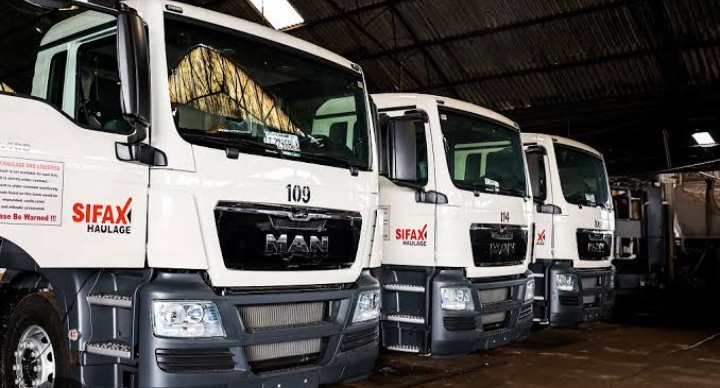
The haulage subsidiary of the SIFAX Conglomerate, SIFAX Logistics Company Ltd has acquired 13 brand-new trucks out of the 200 targeted to boost her operations.
The trucks, which are 33 tons of 6×4 MAN diesel vehicles with 400 horsepower, will help the company increase its market share and competitiveness in long-distance and interstate deliveries.
Adewale Adetayo, General Manager, SIFAX Logistics Company Limited, disclosed this at the unveiling of the 13 brand-new trucks.
According to him, the additions became necessary following an upsurge in demand for the company’s haulage services across the country.
He said: “To maintain our market dominance and expansion to various new routes within the country, management decided to embark on the purchase of these new trucks. Our target is to expand rapidly and we have mapped out a strategic plan to acquire 200 new trucks before the end of the 2024 business year. This will be done in phases and we have started with 13 for now. We hope to buy another 20 in the next phase of our acquisition plan.”
He explained that the company went for the MAN diesel brand, a German product, because of its high rating in the logistics ecosystem, durability, load-bearing capability, driving stability, and adaptability.
In his remarks during the unveiling, Chairman of SIFAX Group, Dr. Taiwo Afolabi, noted that the company has always braved the odds to invest more in the Nigerian economy during downtimes.
“We are aware many businesses are not favorably disposed to investing at this moment due to the prevailing economic reality. But the reality is that some economic activities like production and movement of goods will almost always demand haulage services even in challenging times.”
He said SIFAX is scaling up through the acquisition of the trucks because of the huge potential in the industry.
“The economic outlook for the country is looking bright and we know that once the economy bounces back, we would reap the rewards of our investments.”
“Many businesses, both existing and potential clients, continue to reach out to us due to the credibility and efficiency we have achieved over the years. To meet these agreements, we need a larger fleet”, Afolabi added.
By Izuchukwu Ozoemena
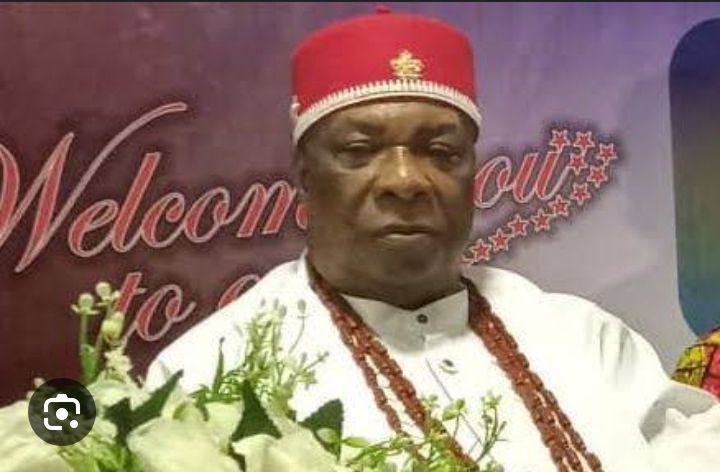
The Association of Igbo Maritime Practitioners In Nigeria (ASSIMPIN) has called on the current leadership under His Royal Majesty, Eze Ambassador Damian Obianigwe, to conduct an election without further delay. This is with the aim to inject new blood into the leadership after a very long period of leadership inertia which has stagnated growth contrary to the dream of the founding fathers.
As stated in an ASSIMIN press release jointly signed by the the Chairman and Secretary, Chief Boniface Okoye and Osita Chukwu respectively, the umbrella body of Igbo practitioners in the freight forwarding trade expressed disgust at the state of affairs in the association whereby those in power have, for the past twelve years, refused to conduct election even as thy have failed to add value to the body.
The elders condemned, in strong terms, the inability of the current leadership to obey the stipulations of the constitution especially as regards tenure.
The elders are worried that one of them, Prince Ozo Chukwura who was chosen about fourteen years ago to assist and direct the President-General to ensure that the right steps are taken to move the body forward has completely failed in his duty.
“We the elders of the Igbo Maritime Forum of ASSIMPIN are hereby writing to register our utter disgust at the state of our formerly revered Association.”
“We chose Prince Ozo Chukwura about fourteen years ago as a well-grounded maritime professional to help guide the president general in shepherding this Association to greatness”.
ASSIMPIN noted with displeasure, what it referred to as the seemingly unshakable bad support that Prince Chukwura has accorded the President- General, His Royal Majesty, Ambassador Damian Obianigwe, thus, making him unable to show good leadership. The President-General, the statement added, has not added much value to the Association.
“It is also on record that Chief Obianigwe was voted to serve a two-year tenure, but has now spent almost fourteen years at the position. These have happened with the unflinching support of Prince Ozo Chukwura to the president general. All entreaties for him to guide the president general and grant some good advice to him have not been heeded to”.
“We also want to state that the flimsy and illegitimate excuse of lack of biometrics capture by members for the conduct of an election is not tenable as it is unconstitutional”.
The present leadership, the statement said, should make the right move towards having a free and fair election so as to enthrone what it calls an efficient executive to take over the mantle of leadership.
By Izuchukwu Ozoemena
To realize Government’s vision and objectives on the current reforms in the transportation sector, it has become necessary to unbundle the Nigerian Railway Corporation (NRC).
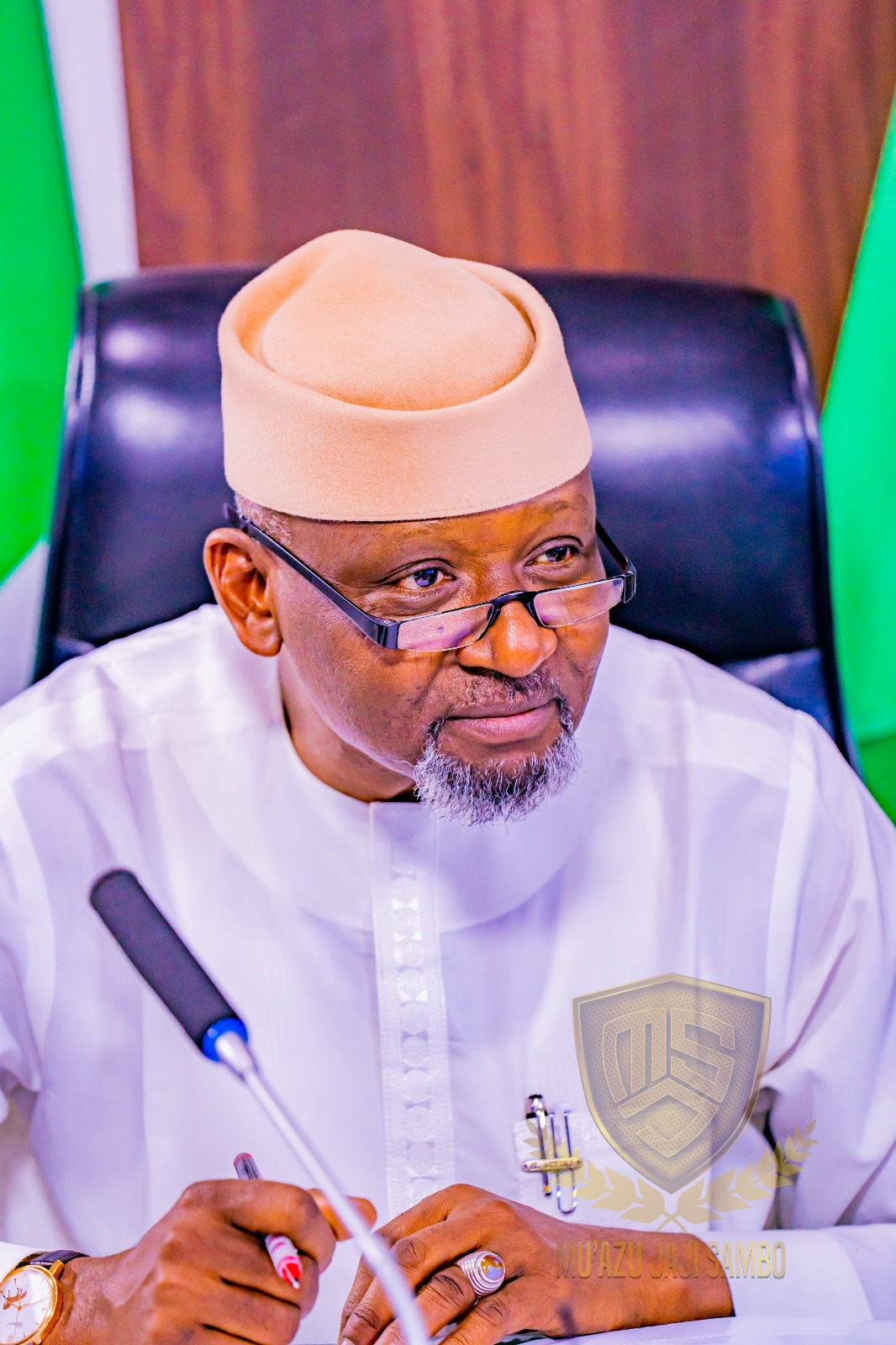
Transportation Minister, Muazu Jaji Sambo stated this while addressing the management team of the Ministry of Finance Incorporated (MOFI), led on a visit to him by the CEO, Dr. Armstrong Katang.
Unbundling the NRC to make it more economically viable while offering world class services to Nigerians has become imperative, he told the delegation.
“One of the things I will like to see as the Minister of Transportation, through MOFI is the unbundling of the Nigerian Railway Corporation (NRC). There is a Committee set up to unbundle NRC and I will urge you to work with the existing Committee” , he affirmed.
The Ministry of Finance Incorporated (MOFI) was incorporated under the provisions of Sections 2 and 3 of the Ministry of Finance Incorporated (MOFI) Act of 1959 as an asset holding company under the Federal Ministry of Finance. MOFI is the sole manager of all Federal Government investment interests, estates, easement and rights.
Going by the reforms implemented in the ports and numerous benefits that have been brought in the sector, a similar thing deserves to be replicated in the railway sector.
” The Nigerian Railway Corporation (NRC), the way it is currently, is the way the ports were prior to concession, prior to the reforms of 2005. Today, even the Nigeria Ports authority (NPA) workers are happier about how NPA is today compared to how it was prior to the reforms. This means the reformed NPA is generating more revenue to support its operations and also support its workforce and its pensioners”.
” I don’t want the NRC staff to see the unbundling of the NRC as a threat to their jobs. If we have a better performing NRC, then we are going to have better salaries for its workers, better working conditions for its workers, more revenue for the FG and therefore the ability to even build more rail networks”, he told staff who may dread job loss.
Sambo pointed out that the issue of encroachment on railway property will soon be a thing of the past as “MOFI was berthed for a specific reason and that reason is for the Federal Government to take control of its assets and create optimum value for these assets”.
In his contribution, the Minister of State for Transportation, Prince Ademola Adegoroye, extolled the capabilities of the Managing Director, MOFI, Dr. Armstrong, saying he has full confidence that the MOFI team will deliver on the job.
On her own part, Dr Magdalene Ajani, Permanent Secretary, Ministry of Transportation, noted that the MOFI team is satisfying the yearning of Nigerians to have young people in positions of responsibility. She assured the MOFI team of the cooperation of the Ministry in their assignment.
Earlier, the MOFI Chief Executive Officer, Dr. Armstrong Katang explained that the visit was to discuss how to create a more effective and efficient partnership between MOFI and the Ministry of Transportation.
Areas of collaboration with the Ministry of Transportation Katang pointed out included enumerating and valuing the Nigerian Railway Corporation to ensure that its value is captured in line with current realities.
Others included enumerating and capturing other critical assets within the Ministry especially its infrastructure assets and establishing a task force with representation from the Ministry of Transportation and Ministry of Finance, with clear terms of reverence to help with the identified assignments.


PORTBIZNESS Celebrates Excellence in Customer Service Delivery, Holds Special Awards Night

Kebbi Customs Command Introduces Health Screening, Mandatory Sports To Ensure Work-life Balance

CG Adeniyi Commends Ogun II Command for Massive Revenue Increase.

Container Movement To Seaports: NPA Meets With APM Terminals, Shipping Lines, for Coordination.

ANTI-SMUGGLING OPERATIONS: FOU, Zone ‘A’ Ups the Ante, Confiscates Bulletproof Vests, Cannabis Sativa,etc, worth N1.2bn

INLAND WATERWAYS SAFETY: Oyetola Flags Off 3,500 Life Jacket Distribution Campaign in Lagos.

Dangote Hits Another First, Named “Most Admired African Brand” in Addis Ababa.

NPA Secures Approval to Dredge Lekki Deepsea Port Channel To 19 Metres

Apapa Customs , International Network and NDLEA Collaborate to Confiscate Unregistered Pharmaceuticals.

Nigeria Hosts French Ambassador, Seeks Support for Her IMO Council Membership Quest.

TRADE FACILITATION: Nigeria And Benin Customs Deploy SIGMAT To Address Diversion And Fraud

Improving Ease of Doing Business: NPA Set To Clear Ports Corridor

Seme Customs Collects N847m in a month, facilitates non-oil exports valued at N16Bn

CVFF Disbursement: NIMASA Raises the Bar, Undertakes Sensitization To The Delight of Stakeholders.
NPA Debunks Corruption Allegations, Urges Media To Always Seek Clarifications.

Distribution of ‘Poisoned Rice’: Count Us Out, says Seme Customs

APFFLON Seeks Immediate Reform of CRFFN, Replacement of Registrar.

OMIS AWARDS, 2022: Greg Ogbeifun, Industry Gurus For Special Recognition.

FG Set To Re-establish National Shipping Line, To Take Advantage of $10 bn Annual Ship Charter Market.

2023 ELECTIONS:CILT Hosts Seminar on Logistics & Electoral Process

INLAND WATERWAYS OFFERS NIGERIA ALTERNATIVE REVENUE SOURCE, Says Sambo

MAN, ORON: It’s Encomiums Galore From International Seabed Authority (ISA).

MAN, Oron, Kick-starts Simulator-based Training, Commends FG, NIMASA.

MUAZU SAMBO: Showcasing Nigeria’s Maritime Potentials At The Global Arena

Photo News: Salah Celebration

Lilypond Export Command Is Meeting Expectations, Handles 70% of Nigeria’s Total Tonnage of Export Cargo, says CAC Odusanya.

PHOTO NEWS: Maritime Capacity Development

BENIN SEAPORT UPDATE: Edo State Government, Host Communities, Conduct Bidders To Inspect Project Site.

MARAN Salutes DCG Adeniyi On His Elevation As Customs Comptroller-General.

WAR AGAINST OIL THEFT: Tompolo’s Company Nabs VLCC Laden With Crude Oil

PUBLIC RELATIONS: New Image Maker Mounts the Saddle at NPA.

SIFAX GROUP: Ojeniyi Becomes Sky Capital GMD, Omajuwa Strategy Director.

-
 Maritime Agencies3 weeks ago
Container Movement To Seaports: NPA Meets With APM Terminals, Shipping Lines, for Coordination.
-
 Maritime Agencies3 weeks ago
CG Adeniyi Commends Ogun II Command for Massive Revenue Increase.
-
 Maritime Agencies1 week ago
PORTBIZNESS Celebrates Excellence in Customer Service Delivery, Holds Special Awards Night
-
 Maritime Agencies1 week ago
Kebbi Customs Command Introduces Health Screening, Mandatory Sports To Ensure Work-life Balance