
Maritime Agencies
CARGO TRACKING NOTE: You Have Nothing To Fear, Shippers’ Council Assures MAN.

By Izuchukwu Ozoemena
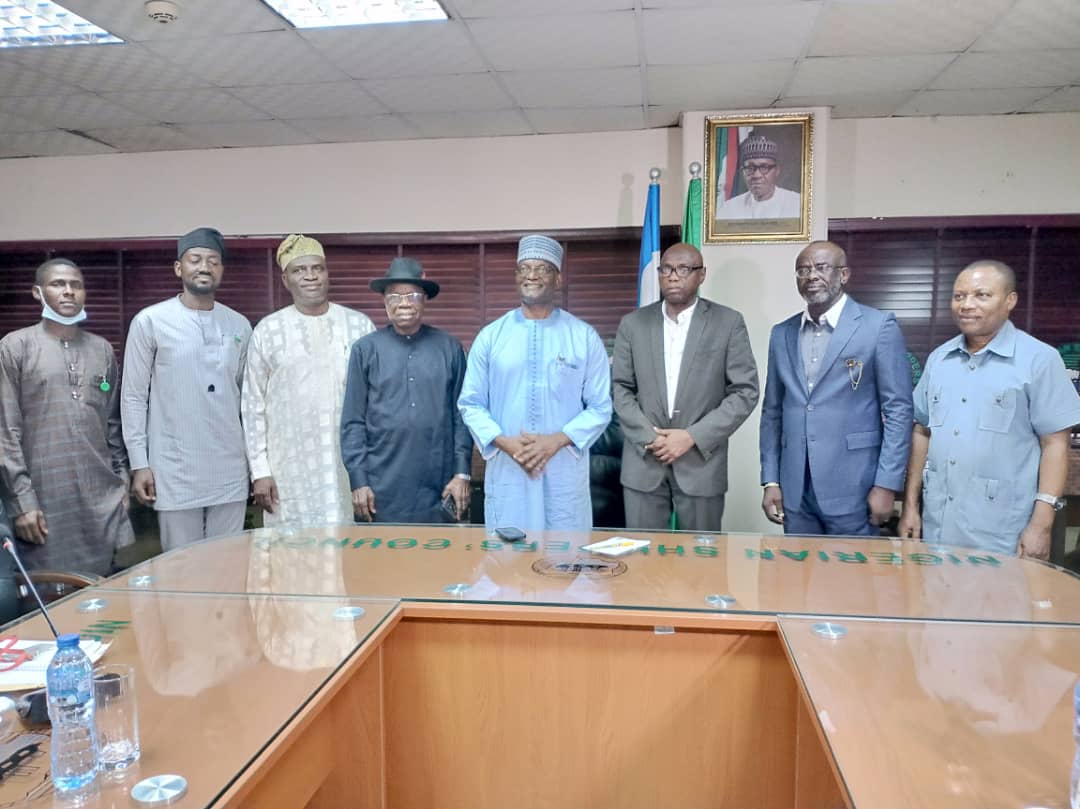
The Nigerian Shippers’ Council (NSC) has disclosed that the Manufacturers Association of Nigeria (MAN) has nothing to lose regarding the introduction of the International Cargo Tracking Note (ICTN) as the platform will not become an additional fiscal burden on Nigerian shippers.
The Executive Secretary of the Nigeran Shippers’ Council, Hon Emmanuel Jime stated this in Lagos, Monday, during a breakfast meeting with executives of MAN at the Council’s headquarters in Apapa, Lagos.
Jime made it clear to MAN that the cost angle of the ICTN regime will not be borne by Nigerian shippers as things have been arranged in a way that it cannot do what he referred to as a dramatic damage to the economy. It will not negatively affect the cost of doing business since there will not be additional costs.
As critical stakeholders in the business value chain, he admitted, manufacturers have a right to seek clarifications and be properly informed on what is to be expected as far as the International Cargo Tracking Note (ICTN) is concerned.
“The cost will be very minimal. Let’s keep in mind that this cost has always been a shipping charge. It isn’t something that is really new.”
“Nevertheless, we have to look at the real impact this will have on the Nigerian economy,” he assured.
Outlining the benefits acruable from the ICTN, Jime spoke specifically on crude oil theft and the implications on the nation’s economy. He was emphatic that tracking the movement of this cargo from source will ensure monitoring and assist Nigeria overcome the menace of crude oil theft which is having huge implications on the nation’s revenue.
He explained that among other benefits, the quantum of crude being stolen from Nigeria is enough to establish the kind of infrastructural development the nation deserves.
Besides, ICTN stands to address the problem of undervaluation of goods.
“These are some of the balancing factors that ICTN is going to bring. With these immense benefits that will come to the nation’s economy from ICTN, you will agree that there are more reasons to introduce ICTN than not to,” he observed.
The NSC boss requested MAN to collaborate in close partnership with his office to ensure that the reintroduction of the ICTN does not lead to an increase in the cost of doing business.
“Assist us,” he urged MAN.
Speaking earlier, former Vice President of MAN, Lagos Zone, Chief John Aluya, raised concerns that the introduction of the ICTN would lead to a new fiscal burden on Nigerian shippers as well as increasing the prices of imported goods.
Aluya, who is also a member of the NSC Governing Board, regretted that every regulatory regime in Nigerian ports has always translated to increased tax and avoidable costs for port stakeholders. Nigerian ports are already notorious in this aspect, he stated.
“Manufacturers’ ultimate aim is to make sure that Nigeria becomes the hub of the West-African region in production. But if our port costs keep rising, we will be driving away the land-locked countries from using our ports.”
“We don’t pay these additional costs directly. It is the final consumer that pays because it would reflect on the final prices of our products,” he told the NSC.
He prayed that being the ports economic regulator out to advance the economic interest of the nation, the NSC would be in a position to appreciate the fiscal implications of the ICTN especially from the point of view of the MAN.
Among others, the MAN’s delegation to the meeting included Mr Ambrose Oruche, the Director of Corporate Services.







Maritime Agencies
MAN, Oron, Pushes Actualization of Her Mandate Beyond Nigeria, Seeks Strategic Partnership with Liberia Maritime Training Institute
By Izuchukwu Ozoemena
Nigeria’s foremost maritime education and training institution, the Maritime Academy of Nigeria (MAN), Oron, has entered a strategic partnership with the Liberia Maritime Training Institute (LMTI) and the Liberia Maritime Authority (LiMA) as part of efforts to actualize her statutory mandate within Nigeria, West and Central Africa and beyond.

Under the proposed partnership endorsed during a study tour and landmark engagement in Liberia, February 23 to 27, 2026, the specialized training instructions are to establish a lecturer- exchange programme in Maritime Education and Training (MET), resource-sharing and maritime operations in the sub-region. Also involved is the promotion of courses offered by both institutions on each partner’s communications platform including their websites. Liberian youths are to be trained at the Academy. Placement of MAN cadets onboard Liberian-flagged vessels for sea-time training and training of Liberian Ports State Control officers at the Academy in collaboration with the Abuja MoU on Ports State Control will also take place.

In his remarks, the Maritime Academy of Nigeria (MAN) Governing Council Chairman, Engr Kehinde Olayinka Akinola described the visit as part of the ongoing efforts of the Federal Government of Nigeria to strengthen regional maritime cooperation andbinstitutional capacity. It also aimed at enhancing global best practices while positioning Nigeria as a hub of maritime operations in the subregion.
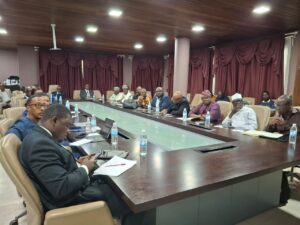
”This visit majorly underscores the Federal Government of Nigeria’s commitment to advancing maritime education and international best practices in line with the Renewed Hope Agenda for the Marine and Blue Economy sector. The proposed agreement will strengthen sub-regional cooperation and fast-track collective growth within the blue economy sector.”
He further noted with satisfaction LiMA’s well-structured maritime administration system, strong adherence to global maritime conventions, and commitment to competitiveness within the international maritime community.
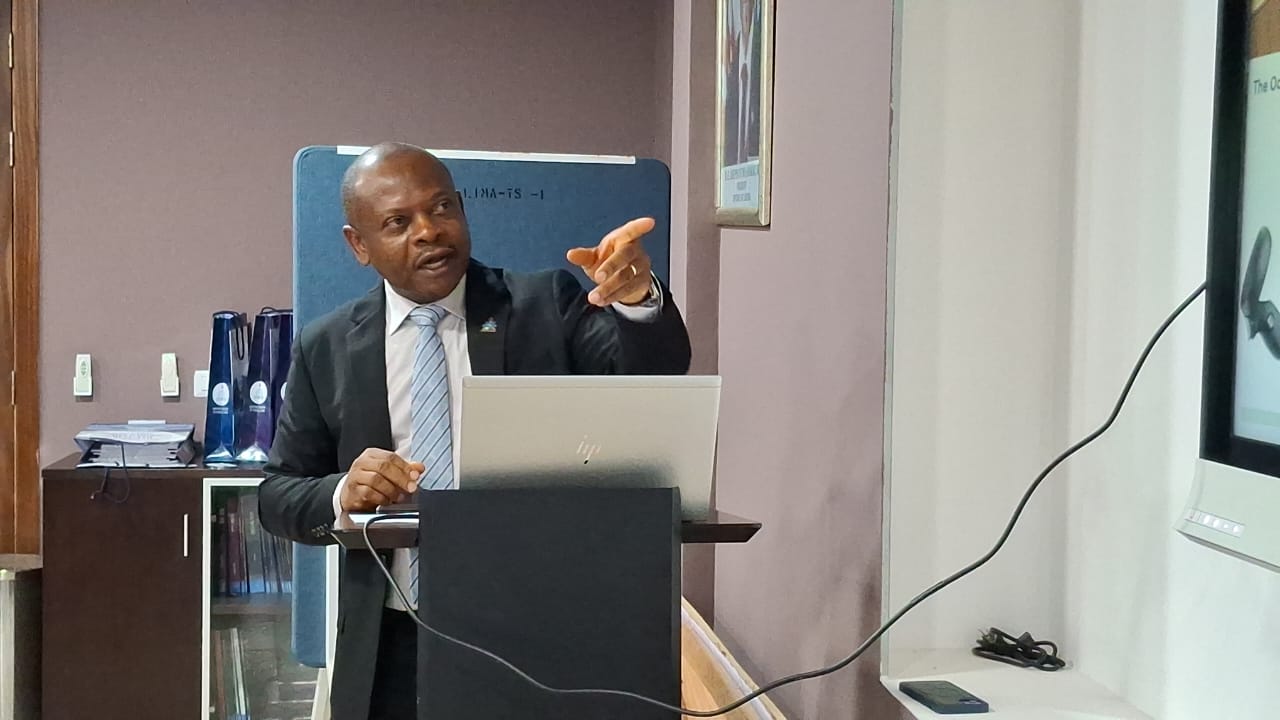
In his presentation, the Acting Rector of the Maritime Academy of Nigeria, Dr. Kevin Okonna reaffirmed the Academy’s dedication to continually develop highly skilled and competent seafarers capable of competing with their counterparts around the globe.
The Academy’s competent workforce, he emphasized, state-of-the-art training facilities and enhanced curricula have positioned the institution as one of the best maritime education and training institutions in the world. He aligned the Academy’s remarkable strides with the visionary policy direction of the Honourable Minister of Marine and Blue Economy, H.E. Adegboyega Oyetola, CON.
According to him, the partnership will open new pathways for knowledge exchange, institutional collaboration and practical training that will benefit cadets, instructors and maritime operators across the sub-region.
Dr. Okonna said: “We acknowledge and recognise Liberia for its significant stance in the global maritime community, particularly as a nation with the world’s largest merchant ship fleet/tonnage and as a Category ‘A’ member of the Council of the International Maritime Organisation (IMO). ”
“This partnership reflects our shared vision to build a new generation of highly skilled and globally competitive seafarers through collaboration, innovation, and capacity development. It would enable both institutions to leverage each other’s strong points to enhance the quality of MET and capacity building for lecturers and cadets,” he added.
In his response, the Deputy Commissioner of the Liberia Maritime Authority, Mr. John F. Harvey welcomed the Academy’s delegation, noting that partnership between the two countries was a welcome development that will serve as a model for other regional collaborations.
While reaffirming his organisation’s unwavering commitment to maritime development, he described the proposed collaboration between MAN, Oron, LMTI, and LiMA as a major step towards strengthening regional maritime cooperation.
”Let me reaffirm our unwavering commitment to mutually beneficial partnerships that would enhance maritime education and training excellence and professional development of our cadets,” he said.
Other officials of the Liberian Maritime Authority who added their voices expressed profound admiration for a well articulated and insightful presentation by the Academy’s delegation, noting that the presentation showcased the Academy’s institutional capacity, strategic direction and commitment to excellence.
The partnership initiative is expected to chart new pathways for strategic collaboration in a lot of areas, foster innovation, maintain maritime training excellence, deepen capacity-building initiatives, strengthen research partnerships and promote cross-border knowledge/culture transfer.
The Nigerian delegation further undertook a guided tour of the top-notched marine engineering training facilities of the Liberia Maritime Training Institute (LMTI) and were treated to a beautiful parade display by the cadets of the LMTI.
Top on the Academy’s delegation were the Chairman of the Governing Council, Engr. Kehinde Akinola; Acting Rector, Dr. Kevin Okonna; Council Members: Hon. Faisal Halidu, Hon. Samuel Isichei, Mrs. Hussaina Inja, Hon. Shegu Maigari. Some members of the Academy’s Management included the Director, Research and Strategic Development, Dr. John Adeyanju, Ag. Registrar, Mr. P. M. Netson and Ag. Bursar, Mr. Anthony Ambi.
Capt Sunday Umoren, Secretary- General, Abuja MoU which partners the Academy in PSCO Courses, Senior Assistant Registrar (Rectorate) Mr. Ime Morgan, Senior Lecturer (Marine Engineering) Mr. Hope Inyang and the Academy’s Image Manager, Domo Umoekpe, also participated in the Study Tour.
The Study Tour was facilitated by Marshall Shield, represented by Mr. Emmanuel Maiguwa and Mr. Steve Ujah.
Maritime Agencies
NPA’s 2025 Operational Performance Report Validates FG’s Economic Diversification Initiatives.

By Izuchukwu Ozoemena
The comprehensive port modernization project being championed by the Nigerian Ports Authority (NPA) is designed to overhaul ageing infrastructure, deepen berths, rehabilitate quays, expand cargo-handling capacity while deploying advanced digital solutions across Nigeria’s port network. The initiative is expected to improve vessel turnaround time, reduce cargo dwell time, enhance safety standards, and significantly boost operational efficiency across all terminals.
The 2025 Operational Performance Report released by the NPA says
Nigeria’s maritime sector recorded a historic surge in activity in 2025, driven by increased cargo throughput, rising container traffic, and a growing export footprint, a development that underscores the Federal Government’s commitment to economic diversification.
The report revealed that total cargo throughput surged by 24.8 percent, rising from approximately 103.6 million metric tons in 2024 to over 129.3 million metric tons in 2025.
As stated by an elated Dr. Abubakar Dantsoho, Managing Director of the Nigerian Ports Authority (NPA), the growth being witnessed reflects one of the most significant annual increases in Nigeria’s maritime history.
The milestone, he says, strengthens the country’s position as a more competitive and strategic player in regional and global trade.
While imports continue to dominate overall cargo traffic, the report highlights a steady rise in outward trade, with exports accounting for 39.0 percent of total cargo throughput. Inward traffic represented 59.2 percent, and transshipment contributed 1.8 percent. Analysts view the growth in export volumes as a direct validation of the Federal Government’s economic diversification initiatives aimed at reducing dependence on crude oil and promoting non-oil sector exports.
Containerized cargo, a key indicator of export trade activity, grew significantly. Total container traffic increased by 25.7 percent, surpassing 2.1 million twenty-foot equivalent units (TEUs). Of this, export containers grew by 3.1 percent, while import-laden containers surged by 32.8 percent. The report also noted a remarkable 205.8 percent increase in transshipment containers, signaling Nigeria’s emergence as a pivotal regional logistics and trade hub.
The report identified Lekki Port as the leading port in Nigeria, handling 40.6 percent of the nation’s total cargo throughput. Onne Port followed with 19.1 percent, and Apapa Port handled 16.7 percent.
In addition to volume, Lekki Port attracted the largest vessels in 2025 with an average Gross Registered Tonnage (GRT) of 55,712, slightly higher than Onne Port at 53,022 GRT. Apapa and Tin Can Island Port received ships averaging 33,251 GRT and 36,909 GRT, respectively, while Delta Ports handled vessels averaging 17,414 GRT.
The report underscores a structural shift in vessel traffic: although Tin Can Island Port recorded the highest frequency of ship arrivals accounting for 22.7 percent of total ship calls Lekki and Onne are increasingly receiving the industry’s “heavyweight” vessels, enhancing Nigeria’s capacity to handle larger, more valuable cargoes.
Overall, total ship calls rose by nearly 12 percent to 4,477 vessels, reflecting broad-based growth across all operational metrics. Liquid bulk cargo, including fuel and chemicals, remained the dominant commodity at 54.7 percent, while containerized cargo accounted for 24 percent. Analysts note that the increasing size and sophistication of vessel traffic, coupled with container growth, points to a maritime sector gradually aligning with global shipping standards.
The report also highlights the rising importance of transshipment cargo, particularly for containerized goods destined for other West and Central African ports. The 205.8 percent surge in transshipment containers positions Nigeria as a strategic regional hub, attracting international shipping lines and increasing revenue for the Nigerian Ports Authority.
“This is a pivotal moment for Nigeria’s trade ecosystem,” maritime analysts say. “The growth in exports and transshipment reflects the success of policy reforms aimed at reducing reliance on oil revenues, while enhancing the competitiveness of Nigerian ports in regional trade.”
With the nation’s ports showing resilience and dynamism, the report reinforces the Federal Government’s efforts to expand non-oil exports, attract investment into port infrastructure, and integrate Nigeria more fully into global supply chains.
As Nigeria continues to welcome larger vessels and diversify its cargo base, the 2025 NPA report positions Lekki Port and the broader port network as central to the country’s economic diversification strategy, regional trade prominence, and global maritime ambitions.
Looking ahead, Dantsoho expressed confidence that the next phase of growth will be driven by the Federal Government–approved bold port modernization programme and the implementation of the National Single Window system.
Maritime Agencies
Dedication To Service Earns NIWA’s Engr Sarat Braimah the Nelson Mandela Pan African Leadership Award.

By Izuchukwu Ozoemena
The Lagos Area Manager of the National Inland Waterways Authority (NIWA), Engr Sarat Lara Braimah has been bestowed with an award by a Ghana-based organization, Stay Africa Youth Development Initiative (SAYDI). The Nelson Mandela Pan African Leadership Award is in recognition of her hard work and dedication to national service.
Dominic Mensah, President of the Accra, Ghana-based organisation, formally present the award to her in Lagos, Wednesday.
In his remarks, Ambassador Mensah stated that the Nigerian chapter of SAYDI nominated Engr Braimah following the positive transformation recorded at the NIWA Lagos Area Office since she assumed office.
He highlighted her promotion of students and youth empowerment, support for the Executive Governor of Lagos State’s zero tolerance for nepotism and favouritism, commitment to teamwork and selfless leadership style that reflects African moral values.
He added that her career progression serves as an inspiration to young Africans, particularly women aspiring to build careers in the maritime sector.
“Our core objective is to identify tomorrow’s leaders today by inspiring and educating young people in Africa to remain on the continent and contribute to its sustainable development across all fields of human endeavour.
“This is where mentorship becomes essential. We seek out achievers like you who have risen through the ranks to inspire other young Africans to stay back and contribute to the growth of the continent,” Mensah said.
During the presentation to Engr Braimah, Ambassador Mensah also announced her automatic induction into the Pan African Leadership Hall of Fame as an amazon of nation- building in Africa.
In her appreciation remarks, Engr Braimah expressed gratitude for the recognition, noting that although she had not previously encountered the organisation, she strongly aligns with its vision.
She stressed that Africa can only grow and prosper when young people commit themselves to hard work and selfless service.
“I want to sincerely thank you for this award, which I do not take for granted.
“It will inspire me to do more for my organisation, Nigeria, and Africa’s maritime development. I believe in and encourage teamwork and dedication. Therefore, this award is dedicated to my superiors in Abuja and to all those who work tirelessly, sacrificing time with family and friends, to support me here in Lagos as Area Manager. I pray that many young people will remain focused and give their best to Nigeria and indeed Africa,” she stated.


MAN, Oron, Pushes Actualization of Her Mandate Beyond Nigeria, Seeks Strategic Partnership with Liberia Maritime Training Institute

HAPPY BIRTHDAY, DOUBLE CAPTAIN!

NPA’s 2025 Operational Performance Report Validates FG’s Economic Diversification Initiatives.

Dedication To Service Earns NIWA’s Engr Sarat Braimah the Nelson Mandela Pan African Leadership Award.

NATIONAL SECURITY: Tantita Security Donates Command Centre, Vehicles to Boost NSCDC Operations.

SEME CUSTOMS HITS N3.4Bn IN FEBRUARY FOLLOWING A SURGE IN EXPORT OF AGRO PRODUCTS.

”NATIONAL SINGLE WINDOW WILL CUT CARGO CLEARANCE TIME BY 75%,” NAGAFF President, Tochukwu Ezisi says.

Customs Unveils Automation of Licenses and Permits, Seeks Full Cooperation from Stakeholders.

SEA EXPERIENCE: NSML Inducts 30 MAN Oron Cadets for On-board Training

Ogun 1 Customs Hosts FAED 2026, Highlights Gains of Cross-Border Cooperation, Economic Empowerment and Entrepreneurial Development.

We’re Ever Proactive In Intercepting Prohibited, Falsely Declared Goods, says Controller Onyeka.

Zone ‘A’ Coordinator, Mohammed Babandede, Visits Apapa Command, Commends Officers’ Sterling Performance.

Freight Forwarders Warn FAAN To Halt New Charges In Airport Cargo Operations or Risk Rumble in the Sector .

Lekki Deepsea Port: The Success Story of the Nigerian Ports Authority.

NAGAFF Pledges Watertight Enforcement, Unveils A More Formidable 100% Compliance Team.

PTML Customs Hands Over Seized Arms and Ammunition, Collects N44.06bn in January.

1. EXECUTIVE PLATFORM. AMES 2024: TIME TO CHANGE GOVERNMENT ATTITUDE TOWARDS SHIPPING DEVELOPMENT IS NOW, AMES President Charges FG.

2023 ELECTIONS:CILT Hosts Seminar on Logistics & Electoral Process

APFFLON Seeks Immediate Reform of CRFFN, Replacement of Registrar.

OMIS AWARDS, 2022: Greg Ogbeifun, Industry Gurus For Special Recognition.

B’ODOGWU TRADE PORTAL: Customs Consolidates, Pilots Form ‘M’ Processing.

FG Set To Re-establish National Shipping Line, To Take Advantage of $10 bn Annual Ship Charter Market.

PHOTO NEWS: Maritime Capacity Development

Sylvanus Ekpo, ex-Editor, Shipping World Magazine, loses Mum

WAR AGAINST OIL THEFT: Tompolo’s Company Nabs VLCC Laden With Crude Oil

Photo News: Salah Celebration

INLAND WATERWAYS OFFERS NIGERIA ALTERNATIVE REVENUE SOURCE, Says Sambo
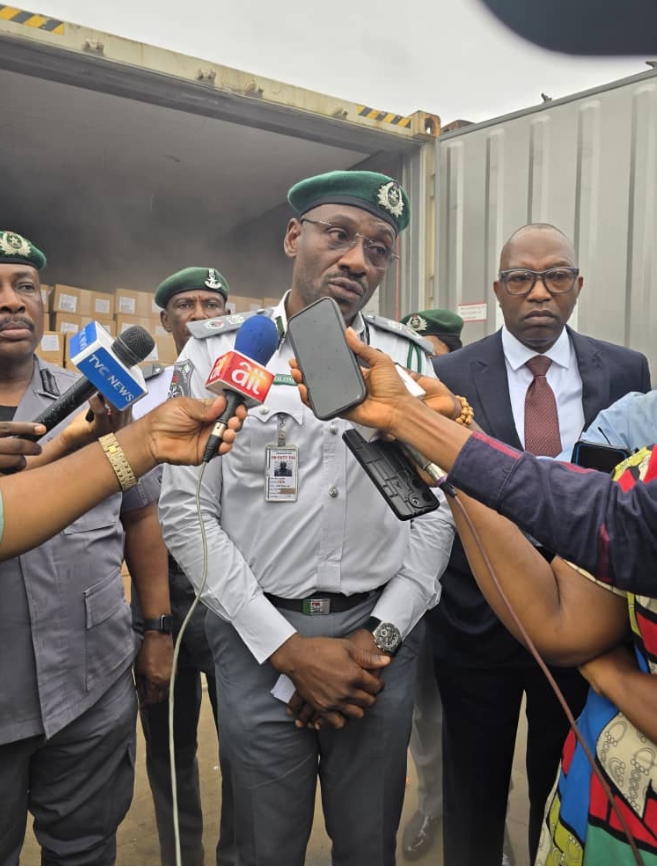
HALF YEAR, 2024: Apapa Customs Nets ₦1.024 Trillion, Records 143% Increase.

MAN, ORON: It’s Encomiums Galore From International Seabed Authority (ISA).

Lilypond Export Command Is Meeting Expectations, Handles 70% of Nigeria’s Total Tonnage of Export Cargo, says CAC Odusanya.

JANUARY-MAY REPORT: Seme Customs Hits N2.6bn, Facilitates ₦35.1bn Exports.

Mama Theresa Enisuoh Due For Burial April 27

-
 Personality Interviews2 weeks ago
”NATIONAL SINGLE WINDOW WILL CUT CARGO CLEARANCE TIME BY 75%,” NAGAFF President, Tochukwu Ezisi says.
-
 Maritime Agencies3 weeks ago
SEA EXPERIENCE: NSML Inducts 30 MAN Oron Cadets for On-board Training
-
 Maritime Agencies2 weeks ago
Customs Unveils Automation of Licenses and Permits, Seeks Full Cooperation from Stakeholders.
-
 Maritime Agencies2 weeks ago
Dedication To Service Earns NIWA’s Engr Sarat Braimah the Nelson Mandela Pan African Leadership Award.
-
 Maritime Agencies2 weeks ago
NATIONAL SECURITY: Tantita Security Donates Command Centre, Vehicles to Boost NSCDC Operations.
-
 Celebration6 days ago
HAPPY BIRTHDAY, DOUBLE CAPTAIN!
-
 Maritime Agencies2 weeks ago
SEME CUSTOMS HITS N3.4Bn IN FEBRUARY FOLLOWING A SURGE IN EXPORT OF AGRO PRODUCTS.
-
 Maritime Agencies1 week ago
NPA’s 2025 Operational Performance Report Validates FG’s Economic Diversification Initiatives.