
Maritime Agencies
PORT STATE CONTROL: Equatorial Guinea Joins Abuja MoU

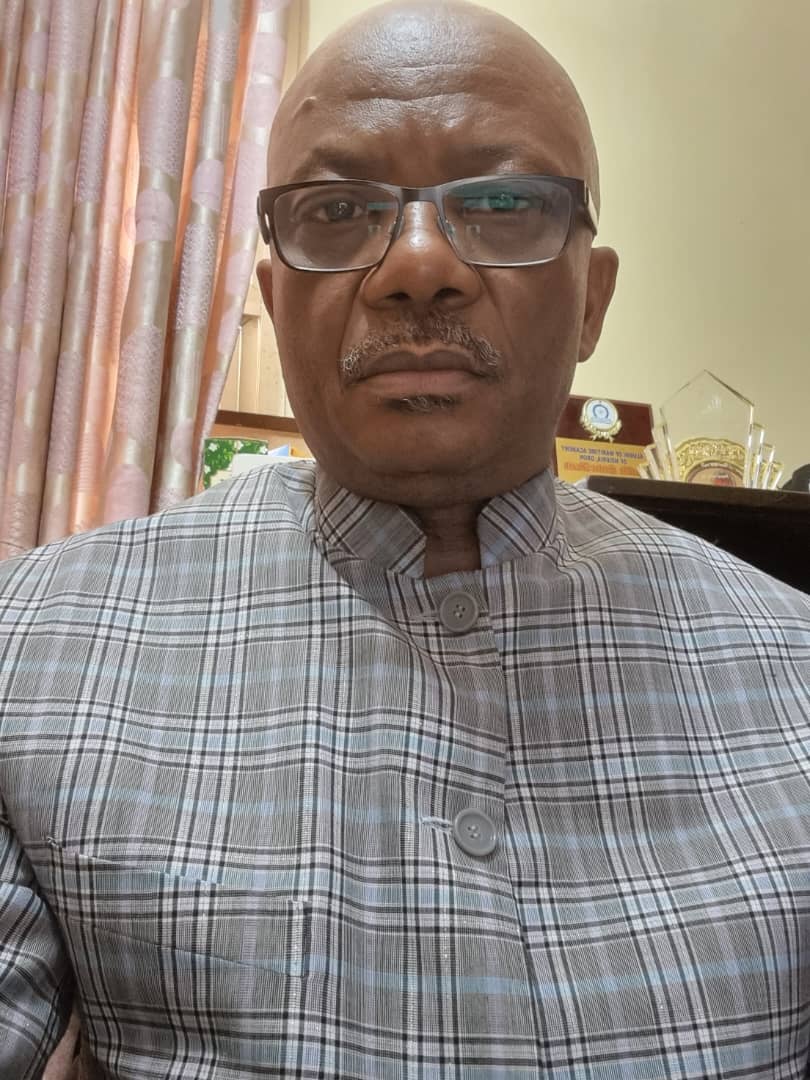
By Izuchukwu Ozoemena
November 23, 2023, Equatorial Guinea finally became a member of the Abuja Memorandum of Understanding on Port State Control in West and Central Africa, otherwise known as the Abuja MoU.
This makes the central African nation the 20th member-state of the group.
Secretary-General of the Abuja MoU, Capt Sunday Umoren disclosed this in Lagos while exchanging views with Falcon Watch Online.
“It means we have two countries in the region left now for all the countries to subscribe as full members. The outstanding countries are the Arab Republic of Mauritania and the Republic of Namibia. These are the countries that are yet to sign up,” the Abuja MoU boss said.
At the occasion, Capt Umoren explained, the Vice President and Minister of Transportation of Equatorial Guinea were present as witnesses.
“Also present were Nigeria’s Ambassador to Equatorial Guinea, the South African Ambassador and the Cameroonian Ambassador to Equatorial Guinea. They were in attendance to celebrate a wonderful day, a great celebration for Equatorial Guinea.”
On the significance of Equatorial Guinea joining the Abuja MoU, Capt who referred to it as a great day said it will be celebrated by the International Maritime Organization (IMO), other MoUs worldwide and the maritime world because with the addition, there is an increase in the number of countries whose ports are now part of the watch dog regarding the propagation and insistence on safety in navigation.
“The port state regime is actually a safety net such that no substandard ships can trade within the regions and around the world”.
“If in a region you have countries that are not full members or not acceding to become full members, it means those countries will not be conducting port state inspection of ships. Substandard ships can easily visit those ports and come out. What does that mean? It means a weak link.”
He stated that substandard ships trading could actually get involved in accidents and spillage and if they are carrying oil, the marine environment will be polluted.
“So, coming into the Abuja MoU means that we are tightening the noose around the region.”
He was optimistic that by the time the remaining two countries join, it means all countries in the West and Central African region have agreed and signed to monitor their waters and their countries to ensure that no substandard vessels are sailing within the system.
“So, everyone will be happy because the probability of substandard vessels slipping through will almost be nill. This means safer seas, safer world for all.”
He said his organization is still engaging the few countries left in the region.
“We are engaging them. We’re quite hopeful that by next year, we will have all the countries in the region subscribe and acceed to full membership of Abuja MoU.”
Port State Control is the inspection carried out on visiting foreign ships to verify their compliance with international instruments on safety, pollution prevention and seafarers’ working and living conditions. It is a means of enforcing compliance in cases where the owner and flag state have failed in their responsibility to implement or ensure compliance.
The Port State can require deficiencies to be put right and detain the ship for this purpose if necessary. It is therefore also a Port State’s defense against visiting substandard ships.
The Secretariat is established to develop a system of harmonized Port State Control Inspection Procedures for the region with the aim of eliminating substandard ships. In pursuit of a strategic direction and with consistent alignment with the context of the organization through a risk-based approach, the Abuja MoU Secretariat is committed to continuous improvement of its quality management system in line with the International Organization for Standardization requirements (ISO 9001:2015) and the IMO Resolution A.686 (17), 1991.
The Memorandum of Understanding on Port State Control for West and Central African Region, generally referred to as the Abuja MoU, is one of the nine regional MoUs established pursuant to the International Maritime Organization (IMO) Resolution A. 682 (17) of 1991. The Organization operates under a cooperative agreement with the IMO.
The Abuja MoU was established in Abuja, Nigeria, on October 22, 1999 as an inter-governmental organization comprising the Maritime Administrations of countries abutting the South Atlantic coast of Africa.
The regime covers 22 countries from Mauritania to South Africa.16 of these countries signed the MoU to establish the organization.
Countries that have completed the procedures and have become full members are Angola, Benin, Cameroon, Cape Verde, Congo Brazil, Cote D’Ivoire and Democratic Republic of Congo. Others are Gabon, The Gambia, Ghana, Guinea Bissau, Guinea- Conakry, Liberia and Nigeria.
Others are Sao Tome & Principe, Senegal, Sierra Leone, South Africa and Togo.





By Izuchukwu Ozoemena
The Nigerian Navy has warned that the unregulated deployment of unmanned vessels for maritime surveillance could pose serious security risks to the nation’s maritime domain. It has, therefore, called
for the development of an appropriate legal framework to regulate their use.
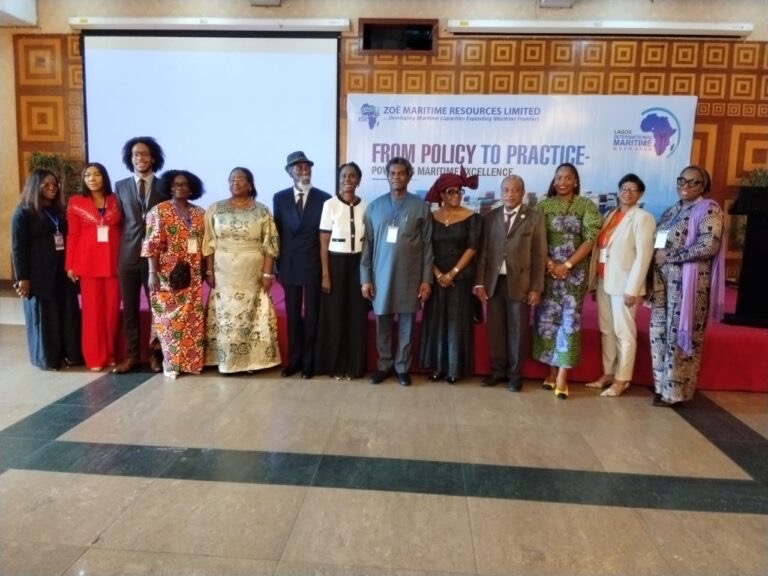
Rear Admiral Daniel Atapa of the Nigerian Navy Hydrographic Department made the call in Lagos while speaking on behalf of the Chief of the Naval Staff at the Lagos International Maritime Week (LIMWEEEK) 2026 hosted by Zoe Maritime Resources Ltd.
Rear Admiral Atapa said there was the need to harmonise the various maritime architectures under a single command to effectively curb the practice.
Even though each agency is at liberty to operate its own equipment and systems, Atapa noted, the issue of inter-agency rivalry and the harm it has brought to bear on the system often makes it difficult to harmonise the various maritime domain awareness assets for effective coordination and information-sharing.
“There are Maritime Domain Awareness assets with NIMASA, Navy, NPA and the rest. To the extent that there is no regulation or codified framework mandating their use or defining their modus operandi, each agency is at liberty to operate with what it has.
“Also, because of inter-agency rivalry which is silent and which we sometimes do not want to admit exists, it becomes difficult to harmonise these Maritime Domain Awareness assets. So, we continue to operate the way we do until there is a regulation that brings everybody together and says, ‘Come together and operate this way.’
“We still make do with what we have. But once there is a regulation, it will provide the framework for harmonising these assets and ensure better coordination among the agencies.
“On the presence of foreign vessels and navies in the Gulf of Benin, we need to understand that the Gulf is an open sea line of communication. Most of these foreign navies are from countries with significant shipping activities in the region.
“You cannot impose on any country that because our maritime domain is now safe; they should drive away their vessels. To the extent that they were there before the crisis, during the crisis and before the de-escalation, they still have the liberty to operate.
“We cannot tell them to leave the Gulf of Benin because that space is free and freedom of navigation is obtainable for everyone.
“On the unregulated use of unmanned vessels, as I recommended as part of my prescriptions for addressing the issue, there is currently no regulation, and so everybody operates and does what they deem appropriate.
“The implication is that, as long as there is no problem, everybody is fine. But once there is a problem, that will become the test case and demonstrate the need for regulation.”
Maritime Agencies
Nigeria Collaborates with Benin Republic to Launch Modernised Joint Customs Border Post.
By Izuchukwu Ozoemena
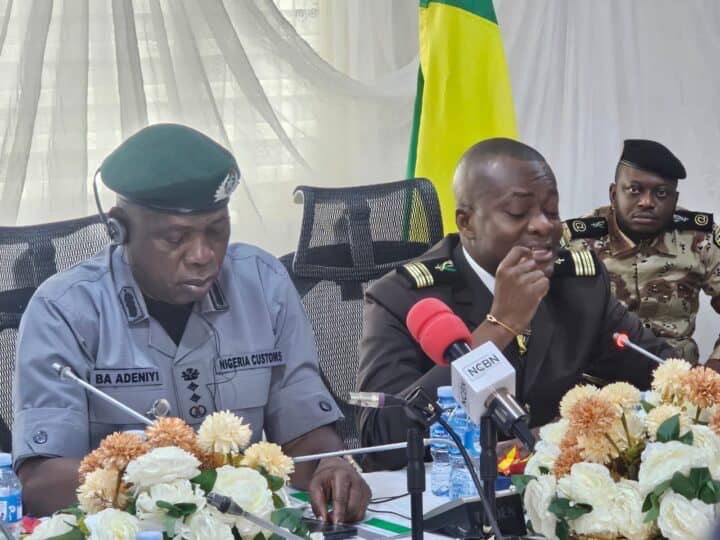
To deepen customs inter-connectivity, joint risk management, coordinated enforcement, secure infrastructure, harmonized procedures and accountable joint governance, the Nigeria Customs Service (NCS), in collaboration with the Benin Republic Customs has launched the transformation of the Seme-Krake Border Post into a modern technology-driven joint border post connecting Nigeria and the Republic of Benin.
Performing the historic transformation at the Seme-Krake Border Command, Friday, Comptroller -General of Customs, Dr Bashir Adewale Adeniyi said without real time interconnectivity between the customs administration of Nigeria and Benin, the facility being inaugurated cannot achieve the purpose intended.
He noted that while physical infrastructure such as lanes, parking lots, offices, weigh bridge and scanner housing have long been completed, integrating them into the customs systems with the aid of technology need to be in place.
”Without inter-connectivity, this is not a joint border post. It is a border post sharing a car park at best,” Adeniyi stated.
Key features of the modernisation arrangement include
real-time data exchange where declarations lodged on one side will be visible on the other, enabling seamless transit tracking and shared enforcement alerts.
Another is trader support. This is a dedicated facility for women traders which will simplify procedures for small consignments, provide multilingual information and reduce harassment and extortion.
Enhanced security enables the restoration of scanning capability, strengthened access control, surveillance and lighting.
Joint governance deals with harmonised bilingual SOPs. This covers cargo, passengers, inspection and incident escalation alongside a standing Nigeria–Benin enforcement and intelligence mechanism.
Speaking at the event, Benin Customs Director-General, Col. Raouf Malehossou Aboudou described the initiative as commendable as it is critical and well -intentioned in efforts to recalibrate joint operations to facilitate trans-border trade in the current era.
The Seme Customs Area Controller, Comptroller Abdullahi Shuaibu Kaila, also pledged the Command’s commitment to supporting seamless trade across the corridor.
The launch event featured a facility inspection, demonstration of the border modernization solution and a symbolic football match between the Seme Area Command team and Badagry United Football Club. The Command carried the day with a 2–0 victory against their opponents.
Maritime Agencies
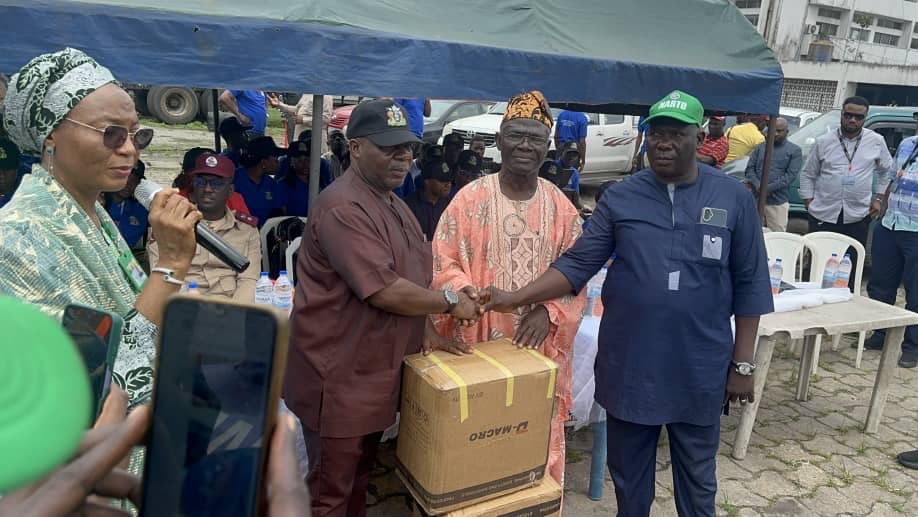
NPA Emphasizes the Importance of Truck Drivers, Donates 400 Safety Vests to AMATO and NURTW.
By Izuchukwu Ozoemena
No matter the number of vessels that visit the port, it is the responsibility of truck drivers to move whatever cargos they carry into or out of the port and here lies their immense importance.
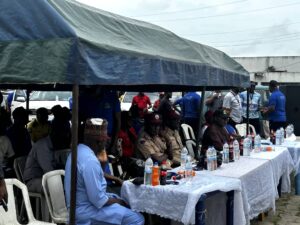
Mr Adebo Lawal, Port Manager, Lagos Port Complex (LPC), stated this in Lagos, Wednesday, while welcoming truck owners and drivers to a sensitization programme on the importance of minimum safety standards held at the Lilypond Export Complex, Apapa.
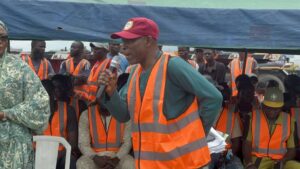
”To make you know how important you are in the system,” the Port Manager said, no matter the number of vessels that call at the port, truck drivers must move the goods they carry out or in. Here lies your importance.”
He deplore drivers who often leave their trucks on the road and disappear.
”Please know that you are a reliable part of the ecosystem and that’s the reason the NPA Managing Director approved the sensitization programme,” Adebo Lawal announced.
In his address, Engr Muktar Abdullahi of the Safety Department said the meeting was on the safety of everyone who interfaces with the ports. He noted that accidents do occur and that is reason NPA management makes reservations for minimum cases that enable accidents so that everyone can strive to avoid these to remain safe.
”Tyre can burst and a truck can overturn. If there is little fire in the truck it can cause a disaster even as defective trucks can lead to accident.”
He dwelt on the need to ensure an efficient lighting system as bad headlights can lead to a crash especially at night.
”Ensure your chassis do not rust because you carry containers and other heavy cargo,” he advised the truck drivers.
The truck brake, he explained, must always be active while brake fluid must be promptly replaced when due. He advised on the use of trafficators, advising they must be used at all times to notify other drivers on the direction of movement.
Before embarking on any trip, Engr Abdullah counselled, tyres must be checked and any defects corrected. He warned drivers to keep off any form of distraction and avoid excessive speed on the road at all times.
For the truck owner, he strongly recommended putting in place preventive measures against decay of motor parts while repairs must be prompt to ensure the truck remains safe and sound.
Licences, stickers and other vehicle documents must be up-to-date while efforts must be made to get these renewed when necessary.
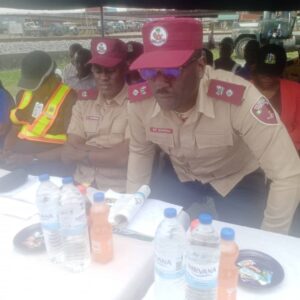
Addressing the drivers, Mrs Olanipekun, a staff of the Lagos Port Complex, enumerated important healthy tips, explaining that it is a necessary guide for all drivers and all other persons. She urged drivers to resist the urge to consume anything that will enhance their alertness and advised that they sleep or rest when nature calls.
Mrs Olanipekun pointed out the negative economic effects of the driver’s misconduct. This includes cargo loss, physical damages or death arising from accidents occasioned by carelessness on the part of the driver or any other person involved in the value chain.
”Nature cannot be cheated,” she stated. When you feel tired, is it to go and take enhancers? No! ”
Speaking from the viewpoint of road usage, Mr Oyediji of the Federal Road Safety Commission (FRSC) enumerated the main causes of road crashes which truck drivers must guard against, explaining that these relate more with the human factor.
Most times, truck drivers become over-confident to the point of refusing to latch their containers as expected. Most drivers over-speed and allow avoidable distractions to get the better part of them. Most of them drive under the influence of drugs and illicit drinks.
He advised them to renew their licenses when necessary. They should not drink and drive. They must consider other road users and be on the correct lane to allow other vehicles access.
From the Lagos State Transport Management Agency (LASTMA) came Mr Olalekan Bakare Oki who hailed the NPA for organizing the sensitization programme.
He explained that the truck owner, driver, law enforcement and the NPA each has a role to play to achieve minimum safety standards (MSS). The basis for MSS, he explained, is to reduce frequent breakdown on the road. LASTMA, he stated , has a free short code 3367 to contact if there is any issue with her officers and how they operate. This is to ensure free movement of trucks in the Lagos area.
In his intervention, Chief Remi Ogungbemi, Chairman , Association of Maritime Truck Owners (AMATO) paid special tribute to the LPC Port Manager whose tenure has signposted special regard for the welfare of truckers and drivers. He advised that since safety is the responsibility of everyone, all must cherish the importance. He stated that truck owners are working hard to bring professionalism in the sector and called on the NPA to consider the plight of drivers considering the harsh working environment.
”Let’s change the strategy and see the drivers as friends. Let the agencies not be seen by them as enemies working to undo them.”
Speaking along same line, Adesina Abimbola, AMATO Technical Director added that before long, drunk drivers would have their licenses revoked, adding that those in the habit should make adjustments. Truck owners should also be safety conscious and put their trucks in good condition.
On his part, Engr Ikpe, NPA’ s General Manager, Safety, who described the LPC Port Manager as a safety man enjoined the drivers to know that NPA Management loves them. Safety is a collective responsibility, he argued.
”We want you to stay safe; we’re interested in your safety.”
The drivers who turned up in their numbers described the sensitization programme as a parental engagement they cherish. They pleaded with enforcement organs to minimize the stress truck drivers are subjected to. They also requested for parking lots for relaxation whenever they are stressed.
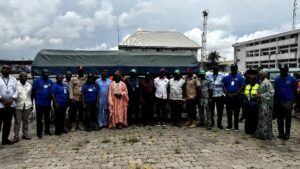
Apart from AMATO, truck drivers from the National Union of Road Transport Workers (NURTW) also graced the occasion.
The LPC Port Manager, Mr Adebo Lawal, later presented 200 reflective jackets to AMATO and NURTW respectively.


Unregulated Deployment of Unmanned Vessels Threatens Maritime Security — Navy.

Nigeria Collaborates with Benin Republic to Launch Modernised Joint Customs Border Post.

NPA Emphasizes the Importance of Truck Drivers, Donates 400 Safety Vests to AMATO and NURTW.

MAMAL 2026: FG Targets Globally Competitive Ports As Tantita Urges a ‘Look Beyond Lagos’ in Port Development.

MAMAL 2026: Stakeholders Recommend End -To-End Modernization of Nigeria’s Port System To Achieve Competitiveness.

MAN, Oron Commends MAMAL 2026, Urges Efficient, Competitive and Globally- Respected Maritime Sector.

LIMWEEK 2026: Measurable Outcomes Must Guide Policies in Nigeria’s Marine and Blue Economy.

CUSTOMS’ ZONE ‘A’ SPORTS EVENT: CGC Adeniyi Highlights Need for Discipline, Teamwork in Customs Operations.

Parts Central Ltd Set To Turn Waterway Waste into Wealth, says Onifade.

Oyetola Transfers Inland Dry Ports to NPA, Sets Up Committee for NSC–NPERA Transition.

Zoe Maritime Resources Hosts Lagos International Maritime Week (LIMWEEK), 2026.

FRESH ARMS IMPORTATION : Customs Hits Criminal Networks Hard, Intercepts 204 Firearms Routed from Turkey.

NAGAFF Suspends Planned Strike As NPA, Maritime Police, DSS Resolve To End Container Blockage.

CVFF: Cargo Availability, Trade Contracts Should Determine Ship Acquisition.

MARAN to Honour NAGAFF President, High Chief Tochukwu Ezisi as Patron.

Apapa Customs in Historic Revenue Boost, Nets N28 Billion In One Day.

ABUJA MoU: WE FUNCTION BEHIND A MASK, says Capt Umoren

1. EXECUTIVE PLATFORM. AMES 2024: TIME TO CHANGE GOVERNMENT ATTITUDE TOWARDS SHIPPING DEVELOPMENT IS NOW, AMES President Charges FG.

2023 ELECTIONS:CILT Hosts Seminar on Logistics & Electoral Process

B’ODOGWU TRADE PORTAL: Customs Consolidates, Pilots Form ‘M’ Processing.

APFFLON Seeks Immediate Reform of CRFFN, Replacement of Registrar.
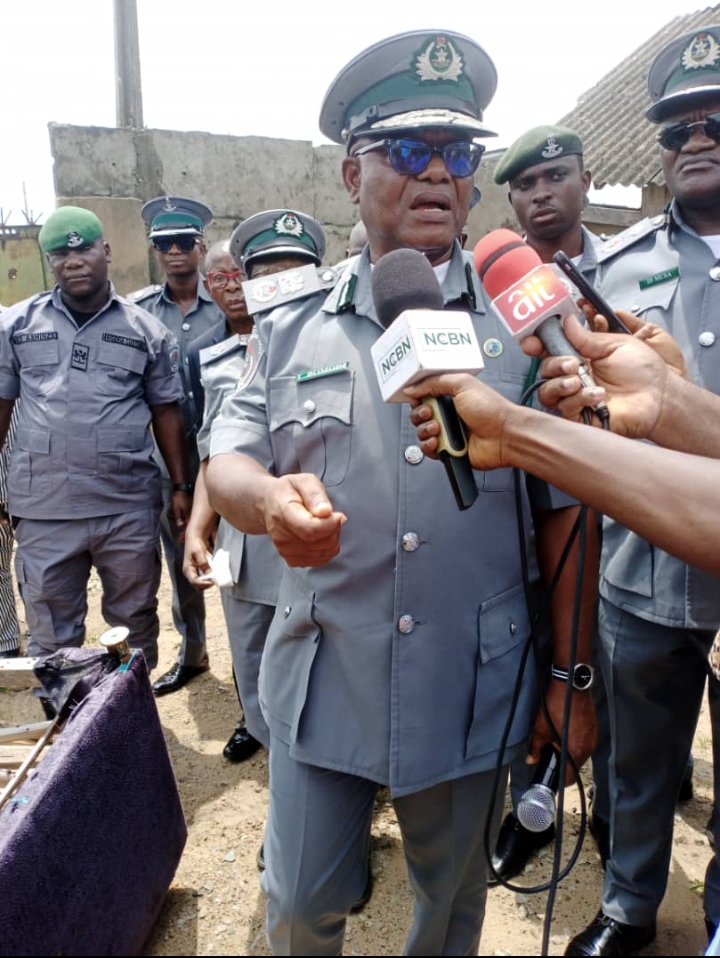
JANUARY-MAY REPORT: Seme Customs Hits N2.6bn, Facilitates ₦35.1bn Exports.
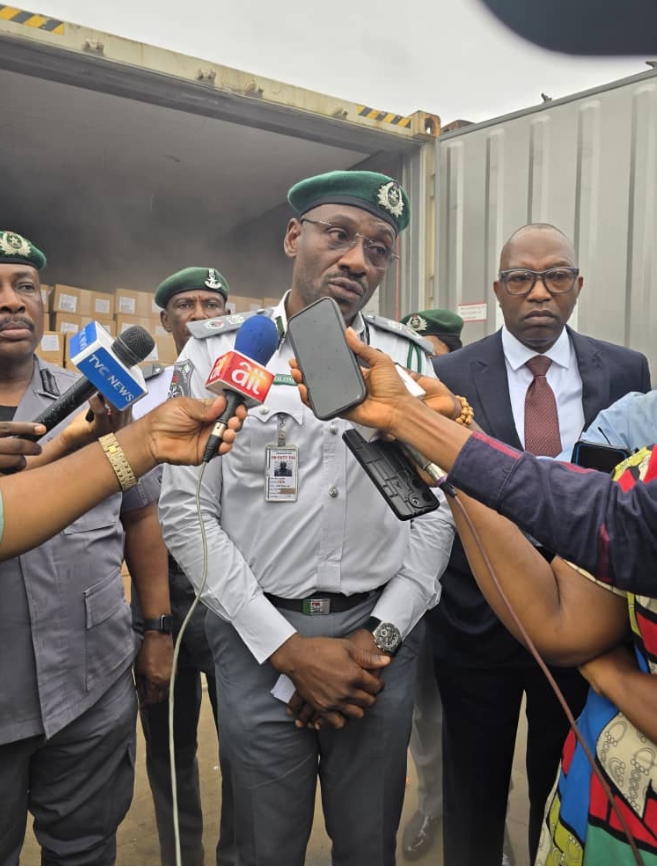
HALF YEAR, 2024: Apapa Customs Nets ₦1.024 Trillion, Records 143% Increase.

OMIS AWARDS, 2022: Greg Ogbeifun, Industry Gurus For Special Recognition.

B’Odogwu: Apapa Customs Collects ₦161b in 3 Weeks, Assures of Improvements .

PHOTO NEWS: Maritime Capacity Development

FG Set To Re-establish National Shipping Line, To Take Advantage of $10 bn Annual Ship Charter Market.
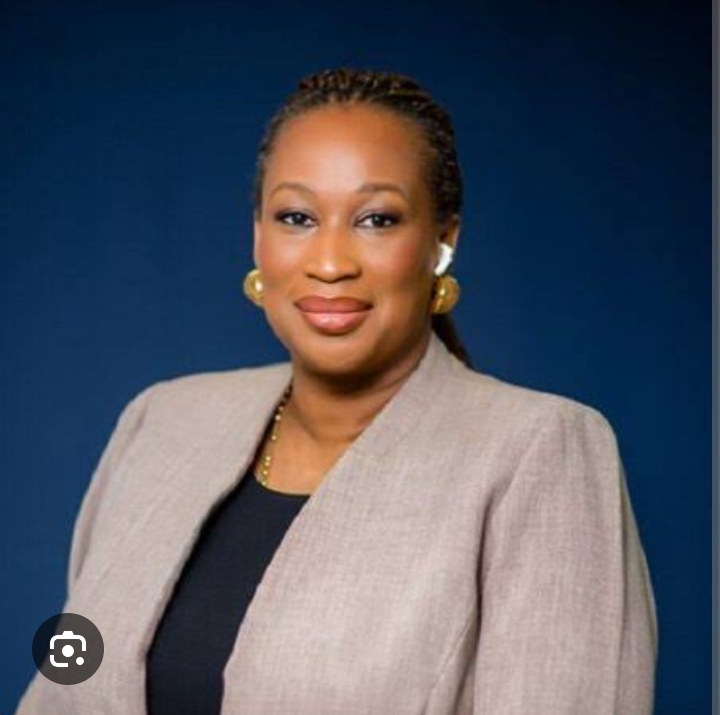
Adesuwa Ladoja Becomes MD/CEO, Lagos Free Zone.

Photo News: Salah Celebration
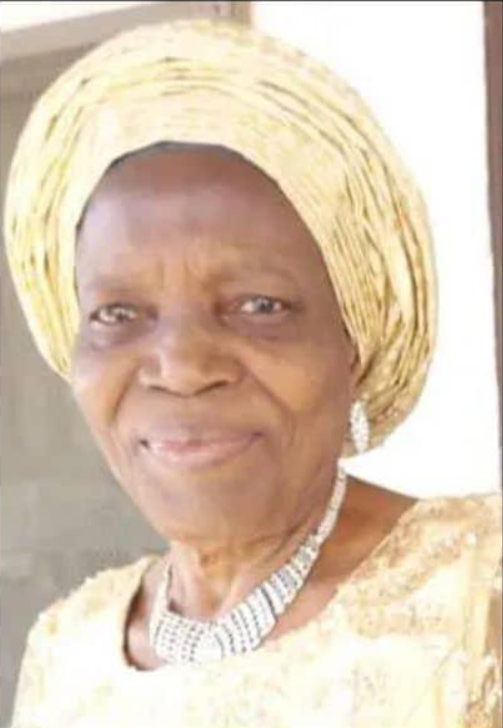
Mama Theresa Enisuoh Due For Burial April 27

Sylvanus Ekpo, ex-Editor, Shipping World Magazine, loses Mum

MAN, ORON: It’s Encomiums Galore From International Seabed Authority (ISA).

-
 Maritime Agencies3 weeks ago
CVFF: Cargo Availability, Trade Contracts Should Determine Ship Acquisition.
-
 Maritime Agencies2 weeks ago
NAGAFF Suspends Planned Strike As NPA, Maritime Police, DSS Resolve To End Container Blockage.
-
 Maritime Agencies2 weeks ago
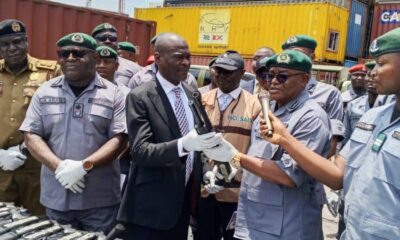
FRESH ARMS IMPORTATION : Customs Hits Criminal Networks Hard, Intercepts 204 Firearms Routed from Turkey.
-
 Maritime Agencies2 weeks ago
Zoe Maritime Resources Hosts Lagos International Maritime Week (LIMWEEK), 2026.
-
 Maritime Agencies1 week ago
Parts Central Ltd Set To Turn Waterway Waste into Wealth, says Onifade.
-
 Maritime Agencies2 weeks ago
Oyetola Transfers Inland Dry Ports to NPA, Sets Up Committee for NSC–NPERA Transition.
-
 Maritime Agencies1 week ago
CUSTOMS’ ZONE ‘A’ SPORTS EVENT: CGC Adeniyi Highlights Need for Discipline, Teamwork in Customs Operations.
-
 Maritime Agencies5 days ago
LIMWEEK 2026: Measurable Outcomes Must Guide Policies in Nigeria’s Marine and Blue Economy.