
Maritime Agencies
The Price Of The Byline: When Journalists Cannot Afford To Live


BY YUSUF BABALOLA
Last week, the Nigerian media industry was confronted with a painful reality that is becoming increasingly difficult to ignore: journalists who spend their lives reporting the crises, triumphs and struggles of society are themselves struggling to survive.
Within days, the industry lost two journalists to illness, while another was reported missing. Beyond the immediate grief, these incidents raise a much bigger and uncomfortable question: who takes care of the people who spend their lives taking care of society’s information needs?
Journalists are often at the forefront of campaigns for better healthcare, improved working conditions, higher wages and stronger social protection for workers across different sectors of the economy. They report the suffering of families who cannot afford medical treatment, expose gaps in the healthcare system and interrogate government policies that affect the vulnerable.
But behind the camera, microphone, notebook and computer screen is another vulnerable population – the journalist.
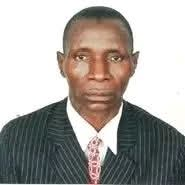
The recent death of Mr Ben Ameh, a gentle and unassuming journalist who had spent years contributing to the profession, has once again brought that vulnerability into sharp focus.
Ameh, according to information available to colleagues, underwent eye surgery but subsequently developed complications and died while recuperating. The circumstances surrounding his death deserve proper documentation and should not be reduced to speculation. But the tragedy has nevertheless generated a difficult conversation among colleagues about the ability of journalists to access timely and quality healthcare when illness strikes.
For many media workers, the problem is not necessarily the absence of medical expertise. It is often the inability to afford it.
And that distinction matters. A medical condition that might be treatable can become life-threatening when a patient delays treatment because of cost, lacks adequate insurance coverage, cannot afford a specialist or is forced to depend on contributions from friends and colleagues.
That is the frightening reality confronting many journalists today.
The story of Chuks Nwanne, who died on Saturday, October 3, 2026, is even more painful because colleagues and friends were already mobilising to save his life.
Nwanne was a course mate at Pan-Atlantic University. He fell ill, reportedly recovered at a point, but was subsequently scheduled for surgery abroad. The family and friends initially considered India but had to change the destination to Egypt because of the cost of treatment and other considerations.
Money was being raised. Friends, family members and acquaintances were contributing what they could. But time, as it often does in medical emergencies, was unforgiving.
Nwanne was scheduled to travel to Egypt for the surgery. He died in the early hours of the day he was expected to leave.
A message circulated among those close to him captured the heartbreak of the situation: he was supposed to be flown to Egypt for surgery, but died before the journey could begin.
The tragedy is not simply that a journalist died, it is that people were still trying to raise the resources needed to give him a chance to live.
His death raises a question that should concern the entire media industry: **how many journalists can actually afford a serious medical emergency without turning to public appeals, colleagues, friends and family?
This is where the conversation must move beyond condolences. For years, journalists have been expected to work under difficult conditions. They are expected to attend events, chase breaking news, make calls, investigate allegations, meet deadlines, produce online stories and still deliver compelling newspaper copy.
The newsroom does not stop because a journalist is sick. The deadline does not disappear because a reporter cannot afford medication. The story does not wait because a journalist’s child has school fees to pay.
And the salary does not necessarily reflect the demands of the job. This is the contradiction at the heart of Nigeria’s media industry.
Journalists routinely report on minimum wage negotiations, pension reforms, healthcare workers’ demands, bank workers’ conditions, industrial disputes and the welfare of public servants. Yet inside many newsrooms, the welfare question remains largely unresolved.
For instance, how many media organisations provide comprehensive health insurance for their journalists?
How many provide adequate life insurance?
How many pay living wages that can realistically cover food, accommodation, transportation, children’s education and healthcare?
How many provide meaningful allowances for journalists who spend their own money travelling to events, making telephone calls, moving around the city and gathering information?
And perhaps most painfully: how many journalists are still owed salaries while being expected to maintain the same level of professional commitment?
These are not merely labour questions, they are questions about the survival and sustainability of journalism itself.
A poorly paid journalist is not simply an unhappy employee. He or she is a professional operating under enormous financial pressure while carrying a public responsibility.
The consequences can be profound. A journalist who cannot pay rent is worried about eviction. A journalist whose children need school fees is under pressure.
A journalist battling illness without insurance is vulnerable. A journalist who spends a significant portion of his salary on transportation and data has less money available for food and healthcare.
And a journalist who is owed months of salary is effectively being asked to perform a critical public service without the economic foundation required to sustain a decent life.
This is why the deaths of journalists like Ameh and Nwanne should provoke more than social-media tributes. The media industry needs to examine its own house.
Government has a responsibility to create an environment in which workers can access affordable healthcare and decent social protection. But media owners and managers also have a responsibility to protect the people whose labour sustains their newspapers, television stations, radio stations and digital platforms.
The argument that the media business is difficult is understandable. Advertising revenues are under pressure. Production costs are rising. Digital disruption has transformed the traditional business model. Many organisations are struggling to remain profitable.
But journalists cannot be expected to carry the burden of an industry’s economic crisis indefinitely. There must be a point at which the survival of the business and the survival of its workers are treated as connected objectives.
A media organisation cannot claim to be defending workers’ rights in society while its own employees cannot afford basic healthcare. It cannot demand excellence from reporters who are struggling to feed their families.
It cannot insist on speed, exclusivity and productivity while ignoring the physical and psychological cost of maintaining such pressure.
And it cannot wait until a journalist dies before remembering that there was a human being behind the byline.
The situation also demands a conversation among journalists themselves. Professional associations, unions, media owners, editors and regulators need to examine whether there should be minimum welfare standards for journalists, including health insurance, pension coverage, life insurance, timely payment of salaries and appropriate field allowances.
Media houses may also need to explore collective health insurance arrangements that can provide affordable coverage for their workers and immediate families.
Because illness does not discriminate between senior editors and junior reporters. Neither does death.
Today, it is Ameh and Nwanne, Tomorrow, it could be another journalist whose name appears on the front page, followed by condolences from colleagues who had no idea how difficult the person’s final months or weeks had been.
The industry must therefore ask itself a painful question: are journalists becoming casualties of the profession they have spent their lives serving?
These men and women have contributed to the development of Nigeria’s economy by reporting on businesses, exposing corruption, tracking public expenditure, analysing government policies, reporting investment opportunities and giving citizens information necessary for democratic participation.
They have also helped strengthen Nigeria’s democracy by holding institutions and public officials to account.
Yet many of them remain economically vulnerable. They report the economy but cannot afford the economy they report about.
They investigate the cost of living but struggle with their own cost of living. They report hospitals but sometimes cannot afford hospital bills.
They report education but struggle to pay their children’s school fees, they report housing but cannot afford decent accommodation, they defend workers’ rights while their own welfare remains precarious.
That contradiction cannot continue indefinitely. The deaths of Ameh and Nwanne should therefore become more than two entries in the long list of journalists who have passed away, rather, they should become a moment of reflection for the Nigerian media industry.
The question should not only be what caused their deaths? We should also ask: could better welfare, timely medical intervention, health insurance or stronger financial protection have changed the outcome?
Those questions may not always have easy answers. And in the absence of medical evidence, nobody should speculate about the specific causes of individual deaths.
But the broader question is legitimate and urgent. Who cares for the journalists?
If journalism is essential to democracy, then the people who practise it deserve more than applause when they die. They deserve decent pay while they are alive.
They deserve healthcare before they fall critically ill. They deserve insurance before disaster strikes.
They deserve housing they can afford, education for their children and working conditions that recognise them as human beings rather than merely bylines, reporters’ numbers or content producers.
The Nigerian media industry has spent decades telling the stories of people who need help.
Perhaps it is time to tell its own story. Perhaps it is time for the industry to admit that behind the professionalism, resilience and commitment of Nigerian journalists is a growing welfare crisis.
And perhaps the most important tribute we can pay to colleagues who have died is not another condolence message.
It is to make sure that the next journalist who falls ill does not have to launch a public appeal before being able to afford treatment. Because journalists should not have to become fundraisers before they can become patients.
And they certainly should not have to become headlines before society remembers that they, too, are human beings.
YUSUF BABALOLA is a journalist, he writes from Lagos
Can be reached through babalolayusufabiola@gmail.com or 08061520468

Maritime Agencies
GRIDLOCK ON LEKKI PORT CORRIDOR: Omatseye Condemns Failure To Learn from the Apapa Experience.
By Izuchukwu Ozoemena
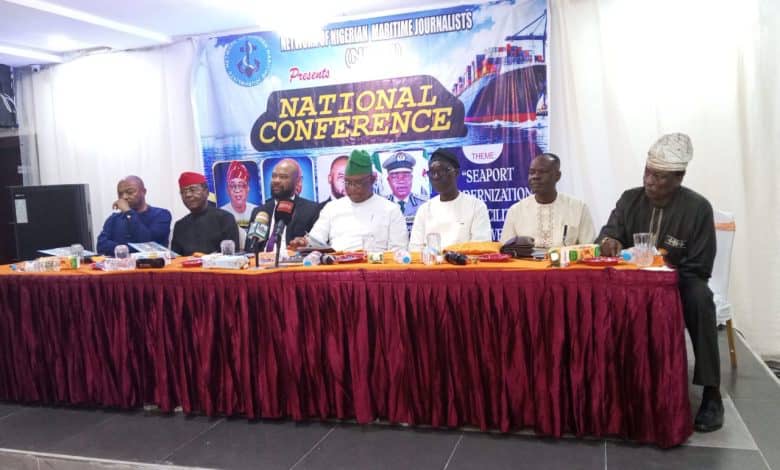
Former Director-General, Nigerian Maritime Administration and Safety Agency (NIMASA), Barr Temi Omatseye has strongly condemned government’s refusal to learn hard lessons from the Apapa ports gridlock experience while putting in place logistics infrastructure for the Lekki Deepsea Port. This inexcusable failure, he said, has resulted in a situation
the traffic chaos that once featured in Apapa is being replicated on the Lekki axis of Lagos. Allowing the inefficiencies of the old ports to plague cargo evacuation to and from the new Lekki Deep Seaport and other intended new ports, he warned, signposts avoidable regression instead of progress in line with international best practices.
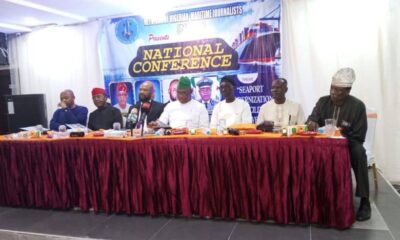
Omatseye stated this in Lagos, Friday, while speaking as chairman of the Unity Conference organised by the Network of Nigerian Maritime Media Journalists (NNMJ) at the Airport Hotel, Ikeja. The theme was ‘Seaport Modernization, Trade Facilitation and Revenue.’
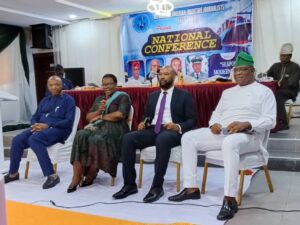
Deploring the traffic chaos currently inhibiting movement along the corridor and lack of multimodal means of cargo evacuation which government promised before the port became operational, he warned that this is not a sign of seriousness as things are bound to get worse.
“We did not fix Apapa. We simply moved its chaos to Lekki and our ports as they are today cannot carry a $1 trillion economy by 2030. We have successfully transferred our inefficiencies from Apapa, and relocated it to Lekki axis. The way we used to dodge traffic in Apapa is the way we are now dodging traffic in Lekki. A truck almost squeezed me day before yesterday,” he said.
He questioned why trucks and tankers cannot go round through Ogun State to access the Lekki Port instead of passing through the city centre, insisting that it exposed a monumental failure of planning on the part of the authorities because a deepsea port cannot be built without what he referred to as a deep evacuation plan.
“A $1.5 billion port without a proper bypass, without a dedicated truck route, without a railway, without a plan to keep heavy trucks out of residential and commercial Lekki”.
He referred to neighbouring Guinea’s Simandou iron ore development project and structures on ground for the evacuation of mineral exports as an example of how coordinated investments in natural resources, rail transportation and port infrastructure could enhance business while attracting international capital.
Omatseye recalled that the $17 billion Simandou iron ore development project was carried out by a consortium of Chinese and American firms (Rio Tinto) and this involved the development of a 650-kilometre railway line connecting iron ore deposits to a dedicated port. He said the rail line was carefully planned to avoid trucks, tankers and containers passing through a city centre or any congested area.
Nigeria, with 53 commercially viable solid minerals, he explained, needed similar integrated infrastructure planning to connect her natural resources, ports and similar establishments inclusive, to domestic and international markets.
According to him, such investments could create substantial economic opportunities if government and private investors see this as a priority while planning port, railway and industrial development as interconnected projects.
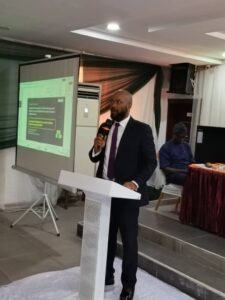
In his presentation on Seaport Modernization, Trade Facilitation and Revenue under President Tinubu’s administration, the event keynote speaker, Barr Emeka Akabogu, SAN,
examined the relationship between port performance and Nigeria’s broader economic ambitions.
In line with serious concerns earlier expressed by Omatseye, he took a swipe at the inability of the authorities to invest in intermodal infrastructure as promised in the build-up to the Lekki Port, doubting the ability of Nigeria’s maritime sector contributing her quota towards building a trillion economy when key seaports infrastructure are not in place.
“Nigeria’s ambition to build a $1 trillion economy will depend partly on the modernisation of its seaports, improved trade facilitation and stronger maritime infrastructure”, he said.
He highlighted the need to assess the country’s maritime capacity through indicators such as container traffic, cargo throughput, vessel calls, ship turnaround time, vessel occupancy, port connectivity, export performance and the capacity of Nigerian-registered vessels.
These indicators, he noted, are important in evaluating the efficiency and competitiveness of the country’s ports.
He said it is unacceptable that 90 per cent of cargo movement from Nigerian ports is by road as this places enormous pressure on port access roads, fuel congestion as well as undermining efficient cargo delivery
in a country where the Apapa gridlock was once an international embarrassment.
He called for stronger rail connectivity and the development of alternative cargo evacuation channels to create a more integrated logistics system involving rail, inland waterways, barges, coastal shipping, pipelines.
He warned that for Nigeria to realize her ambition of building a $1 trillion economy by 2030 from about $290 billion in 2025, she needs to grow by about 26.8 per cent annually to reach the target.
“Pause and think about that: 26.8% every year, for five years straight. No African economy of Nigeria’s size has ever done that consistently. And yet, that is what the target demands”.
”That growth,” he said, “must be carried out by the ports. But the ports are not growing fast enough. In fact, they are growing far too slowly.”
He identified a similar shortfall in general cargo. “Total throughput stood at about 130 million metric tonnes in 2025 and could rise to about 230 million tonnes by 2030 if current growth persisted, but the economy’s projected expansion would require between 330 million and 442 million tonnes.”
”Even if we keep growing at our current rate, we will still be more than 100 million tonnes short. Even our best-case scenario is a failure scenario, he warned.
By Izuchukwu Ozoemena
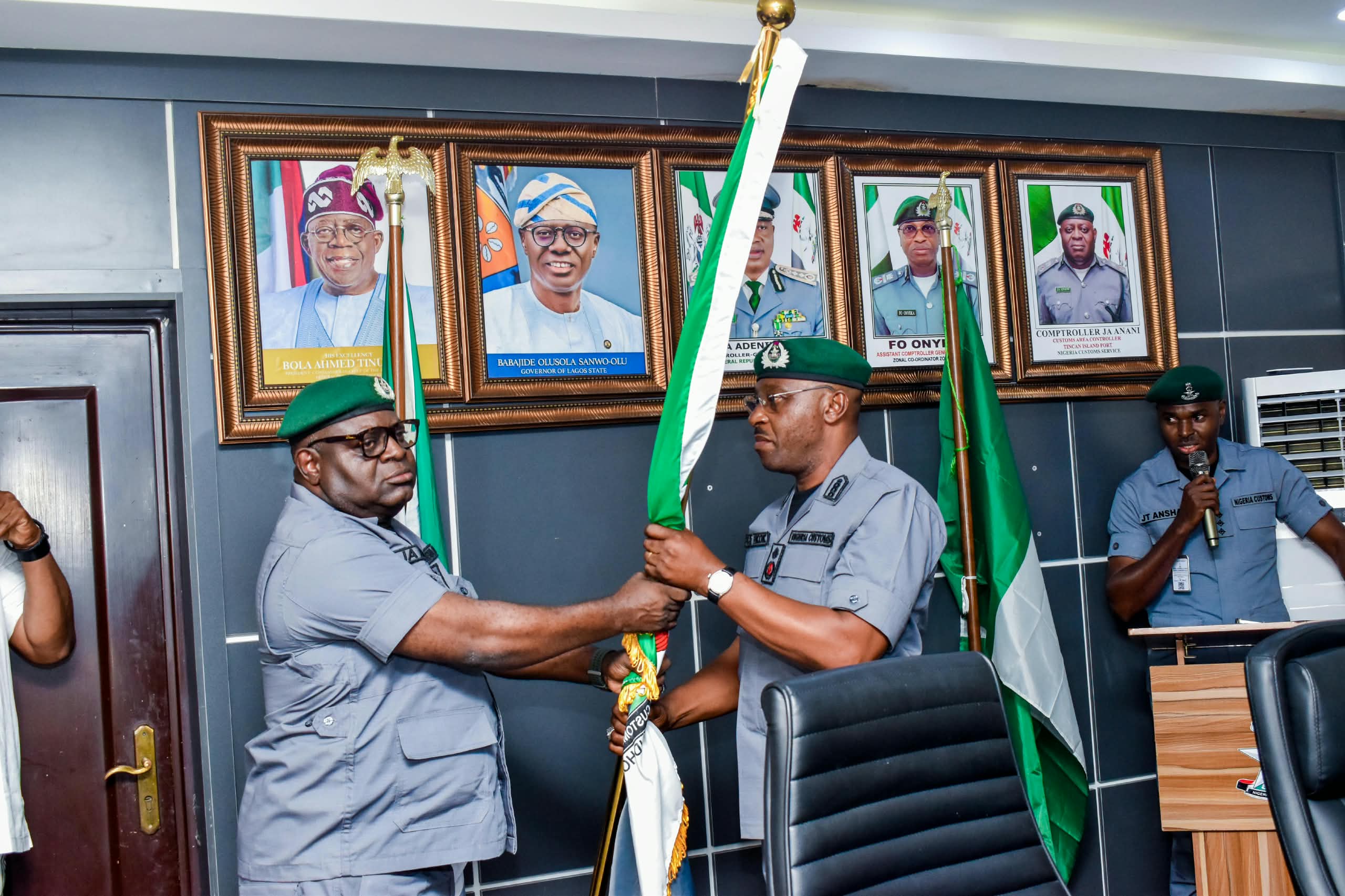
A change of leadership took place at the Tincan Command of the Nigeria Customs Service, Friday, when the outgoing Customs Area Controller, now-ACG Joe Anani handed over to Deputy Controller Emmanuel Ekok.
”Today marks another significant milestone in my career and service to the Nigeria Customs Service,” ACG Anani stated, “as I formally hand over the leadership and responsibilities of Tincan Island Port Command, following my elevation to the prestigious rank of Assistant Comptroller-General of Customs.”
He described his tenure as an opportunity to contribute meaningfully to the institutional mandate of the Nigeria Customs Service, particularly in the areas of revenue generation, trade facilitation, anti-smuggling operations, enforcement and national economic development.
Expressing profound appreciation to the Comptroller-General of Customs, Bashir Adewale Adeniyi, MFR, PhD, dsm, FNIPR, psc (+), the Management of the Service and the entire leadership for the opportunity to serve, he said his elevation to the rank of Assistant Comptroller-General is a further testament to the opportunities for growth and professional development within the Service.
On the achievements recorded in the Command while he was at the helm, he attributed these to teamwork, commitment, institutional support and the dedication of officers and men of the Command.
ACG Anani departing Tincan Island Port Customs Command
”Revenue generation remained a key priority, and from the moment I assumed duty, the Command pursued deliberate measures to boost collection through improved compliance, closer monitoring, more efficient operations and stronger stakeholder engagement. These efforts yielded appreciable growth in the Command’s revenue profile, reinforcing our commitment to the Nigeria Customs Service’s revenue mandate and to national economic development.
Arising from the foregoing, he explained, between May and October 2026, the Command generated a total revenue of ₦787,234,144,911.15.
”In anti-smuggling and enforcement, the Command recorded notable successes through the interception and seizure of illicit and prohibited items, including narcotics, dangerous drugs, arms and ammunition. Under my leadership, the Command intercepted about 603 shotguns and 14,862.75kg of Cannabis Indica, among other significant seizures. These operations reflect our resolve to protect society, safeguard public health, strengthen national security and prevent harmful goods from entering the country.”
Acting ACG Anani was full of commendation for officers whose vigilance, courage and professionalism made these achievements possible.
”Furthermore, the welfare and general well-being of officers and men remained an important consideration throughout my tenure. I recognize that the effectiveness of any Command depends not only on its operational capacity but also on the welfare, motivation and morale of its personnel. We therefore made efforts to encourage a supportive working environment, promote unity and strengthen the sense of belonging among officers and men. I firmly believe that investing in personnel welfare is an investment in institutional productivity and service delivery.
”These achievements, among others, are not personal accomplishments. They are the collective results of the commitment, sacrifices and contributions of the entire Command. I therefore dedicate every success recorded during my tenure to the officers and men who worked tirelessly to move the Command forward,” Anani said.
He appreciated all stakeholders and sister agencies, port and terminal operators, shipping companies, licensed customs agents and other critical partners for cooperating with and supporting the Command throughout his tenure.
He told his successor, Deputy Comptroller of Customs EA Ekok, that he was taking over a strategic Command with enormous responsibilities and opportunities.
”I encourage you to build on the existing achievements, strengthen operational efficiency, promote discipline and professionalism, deepen stakeholder engagement and sustain the drive towards improved revenue collection, effective trade facilitation and robust anti-smuggling operations.”
In his response, Acting Deputy Comptroller Emmanuel Ekok, while thanking the Customs Comptroller General, Dr Bashir Adewale Adeniyi MFR for finding him worthy of this national assignment, assured that he would justify the confidence reposed in him .
”It is with great humility, profound gratitude to Almighty God and a strong commitment to service that I present myself before you today on this important occasion of my assumption of duty as the new Area Controller of the Tin Can Island Port Area Command. My deepest appreciation goes to the Comptroller-General of the Nigeria Customs Service, who doubles as the Chairperson of the World Customs Organization Council, Bashir Adewale Adeniyi, Ph.D., MFR for finding me worthy of this appointment and entrusting me with the responsibility of leading this strategic gateway for national revenue generation and maritime trade. I do not take this confidence for granted and see it as a call to greater service and commitment to the Nation.
He assured the Comptroller-General that he would do his utmost to justify the confidence reposed in him.
”Our administration will firmly align with the strategic policy thrust of the CGC, which is centered on Consolidation, Collaboration and Innovation, alongside core focus areas in revenue optimization, trade facilitation, robust enforcement and strict discipline.
” I also wish to sincerely appreciate my predecessor, the outgoing Customs Area Controller, Comptroller Joseph Anani, now prepared to assume higher responsibilities as an Assistant Comptroller General of Customs, for the warm reception accorded me and the smooth transition process. I commend him and his management team for the solid foundation laid and impressive milestones recorded during his tenure. Sir, we shall consolidate on your achievements, sustain the positive momentum and ensure continued success.” he said
”To our distinguished stakeholders, including licensed customs agents, importers and terminal operators, I sincerely appreciate your presence.
DC Ekok assured the Command’s stakeholders of an open door and a transparent partnership.
”While we will provide an enabling environment and seamless cargo clearance procedures for compliant traders to reduce cargo dwell times, we will maintain zero tolerance for false declarations, duty evasion or any attempt to compromise national security. Violators will face the full weight of the law.
”Inter-agency collaboration remains a critical pillar of our operations. I look forward to deepening our partnerships with sister government agencies and port regulators through timely intelligence sharing to ensure comprehensive security.”
He reminded officers and men of the Command that discipline remains the bedrock of professional customs administration. While demanding absolute integrity, punctuality and professional excellence from every officer, he warned against indiscipline, insubordination, neglect of duty, abuse of office and corruption.
Maritime Agencies
Maritime Industry Bigwigs Pledge to Attend the Network of Nigerian Maritime Journalists (NNMJ) Unity Conference.

By Izuchukwu Ozoemena
As the Network of Nigeria Maritime Journalists (NNMJ) unveils “Seaport Modernisation, Trade Facilitation and Revenue” as the theme of her unification conference scheduled for November 13 in Lagos , several prominent personalities in Nigeria’s maritime industry and political landscape have indicated interest to attend.
These include the former Minister of Interior, Capt. Emmanuel Iheanacho; Senator Wasiu Eshilokun; former President of the National Association of Government Approved Freight Forwarders (NAGAFF), Dr. Eugene Nweke; and Dr. Kayode Farinto, former Acting National President of ANLCA.
Also participating are key policymakers, heads of maritime agencies, industry leaders, legal practitioners, freight forwarders and other critical stakeholders whose voices cannot be ignored while deliberating on the future of Nigeria’s maritime sector.
Former Director-General of the Nigerian Maritime Administration and Safety Agency (NIMASA), Barrister Temisan Omatseye, will chair the conference, while the Minister of Marine and Blue Economy, His Excellency Adegboyega Oyetola, will attend as Special Guest of Honour.
Renowned maritime lawyer, Barrister Emeka Akabogu, SAN, will deliver the keynote address at the event which takes place at Airport Hotel, Ikeja.
Discussions will particularly focus on ongoing reforms, infrastructure development and strategic interventions required to strengthen the maritime industry’s contribution to national economic growth.
According to Elder Dele Aderibigbe and Jerry Aguigbo, the NNMJ President and Public Relations Officer respectively, the conference will provide an avenue for constructive engagement among government representatives, maritime professionals and private-sector operators on practical measures to reposition Nigeria’s maritime industry for improved efficiency, productivity and global competitiveness.
Seaport modernisation, rehabilitation and renewal of critical port infrastructure, trade facilitation, ease of doing business, revenue optimisation and strategies for identifying and eliminating financial leakages across the maritime value chain will form key discussion points at the Unity Conference.
Participants will also examine opportunities for expanding Nigeria’s marine and blue economy, generating employment, strengthening maritime safety and security, and enhancing the competitiveness of the nation’s seaports.
The conference is expected to attract heads of government agencies, managing directors of shipping companies, terminal operators, freight forwarders, licensed customs agents and other influential stakeholders across the maritime industry.
The Unity Conference also avails stakeholders opportunity to evaluate existing government policies and reforms, identify implementation gaps and recommend sustainable solutions to improve port operations, facilitate legitimate trade, increase government revenue and unlock the vast economic potentials of Nigeria’s maritime sector.
The organizers further underscored the strategic importance of maritime journalism in promoting transparency and accountability, providing credible industry analysis and sustaining informed public discourse on government policies, regulatory interventions and reforms affecting the marine and blue economy.
The NNMJ leadership expressed confidence that the conference would strengthen relationships among industry stakeholders, encourage meaningful policy engagement and reinforce collective efforts towards building a more efficient, transparent and globally competitive maritime industry.


GRIDLOCK ON LEKKI PORT CORRIDOR: Omatseye Condemns Failure To Learn from the Apapa Experience.

LEADERSHIP CHANGE: ACG Anani Hands over to DC Ekok at Tincan Customs.

Maritime Industry Bigwigs Pledge to Attend the Network of Nigerian Maritime Journalists (NNMJ) Unity Conference.

AMANO Advocates Rapid Growth in Nigeria’s Maritime Sector, Holds National Convention

OUTSTANDING LEADERSHIP: NAWOJ Lagos Honours Omowole, NAN’s Managing Editor.

Customs FOU Zone ‘A’ Hits Smugglers Hard, Confiscates 23, 220 Matchettes, Other Contrabands Worth over N6.19bn.

Oyetola, Omatseye, Akabogu, Other Dignitaries To Attend Network of Nigerian Maritime Journalists Unity Conference in Lagos.

SCAN SUMMIT, 2026: Conversion to Earn Higher Interest Rates, the Bane of the CVFF, Omatseye says.

Dredgers’ Body Disowns Report Alleging Extortion Against Lagos Commissioner Alebiosu, Cardoso.

2026 World Maritime Day: Nigeria Subscribes to Safer Waterways and Excellence.

NAGAFF President, Chief Ezisi, Visits PTML Customs, Urges Deepened Customs-Freight Forwarders Partnership.

Ogun 1 Customs Hits Smugglers Hard 15 Days into New Leadership, Intercepts N3.15 bn Contrabands.

Lekki Port Customs Confiscates 400kg of Suspected Cannabis Sativa Worth over N2.26bn, Hands over To NDLEA.

MARAN Trains Members at Shipping Institute, Pledges Sustained Capacity Building.

Deputy Comptroller Nkiru Nwala Takes Over C’River, Calabar FTZ and Akwa Ibom Customs Command, Succeeds Comptroller Momodu Dauda.

The Price Of The Byline: When Journalists Cannot Afford To Live
JANUARY-MAY REPORT: Seme Customs Hits N2.6bn, Facilitates ₦35.1bn Exports.

2023 ELECTIONS:CILT Hosts Seminar on Logistics & Electoral Process
HALF YEAR, 2024: Apapa Customs Nets ₦1.024 Trillion, Records 143% Increase.

B’Odogwu: Apapa Customs Collects ₦161b in 3 Weeks, Assures of Improvements .

ABUJA MoU: WE FUNCTION BEHIND A MASK, says Capt Umoren

IMPRESSIVE REVENUE DRIVE: Tincan Customs Generates ₦154.3Bn In October.

1. EXECUTIVE PLATFORM. AMES 2024: TIME TO CHANGE GOVERNMENT ATTITUDE TOWARDS SHIPPING DEVELOPMENT IS NOW, AMES President Charges FG.

PTML Customs Hits Over N350Bn in 9 Months, Intercepts ₦200m Illicit Pharmaceuticals,

B’ODOGWU TRADE PORTAL: Customs Consolidates, Pilots Form ‘M’ Processing.

OMIS AWARDS, 2022: Greg Ogbeifun, Industry Gurus For Special Recognition.

APFFLON Seeks Immediate Reform of CRFFN, Replacement of Registrar.

Apapa Customs Hits Smugglers Hard After CGC’s Visit, Intercepts ₦3.398 Billion Codeine Syrup In 5 Days.

Information Minister Highlights President Tinubu’s Achievements, says 2025 Is A Year of Consolidation.
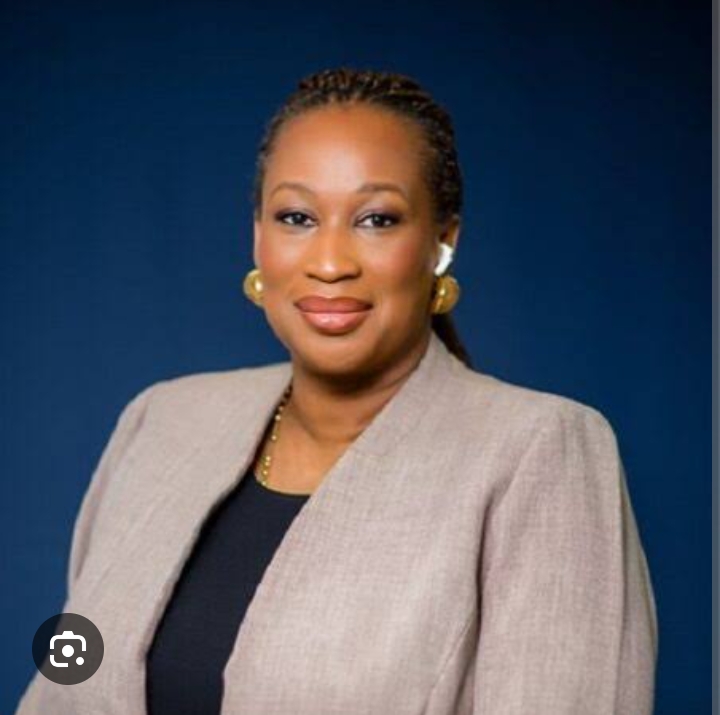
Adesuwa Ladoja Becomes MD/CEO, Lagos Free Zone.

PHOTO NEWS: Maritime Capacity Development

Photo News: Salah Celebration

-
 Maritime Agencies3 weeks ago
OUTSTANDING LEADERSHIP: NAWOJ Lagos Honours Omowole, NAN’s Managing Editor.
-
 Maritime Agencies3 weeks ago
Customs FOU Zone ‘A’ Hits Smugglers Hard, Confiscates 23, 220 Matchettes, Other Contrabands Worth over N6.19bn.
-
 Maritime Agencies3 weeks ago
Oyetola, Omatseye, Akabogu, Other Dignitaries To Attend Network of Nigerian Maritime Journalists Unity Conference in Lagos.
-
 Maritime Agencies2 weeks ago
AMANO Advocates Rapid Growth in Nigeria’s Maritime Sector, Holds National Convention
-
Maritime Agencies2 weeks ago
Maritime Industry Bigwigs Pledge to Attend the Network of Nigerian Maritime Journalists (NNMJ) Unity Conference.
-
 Maritime Agencies2 weeks ago
LEADERSHIP CHANGE: ACG Anani Hands over to DC Ekok at Tincan Customs.
-
 Maritime Agencies1 week ago
GRIDLOCK ON LEKKI PORT CORRIDOR: Omatseye Condemns Failure To Learn from the Apapa Experience.