
Maritime Agencies
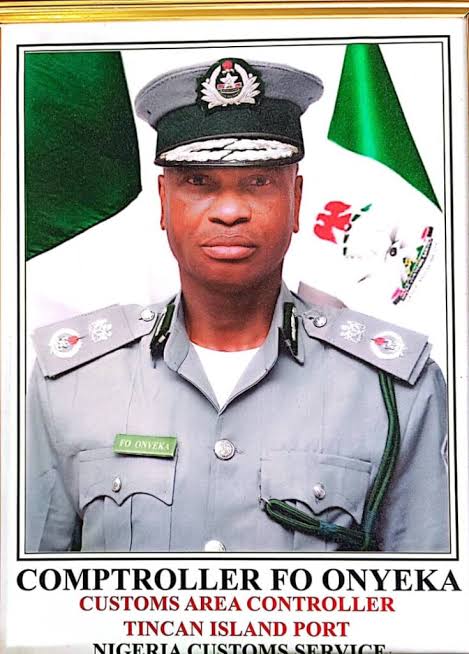
Sustained High Revenue: Tincan Customs Command Under Comptroller Onyeka A Test Case.

By Izuchukwu Ozoemena
On a particular Tuesday, late August, the Tincan Island Port Command of the Nigeria Customs Service generated a mouth-watering revenue of N16.4 billion. To industry observers, this is a monumental feat in revenue collection, the first of its kind in the annals of the Command.
For Comptroller Frank Onyeka who took over the headship of the Command about a year ago, this achievement in revenue generation on a particular day is significant . It is more than a numerical victory. This he attributed to “the game-changing role of technology and teamwork in modernising port operations.”
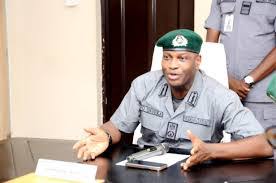
On the possibility of surpassing his predecessor’s attainment in this regard, Comptroller Onyeka quickly referred to God’s grace and the willingness of stakeholders who are showing increasing commitment to collaborate. This is even as many wonder if the bar could get higher for revenue generation, trade facilitation following the massive infrastructure restructuring at the Command under the erstwhile Customs Area Controller, now DCG Deraa Nnadi.
Particualar mention must be made of the “technology” being referred to here which is the Unified Customs Management System (UCMS) also known as B’Odogwu, a platform that has been quietly revolutionising how cargo is cleared at Nigeria’s busiest ports for maximum benefit.
A COMMAND ON THE RISE
Revenue generation has always been the barometer of Customs’ performance. Under Onyeka’s watch, Tincan Island Port Command has not just hit targets, it has smashed them.
In the first half of 2025, the Command raked in N747.08 billion, nearly 30 percent higher than the N575.36 billion it collected during the same period in 2024. In fact, by June, the Command had already achieved 98 percent of its expected target for half of the year.
Month after month, the figures told the same story of growth. January brought in N116.4 billion, February crossed N103 billion, and by April, collections peaked at N145 billion. Each number stood not just as a financial tally but as evidence of operational efficiency and an increasingly transparent revenue ecosystem.
Civil society networks and trade analysts are quick to applaud the surge. A coalition of civil society groups even issued a statement crediting the Customs leadership’s reforms for “closing leakages, boosting transparency and aligning with President Tinubu’s Renewed Hope Agenda.”
THE B’ODOGWU EFFECT
At the heart of this transformation lies B’Odogwu, the new digital backbone of port operations. Rolled out earlier this year, the system integrates all Customs processes into one seamless interface. For freight forwarders and licensed Customs agents, it has meant fewer bottlenecks, faster payments, and real-time clearance.
“Before now, delays and system downtime were routine frustrations. Today, B’Odogwu has given us speed, predictability, and accuracy,” Onyeka told journalists during one of his regular press briefings.
In just six months, more than 3,400 Single Goods Declarations (SGDs) were filed under the new system. To ensure a smooth transition, the Command organised a series of online and in-person trainings for stakeholders—from terminal operators to shipping companies.
The results are tangible. Importers now move cargo with fewer delays, and Customs can track shipments more accurately, reducing the scope for under-declaration or fraud.
GUARDING THE BORDERS
Comptroller Onyeka’s success story is not only about revenue. It is also about enforcement. In the first half of the year, Tin Can Command recorded several high-profile anti-smuggling breakthroughs.
Two containers were intercepted carrying illicit drugs worth more than N8 billion, including cannabis indica and crystal methamphetamine, collectively weighing over a metric tonne. The contraband was promptly handed over to the National Drug Law Enforcement Agency (NDLEA).
In another operation, a 40-foot container supposedly loaded with used cars concealed a cache of weapons: pistols, live ammunition, blank rounds, empty magazines, and handcuffs. The discovery, made possible through a mix of physical inspection and non-intrusive scanning, underscored the Command’s vigilance. The arms, along with the implicated consignee and declarant, were handed over to the Department of State Services (DSS).
“These seizures remind us that Customs is not just about trade and revenue. It is about security—about protecting the nation and its people from threats at the borders,” Onyeka stressed.
DIALOGUE AND TRUST
Central to Onyeka’s administration is stakeholder engagement. Recognising that ports function is an ecosystem, he has prioritised inclusive dialogue with terminal operators, shipping companies, freight forwarders and government agencies.
Regular interactive forum with captains of industry have created space for candid conversations on operational challenges and reforms. Feedback is actively sought, ensuring that policy changes are not imposed but co-created with those they affect.
The Command has also made media transparency a hallmark of its operations. Journalists are frequently briefed, and press forums organised, keeping the public informed about both successes and challenges. For port users long accustomed to opacity, this openness is a refreshing change.
LEADERSHIP AND INSPIRATION
While Comptroller Onyeka’s name has become synonymous with efficiency at Tin Can Command, he is quick to defer credit to his boss, Comptroller-General of Customs Bashir Adewale Adeniyi, who was recently elected Chairman of the World Customs Organisation Council. Describing the victory as “divine,” Onyeka praised Adeniyi’s leadership, reforms, and unwavering support, which he said provided the foundation for Tin Can’s successes.
He has also repeatedly reminded his officers that the Command’s achievements are a product of their professionalism and bravery. “Our strength lies in the competence of our men and women,” he said. “We must remain vigilant, committed, and innovative.”
LOOKING AHEAD
As Nigeria intensifies efforts to diversify its economy and strengthen non-oil revenue, the performance at Tincan Island Port offers a glimpse of what is possible. With technology like B’Odogwu redefining trade facilitation, robust enforcement keeping smugglers in check, and a leadership style that prizes collaboration, Tin Can is fast becoming a model for Customs operations nationwide.
Yet, for Onyeka, the numbers and headlines are not the end goal. “Revenue is important, but our real mandate is broader: to facilitate trade, safeguard our borders, and create a port environment that supports Nigeria’s economic growth,” he posited.
In a sector long dogged by inefficiency and opacity, that vision feels both ambitious and necessary. If recent achievements are anything to go by, Tin Can Island Customs Command may well be setting the pace for a bold new era in Nigeria’s maritime trade.

Maritime Agencies
LIMWEEK 2026: Measurable Outcomes Must Guide Policies in Nigeria’s Marine and Blue Economy.
By Izuchukwu Ozoemena
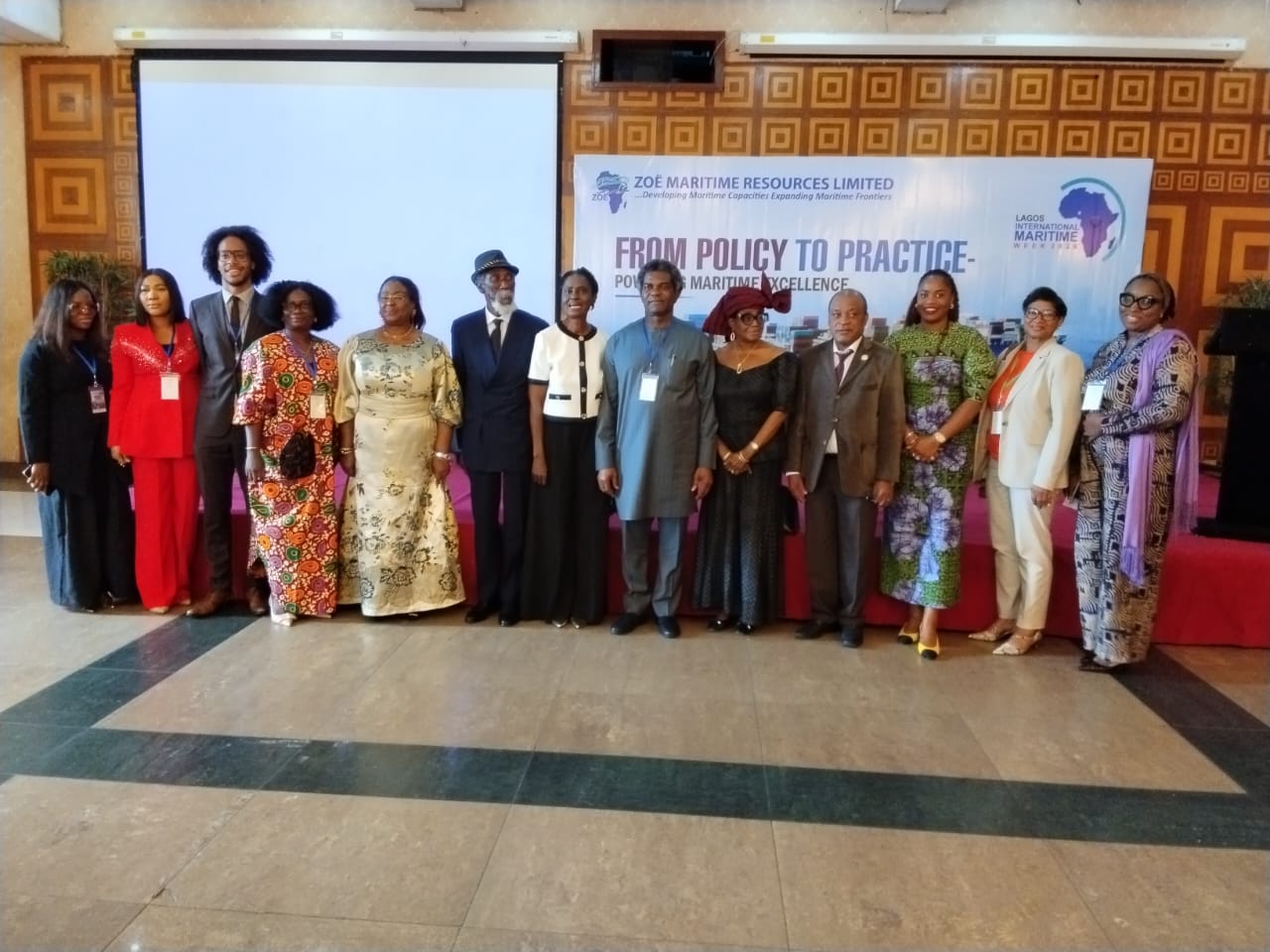
The Convener of the Lagos International Maritime Week (LIMWEEK) Conference , Barr Oritsematosan Edodo Emore has described the annual gathering as a veritable platform to assess the extent to which existing policies and programmes of government produce practical and measurable outcomes across the maritime, marine and blue economy value chains.
Edodo Emore who doubles as the Chair of Zoe Maritime Resources Ltd spoke in Lagos, Tuesday, while welcoming guests at the 2026 edition of the Lagos International Maritime Week (LIMWEEK) and the 11th International Maritime Business-to-Business Conference and Exhibition with the theme “From Policy To Practice: Powering Maritime Excellence” holding at the Oriental Hotel, Victoria Island.
Edodo-Emore who noted that maritime excellence cannot exist if the waterways suffer insecurity described maritime security as critical to cargo movement, preservation of national assets and a smooth functioning of the national economy.
The conference, she stated, would examine ways to develop sustainable African shipping environment, rescue insolvent operators and apply the UNCITRAL Model Law in African jurisdictions.
She acknowledged the attendance of representatives of the Nigerian Navy, Gulf of Guinea Commission, Maritime Organization of West and Central Africa, Gambian Maritime Authority and Damen Shipyard of South Africa, describing it as a way of strengthening cross-border and inter-regional collaboration .
Edodo-Emore also announced full scholarships for 12 students from Obafemi Awolowo University, University of Ilorin and Lagos State University, with beneficiaries to receive mentorship to facilitate their entry into the maritime industry.
In a lead paper presentation entitled “From Policy To Practice: Powering Maritime Excellence”, Oritsemeyiwa Eyesan, the Commission Chief Executive Officer, Nigerian Upstream Petroleum Regulatory Commission (NUPRC) said Nigeria must convert her vast offshore oil and gas assets into broader maritime investment for the purposes of job creation, enhancing industrial capacity and achieving a sustainable growth of her blue economy.
Speaking through the Executive Commissioner, Health, Safety, Environment and Community, Capt. John Tonlagha, the NUPRC boss said offshore petroleum development must be treated as a major component of Nigeria’s maritime economy.
Eyesan also called for stronger coordination among regulators, operators, investors, maritime agencies and coastal communities to close the gap between policy and implementation.
Eyesan said offshore petroleum projects generated opportunities across marine logistics, drilling, subsea engineering, fabrication, port services, offshore support vessels, maintenance, inspection, emergency response and environmental management.
“Offshore petroleum development is not separate from maritime development. It is a major maritime enterprise,” she said, stressing that the value chain runs from exploration through production, maintenance, decommissioning and environmental restoration.
She said the effectiveness of government policy should ultimately be measured by its implementation, even as the regulatory chain must progress from policy and legislation to standards, procedures, enforcement, monitoring and continuous improvement.
“A policy may be excellent on paper, but if it is not effectively implemented, it remains an aspiration,” Eyesan said.
She identified seven priorities for moving from policy to practice: predictability, domestic capability, maritime infrastructure, environmental and safety performance, human capital, partnership and continuous learning.
According to her, Nigeria had 131 offshore and deep offshore concessions as of January 1, 2026, representing 48.3 per cent of total concessions. The assets account for 61 per cent of annual oil production and hold 15.97 billion barrels of 2P oil and condensate reserves, or 43 per cent of national reserves, alongside 92.71 trillion cubic feet of gas reserves.
This underscores the strategic importance of offshore activities to Nigeria’s maritime economy and the need to ensure that more value is retained domestically through Nigerian businesses, professionals, technology and industrial capacity.
She urged government to regard ports, shore bases, fabrication yards, ship-repair facilities and logistics corridors as strategic infrastructure capable of serving both petroleum and wider maritime activities.
She also called for closer alignment between training institutions, regulators and industry to develop skills in offshore operations, marine engineering, digital systems, environmental management and decommissioning.
Maritime Agencies
CUSTOMS’ ZONE ‘A’ SPORTS EVENT: CGC Adeniyi Highlights Need for Discipline, Teamwork in Customs Operations.
By Izuchukwu Ozoemena
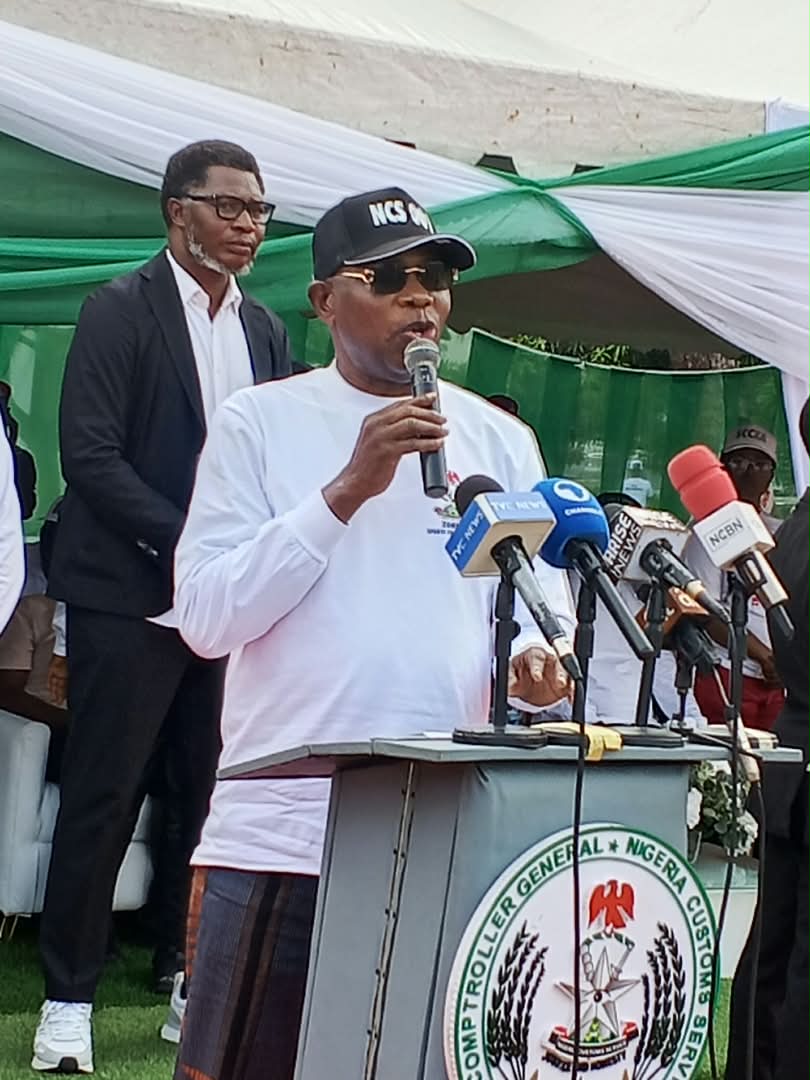
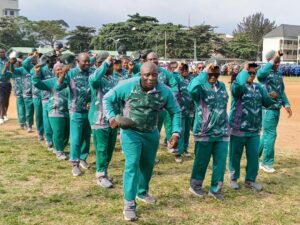
With a colourful display of sporting artistry, discipline and commitment, the Zone ‘A’ of the Nigeria Customs Service, Saturday, concluded the finals of her 2026 Inter-Command Games competition and award ceremonies.
Zone ‘A’ of the Service comprises 15 autonomous Commands . These are Apapa; Federal Operations Unit (FOU, Ikeja; Kirikiri Lighter Terminal; Lagos Free Trade Zone; Lilypond Export; Murtala Mohammed Airport Command and the Murtala Mohammed International Airport Command. Others are Lagos Industrial Command; Ogun 1, Idiroko Command; Ogun 2, Abeokuta; PTML Command; Seme; Tincan; Western Marine Command and the Customs Police.
In his opening remarks, Comptroller – General of the Service, Dr Bashir Adewale Adeniyi paid glowing tributes to the Zonal Coordinator, Zone A, Assistant Comptroller-General (ACG) Mohammed Babandede, the Chairman of the Organising Committee, Comptroller Chidi Nwokorie and his team for the colourful and impressive arrangement for the competition.
Commenting on the state of sports infrastructure of the Service generally, the CGC called for noticeable improvements across all formations to develop the sporting talents of officers as this plays a key role in ensuring fitness and chances of enhanced prospects of productivity by officers who use such facilities.
He described as unacceptable the state of sporting facilities at the Customs Training College, Ikeja, venue of the event, observing that it does not speak good of a Service that has made significant contributions to the growth of sports in Nigeria.
Stating that consolidation , collaboration and innovation remain the key fulcrum of his tenure, CGC Adeniyi commended sister security agencies that participated in the event, including the National Drug Law Enforcement Agency, NDLEA, describing their presence as a further effort to deepen the existing collaboration and partnership in the discharge of national security responsibilities.
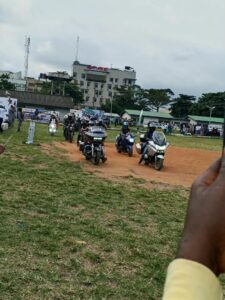
Adeniyi noted that Customs had produced athletes and teams that had excelled in various sporting competitions, recalling that at a time, the Service was the defending champion in male and female volleyball and had also performed strongly in basketball, football, athletics and beach volleyball. He said the service was already building an ultra-modern sporting facility in one of its barracks in Kano and promised that a befitting sports facility would be included in the proposed new location of the FOU and the Customs Training College Iperu, Ogun State.
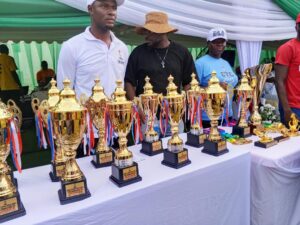
Beyond sports, the CG said the competition offered important lessons that Customs officers should apply to their professional duties, particularly discipline, teamwork and strategy. He stressed that just as success in sports required discipline and effective teamwork, Customs operations and revenue generation also required clear strategies and coordinated efforts.
He congratulated the winners and encouraged those who lost to prepare for future competitions, urging officers to maintain the spirit of sportsmanship and teamwork in the discharge of their responsibilities.
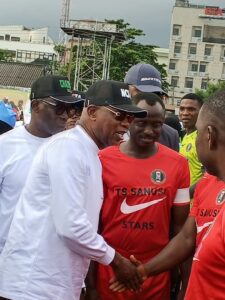
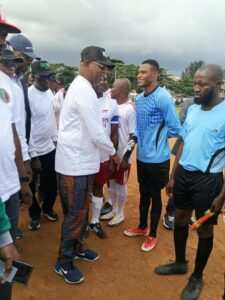
At the finals of the football competition, the Customs Police Command carried the day by defeating the MMIA side by a 1-0.
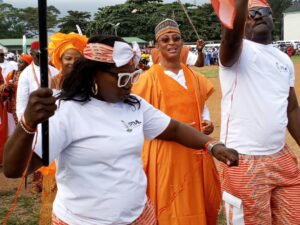
The event featured march past and parade by all Commands under Zone ‘A’ as well as beautiful display by Customs expert riders.
By Izuchukwu Ozoemena
The growing volume of plastic waste, water hyacinth and other marine litter clogging Nigeria’s inland waterways can be turned into economic wealth through recycling, biofuels and other value-added processes.
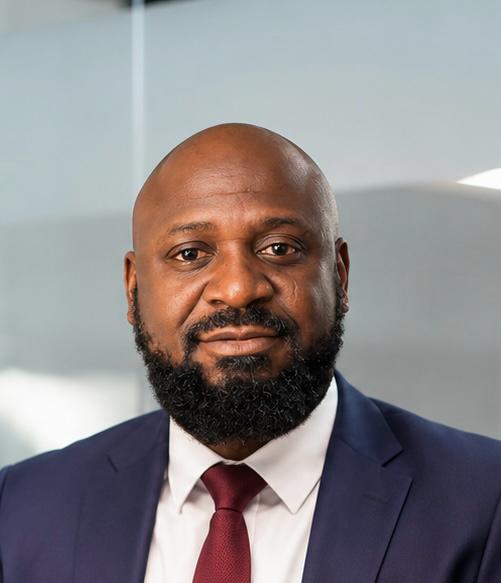
Mr Henry Olaoluwa Onifade, Managing Director, Parts Central Limited stated this in Lagos during activities marking his birthday. He also provided updates on his company’s recently launched nationwide waterways clean-up initiative in partnership with the National Inland Waterways Authority (NIWA).
“We don’t have waste anymore; waste is now wealth,” he declared. The collaboration with NIWA, Onifade stated, is an initiative designed not merely to remove waste from Nigeria’s waterways but to develop sustainable systems for converting recovered materials into useful products.
He explained that biodegradable materials collected during the clean-up would not simply be discarded. They could be processed for various applications, including biofuels and other products.
According to him, the company is also examining technologies for sorting and processing plastic waste for recycling, stressing that the objective is to create an economically viable circular economy around Nigeria’s waterways.
Onifade said the growing interest from government agencies, ministries, associations and other stakeholders in cleaner waterways was an indication that the initiative was addressing a critical national challenge.
He noted that the National Environmental Standards and Regulations Enforcement Agency (NESREA) was also engaging stakeholders on reducing plastic pollution in waterways.
“We are happy that we can even think of a possible pollution-free waterways and roll it out. Since we rolled it out, we’ve heard of different people, associations, organisations and states that are now talking about it, which is very good for us,” he said.
“Our goal is for us to have pollution-free waterways. By God’s grace, we will integrate everybody who has a very good and genuine mindset that pollution-free waterways is possible in Nigeria.”
Onifade disclosed that Parts Central was developing a technology-driven database covering ports, jetties, landing sites, riverbanks, dockyards and other locations connected to Nigeria’s inland waterways.
He said the database would enable the company and relevant government stakeholders to determine the volume of waste generated across different locations and deploy resources more effectively.
Every jetty and landing port would be assessed to determine whether appropriate waste-management facilities were available, while boats and other watercraft would also be incorporated into the data-gathering process.
“It’s not for us to have the data, because if you don’t have data of the people you want to cater for, you don’t know how to cater for them,” he declared.
Onifade explained that Parts Central had spent considerable time testing different technologies and devices capable of tackling waterway pollution, adding that the exercise would eventually incorporate manufacturers and other stakeholders within the plastics and waste-management value chain.
Parts Central, he disclosed, was preparing to extend the clean-up campaign beyond Lagos, with plans to flag off the waterways clean-up exercise in Port Harcourt and Imo State as part of its broader expansion across the country.
Onifade said the company was currently putting structures in place to ensure that the initiative was properly coordinated and supported by data before expanding to additional locations to create a nationwide system where waterways would not only be cleaner but would also become sources of employment, enterprise and wealth creation.
“Our goal is for us to have pollution-free waterways,” he reiterated, adding that the company would continue to work with government agencies, communities, private-sector operators and other stakeholders towards achieving the objective.
Onifade also defended his transition from partisan politics to business, saying the experience gained in politics had strengthened his understanding of public needs, motivating him to pursue practical solutions through enterprise.
“I took my own to the other side. I took it from politics to business,” he said.
He urged Nigerians to embrace the concept of converting environmental challenges into economic opportunities.
“No more waste on the waterways; we will now have wealth on the waterways.”


LIMWEEK 2026: Measurable Outcomes Must Guide Policies in Nigeria’s Marine and Blue Economy.

CUSTOMS’ ZONE ‘A’ SPORTS EVENT: CGC Adeniyi Highlights Need for Discipline, Teamwork in Customs Operations.

Parts Central Ltd Set To Turn Waterway Waste into Wealth, says Onifade.

Oyetola Transfers Inland Dry Ports to NPA, Sets Up Committee for NSC–NPERA Transition.

Zoe Maritime Resources Hosts Lagos International Maritime Week (LIMWEEK), 2026.

FRESH ARMS IMPORTATION : Customs Hits Criminal Networks Hard, Intercepts 204 Firearms Routed from Turkey.

NAGAFF Suspends Planned Strike As NPA, Maritime Police, DSS Resolve To End Container Blockage.

CVFF: Cargo Availability, Trade Contracts Should Determine Ship Acquisition.

MARAN to Honour NAGAFF President, High Chief Tochukwu Ezisi as Patron.

Apapa Customs in Historic Revenue Boost, Nets N28 Billion In One Day.

COUNTDOWN TO 2027 ELECTIONS: Customs Hands Over 399 Seized Rifles To NCCSALW .

Ex-NPA MD, Hadiza Bala Usman, Set To Deliver Keynote Address At MAMAL 2026.

NAGAFF Petitions IGP On Alleged Police Extortion, Harassment At Sea Ports.

NAGAFF Deplores Foreign Domination of Freight Forwarding, Tasks Indigenous Operators to Form Combines.

NIWA, Private Agency Target Pollution Elimination, Job Creation To Clean Lagos Waterways.

Seme Customs Arrests 2, Intercepts Explosives, Expired Noodles As Command’s Revenue Hits N19.8bn.

ABUJA MoU: WE FUNCTION BEHIND A MASK, says Capt Umoren

1. EXECUTIVE PLATFORM. AMES 2024: TIME TO CHANGE GOVERNMENT ATTITUDE TOWARDS SHIPPING DEVELOPMENT IS NOW, AMES President Charges FG.

2023 ELECTIONS:CILT Hosts Seminar on Logistics & Electoral Process

B’ODOGWU TRADE PORTAL: Customs Consolidates, Pilots Form ‘M’ Processing.

APFFLON Seeks Immediate Reform of CRFFN, Replacement of Registrar.
JANUARY-MAY REPORT: Seme Customs Hits N2.6bn, Facilitates ₦35.1bn Exports.
HALF YEAR, 2024: Apapa Customs Nets ₦1.024 Trillion, Records 143% Increase.

OMIS AWARDS, 2022: Greg Ogbeifun, Industry Gurus For Special Recognition.

B’Odogwu: Apapa Customs Collects ₦161b in 3 Weeks, Assures of Improvements .

PHOTO NEWS: Maritime Capacity Development

FG Set To Re-establish National Shipping Line, To Take Advantage of $10 bn Annual Ship Charter Market.

Photo News: Salah Celebration
Adesuwa Ladoja Becomes MD/CEO, Lagos Free Zone.
Mama Theresa Enisuoh Due For Burial April 27

Sylvanus Ekpo, ex-Editor, Shipping World Magazine, loses Mum

MAN, ORON: It’s Encomiums Galore From International Seabed Authority (ISA).

-
 Maritime Agencies3 weeks ago
COUNTDOWN TO 2027 ELECTIONS: Customs Hands Over 399 Seized Rifles To NCCSALW .
-
 Maritime Agencies2 weeks ago
CVFF: Cargo Availability, Trade Contracts Should Determine Ship Acquisition.
-
 Maritime Agencies3 weeks ago
Ex-NPA MD, Hadiza Bala Usman, Set To Deliver Keynote Address At MAMAL 2026.
-
 Maritime Agencies2 weeks ago
NAGAFF Suspends Planned Strike As NPA, Maritime Police, DSS Resolve To End Container Blockage.
-
 Maritime Agencies3 weeks ago
Apapa Customs in Historic Revenue Boost, Nets N28 Billion In One Day.
-
 Maritime Agencies3 weeks ago
MARAN to Honour NAGAFF President, High Chief Tochukwu Ezisi as Patron.
-
 Maritime Agencies1 week ago
FRESH ARMS IMPORTATION : Customs Hits Criminal Networks Hard, Intercepts 204 Firearms Routed from Turkey.
-
 Maritime Agencies1 week ago
Zoe Maritime Resources Hosts Lagos International Maritime Week (LIMWEEK), 2026.