
Maritime Agencies
NAGAFF Boss, Chief Afam Chukwuma, Hails B’Odogwu, Insists that 24-hour Cargo Clearance is Achievable .

By Izuchukwu Ozoemena
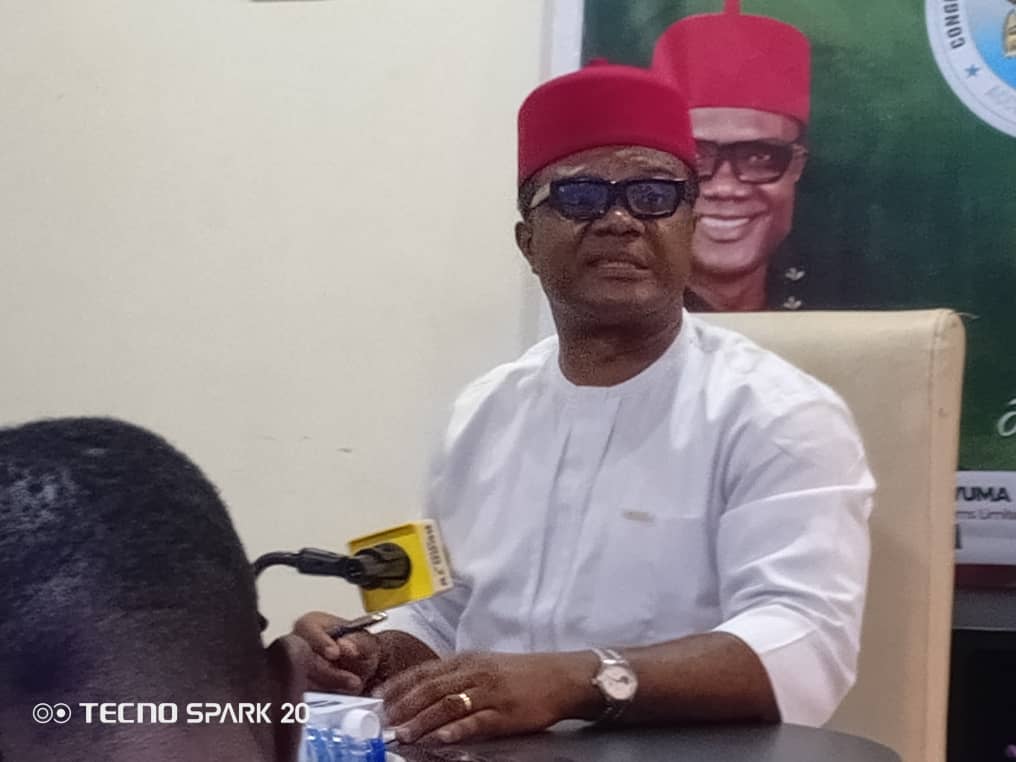
Notable freight forwarder, Chief Afam Chukwuma has said that 24 hours cargo clearance can be achieved in Nigerian ports.
”We need to reduce body contacts by going full automation. Achieving 24hours cargo clearance is not a rocket science. We need to make it work no matter what it takes”.
Chief Chukwuma, the Deputy National Chairman (Seaports) of the National Association of Government Approved Freight Forwarders (NAGAFF) stated this in Lagos,Thursday, when he featured as a special guest at a monthly Roundtable of the Congress of Nigerian Maritime Media Practitioners- CONMMEP .
CONMMEP Monthly Roundtable affords key maritime stakeholders opportunity to engage with maritime press to examine and analyze issues of relevance and come up with actionable measures government could consider as she strives to improve and make the system better for the good of all.
Chief Chukwuma, Chairman , ISCS Group and Managing Director/ CEO of International Supply Chain Systems Limited, a foremost International Trade Logistics and Freight Forwarding Company, called on freight forwarders to upgrade themselves via training and retraining, encouraging a 100% automated clearing system.
He said that full automation would make the system easier and more efficient against operational challenges and bottlenecks that add financial burdens on importers and their agents.
Analysing the challenges associated with B’Odogwu, the trade facilitation tool recently introduced by the Nigeria Customs Service, Chief Afam Chukwuma was optimistic that despite obvious hitches, it will work to the satisfaction of all.
He announced that in several fora, he had argued that the Nigeria Customs Service is the best government agency when it comes to electronics and digitalized processes which B’Odogwu incorporates.
”I say this because l interact with the Police; l also interact with the military. None of them has a seamless electronic process like Customs.”
“For instance, in Customs today, if anything is happening in any Command, the integration of its system is very effective that even the CGC can view what is happening in a terminal in Enugu without being to the terminal.
I was in Customs Headquarters sometime ago in Wuse before they moved to Maitama, it was there l saw a large screen in the office of the ACG Tariff and Trade and he was showing me the revenue graphs of all the commands in Nigeria as they stood in real time. As duties were being paid, the graphs were growing. Right in his office he knew in real time when the revenue was dropping and also when it was rising. Within the space of 45 minutes l spent in his office, l could see the rise in figures .That’s the level of efficiency of Customs electronic process and digitalization.”
“Again, if you make a wrong declaration at Tincan or any other Command, an officer in Abuja would alert the Service, and your job is referred. If there is an issue in Onne, or anywhere in the East, you can be in Murtala Muhammed International Airport and view what is happening in Port Harcourt, just like in the banking industry that you can walk into any branch and make your transaction irrespective of where you are.”
“Customs has been able to achieve that level of integration. Before now, entries were released manually. But now, for instance,B’Odogwu can operate at home because it is a continuation of the modernization policy of the Nigeria Customs Service. Don’t forget that Customs started from Asycuda to Asycuda ++ to NCIS 1 and 2, and now they are continuing into what they now call B’Odogwu. But the difference is that all those other platforms were foreign. But B’Odogwu as a platform is indigenous.”
“We witnessed the same thing when late Dikko was the CG of Customs. He moved us from Risk Assessment Report (RAR) to Pre- Arrival Assessment Report (PAAR). Then we had SGS, Cotecna and Global Scan. When Dikko said we were going indigenous, there was pannick, there was fear, people were skeptical about it. And today, PAAR has come to stay, and every one has moved on. The same thing the CGC, Wale Adeniyi has repeated.”
“Surely, it is not all rosy but all we owe them is patience and understanding. I have also told Customs point blank that we are going to support B’Odogwu to work, because we are working to grow the Nigerian economy. If any sector wants to indigenise its system, we need to give it maximum support. ”
B’Odogwu, Chief Adam argued, is a Nigerian thing, and as patriotic citizens, we have no choice than to support home- grown products. “Though there are challenges, delays and network issues, but we need to be patient. All those are teething problems which l believe will give way soon. It is technology, it is ICT; nobody can get it 100% right at a time. But with our patience and understanding, it will stabilize.”
“I believe that B’Odogwu will improve, and you can see that between three weeks ago and now, there has been a tremendous improvement. There was a time one week ran out, no network, but it is no longer the same story today. But as at the moment, it is not working well and Customs know that so well.
He explained that freight forwarders had reasons to demand that Customs should grant them some level of compensation since the initial teething problem were fraught with some cost effects.
”Demurrages are there. Shipping companies and terminal operators will always say that it is not their fault; they are even enjoying it because they are making fortune out of it. Though the CG has said that he had engaged the Executive Secretary of Shipper’s Council in that regard, we are yet to see the result. So while trying to improve on the platform, they should also look for a way to compensate freight forwarders and importers, even if it is by granting provisional release or whatever they can do to fast-track the process.”
He criticized the reintroduction of the Free-on- Board (FoB) process in importation. According to him, The notable freight forwarder Chief said he was still trying to know why the Nigeria Customs reintroduced it, though with little modification.
“Technically, they say it is 3%, and we have been at that. It is legal because it is in the Nigeria Customs Service Act 2023. The 4% is there, what has been delayed is the implementation. Legally speaking, Customs has not erred. What we are looking at is the timing, the moral angle – how bad the situation is presently. Inflation is here, prices of things are going up everyday. 4% at this time will automatically mean high clearing costs because every businessman checks his landing cost and spreads it on the goods to fix his price. And ultimately, the burden will be on end-users.”
He would rather ask Customs to hold on, especially this time there are teething problems with B’Odogwu.
”Not that we are saying they don’t have the power to implement it; they have the legal backing to do that. My humble appeal is that Customs should delay the implementation until we begin to reap the benefits of B’Odogwu.”







By Izuchukwu Ozoemena
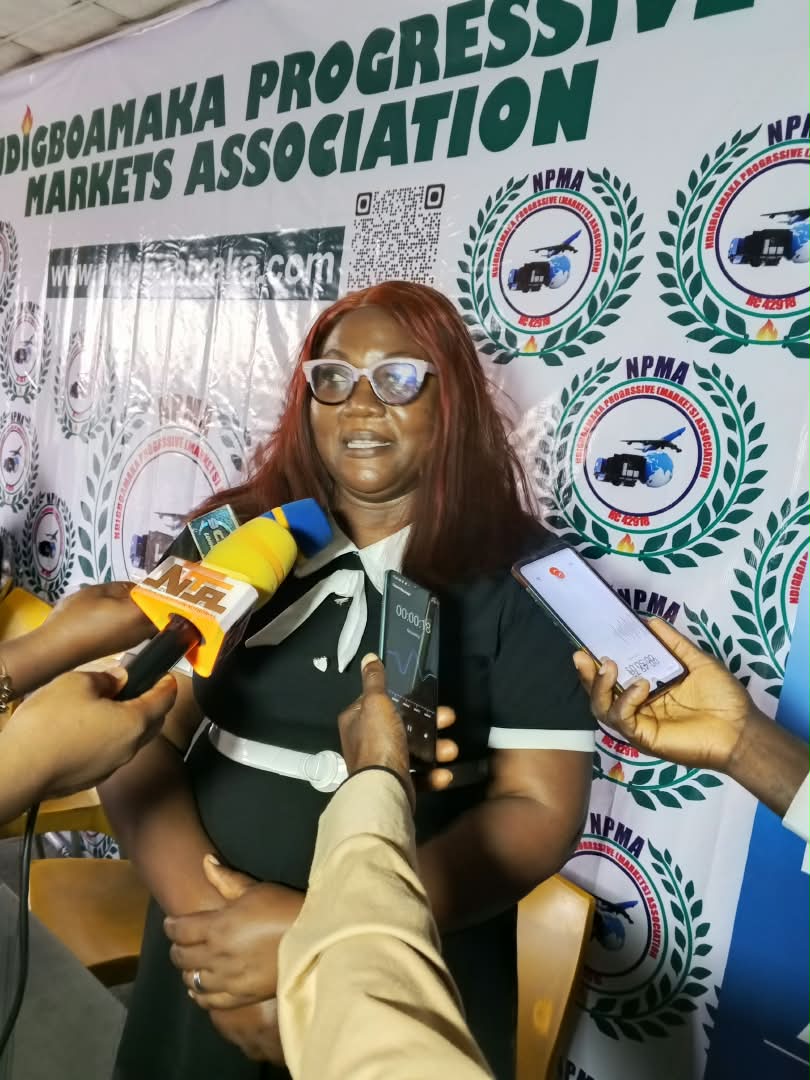
The Ndigboamaka Progressive Markets Association has officially announced the 3.0 Edition of a sporting collaboration between her and the United Nigeria Airlines. Known as the United Nigeria Airlines Ndigboamaka Traders Cup 2026 (3.0 Edition), the sporting fiesta is part of a fresh initiative to encourage her members and staff of the airline to engage in sporting activities for leisure.
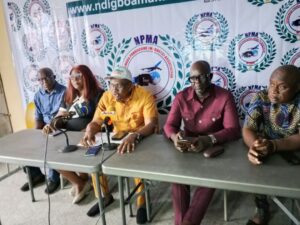
Speaking at the event in Lagos, National President of the traders’ group, Comrade Chinedu Ukatu described the official unveiling as a milestone.
”Today, we are marking another milestone. We are bringing all 58 markets together, not in the marketplace, but on the football pitch under one umbrella of unity.”
”As you all know, Ndigboamaka Progressive Markets Association is the apex body of 58 major markets in Lagos State with over 2 million traders. Our mandate goes beyond trade – we promote unity, peace, welfare and progress of our members and the entire Lagos trading community.
Describing football as a unifying language, he said it serves as a positive engagement and a unifying force for youths in the market, hence the choice.
”We need to promote healthy living among our traders. We want to strengthen brotherhood among markets – Alaba, Trade Fair, Ladipo, Computer Village, Balogun, Lagos Island, ASPMDA and all others.”
”I am therefore very delighted to announce that United Nigeria Airlines, a proudly Nigerian airline led by our National Grand Patron, Prof. Obiora Okonkwo (OFR), has graciously accepted to be the Title Sponsor of this tournament,” Ukatu stated.
”United Nigeria Airlines is an airline that believes in connecting people and businesses – just as we connect markets and traders. Their decision to partner with us shows their deep commitment to grassroots development and the informal sector which is the real engine of Nigeria’s economy.”
The tournament named United Nigeria Airlines Ndigboamaka Traders Cup 2026 has the theme Unity, Enterprise and Healthy Living.
Of 58 affiliate markets,12 qualified market teams are billed to participate for a duration of six weeks.
Grand finale in Lagos featuring trophies, medals and cash prizes will be graced by an expected audience of over 500,000 direct spectators and over 5 million reach via radio and social media.
”This tournament will also be an opportunity to discover football talents among our traders and empower our youths.”
On behalf of the National Executive of Ndigboamaka, Comrade Ukatu thanked the Chairman and Management of United Nigeria Airlines for believing in the vision.
”I also thank all our media partners who have agreed to join us on this journey.”
He called on all market leaders, corporate bodies and well-meaning Nigerians to come and support the laudable project.
Maritime Agencies
Traders’ Umbrella Group Evaluates State of the Nation, Expresses Serious Concerns of the Trading Public.
By Izuchukwu Ozoemena
Following heightening campaign activities preparatory to the 2027 general elections, the Ndigboamaka Progressive Markets Association has taken what it calls a political and economic stand as it affects the Nigerian trader.
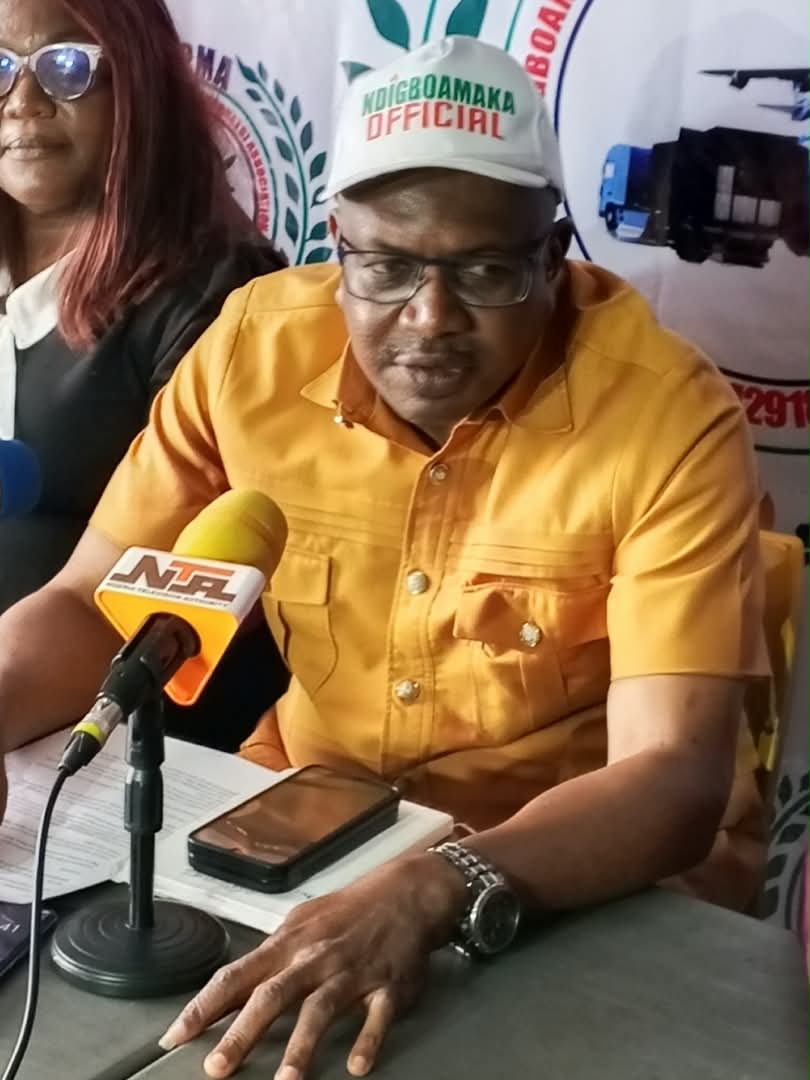
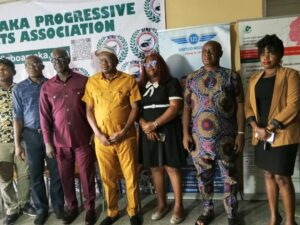
Chief Chinedu Ukatu, President of the traders’ group made the disclosure in Lagos, Monday, while speaking on the state of the nation and issues of grave concern to the Nigerian trading community.
Ukatu explained that as leaders of the largest market association in West Africa representing over 58 major markets and millions of traders in Lagos State, Ndigboamaka Progressive Markets Association cannot remain silent and unconcerned while her members bear the brunt of the current realities of the Nigerian nation.
On the political turf, he described his Association as non-partisan.
”Let us state clearly once again that as an Association, we are non-partisan. We do not belong to any political party. But we will only support and endorse parties and candidates who are willing to accommodate our aims and objectives vis-à-vis protecting the interests of traders.”
”As traders, we desire only one thing: stability. Business thrives where there is peace and predictability.”
While commending the Federal Government on current efforts to secure the nation, the Association singled out insecurity on the highways.
”Lagos to Onitsha, to Kano, to Port Harcourt has become a direct tax on trading. Our members pay heavily to move goods. Trucks are delayed, goods are lost, drivers are attacked.”
Warning that the economy cannot grow when the roads that connect the markets are not safe, Ukatu appealed to the Federal and State Governments to do more to secure the trade corridors.
”The trader is not a politician; he is not interested in party A or party B. He is interested in whether his goods will get to the market safely.”
”We also call for an end to multiple taxation and harassment by non-state and state actors. In Lagos alone, a single container is subjected to over 15 different levies from the port to the shop. This is politically unsustainable.”
Still on the economic state of the nation, the Ndigboamaka Progressive Markets Association Servant-Leader described the Nigerian trader as resilient. However, resilience has a limit, he explained.
”Today, the Nigerian economy is facing a triple challenge: high exchange rate, high cost of energy, and low purchasing power.”
Addressing foreign exchange and imports, he said over 70% of goods in Nigerian markets are imported.
”The volatility of the Naira to the Dollar has made price planning impossible. A trader who orders goods today cannot predict the cost of clearing it tomorrow. We call on the Central Bank of Nigeria to create a special stability window for genuine importers of essential commodities and raw materials.”
Traders, he regretted, run their businesses on diesel and generators.
” The cost of power is now higher than the rent of our shops. We cannot compete with other nations where traders have 24-hour electricity. We urge the Federal Government to fast-track the special industrial and market power projects.”
Decrying mounting inflation and a reduction in purchasing power, the Association boss said their customers now buy less.
”Families are cutting down on everything. When the buyer has no money, the seller cannot sell. We therefore support all policies that bring down food inflation and put money back in the pockets of ordinary Nigerians.”
On rumoured protests regarding Chinese and other foreigners taking over retail trade ordinarily reserved for Nigerians, he clarified that his group never mobilized any trader to protest against Chinese citizens or any other foreigners in Nigeria as Nigeria is a hospitable nation.
”However, as a trade union, we are asking for what is done all over the world. We seek the required legislation and enforcement of the Indigenous Trade Policy as regards retail trade and investment.
The Nigerian Enterprises Promotion Decree of 1972 now replaced by the NIPC Act, he recalled, clearly reserved retail trading for Nigerians.
”Today, we see foreigners moving from wholesale and manufacturing directly into our markets to sell retail, competing with our members who cannot do the same in their countries.”
”We are not asking for xenophobia; we are asking for reciprocity and protection as provided in other climes. We call on the National Assembly and the Federal Government to revisit and strengthen the Local Content and Retail Trade protection laws to save Nigerian traders from extinction,” he demanded.
On political parties now canvassing for votes, the group said the traders would only support candidates or parties that will abide by specific commitments that favour the association.
”For the sake of the millions of traders we represent, we shall only support any Candidate or Party that will assure us of the following:
1. Setting up a joint Federal and State Task Force to address multiple taxation at the ports and on the roads.
2. Improved security on major trade routes, especially the Lagos – Benin – Onitsha corridor.”
Other commitments include providing single-digit interest rate loans for traders through the Bank of Industry and other development banks;
inclusion of market leaders in the formulation of trade and fiscal policies as policy for traders cannot be made without traders.
Enactment and enforcement of a clear Retail Trade Protection Law to regulate foreign participation in the retail space is also a major commitment candidates and parties seeking for votes must abide by, Ndigboamaka Progressive Markets Association stated.
Maritime Agencies
Ehingbeti Summit: Stakeholders Say Coastal Communities Need Funding for Development.
By Izuchukwu Ozoemena
Maritime stakeholders say to promote sustainable coastal development, attention should be focused on the legal, regulatory, security and investment frameworks required to unlock Nigeria’s blue economy potentials .
Delivering the keynote address at the 4th Ehingbeti Maritime Hub Summit in Lagos, Thursday, President, Maritime Arbitrators Association of Nigeria (MAAN), Chief Jean Chiazor Anishere, SAN, said a dedicated financing mechanism was necessary to address infrastructure deficits and improve the living conditions of people in coastal communities.
Anishere urged Nigeria to explore international financing opportunities through climate funds, development banks and multilateral organisations to scale up coastal resilience and community development.
She said sustained investment in coastal resilience would help strengthen infrastructure, protect livelihoods and create an enabling environment for coastal communities to participate meaningfully in the emerging blue economy.
Nigeria’s blue economy, she stressed, must be underpinned by effective governance as the country needs to establish the legal and institutional conditions required for innovation, investment and sustainable exploitation of marine resources.
There must be a regulatory system that provides security for investors while remaining flexible enough to encourage innovation, environmentally responsible enough to protect marine resources and inclusive enough to benefit coastal populations.
Anishere also advocated improved waste-management infrastructure, sustainable fishing practices, recycling education and environmental stewardship initiatives that directly benefit coastal communities.
Representing the Lagos State Governor, Mr. Babajide Sanwo-Olu, the Permanent Secretary, Lagos State Ministry of Tourism, Arts and Culture, Mrs. Bopo Oyekan-Ismaila said the state remained committed to an inclusive approach to blue economy development.
She noted that while Ehingbeti’s history was closely associated with Lagos Island, the state’s blue economy development agenda would encompass communities across Lagos.
According to her, Governor Sanwo-Olu encouraged participants to collaborate and develop a communiqué capable of advancing the blue economy agenda of Lagos State.
In her speech, the convener of the Ehingbeti Maritime Hub and Founder of the Ocean Ambassadors Foundation, Hon. Olaitan Violet Williams said the Hub was established in 2023 to trace and reconnect with the historical roots of maritime activities in Lagos.
According to Williams, Ehingbeti represented an important chapter in Lagos’ evolution from its early trading history to modern-day Eko.
She identified inland waterways as one of the low-hanging fruits of Nigeria’s blue economy and called for greater investment and stronger legal protection for investors.
She said Nigeria’s estimated 10,000 kilometres of waterways cannot deliver their full economic potential if they remained largely unnavigable.
The Chairman of the occasion and Chairman of the NIWA Governing Board, Alhaji Mukhtar Shehu Shagari, represented by NIWA Board Member, Capt. Tajudeen Alao, commended the Convener for her commitment to the development of Nigeria’s marine and blue economy.
Shagari stressed that coastal communities must remain central to the implementation of blue economy policies, while advocating an appropriate legal framework for the development of Nigeria’s littoral states.
Representing the Flag Officer Commanding, Western Naval Command, Rear Admiral Abubakar Mustapha, Rear Admiral N.C. Okon called for stronger maritime regulation and effective enforcement of existing laws.
Okon identified “sea blindness” as a factor limiting Nigeria’s ability to fully harness its maritime potential and stressed that collaboration among government agencies, coastal communities and development partners was essential.
He noted that a thriving blue economy could not be sustained amid insecurity, environmental degradation, illicit activities and regulatory uncertainty.
The Naval representative reaffirmed the Nigerian Navy’s commitment to providing the secure maritime environment required for commerce, investment and sustainable exploitation of Nigeria’s maritime resources.
Also speaking, Ekeoma Ezeibe, Chairman, Nigerian Council of Registered Insurance Brokers (NCRIB), identified insurance as a critical component of maritime and blue economy development.
She said adequate insurance protection was necessary to safeguard maritime assets, infrastructure and businesses against the multiple risks associated with the sector.
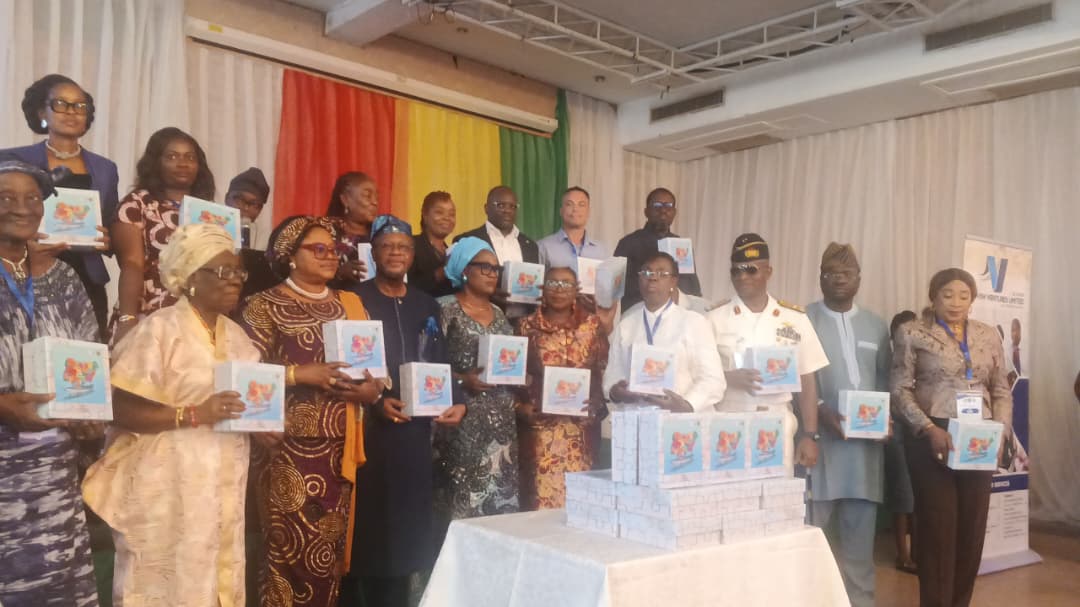
A major highlight of the summit was the official launch of the 28 Inland Waterways Investment Jigsaw, an initiative designed to highlight viable investment opportunities across Nigeria’s inland waterways and provide a structured pathway for private-sector participation.
The initiative is expected to support efforts to identify investment opportunities across the country’s inland waterways while encouraging greater private-sector involvement in water transportation and other marine-related businesses.
The 4th Ehingbeti Maritime Hub Summit brought together government representatives, maritime professionals, security stakeholders, legal practitioners, insurers, traditional rulers, academics, private-sector operators and representatives of coastal communities.
The summit reaffirmed the need for stronger regulation, maritime security, sustainable financing, infrastructure development and community inclusion as Nigeria works to translate its blue economy potential into sustainable economic and social development.


SPORTS: Group Unveils United Nigeria Airlines Ndigboamaka Traders’ Cup, 2026.

Traders’ Umbrella Group Evaluates State of the Nation, Expresses Serious Concerns of the Trading Public.

Tantita’s Oil Pipeline Surveillance Yields Huge Dividend, Shoots Nigeria’s Q2 Oil Exports Earnings To $9.39bn.

Ehingbeti Summit: Stakeholders Say Coastal Communities Need Funding for Development.

Ogun 1 Customs Repeats Stern Warning To Smugglers, Confiscates Latest Brand of Range Rover, Other Contrabands.

Unregulated Deployment of Unmanned Vessels Threatens Maritime Security — Navy.

Nigeria Collaborates with Benin Republic to Launch Modernised Joint Customs Border Post.

NPA Emphasizes the Importance of Truck Drivers, Donates 400 Safety Vests to AMATO and NURTW.

MAMAL 2026: FG Targets Globally Competitive Ports As Tantita Urges a ‘Look Beyond Lagos’ in Port Development.

MAMAL 2026: Stakeholders Recommend End -To-End Modernization of Nigeria’s Port System To Achieve Competitiveness.

MAN, Oron Commends MAMAL 2026, Urges Efficient, Competitive and Globally- Respected Maritime Sector.

LIMWEEK 2026: Measurable Outcomes Must Guide Policies in Nigeria’s Marine and Blue Economy.

CUSTOMS’ ZONE ‘A’ SPORTS EVENT: CGC Adeniyi Highlights Need for Discipline, Teamwork in Customs Operations.

Parts Central Ltd Set To Turn Waterway Waste into Wealth, says Onifade.

Oyetola Transfers Inland Dry Ports to NPA, Sets Up Committee for NSC–NPERA Transition.

Zoe Maritime Resources Hosts Lagos International Maritime Week (LIMWEEK), 2026.

ABUJA MoU: WE FUNCTION BEHIND A MASK, says Capt Umoren

1. EXECUTIVE PLATFORM. AMES 2024: TIME TO CHANGE GOVERNMENT ATTITUDE TOWARDS SHIPPING DEVELOPMENT IS NOW, AMES President Charges FG.

2023 ELECTIONS:CILT Hosts Seminar on Logistics & Electoral Process

B’ODOGWU TRADE PORTAL: Customs Consolidates, Pilots Form ‘M’ Processing.
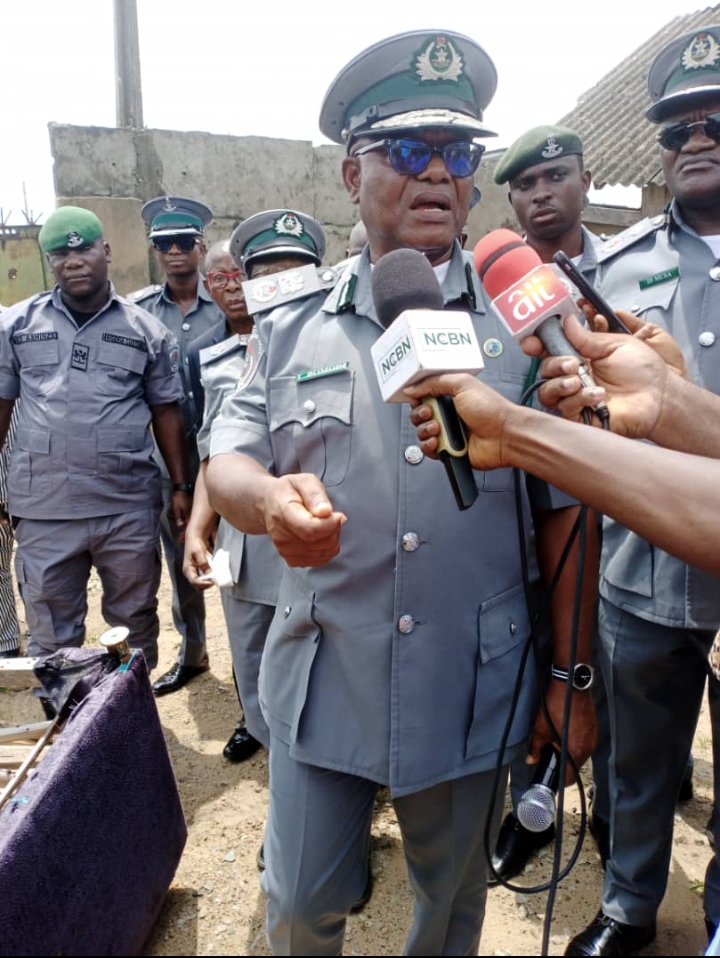
JANUARY-MAY REPORT: Seme Customs Hits N2.6bn, Facilitates ₦35.1bn Exports.
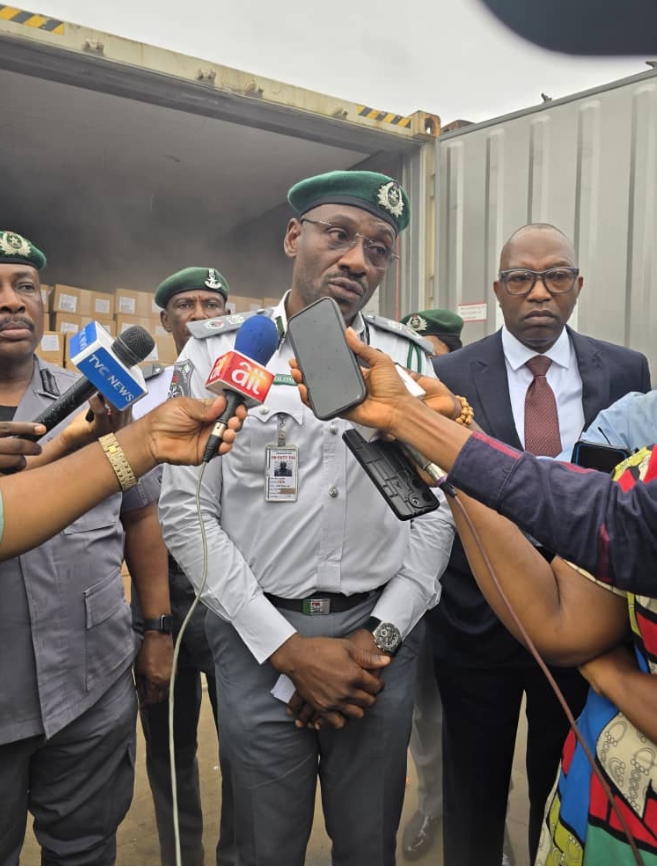
HALF YEAR, 2024: Apapa Customs Nets ₦1.024 Trillion, Records 143% Increase.

B’Odogwu: Apapa Customs Collects ₦161b in 3 Weeks, Assures of Improvements .

APFFLON Seeks Immediate Reform of CRFFN, Replacement of Registrar.

OMIS AWARDS, 2022: Greg Ogbeifun, Industry Gurus For Special Recognition.

PHOTO NEWS: Maritime Capacity Development
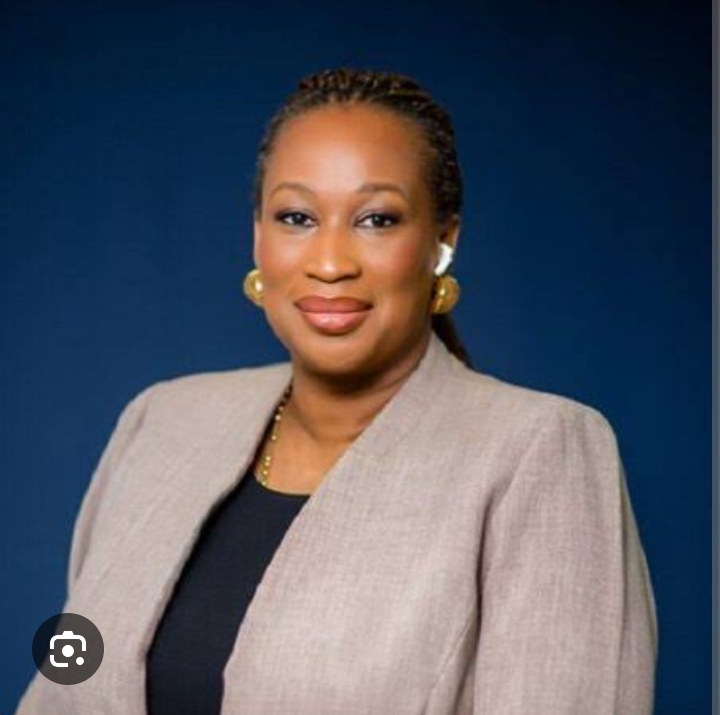
Adesuwa Ladoja Becomes MD/CEO, Lagos Free Zone.

FG Set To Re-establish National Shipping Line, To Take Advantage of $10 bn Annual Ship Charter Market.

Photo News: Salah Celebration
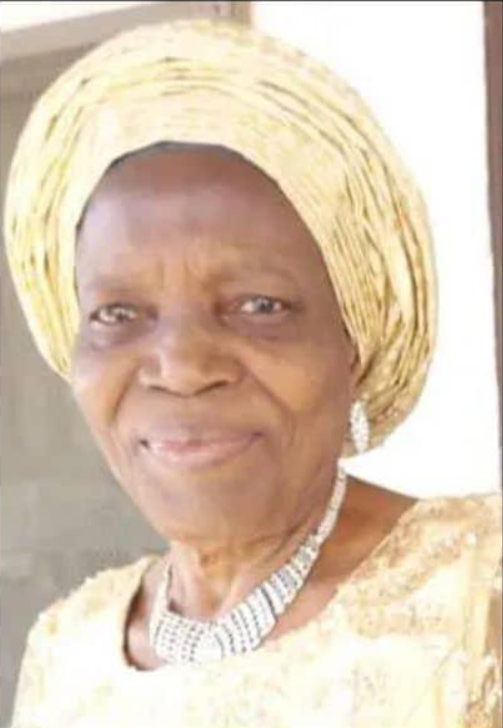
Mama Theresa Enisuoh Due For Burial April 27

Sylvanus Ekpo, ex-Editor, Shipping World Magazine, loses Mum

MAN, ORON: It’s Encomiums Galore From International Seabed Authority (ISA).

-
 Maritime Agencies3 weeks ago
LIMWEEK 2026: Measurable Outcomes Must Guide Policies in Nigeria’s Marine and Blue Economy.
-
 Maritime Agencies3 weeks ago
CUSTOMS’ ZONE ‘A’ SPORTS EVENT: CGC Adeniyi Highlights Need for Discipline, Teamwork in Customs Operations.
-
 Maritime Agencies2 weeks ago
Nigeria Collaborates with Benin Republic to Launch Modernised Joint Customs Border Post.
-
 Maritime Agencies2 weeks ago
Unregulated Deployment of Unmanned Vessels Threatens Maritime Security — Navy.
-
 Maritime Agencies2 weeks ago
NPA Emphasizes the Importance of Truck Drivers, Donates 400 Safety Vests to AMATO and NURTW.
-
 Maritime Agencies2 weeks ago
MAMAL 2026: Stakeholders Recommend End -To-End Modernization of Nigeria’s Port System To Achieve Competitiveness.
-
 Maritime Agencies2 weeks ago
MAN, Oron Commends MAMAL 2026, Urges Efficient, Competitive and Globally- Respected Maritime Sector.
-
 Maritime Agencies2 weeks ago
MAMAL 2026: FG Targets Globally Competitive Ports As Tantita Urges a ‘Look Beyond Lagos’ in Port Development.