
Personality Interviews
ANLCA Crisis is Over for Good; Nothing Returns it, says Michael Imonitie.


INTERVIEW:
Ovien Michael Imonitie, the CEO, Mimov Global Ventures, is a lawyer by profession and Secretary, Tincan Port Chapter of the Association of Nigeria Licensed Customs Agents (ANLCA).
In this exclusive chat with Falcon Watch Online, he was emphatic that the 5-year old crisis in ANLCA is over and ended for good. He salutes the CRFFN for the courage to take the bull by the horns to resolve issues involved and return normalcy to the pioneer customs brokers’ body which suffered 5 years of internal wrangling and avoidable factionalization. Nothing will ever resurrect it, he insists. Izuchukwu Ozoemena reports.
Q: The Council for the Regulation of Freight Forwarding in Nigeria (CRFFN) recently achieved what industry watchers call a remarkable feat when it successfully resolved the crisis that bedeviled the Association of Nigeria Licensed Customs Agents (ANLCA) for 5 years. As an insider, what gives you assurance that the peace will endure?
Ans: ANLCA’s 5-year crisis came and has ended. There’s no crisis that will be this long without seeking a peaceful resolution. The crisis brought a lot of damage to the industry. Agents suffered; Customs did not know who to call or the faction to call for economic deliberation or passage of circulars, etc. As it is now, Customs have gone far ahead of even the customs brokers themselves. So, if ANLCA did not settle, I don’t think we will have any means of coming together again. That’s why I say ANLCA crisis has come to a halt. This is the final stage; it has been settled and we have embraced peace. We pray not to go back to it again. Now, we can at least adjust and repair all the wounds, the potholes, the gullies created. This is the time for us to fill them. We thank God. I have the belief that the crisis has come to an end.
Q: React to concerns that while the disagreement festered, some reputable past leaders of the Association failed to intervene to resolve matters owing to personal interest.
Ans: There’s no past ANLCA leader that did not wade into the crisis. There’s none! Are you talking of Kamba, Okocha, Shittu, etc? Name them! They all intervened. Even the Transportation Minister and the NIMASA DG intervened before summoning the CRFFN to do the mediating part and call the two factions to order. So, I won’t say maybe there’s somebody still sitting on the fence and wants this thing to continue. No! Every aspect of leadership in ANLCA has been touched. Everything has been settled. No leader is holding it back. No one wants the house to go back to disarray. Peace has come.
Q: What’s your take on concerns that rather than stay around to confront issues and settle the internal strife in his house, the National President took a leave of absence?
Ans: I am not the PA to the National President or any of the executives. The only thing I can say is that he has his reasons. Maybe he’s someone that is shying away from facing reality. Maybe he doesn’t want his name to be dented when he found out that they did not allow him operate the 2020 Constitution unveiled at the AGM in Owerri. So, he believes that the certificate has fallen due from the Constitution of 2008 and he has a certificate for 4 years. So, he decided to step aside and said he was going for a study leave. Since he said he was going for a study leave and he gave a letter to that effect, it is accepted that he went on study leave. That’s why his Vice swooped into action and became the Acting President. If the Nigerian President, on health ground or anything, decides to move out of the country where he’s voted to rule, leaving his primary assignment, he has chosen his course. It’s his own cup of tea.
That’s what he feels and it is in his record that he didn’t partake in the peace settlement of ANLCA.
An adage says he who fights and runs away lives to fight another day. He did that when he was the CRFFN Board Chair. He left and Hakeem Olanrewaju came in. So, it’s not new. He has his own opinion being an adult. Even all the litigation on ground didn’t say he should run away. One day, the leave will end and he will come back to Nigeria to resume his practice as a freight forwarder.
Q: What will be his position then?
Ans: As it is now, his position is that of immediate-past Honourable President of ANLCA.
Q: It’s like sister freight forwarding associations would wish the ANLCA crisis to continue because it afforded them opportunity to shine.
Ans: I won’t say they wanted it to continue. Actually, they don’t have the knowledge on how to go about resolving the crisis. The issue is that all the sister associations you talk about came out from ANLCA. This has been the longest crisis in the history of ANLCA . It has really taken a toll on the Association even as it disturbed the smooth running of all the agencies themselves. If ANLCA is not in the field, there is no association. Even NAGAFF is a mere group of freight forwarders. They say you don’t need a license to operate but the Constitution says you must have a license to operate as a customs agent. If you look at it, to them, they’re just there. But for us, we know where we’re going. So, they need us more than we need them.
We are back for good! Since God gave the CRFFN the wisdom to resolve our crisis, the glory is for everybody. It’s not just for only one person.
Even when Dr Aniebonam said they should sack everybody; that’s his own point of view on how to resolve the crisis. He doesn’t know that being a founder of NAGAFF is different from being a joiner in ANLCA. In ANLCA, everybody has equal rights. ANLCA can sue or be sued but NAGAFF cannot be sued until Aniebonam is no more. The same with other sister associations. Those that belong to ANLCA are strong men.
Q: At the recent ANLCA Association Electoral Committee (ASECO) inauguration, the CRFFN Board Chair, Alhaji Abubakar Tsanni, made it clear that contestants and voters for elective positions must be registered members. Does it mean people have been functioning all this while without registration?
Ans: As it is, CRFFN is a body that regulates all freight forwarders and licensed Customs agents. Being a regulator, everybody is under it. The circular is there and everybody must pass through it to practise. Power is in the hands of CRFFN. If they’re the regulator by an Act of government, you must key in. It’s high time we woke up and join the moving train. Otherwise, when the industry changes, we have to be part of those involved. CRFFN has the powers to do that.
Q: As the crisis lasted, what was it like functioning as the Secretary, Tincan Port Chapter?
Ans: Nothing was functioning. We only tried to ensure interaction with the Nigeria Customs Service, Tincan Command, freight forwarders and terminal operators. We made sure we tried to contribute our quota in the business despite the presence of factions in ANLCA then. I personally played a big role especially in the sensitization on VIN Valuation and the introduction of non- standard procedures for clearing vehicles (846). Many freight forwarders know what 846 means. This is just the approval from the Customs Controller which you must obtain before continuing the clearance of non-standard vehicles coming from Europe, Asia or Africa unlike the American vehicles that have standard VIN.
I particularly did a lot. I did some introduction with the Customs. We put our heads together and brought the ease of doing business into the Tincan Port.
And it worked for us with the support of the Tincan Area Controller, Comptroller A. A. Oloyede. We aligned with the policy. Since then, things have been moving smoothly. Agents and other stakeholders were trained into the SGDD and the NICISS on how to input the standard VIN in the system, how value is apportioned to it. Since then, we’ve had it smooth especially in the area of general cargo. We’ve had no issues. We are good to go here.
Q: I perceive you as someone who has a lot to offer to ANLCA and the customs brokers business. Are you contesting for any position in the new ANLCA?
Ans: There’s nothing like new ANLCA. ANLCA is still one and is going to be greater, waxing better. I know there are better days ahead; the future is brighter. Once I make up my mind to come out for any post, I make up sure the press knows it first. But for now, I’m still consulting.
LAST LINE:
Journalists should keep up their good work and let us read the good news. ANLCA is one; we’re one big family.

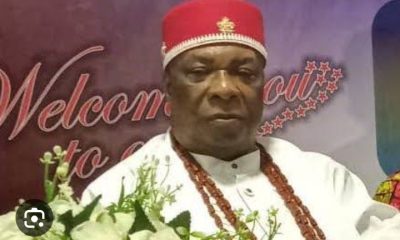



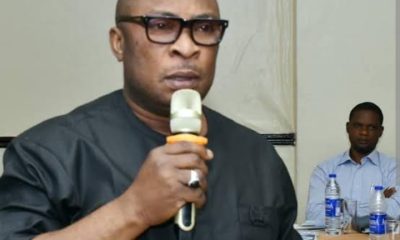





Personality Interviews
”NATIONAL SINGLE WINDOW WILL CUT CARGO CLEARANCE TIME BY 75%,” NAGAFF President, Tochukwu Ezisi says.

Q: The Federal Government is set to launch the National Single Window platform in the first quarter of 2026. How prepared are freight forwarders for this?
Ans: The first phase of the National Single Window will be launched on March 27, 2026, and it will be a thing of joy to freight forwarders. The NSW is a government initiative designed to enhance trade facilitation in Nigeria. It will reduce cargo clearance time by at least 75%. The Nigeria Customs Service has developed the Time Release Study, and with the Single Window in place, that study will be significantly enhanced — you will see things working much faster. For us, it is a very welcome development.
Q: Will the NSW truly facilitate trade? Is it to the benefit of freight forwarders?
Ans: Absolutely. The National Single Window is entirely about trade facilitation. When you bring all the relevant agencies onto one platform, every party can see what the other is doing in real time. Instead of going from one agency to another, back and forth, everything is in one place. That makes the clearance process faster and far less stressful. It is a major step forward for the industry.
Q: Considering the history of technology and infrastructure challenges in the sector, what are your concerns about the NSW?
Ans: In anything you do, you prepare for the worst. But the National Single Window has the full backing of the Federal Government. If any agency attempts to pull out or truncate the process, it means that agency is, in effect, challenging the authority of the Federal Government. Are they saying they are bigger than the Federal Government? Every agency is expected to key in.
Yes, we anticipate some teething problems — that is to be expected, especially with network challenges that are common in Nigeria. But from what I have seen of the NSW’s security architecture, I am confident they have what it takes. Even when issues arise, they will be resolved quickly.
Q: With the introduction of the NSW, do you expect the cost of cargo clearance to reduce?
Ans: Definitely. Bringing all these agencies together on one platform will naturally drive down costs. I do not expect stakeholders to spend more; I expect them to spend less. When everyone is visible to each other on the same system, they will be more accountable and more efficient. That transparency alone is a significant gain for this industry.
Q: What is your message to freight forwarders about the NSW?
Ans: My message is not only to NAGAFF members — it goes to all freight forwarders across Nigeria. There is an end-user training ongoing nationwide, and I strongly urge everyone to embrace it. It is very, very important. The turnout over the past few days has been encouraging, but I still want to appeal to those who have not yet registered — please do so. It is a hands-on training, it is free, and meals are even provided for participants. Do not wait until the platform is live before you start asking questions. The opportunity is here now; take advantage of it.
Q: You mentioned that the NSW will cut clearance time significantly. What is the current average time for clearing cargo from Nigerian ports?
Ans: To be honest, under the Customs Time Release Study, if your declaration is in order and there are no complications; your goods can be cleared within three to four days. And if your declaration is completely honest, goods can be out of the port within 48 hours. That is why I always emphasise honest declaration — it is the single most important thing a freight forwarder can do to speed up the process.
Q: At the start of 2026, your New Year message to members stressed the need for compliance. How has that been received?
Ans: The message resonates with what we are discussing now. Honest declaration is the key — I said it then and I will say it again. When our declarations are honest, the job becomes easier and faster for everyone: easier for Customs, faster for us the freight forwarders. I continue to implore all freight forwarders in Nigeria — honest declaration is in our own best interest and in the interest of the country.

Digital freight forwarders’ group, the African Association of Professional Freight Forwarders and Logistics of Nigeria (APFFLON) has refused to be cowed by criticisms of her concerns about what it describes as an unjust tariff hike by the West African Container Terminal (WACT), Onne Port, raising fundamental questions about the foreign terminal operator. In this personality interview granted Falcon Watch Online Daily recently, APFFLON chieftain, Otumba Frank Ogunojemite, raised fundamental questions about WACT and expressed worry that for whatever reasons, the Nigerian Shippers’ Council (NSC) appears complicit in this operational illegality.
Otumba Ogunojemite also discussed the rejuvenated Council for the Regulation of Freight Forwarding in Nigeria (CRFFN), the new Registrar and other matters.
Izuchukwu Ozoemena reports
Q: Your organization, the African Association of Professional Freight Forwarders & Logistics of Nigeria (APFFLON) is being accused of constituting an opposition to other freight forwarding groups and regulatory agencies. Do you agree?
Ans: I don’t know where the view is coming from that some people are operating illegally when you do not do your homework properly before going public. This can lead you to jail. That was the reason we had about 16 court cases when we started . CRFFN was not excluded as we took them to court. It was a dialogue with Abubakar Tsanni, the CRFFN Board Chairman, that resolved the matter out of court.
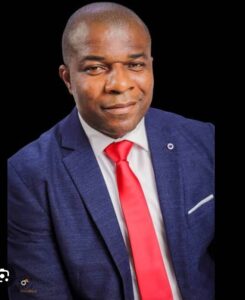
Kingsley Igwe, Registrar/CEO, CRFFN
So, when someone says APFFLON is attacking anybody, he is ignorant and not conversant with what is happening in the industry. When you’re pushed to the wall, you don’t resort to thuggery; you resort to justice. Justice is what can bring satisfaction. When you are dissatisfied with judgement, you go to appeal court rather than resorting to thuggery. So, you don’t just brand somebody without doing your own work. That’s careless talk.
We have a robust relationship with the Nigerian Shippers Council. They’re the only agency that has visited this office (the APFFLON Secretariat). But when you are taking decisions that can inflict pains on the citizens and the economy; when you are making decisions contrary to the Federal Government’s agenda, it’s a different matter.
During the National Single Window discussions, the FG admitted that the cost of doing business in Nigeria is very high and looked for ways to reduce costs to 25%. It’s not up to 60 days some people came up with 80% and 100% increament which, to us, shows injustice and an attempt to sabotage the FG’s initiatives to address port costs. Because we have a relationship, we wrote you to say ‘please look at this issue critically’. You ignored the letter. What d’you expect us to do? Do we have to leave the citizens to keep crying? Do we have to close our eyes for the economy to keep bleeding? Do we have to close our eyes on the need to alert you on what is contrary to the FG’S initiatives on port reformation and cutting costs? However, discrepancies on decisions will not affect our relationship.

Pius Akutah, ES/CEO, Nigerian Shippers’ Council.
Q: What is the problem with operations at the West African Container Terminal (WACT), Onne, which you are kicking against?
Ans: The problem is tariff increment. It’s exactly the same time last year you increased; this time, you’re increasing. The Shippers Council said this increment was by the past Executive Secretary. If the past ES agreed on an increment, can’t the present ES do a review? The person that left did not finish his first term, talkless doing a second tenure. When we now have you onboard, you must be able to assess what was implemented in the past. If it has issues, you can suspend it. We have to reference how the Nigeria Customs suspended the 4% of FOB charges. So, why are you remaining adamant in the same industry, in the same country?
We suspected a compromise between WACT and the Nigerian Shippers Council. This has given us an insight into the establishment of WACT. How did they come to be? How long have they been there? For how long will their contract last? Are they going to have the contract for ever? These are the things that call for clarification. Don’t forget, WACT is a sister company of APMT. What is the synergy there? We need to review all these. Originally, they are from Maerskline, a foreign company. Do we fold our hands for our funds to be on capital flight? Do we continue to fold our hands and see our businesses go to foreign countries? Do we fold our hands for smuggling to continue to rise and cost of operation become unnecessarily expensive in the country? That is what calls for alarm.
Q: Pinpoint a particular way your group is suffering a disadvantage from the tariff hike by WACT.
Ans: Directly, we don’t suffer anything from the tariff hike . But indirectly, every citizen of Nigeria is suffering the high cost of living. You can check up the per capital income of individuals. For now, 20 governors are not paying the N70,000 minimum wage. But you are doing a yearly increment in the same market, in the same country. These people are very smart: they make 100% storage that will negatively affect the people. They look for an area to make money. What things justify the increment? What are they doing new? Is it the salary increment or tax increment or community support increment?
Look at the situation of things in Onne. We were there to notice that the villagers remain what they are. What are they doing differently? It’s high time we all came together to look at how to address the issues of this country. We will not continue to remain silent. APFFLON will continue to stand out and say the truth.
Q: It appears APFFLON is the only association out to say these things the way they are. Others are not saying much. Do you suspect something?
Ans: There are so many associations and issues in the industry. When we are addressing the WACT matter, other associations may be addressing other issues. For instance, haulage from Apapa, Tincan to Trade Fair, Mainland is now very costly. The network problem from banks is another matter.
Sometimes you want to capture, the bank gives you 2 or 3 days yet you cannot pay your duties. We have so many issues to bring to the table and address together. If you think they are not talking as expected, that you are a slow responder does not mean people are not talking. I read where Chief Emenike Nwokeoji of ANLCA reacted and lampooned Nigerian Shippers Council on this increment. Instead of talking about that, they’re talking about APFFLON.
It is high time the media asked the CRFFN why APFFLON is not acredited, despite her inputs so far. When someone says you are operating illegally, he should explain why and how.
Q: Government has been foot- dragging on the renewal of ports concession to private terminal operators. Is this proper?
Ans: It’s not proper. You know the reason for ports concession is the inefficiency of the Nigerian Ports Authority. Ports were concessioned to improve effectiveness and reduce costs. But what we are seeing now is exploitation by shipping and terminal operators.
After COVID 19, I expected the FG to look critically at the concession review. That time, the FG gave a directive that all consignments should be free from charges. But despite this, they collected rates from people. Shippers Council was almost losing control in trying to address the issues. We took pity with the Council for not being in control as they do not have legislative powers. That’s why we seconded them to appear on a bill so that they could have the power to be able to punish offenders. But looking at the way they are handling things now, we are beginning to feel that they are still incapacitated to handle this people even if the bill is passed.
If they cannot control the WACT tariff because somebody has agreed with them, an agreement that is not in the Act, that can be re-visited, we doubt their capacity to handle the ICTN.
Whoever is to lead this country must operate democratically. When an alert on an idea is given to you by an organization you know that has been with you for so many years, you should be able to listen and feel the pains of the citizens of this country. You should be able to support the FG’s initiatives, not going contrary to them.
So, the issue at hand is how do we survive in this country? What is going to be the contribution of each of us? Our pain is not personal; it’s for the citizens of this country. It’s for importers and exporters of this country because maritime is the economic catalyst of any country. Before the evolution of oil, maritime has always been there.
Look at the dwelling time and what they call war risk insurance. This is the amount charged a vessel on the sea as it sails through an area susceptible to piracy attack or robbery. Nigeria is one of the highest globally because shippers do not feel safe to ply our shores for fear of hijack. What is the Shippers Council doing? What’s NPA doing? What are leaders in the industry doing? Many of us in the industry do not even know what is called war risk insurance. A vessel pays $30,000 for how many days? Where will it get the money? The cost is coming back on the citizens who eventually consume the goods or services the vessels carry. Maritime theft, illegal fishing, all over, Nigeria is losing money and they are there increasing tariff. What they are looking for is an avenue for government to make more money at the expense of the suffering masses.
APFFLON will continue to do its best – advocacy. We continue to address issues as they are. We congratulate the CG of Customs following the achievement of PAAR. People have been wondering why we did that. If Webb Fontaine was not suspended, would there be B’Odogwu today. If you follow the antecedents of APFFLON in the industry, you ‘ll know that we do not joke with the issue of server provider. We are the only association that brought together the Senate and House of Reps on the issue of Webb Fontaine. The record is there.
Personality Interviews
TRADE FACILITATION: FULFIL CUSTOMS REQUIREMENTS, ENJOY AEO, B’ODOGWU, says Ayokunle.

Hon Sulaimon Ayokunle, the elected Secretary of the PTML Chapter of the Association of Nigeria Licensed Customs Agents (ANLCA) is the CEO, Sula Marine Gold Ltd and SSA (Media) to the National President of the Association, Mr Kingsley Emenike Nwokeoji.
On the sidelines of the inauguration of chapter executives of the body in Lagos, Thursday, Hon Ayokunle spoke to Falcon Watch Online Daily on some trade facilitation platforms the Nigeria Customs Service (NCS) is currently implementing including the AEO, B’Odogwu, etc. How do these and other trade facilitation tools ultimately affect the operations of the average ANLCA member? According to impression in certain quarters, are customs clearing agents and other stakeholders not being subjected to payment of additional duties and loss of marginal profit they ought to make as return on investment?
Izuchukwu Ozoemena reports.
Q:
The Authorized Economic Operator (AEO) in trade facilitation is currently trending. Is it of any benefit to the customs clearing agent in the present dispensation?
Ans:
The creation of the AEO shows that it is an advanced model of fast-track procedure for cargo clearance. For you to be a beneficiary, you must meet up with certain criteria set out by the Nigeria Customs Service. What is the importance of fast-track? Fast-track is to facilitate trade for low risk importers. I’m talking about importers that are very low in risks such as manufacturers of goods who bring in homogeneous consignments in quantity. The introduction of the AEO is an advancement just to make sure that as the vessel arrives, you can take delivery of your consignment seamlessly. But you must be able to be up to the task because the condition is not just lower in terms of criteria to that of the fast-track beneficiary. It is an improvement on fast-track procedures introduced by the Customs.
Q:
Even as the AEO regime is in place, Customs talks about B’Odogwu, another trade facilitation tool. There are concerns that insufficient stakeholders sensitization should have preceded the simultaneous introduction to avoid confusion. Your take!
Ans:
They are two different things. AEO, as it is known, is basically for importers that are near 100% compliant. AEO is an improvement on fast-track procedures while B’Odogwu is now the new face of customs clearing machine. B’Odogwu is a process; AEO is a procedure. B’Odogwu is a clearing machine coming from NICISS 11 run by Webb Fontaine. When you talk about B’Odogwu, it is what we already have in the system for everybody. Whether you’re on fast-track, diplomatic or physical examination, you must pass through the B’Odogwu clearance machine.
Formerly, we were on the NICISS 11 procedure; even some of the Commands are still on NICISS 11. But B’Odogwu has come to stay at PTML.
PTML was used as a pilot scheme for B’Odogwu. It’s now moving to Tincan and Apapa. What we are telling Customs is that all the teething problems noticed at PTML must be addressed. For instance, you couldn’t connect for examination automatically, you couldn’t attach your documents, even your payment sometimes would not be through with banks used by Customs for collection of duty and other taxes. These teething problems should be sorted out. All banks ought to be integrated on the B’Odogwu clearance procedure. With the same B’Odogwu, you have different channels for clearance. Meanwhile, AEO is just another arm of the clearance process. It’s not a machine, just like you have the one that goes through physical examination, fast-track procedure and the one that involves diplomatic goods, you still have to go through B’Odogwu.
The modernization process of Customs is never static; it is still work- in – progress
The cost has been stated with import and export and, basically, they’re too many.
We are talking about reducing costs and facilitating the process and Shippers Council is talking about ICTN. They should tell us everything that surrounds cargo tracking note because to us, it is another way of adding costs to importation.
Q:
As Customs emphasizes revenue collection, how do you think government should manage the Free Trade Zones?
Ans:
Free Trade Zones are supposed to add to the GDP of the economy. You know it is a special zone for production from where other goods will be exported, not that Customs will not have their revenue once those commodities are to be taken out of the free trade zone. Remember it is specifically meant for those people that have the capacity to produce. The more they produce, the better for us because we can’t continue to be a consuming nation.
So, don’t let us look at it from only the angle of revenue. Let us look at it from the angle of the value being added to the economy.
Q:
What is your view concerning the suspended 4% FOB charges on imports?
Ans:
Customs Act 25 of 2023 contains the issue of 4% FOB charges. However, there is a proviso that for any of those things to be implemented, there must be extensive stakeholder enlightenment and collaboration. Then, how did we come to 4%? Remember we are talking about 4% of FOB in foreign currency – currency of the shipping nation. Sometimes, you might even have more money from that than 4% because even certain consignments that attract zero duty and deserve not to be taxed, yet they pay 4%. Already, Customs has 1% CISS.
We don’t know how 7% surcharge is being distributed. Now another 4% of FOB under the present dispensation that the sector is struggling to survive. You know that without these manufacturers, there is no economy. They add their value to the economy by bringing in their raw materials, yet you add another tax. I don’t think this is the right time to introduce this.


Tantita’s Oil Pipeline Surveillance Yields Huge Dividend, Shoots Nigeria’s Q2 Oil Exports Earnings To $9.39bn.

Ehingbeti Summit: Stakeholders Say Coastal Communities Need Funding for Development.

Ogun 1 Customs Repeats Stern Warning To Smugglers, Confiscates Latest Brand of Range Rover, Other Contrabands.

Unregulated Deployment of Unmanned Vessels Threatens Maritime Security — Navy.

Nigeria Collaborates with Benin Republic to Launch Modernised Joint Customs Border Post.

NPA Emphasizes the Importance of Truck Drivers, Donates 400 Safety Vests to AMATO and NURTW.

MAMAL 2026: FG Targets Globally Competitive Ports As Tantita Urges a ‘Look Beyond Lagos’ in Port Development.

MAMAL 2026: Stakeholders Recommend End -To-End Modernization of Nigeria’s Port System To Achieve Competitiveness.

MAN, Oron Commends MAMAL 2026, Urges Efficient, Competitive and Globally- Respected Maritime Sector.

LIMWEEK 2026: Measurable Outcomes Must Guide Policies in Nigeria’s Marine and Blue Economy.

CUSTOMS’ ZONE ‘A’ SPORTS EVENT: CGC Adeniyi Highlights Need for Discipline, Teamwork in Customs Operations.

Parts Central Ltd Set To Turn Waterway Waste into Wealth, says Onifade.

Oyetola Transfers Inland Dry Ports to NPA, Sets Up Committee for NSC–NPERA Transition.

Zoe Maritime Resources Hosts Lagos International Maritime Week (LIMWEEK), 2026.

FRESH ARMS IMPORTATION : Customs Hits Criminal Networks Hard, Intercepts 204 Firearms Routed from Turkey.

NAGAFF Suspends Planned Strike As NPA, Maritime Police, DSS Resolve To End Container Blockage.

ABUJA MoU: WE FUNCTION BEHIND A MASK, says Capt Umoren

1. EXECUTIVE PLATFORM. AMES 2024: TIME TO CHANGE GOVERNMENT ATTITUDE TOWARDS SHIPPING DEVELOPMENT IS NOW, AMES President Charges FG.

2023 ELECTIONS:CILT Hosts Seminar on Logistics & Electoral Process

B’ODOGWU TRADE PORTAL: Customs Consolidates, Pilots Form ‘M’ Processing.
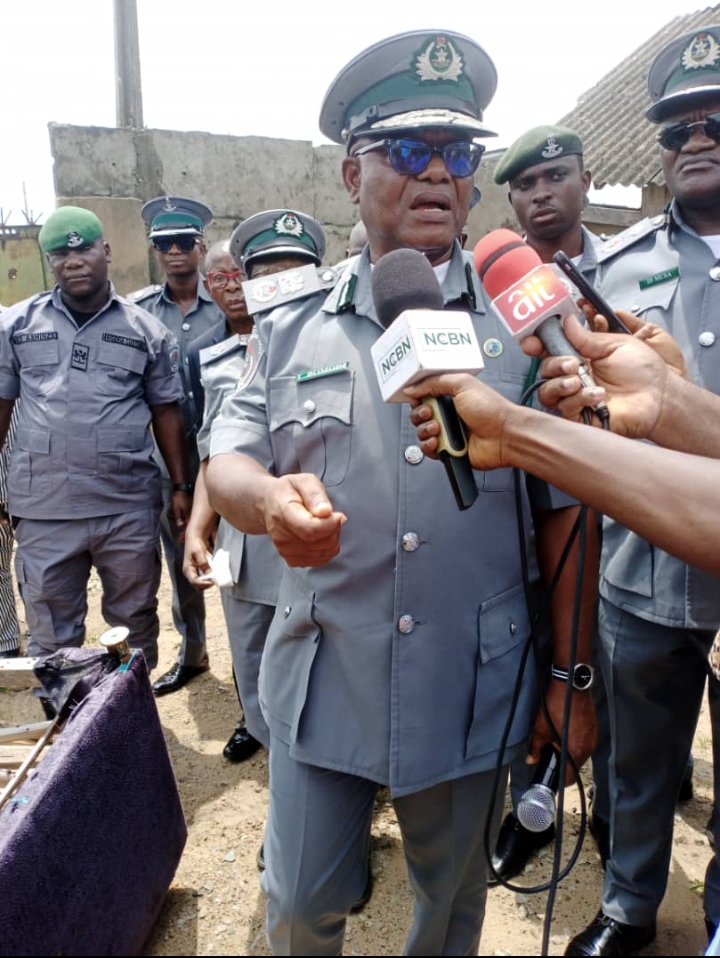
JANUARY-MAY REPORT: Seme Customs Hits N2.6bn, Facilitates ₦35.1bn Exports.
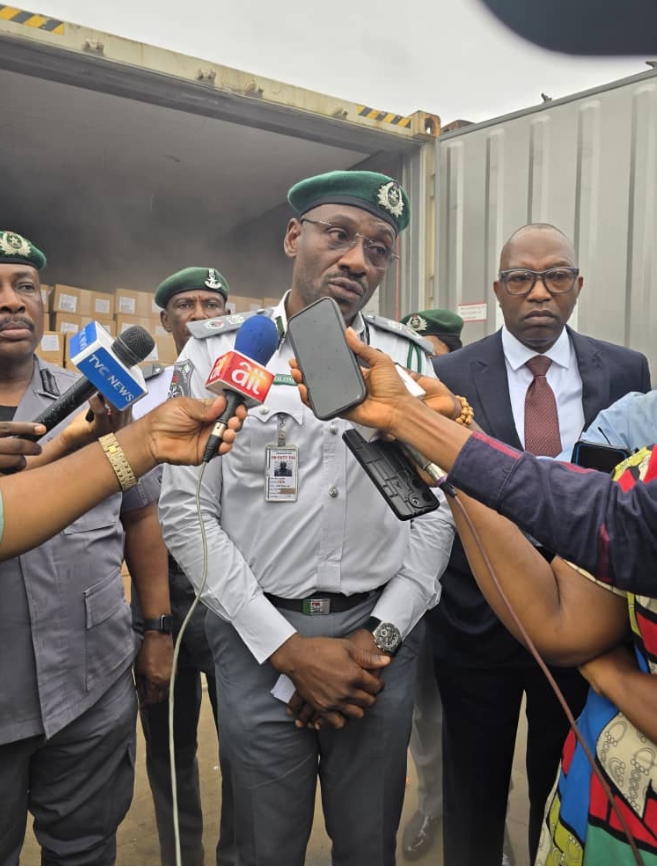
HALF YEAR, 2024: Apapa Customs Nets ₦1.024 Trillion, Records 143% Increase.

B’Odogwu: Apapa Customs Collects ₦161b in 3 Weeks, Assures of Improvements .

APFFLON Seeks Immediate Reform of CRFFN, Replacement of Registrar.

OMIS AWARDS, 2022: Greg Ogbeifun, Industry Gurus For Special Recognition.

PHOTO NEWS: Maritime Capacity Development
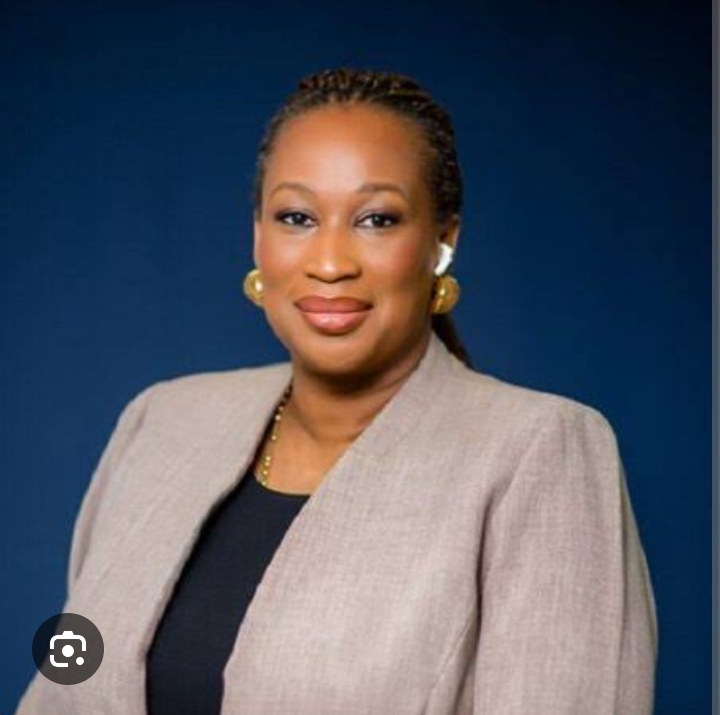
Adesuwa Ladoja Becomes MD/CEO, Lagos Free Zone.

FG Set To Re-establish National Shipping Line, To Take Advantage of $10 bn Annual Ship Charter Market.

Photo News: Salah Celebration
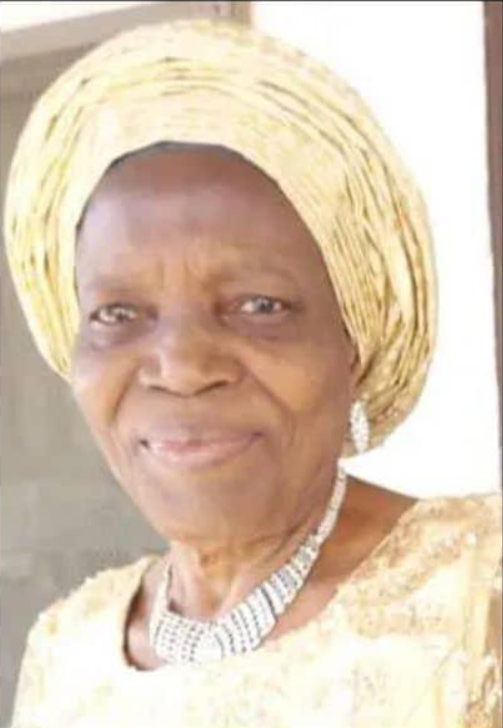
Mama Theresa Enisuoh Due For Burial April 27

Sylvanus Ekpo, ex-Editor, Shipping World Magazine, loses Mum

MAN, ORON: It’s Encomiums Galore From International Seabed Authority (ISA).

-
 Maritime Agencies3 weeks ago
Parts Central Ltd Set To Turn Waterway Waste into Wealth, says Onifade.
-
 Maritime Agencies3 weeks ago
LIMWEEK 2026: Measurable Outcomes Must Guide Policies in Nigeria’s Marine and Blue Economy.
-
 Maritime Agencies3 weeks ago
CUSTOMS’ ZONE ‘A’ SPORTS EVENT: CGC Adeniyi Highlights Need for Discipline, Teamwork in Customs Operations.
-
 Maritime Agencies2 weeks ago
Nigeria Collaborates with Benin Republic to Launch Modernised Joint Customs Border Post.
-
 Maritime Agencies2 weeks ago
Unregulated Deployment of Unmanned Vessels Threatens Maritime Security — Navy.
-
 Maritime Agencies2 weeks ago
MAMAL 2026: Stakeholders Recommend End -To-End Modernization of Nigeria’s Port System To Achieve Competitiveness.
-
 Maritime Agencies2 weeks ago
NPA Emphasizes the Importance of Truck Drivers, Donates 400 Safety Vests to AMATO and NURTW.
-
 Maritime Agencies2 weeks ago
MAN, Oron Commends MAMAL 2026, Urges Efficient, Competitive and Globally- Respected Maritime Sector.