
Maritime Agencies
MAN, Oron Commends MAMAL 2026, Urges Efficient, Competitive and Globally- Respected Maritime Sector.

By Izuchukwu Ozoemena
The Maritime Reports Association of Nigeria (MARAN) has been commended for organizing the 2026 edition of the MARAN Annual Maritime Lecture (MAMAL) which is a platform offered to industry stakeholders to engage in meaningful dialogue on Nigerian ports modernization, charges and the competitiveness question including broader challenges and opportunities available to Nigerian ports to make a mark in the global arena.
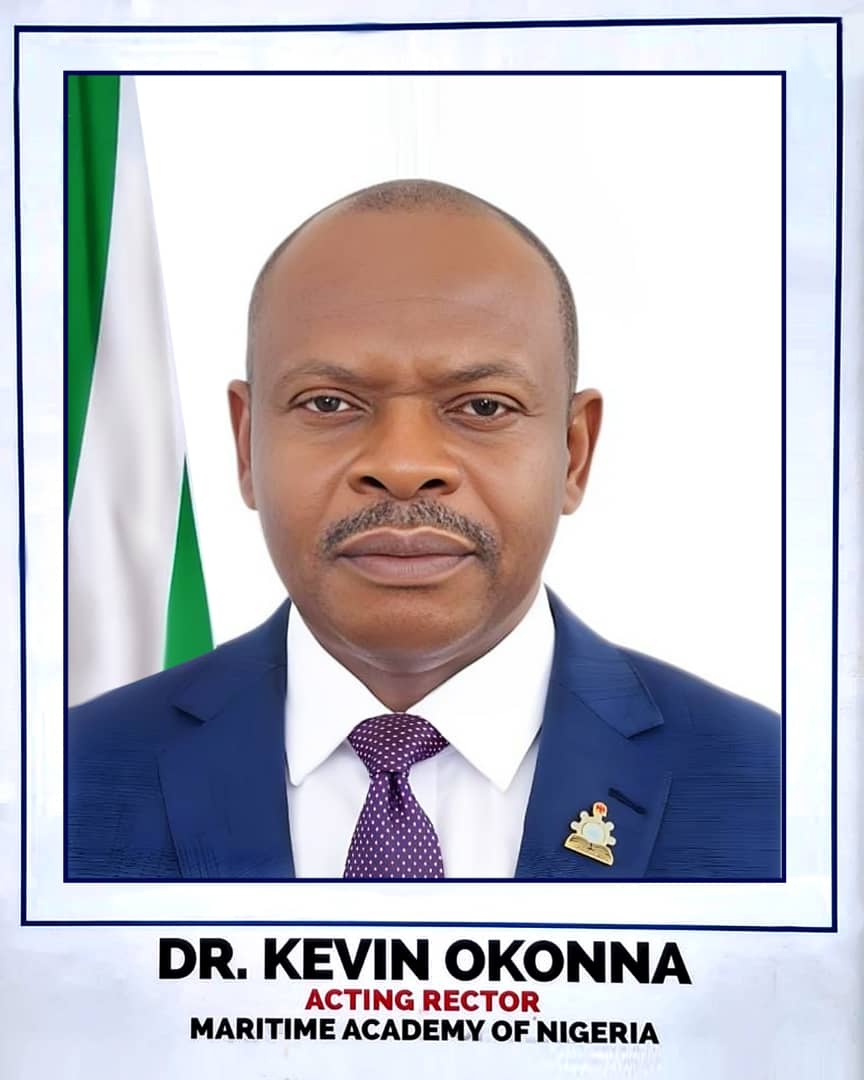
Dr Kevin Okonna, Acting Rector of Maritime Academy of Nigeria, MAN, Oron, made the commendation in Lagos, Thursday, while delivering a goodwill message at the MAMAL event at Kondo Hall, Air Force Base 1, Kofo Abayomi Street, Victoria Island, Lagos.
Speaking through Domo Umoekpe, MAN’s image maker, Dr Okonna said the competitiveness of Nigerian ports cannot be separated from fundamental requirements such as efficiency, innovation, safety, technology, regulation and most importantly, the quality of human capital driving the maritime sector.
”A modern port requires modern infrastructure and competent professionals who can operate, manage and sustain the infrastructure to international standards”, he explained.
He said that as Nigeria’s foremost maritime training and education centre, the Maritime Academy of Nigeria recognises the important role it must play in this regard and has continued to invest in modern training infrastructure, advanced simulators, practical training facilities and improved learning environments while strengthening partnerships with key stakeholders within and outside Nigeria.
”As we discuss port modernisation and competitiveness, we must recognise that our future ports will be driven by both technology and people. The Maritime Academy of Nigeria remains committed to aligning its training programmes with industry needs, international conventions and emerging technologies. Our modern simulation facilities, specialised seafarers training centre, marine engineering workshops and other practical training infrastructure provide our cadets and other maritime professionals with opportunities to develop competencies that are relevant to both the Nigerian and global maritime markets.”
The Federal Government’s renewed emphasis on the Marine and Blue Economy sector, he stated, aims to position Nigeria as a leading maritime hub in Africa and for this vision to become a sustainable reality, Nigerian ports must be competitive, her maritime institutions must be strengthened while the people must be equipped to take full advantage of the opportunities within the sector.
”We at the Academy are proud to be part of this national effort. I therefore commend the organisers of this event, the Maritime Reporters Association of Nigeria, on this laudable initiative which provides a valuable platform for meaningful engagement on issues critical to the growth and development of Nigeria’s maritime industry.”
He commended all stakeholders participating in the annual lecture for their commitment to advancing the conversation on Nigeria’s maritime competitiveness.
”I am confident that the discussions will generate practical recommendations capable of contributing to the modernisation of our ports and strengthening Nigeria’s position within the global maritime economy.”
”Let us continue to work together to build a maritime sector that is efficient, competitive and globally respected”.






Maritime Agencies
MAMAL 2026: FG Targets Globally Competitive Ports As Tantita Urges a ‘Look Beyond Lagos’ in Port Development.
By Izuchukwu Ozoemena
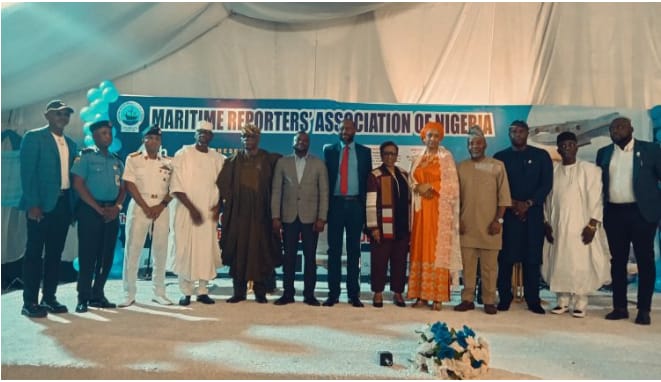
Minister of Marine and Blue Economy, His Excellency Adegboyega Oyetola has said the Federal Government is pursuing an ambitious programme aimed at transforming Nigeria’s maritime infrastructure and positioning the country as a maritime hub for West and Central Africa.
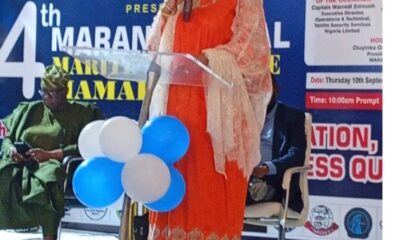
The Minister disclosed this as Special Guest of Honour at the MAMAL 2026 organized in Lagos by the Maritime Reporters Association of Nigeria (MARAN).
Represented by Mr Seyi Iyawe, General Manager, Corporate and Strategic Planning of the Nigerian Ports Authority (NPA), the Minister announced that the administration had secured approval for comprehensive modernisation of Apapa, Tin Can Island and other ports, describing the intervention as a structural renewal rather than cosmetic rehabilitation.
He said the programme would involve the rebuilding of key infrastructure, deeper channels capable of accommodating larger vessels, replacement of obsolete equipment and an overhaul of port operations.
“Our objective is to create ports that can move cargo, accommodate larger vessels, reduce turnaround time and lower the cost per unit of cargo handled,” the Minister said.
He also highlighted the government’s efforts to expand Nigeria’s deep-sea port capacity, saying the country could no longer depend exclusively on traditional ports.
According to him, deep-sea ports would help decentralise cargo flows, reduce pressure on existing facilities, open new economic corridors and create opportunities for investment, employment and industrial development.
Oyetola further cited investments in modern marine crafts including tugboats, mooring boats and pilot boats, as part of measures to improve vessel movement, safety and operational efficiency.
He said Nigeria’s improved maritime security record was another major component of the government’s competitiveness strategy.
According to the Minister, Nigeria has maintained a zero-piracy record in its territorial waters for four consecutive years, while strengthened security and compliance measures had also restored international confidence in Nigerian ports.
On economic regulation to tackle tariff and anti-competitive practices,
Oyetola said the establishment of the Nigerian Ports Economic Regulatory Agency (NPERA) represented a major institutional reform designed to strengthen economic regulation in the sector.
He said the new regulator would be empowered to enforce service standards, monitor tariffs, promote fair competition, address anti-competitive practices and protect port users from arbitrary and unpredictable charges.
“The more competitive our ports become, the greater the volume of legitimate trade they will attract. The more efficient our ports become, the more attractive Nigeria becomes to investors,” he said.
He added that the government’s philosophy was to move the maritime sector “from a culture of collecting charges to a culture of creating value.”
The Minister said the Federal Government would continue to pursue port modernisation, stronger regulation, improved maritime security, deep-sea port development, digitalisation and efficiency in order to make Nigeria’s maritime sector investment-friendly and globally competitive.
In his intervention, the Executive Director (Operations and Technical) of Tantita Security Services Nigeria Ltd, Capt Warredi Enisuoh warned that efforts to modernise Nigerian ports would have limited impact unless equal attention was paid to what happens outside the port gates as the ports cannot be modernized without modernizing the exits.
Enisuoh, the Chairman of the occasion, said Nigeria must adopt a broader approach to port modernisation that incorporates cargo evacuation, road infrastructure, rail, inland waterways, truck management and the reduction of multiple checkpoints and collection points.
“You cannot modernise a port without modernising your exit point,” he said.
According to him, automating operations inside Apapa or Tin Can Island would not eliminate congestion if cargo evacuation remained inefficient.
He pointed to the Port of Lomé in Togo as an example of how strategic investment in deeper channels and streamlined processes could enhance a port’s competitiveness.
Enisuoh noted that the growth in vessel sizes globally made deeper ports increasingly important, observing that some modern container ships now have capacities of more than 20,000 TEUs, far beyond the capacity of many traditional ports and anchorages in the region.
He argued that Nigeria must urgently deepen and expand its port infrastructure to accommodate larger vessels and compete effectively with neighbouring maritime gateways.
The Tantita boss also criticised the multiplicity of agencies and processes confronting shipping agents and port users in Nigeria.
According to him, operators are often required to interface separately with agencies including the NPA, Nigerian Maritime Administration and Safety Agency, NIMASA and Nigeria Customs Service, NCS resulting in delays and additional costs.
He advocated a genuine one-stop-shop system in which port users could complete multiple regulatory and payment requirements through an integrated platform.
Enisuoh further urged the Federal Government to look beyond Lagos and develop Nigeria’s numerous ports as part of a coordinated national maritime strategy rather than concentrating virtually all major port activity in Lagos.
He said the country must develop viable alternatives in other parts of the coastline to distribute cargo, reduce pressure on Lagos and create more efficient trade corridors into the hinterland.
Congestion and poor road infrastructure in Lagos, he warned, could undermine even the most sophisticated investment in port infrastructure.
“If city infrastructure is poor, spend all the millions of dollars you want to maintain the port. It’s not going to work. You will still get congestion,” he said.
He therefore called for a holistic national plan integrating ports, roads, bridges, rail, inland waterways, logistics hubs and cargo evacuation systems.
Maritime Agencies
MAMAL 2026: Stakeholders Recommend End -To-End Modernization of Nigeria’s Port System To Achieve Competitiveness.
By Izuchukwu Ozoemena
Maritime stakeholders say without modernizing infrastructure, digitalization, regulation, security and efficient connections, Nigeria’s quest to emerge the leading maritime and trade gateway in West and Central Africa will remain a mirage.
This was the consensus at the 2026 Annual Maritime Lecture of the Maritime Reporters Association of Nigeria, MARAN where growing concerns over port costs, congestion, cargo evacuation and the competitiveness of Nigerian ports were placed on the front burner.
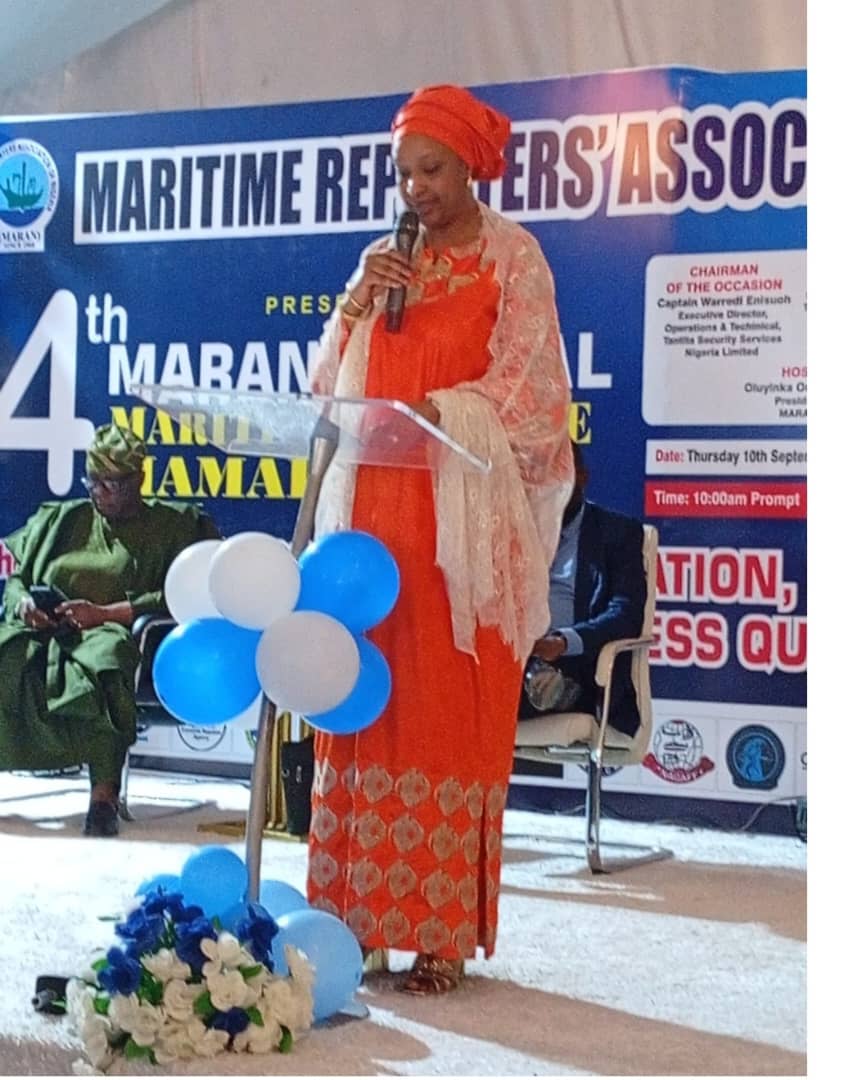
Delivering the keynote address, Special Adviser to President Bola Ahmed Tinubu on Policy Coordination and Head, Central Delivery Coordination Unit, Hadiza Bala Usman, said port modernisation must be measured by tangible improvements in cargo movement, turnaround times, logistics costs and export capacity rather than the volume of money spent on infrastructure.
Usman who served as former Managing Director, Nigerian Ports Authority (NPA) identified six critical dimensions of port modernisation. These are infrastructure and operational models, modern equipment, digitalisation, institutional reform, human capital development and commercial modernisation involving tariffs, concessions, investment and service quality.
Nigeria’s seaports, she explained, handle more than four-fifths of the country’s physical imports and exports, making their efficiency critical to the wider economy.
“When port costs are high, they travel into the price of rice on the trader’s stall, the landed cost of raw materials for the manufacturer and into the exchange-rate pressure created when importers pay dollar-denominated charges on top of naira-denominated uncertainties,” she said.
She commended the recent performance of Nigerian ports, noting that the World Bank and S&P Global Market Intelligence’s Container Port Performance Index showed that Tin Can Island Port ranked 10th globally, while the Lagos Port Complex, Apapa, ranked 12th among the world’s most improved container ports between 2020 and 2025.
Usman also cited increased cargo throughput, digitalisation initiatives and ongoing rehabilitation of major port infrastructure as evidence that reforms were beginning to yield results.
However, she warned that the progress must be consolidated through sustained investment and measurable performance.
She said the reconstruction of Apapa and Tin Can Island ports, rehabilitation of eastern ports, expansion of Lekki Deep Sea Port and development of other facilities would only deliver their full economic value if supported by efficient road, rail, barge, inland logistics and dry-port connections.
“A port cannot be globally competitive if its hinterland is not competitive,” she said.
Arguing that high port charges threaten competitiveness, the former NPA boss also called for a comprehensive review of Nigeria’s port tariff structure, arguing that the focus should shift from individual charges to the total cost of moving cargo through the Nigerian supply chain.
She noted that reports of the cost of clearing a standard 20-foot container through Apapa reaching about N14 million to N15 million, compared with lower costs at some competing West African ports, should concern policymakers.
She stressed, however, that the total cost comprises several different charges, including statutory port tariffs, terminal handling charges, shipping-line charges, detention, demurrage, haulage, documentation and clearing costs.
According to her, eliminating duplicated and obsolete charges and regulatory interventions would significantly reduce the cost of doing business at Nigerian ports.
“Charges cannot remain frozen indefinitely while infrastructure deteriorates, but neither can users be required to pay any amount demanded. Tariffs must be linked to value and performance,” she counselled.
Usman called for a predictable, transparent and performance-based tariff regime, with tariff adjustments supported by published methodologies, international benchmarks and measurable improvements in service delivery.
She also advocated the publication of an annual Port Economic Performance Report covering vessel and truck turnaround times, cargo-handling productivity, equipment availability, customs clearance, total logistics costs, digital transactions, export connectivity, customer satisfaction and dispute-resolution timelines.
Maritime Agencies
LIMWEEK 2026: Measurable Outcomes Must Guide Policies in Nigeria’s Marine and Blue Economy.
By Izuchukwu Ozoemena
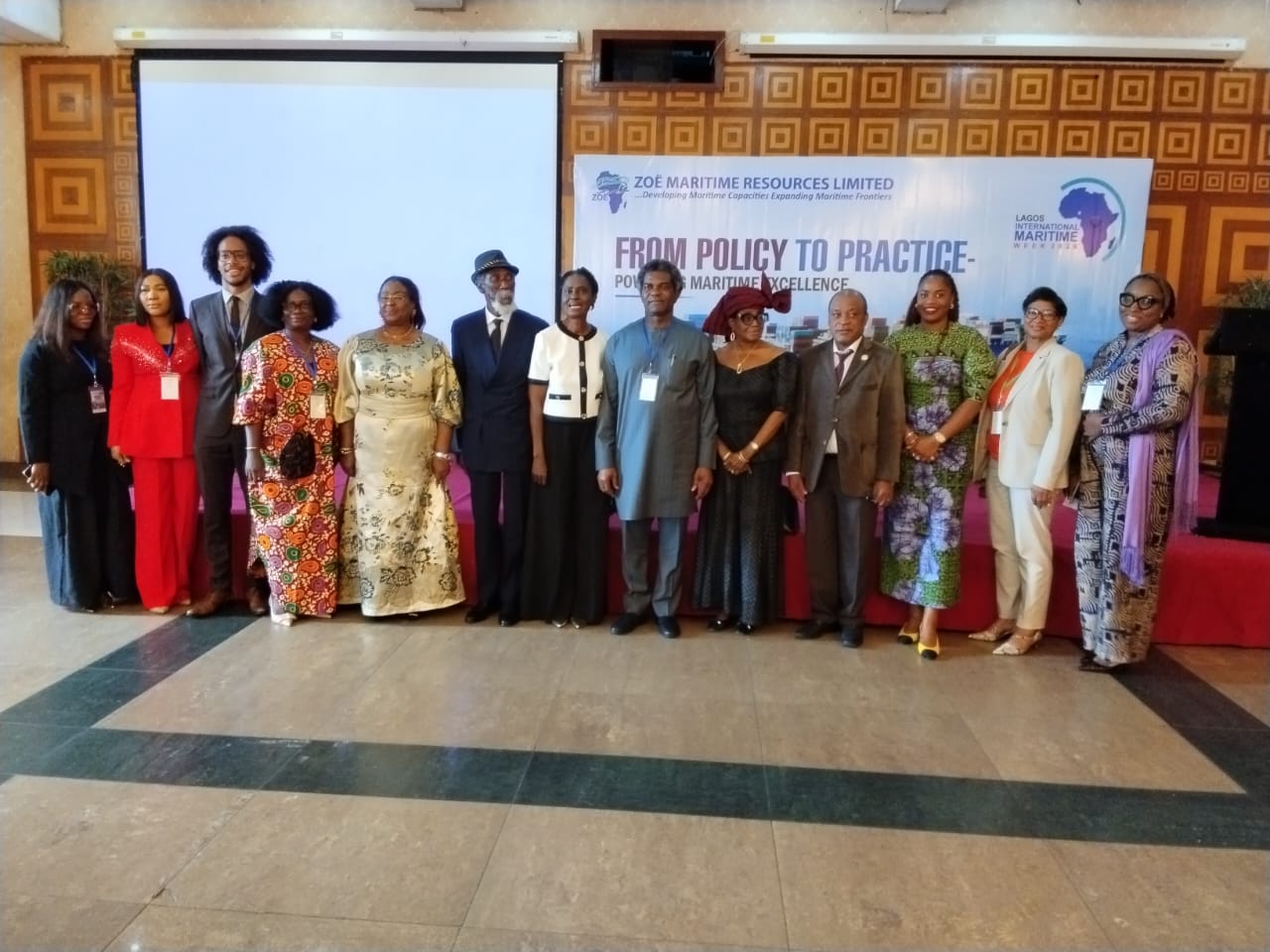
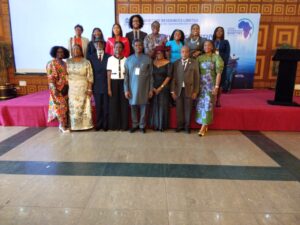
The Convener of the Lagos International Maritime Week (LIMWEEK) Conference , Barr Oritsematosan Edodo Emore has described the annual gathering as a veritable platform to assess the extent to which existing policies and programmes of government produce practical and measurable outcomes across the maritime, marine and blue economy value chains.
Edodo Emore who doubles as the Chair of Zoe Maritime Resources Ltd spoke in Lagos, Tuesday, while welcoming guests at the 2026 edition of the Lagos International Maritime Week (LIMWEEK) and the 11th International Maritime Business-to-Business Conference and Exhibition with the theme “From Policy To Practice: Powering Maritime Excellence” holding at the Oriental Hotel, Victoria Island.
Edodo-Emore who noted that maritime excellence cannot exist if the waterways suffer insecurity described maritime security as critical to cargo movement, preservation of national assets and a smooth functioning of the national economy.
The conference, she stated, would examine ways to develop sustainable African shipping environment, rescue insolvent operators and apply the UNCITRAL Model Law in African jurisdictions.
She acknowledged the attendance of representatives of the Nigerian Navy, Gulf of Guinea Commission, Maritime Organization of West and Central Africa, Gambian Maritime Authority and Damen Shipyard of South Africa, describing it as a way of strengthening cross-border and inter-regional collaboration .
Edodo-Emore also announced full scholarships for 12 students from Obafemi Awolowo University, University of Ilorin and Lagos State University, with beneficiaries to receive mentorship to facilitate their entry into the maritime industry.
In a lead paper presentation entitled “From Policy To Practice: Powering Maritime Excellence”, Oritsemeyiwa Eyesan, the Commission Chief Executive Officer, Nigerian Upstream Petroleum Regulatory Commission (NUPRC) said Nigeria must convert her vast offshore oil and gas assets into broader maritime investment for the purposes of job creation, enhancing industrial capacity and achieving a sustainable growth of her blue economy.
Speaking through the Executive Commissioner, Health, Safety, Environment and Community, Capt. John Tonlagha, the NUPRC boss said offshore petroleum development must be treated as a major component of Nigeria’s maritime economy.
Eyesan also called for stronger coordination among regulators, operators, investors, maritime agencies and coastal communities to close the gap between policy and implementation.
Eyesan said offshore petroleum projects generated opportunities across marine logistics, drilling, subsea engineering, fabrication, port services, offshore support vessels, maintenance, inspection, emergency response and environmental management.
“Offshore petroleum development is not separate from maritime development. It is a major maritime enterprise,” she said, stressing that the value chain runs from exploration through production, maintenance, decommissioning and environmental restoration.
She said the effectiveness of government policy should ultimately be measured by its implementation, even as the regulatory chain must progress from policy and legislation to standards, procedures, enforcement, monitoring and continuous improvement.
“A policy may be excellent on paper, but if it is not effectively implemented, it remains an aspiration,” Eyesan said.
She identified seven priorities for moving from policy to practice: predictability, domestic capability, maritime infrastructure, environmental and safety performance, human capital, partnership and continuous learning.
According to her, Nigeria had 131 offshore and deep offshore concessions as of January 1, 2026, representing 48.3 per cent of total concessions. The assets account for 61 per cent of annual oil production and hold 15.97 billion barrels of 2P oil and condensate reserves, or 43 per cent of national reserves, alongside 92.71 trillion cubic feet of gas reserves.
This underscores the strategic importance of offshore activities to Nigeria’s maritime economy and the need to ensure that more value is retained domestically through Nigerian businesses, professionals, technology and industrial capacity.
She urged government to regard ports, shore bases, fabrication yards, ship-repair facilities and logistics corridors as strategic infrastructure capable of serving both petroleum and wider maritime activities.
She also called for closer alignment between training institutions, regulators and industry to develop skills in offshore operations, marine engineering, digital systems, environmental management and decommissioning.


MAMAL 2026: FG Targets Globally Competitive Ports As Tantita Urges a ‘Look Beyond Lagos’ in Port Development.

MAMAL 2026: Stakeholders Recommend End -To-End Modernization of Nigeria’s Port System To Achieve Competitiveness.

MAN, Oron Commends MAMAL 2026, Urges Efficient, Competitive and Globally- Respected Maritime Sector.

LIMWEEK 2026: Measurable Outcomes Must Guide Policies in Nigeria’s Marine and Blue Economy.

CUSTOMS’ ZONE ‘A’ SPORTS EVENT: CGC Adeniyi Highlights Need for Discipline, Teamwork in Customs Operations.

Parts Central Ltd Set To Turn Waterway Waste into Wealth, says Onifade.

Oyetola Transfers Inland Dry Ports to NPA, Sets Up Committee for NSC–NPERA Transition.

Zoe Maritime Resources Hosts Lagos International Maritime Week (LIMWEEK), 2026.

FRESH ARMS IMPORTATION : Customs Hits Criminal Networks Hard, Intercepts 204 Firearms Routed from Turkey.

NAGAFF Suspends Planned Strike As NPA, Maritime Police, DSS Resolve To End Container Blockage.

CVFF: Cargo Availability, Trade Contracts Should Determine Ship Acquisition.

MARAN to Honour NAGAFF President, High Chief Tochukwu Ezisi as Patron.

Apapa Customs in Historic Revenue Boost, Nets N28 Billion In One Day.

COUNTDOWN TO 2027 ELECTIONS: Customs Hands Over 399 Seized Rifles To NCCSALW .

Ex-NPA MD, Hadiza Bala Usman, Set To Deliver Keynote Address At MAMAL 2026.

NAGAFF Petitions IGP On Alleged Police Extortion, Harassment At Sea Ports.

ABUJA MoU: WE FUNCTION BEHIND A MASK, says Capt Umoren

1. EXECUTIVE PLATFORM. AMES 2024: TIME TO CHANGE GOVERNMENT ATTITUDE TOWARDS SHIPPING DEVELOPMENT IS NOW, AMES President Charges FG.

2023 ELECTIONS:CILT Hosts Seminar on Logistics & Electoral Process

B’ODOGWU TRADE PORTAL: Customs Consolidates, Pilots Form ‘M’ Processing.

APFFLON Seeks Immediate Reform of CRFFN, Replacement of Registrar.
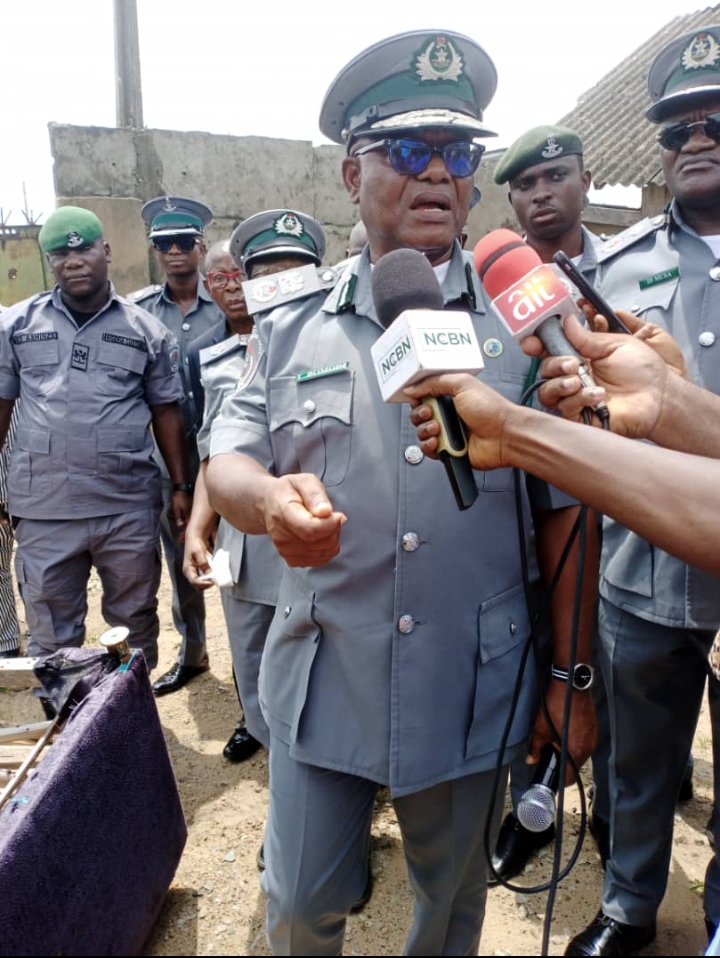
JANUARY-MAY REPORT: Seme Customs Hits N2.6bn, Facilitates ₦35.1bn Exports.
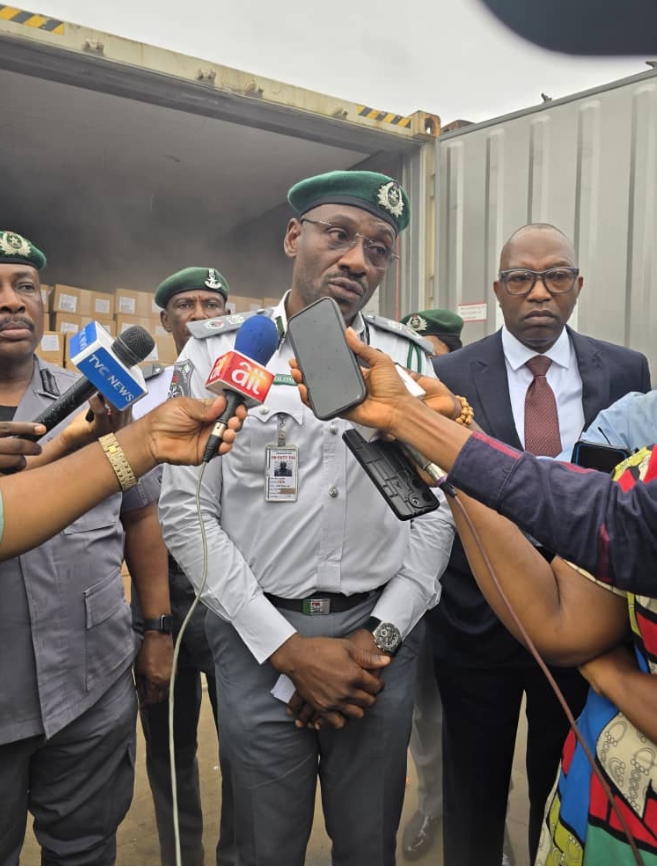
HALF YEAR, 2024: Apapa Customs Nets ₦1.024 Trillion, Records 143% Increase.

OMIS AWARDS, 2022: Greg Ogbeifun, Industry Gurus For Special Recognition.

B’Odogwu: Apapa Customs Collects ₦161b in 3 Weeks, Assures of Improvements .

PHOTO NEWS: Maritime Capacity Development

FG Set To Re-establish National Shipping Line, To Take Advantage of $10 bn Annual Ship Charter Market.
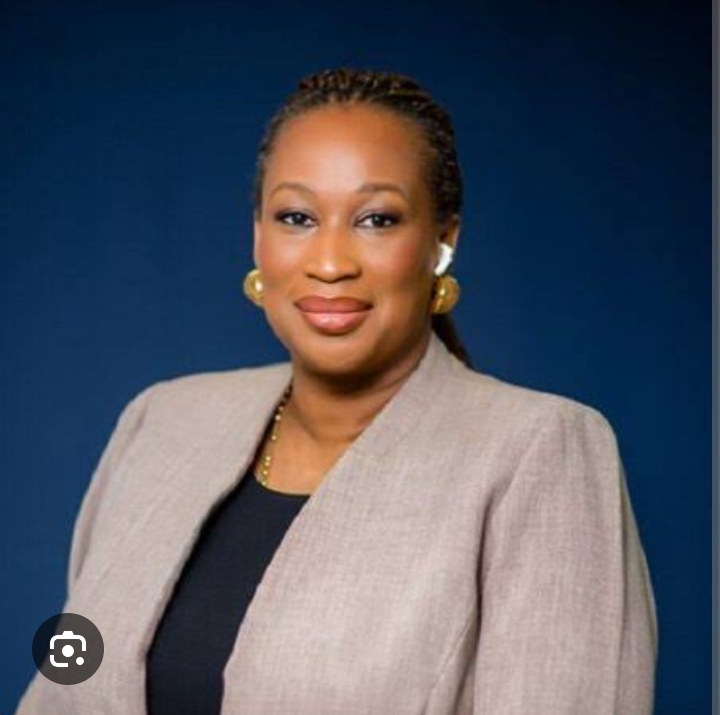
Adesuwa Ladoja Becomes MD/CEO, Lagos Free Zone.

Photo News: Salah Celebration

Mama Theresa Enisuoh Due For Burial April 27

Sylvanus Ekpo, ex-Editor, Shipping World Magazine, loses Mum

MAN, ORON: It’s Encomiums Galore From International Seabed Authority (ISA).

-
 Maritime Agencies3 weeks ago
CVFF: Cargo Availability, Trade Contracts Should Determine Ship Acquisition.
-
 Maritime Agencies2 weeks ago
NAGAFF Suspends Planned Strike As NPA, Maritime Police, DSS Resolve To End Container Blockage.
-
 Maritime Agencies3 weeks ago
Apapa Customs in Historic Revenue Boost, Nets N28 Billion In One Day.
-
 Maritime Agencies3 weeks ago
MARAN to Honour NAGAFF President, High Chief Tochukwu Ezisi as Patron.
-
 Maritime Agencies2 weeks ago
FRESH ARMS IMPORTATION : Customs Hits Criminal Networks Hard, Intercepts 204 Firearms Routed from Turkey.
-
 Maritime Agencies1 week ago
Zoe Maritime Resources Hosts Lagos International Maritime Week (LIMWEEK), 2026.
-
 Maritime Agencies1 week ago
Parts Central Ltd Set To Turn Waterway Waste into Wealth, says Onifade.
-
 Maritime Agencies1 week ago
Oyetola Transfers Inland Dry Ports to NPA, Sets Up Committee for NSC–NPERA Transition.