
Maritime Agencies
Freight Forwarders Unite, Refocus To Enhance Desired Relevance

By Izuchukwu Ozoemena
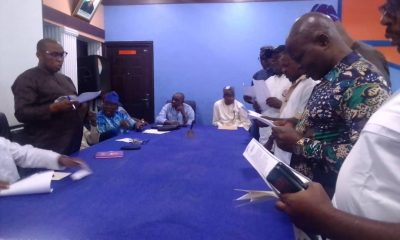
Freight forwarders of different persuasions who recently converged at the Council for the Regulation of Freight Forwarders of Nigeria (CRFFN) Headquarters, Life Camp, Abuja, under the aegis of the Freight Forwarders Consultative Forum (FFCF) came with one clear purpose.
The aim, they said, is to refocus and bring a fresh reawakening and more purposeful approach in addressing issues of concern to all and sundry, a gap they say the numerous associations have failed to fill.
The inaugural meeting attended by representatives of freight forwarding groups identified issues affecting practitioners and port users while carrying out their businesses.
Grey areas that needed immediate attention for the benefit of freight forwarders were isolated and exhaustively discussed. The smooth carriage of businesses at the seaports and other international
gateways into the country was the focus.
The Forum came up with suggestions on the way
forward in addressing their numerous challenges with the aim of pursuing and achieving the overall
regulatory functions of the CRFFN as mandated by Act No 16 of 2007.
After exhaustive deliberations, the FFCF came up with a communique with far-reaching resolutions prominent among which is to ensure the inclusion of a representative of the FFCF on the Governing Board of the Nigeria Customs Service (NCS) as well as deploying professional engagements in resolving all Customs trade-related
disputes and conflicts while exploring the tenets of international best
practices.
The Forum also resolved to support government to ensure that the Ease of
Doing Business Policy is fully harnessed by freight forwarders while the authorities are mandated to fully digitalize and automate shipping company and terminal operations documentation processes to
promote paperless transaction in the cargo clearance chain in line with
global best practices.
While endorsing inter-agency collaborations among government agencies and
service providers, the Forum sued for the extension of
the regulatory functions of the CRFFN to Haulage/Trucking
operators as an integral part of the Freight Forwarding scope.
The Forum will collaborate with relevant authorities to encourage and
sustain the use of NPA’s truck call-up system
to end traffic gridlocks within the ports access roads and adjoining
corridors leading to the ports.
The Forum is to work against any legislation that
promotes the dominance of foreigners against
indigenous practitioners from securing Freight Forwarding contracts in
Nigeria.
FFCF supports adequate logistics for the CRFFN to properly carry out its professional regulatory functions,
as this is germane to the success of the Council’s mandate.
There is need to expand the FFCF to include other critical stakeholders such as Nigerian Shippers
Council, Importers, Shipping Companies, Terminal Operators, etc, in line with the CRFFN regulatory provisions.
FFCF insists on full automation of all Customs processes to reduce physical
contact between the freight forwarders and the
Customs, while promoting paperless transaction in the clearance
documentation process.
The CRFFN Governing Council Board should address the incessant neglect of the provisions of the CRFFN Act 16, 2007
by the Nigeria Customs.
FFCF canvasses for the inclusion of Professional Freight Forwarders in all
National Committees related to international trade and logistics. These include
the National Committee on Trade Facilitation, AfCFTA, etc.
The Council should review various categories of her
membership – individual, corporate, and the
associations with the view to update the Register of Freight Forwarders of
Nigeria in line with the CRFFN Act No 16 of 2007.
CRFFN should visit sister agencies and service providers to
familiarize and synergize in addressing numerous challenges
facing freight forwarders.
FFCF undertakes to join in fighting corruption in all ramifications at seaports, airports and land
borders.
The Forum is to probe the
opening of Form “M”; the issuance of PAAR; multiplicity of Customs adhoc intervention teams; exploitation by other government agencies such as SON, NAFDAC, Quarantine, the
disruption of cargo clearance process by the Police; etc., with the aim to
create conducive and enabling business environment for her teeming
members.
Practitioners should forward to the FFCF their position papers on the identified issues in the course of carrying
out their businesses at the various entry points and hinterland connections to
the ports. These should include the noticeable infractions in the roles of government agencies, the service providers and other ancillary parties.
FFCF resolved to create smaller work groups to effectively
monitor activities of various parties such as Customs, terminal operators and other agencies critical in freight forwarding
operations.






Maritime Agencies
Nigeria Collaborates with Benin Republic to Launch Modernised Joint Customs Border Post.
By Izuchukwu Ozoemena
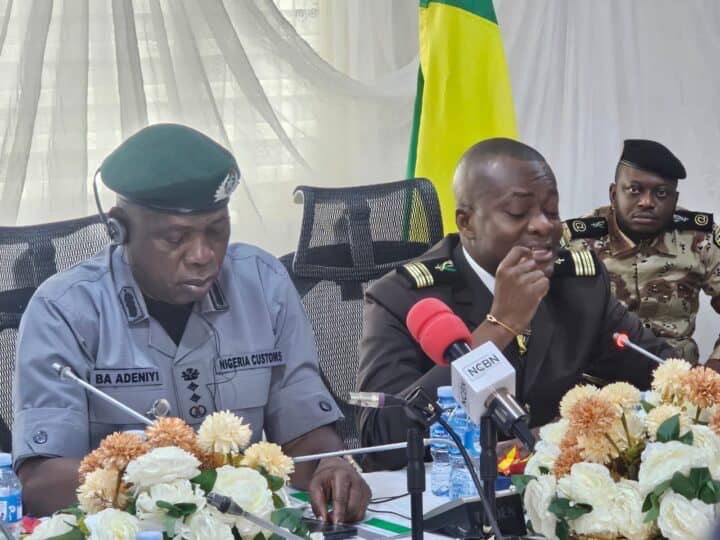
To deepen customs inter-connectivity, joint risk management, coordinated enforcement, secure infrastructure, harmonized procedures and accountable joint governance, the Nigeria Customs Service (NCS), in collaboration with the Benin Republic Customs has launched the transformation of the Seme-Krake Border Post into a modern technology-driven joint border post connecting Nigeria and the Republic of Benin.
Performing the historic transformation at the Seme-Krake Border Command, Friday, Comptroller -General of Customs, Dr Bashir Adewale Adeniyi said without real time interconnectivity between the customs administration of Nigeria and Benin, the facility being inaugurated cannot achieve the purpose intended.
He noted that while physical infrastructure such as lanes, parking lots, offices, weigh bridge and scanner housing have long been completed, integrating them into the customs systems with the aid of technology need to be in place.
”Without inter-connectivity, this is not a joint border post. It is a border post sharing a car park at best,” Adeniyi stated.
Key features of the modernisation arrangement include
real-time data exchange where declarations lodged on one side will be visible on the other, enabling seamless transit tracking and shared enforcement alerts.
Another is trader support. This is a dedicated facility for women traders which will simplify procedures for small consignments, provide multilingual information and reduce harassment and extortion.
Enhanced security enables the restoration of scanning capability, strengthened access control, surveillance and lighting.
Joint governance deals with harmonised bilingual SOPs. This covers cargo, passengers, inspection and incident escalation alongside a standing Nigeria–Benin enforcement and intelligence mechanism.
Speaking at the event, Benin Customs Director-General, Col. Raouf Malehossou Aboudou described the initiative as commendable as it is critical and well -intentioned in efforts to recalibrate joint operations to facilitate trans-border trade in the current era.
The Seme Customs Area Controller, Comptroller Abdullahi Shuaibu Kaila, also pledged the Command’s commitment to supporting seamless trade across the corridor.
The launch event featured a facility inspection, demonstration of the border modernization solution and a symbolic football match between the Seme Area Command team and Badagry United Football Club. The Command carried the day with a 2–0 victory against their opponents.
Maritime Agencies
NPA Emphasizes the Importance of Truck Drivers, Donates 400 Safety Vests to AMATO and NURTW.
By Izuchukwu Ozoemena
No matter the number of vessels that visit the port, it is the responsibility of truck drivers to move whatever cargos they carry into or out of the port and here lies their immense importance.
Mr Adebo Lawal, Port Manager, Lagos Port Complex (LPC), stated this in Lagos, Wednesday, while welcoming truck owners and drivers to a sensitization programme on the importance of minimum safety standards held at the Lilypond Export Complex, Apapa.
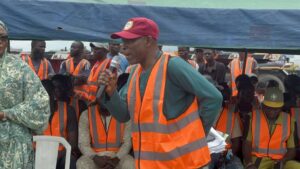
”To make you know how important you are in the system,” the Port Manager said, no matter the number of vessels that call at the port, truck drivers must move the goods they carry out or in. Here lies your importance.”
He deplore drivers who often leave their trucks on the road and disappear.
”Please know that you are a reliable part of the ecosystem and that’s the reason the NPA Managing Director approved the sensitization programme,” Adebo Lawal announced.
In his address, Engr Muktar Abdullahi of the Safety Department said the meeting was on the safety of everyone who interfaces with the ports. He noted that accidents do occur and that is reason NPA management makes reservations for minimum cases that enable accidents so that everyone can strive to avoid these to remain safe.
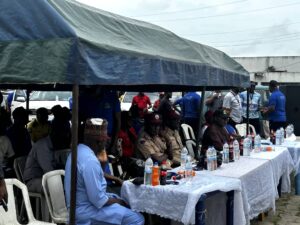
”Tyre can burst and a truck can overturn. If there is little fire in the truck it can cause a disaster even as defective trucks can lead to accident.”
He dwelt on the need to ensure an efficient lighting system as bad headlights can lead to a crash especially at night.
”Ensure your chassis do not rust because you carry containers and other heavy cargo,” he advised the truck drivers.
The truck brake, he explained, must always be active while brake fluid must be promptly replaced when due. He advised on the use of trafficators, advising they must be used at all times to notify other drivers on the direction of movement.
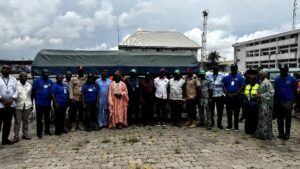
Before embarking on any trip, Engr Abdullah counselled, tyres must be checked and any defects corrected. He warned drivers to keep off any form of distraction and avoid excessive speed on the road at all times.
For the truck owner, he strongly recommended putting in place preventive measures against decay of motor parts while repairs must be prompt to ensure the truck remains safe and sound.
Licences, stickers and other vehicle documents must be up-to-date while efforts must be made to get these renewed when necessary.
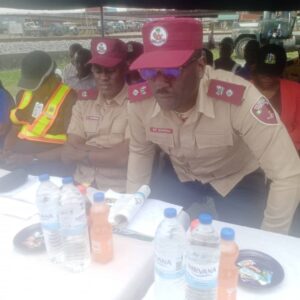
Addressing the drivers, Mrs Olanipekun, a staff of the Lagos Port Complex, enumerated important healthy tips, explaining that it is a necessary guide for all drivers and all other persons. She urged drivers to resist the urge to consume anything that will enhance their alertness and advised that they sleep or rest when nature calls.
Mrs Olanipekun pointed out the negative economic effects of the driver’s misconduct. This includes cargo loss, physical damages or death arising from accidents occasioned by carelessness on the part of the driver or any other person involved in the value chain.
”Nature cannot be cheated,” she stated. When you feel tired, is it to go and take enhancers? No! ”
Speaking from the viewpoint of road usage, Mr Oyediji of the Federal Road Safety Commission (FRSC) enumerated the main causes of road crashes which truck drivers must guard against, explaining that these relate more with the human factor.
Most times, truck drivers become over-confident to the point of refusing to latch their containers as expected. Most drivers over-speed and allow avoidable distractions to get the better part of them. Most of them drive under the influence of drugs and illicit drinks.
He advised them to renew their licenses when necessary. They should not drink and drive. They must consider other road users and be on the correct lane to allow other vehicles access.
From the Lagos State Transport Management Agency (LASTMA) came Mr Olalekan Bakare Oki who hailed the NPA for organizing the sensitization programme.
He explained that the truck owner, driver, law enforcement and the NPA each has a role to play to achieve minimum safety standards (MSS). The basis for MSS, he explained, is to reduce frequent breakdown on the road. LASTMA, he stated , has a free short code 3367 to contact if there is any issue with her officers and how they operate. This is to ensure free movement of trucks in the Lagos area.
In his intervention, Chief Remi Ogungbemi, Chairman , Association of Maritime Truck Owners (AMATO) paid special tribute to the LPC Port Manager whose tenure has signposted special regard for the welfare of truckers and drivers. He advised that since safety is the responsibility of everyone, all must cherish the importance. He stated that truck owners are working hard to bring professionalism in the sector and called on the NPA to consider the plight of drivers considering the harsh working environment.
”Let’s change the strategy and see the drivers as friends. Let the agencies not be seen by them as enemies working to undo them.”
Speaking along same line, Adesina Abimbola, AMATO Technical Director added that before long, drunk drivers would have their licenses revoked, adding that those in the habit should make adjustments. Truck owners should also be safety conscious and put their trucks in good condition.
On his part, Engr Ikpe, NPA’ s General Manager, Safety, who described the LPC Port Manager as a safety man enjoined the drivers to know that NPA Management loves them. Safety is a collective responsibility, he argued.
”We want you to stay safe; we’re interested in your safety.”
The drivers who turned up in their numbers described the sensitization programme as a parental engagement they cherish. They pleaded with enforcement organs to minimize the stress truck drivers are subjected to. They also requested for parking lots for relaxation whenever they are stressed.
Apart from AMATO, truck drivers from the National Union of Road Transport Workers (NURTW) also graced the occasion.
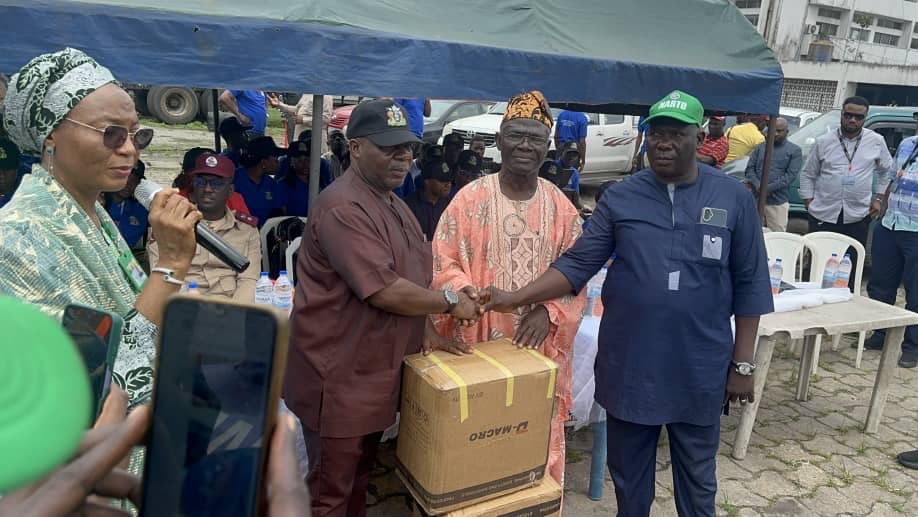
The LPC Port Manager, Mr Adebo Lawal, later presented 200 reflective jackets to AMATO and NURTW respectively.
Maritime Agencies
MAMAL 2026: FG Targets Globally Competitive Ports As Tantita Urges a ‘Look Beyond Lagos’ in Port Development.
By Izuchukwu Ozoemena
Minister of Marine and Blue Economy, His Excellency Adegboyega Oyetola has said the Federal Government is pursuing an ambitious programme aimed at transforming Nigeria’s maritime infrastructure and positioning the country as a maritime hub for West and Central Africa.
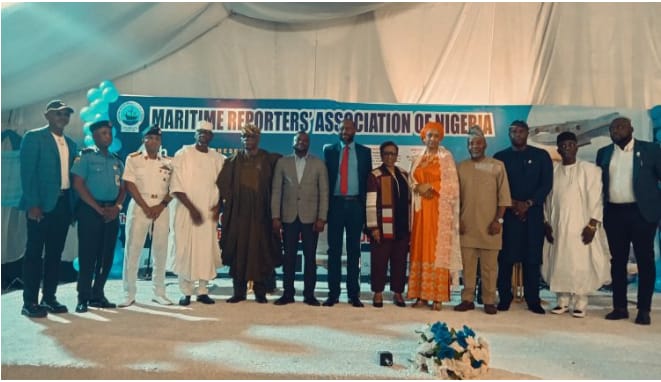
The Minister disclosed this as Special Guest of Honour at the MAMAL 2026 organized in Lagos by the Maritime Reporters Association of Nigeria (MARAN).
Represented by Mr Seyi Iyawe, General Manager, Corporate and Strategic Planning of the Nigerian Ports Authority (NPA), the Minister announced that the administration had secured approval for comprehensive modernisation of Apapa, Tin Can Island and other ports, describing the intervention as a structural renewal rather than cosmetic rehabilitation.
He said the programme would involve the rebuilding of key infrastructure, deeper channels capable of accommodating larger vessels, replacement of obsolete equipment and an overhaul of port operations.
“Our objective is to create ports that can move cargo, accommodate larger vessels, reduce turnaround time and lower the cost per unit of cargo handled,” the Minister said.
He also highlighted the government’s efforts to expand Nigeria’s deep-sea port capacity, saying the country could no longer depend exclusively on traditional ports.
According to him, deep-sea ports would help decentralise cargo flows, reduce pressure on existing facilities, open new economic corridors and create opportunities for investment, employment and industrial development.
Oyetola further cited investments in modern marine crafts including tugboats, mooring boats and pilot boats, as part of measures to improve vessel movement, safety and operational efficiency.
He said Nigeria’s improved maritime security record was another major component of the government’s competitiveness strategy.
According to the Minister, Nigeria has maintained a zero-piracy record in its territorial waters for four consecutive years, while strengthened security and compliance measures had also restored international confidence in Nigerian ports.
On economic regulation to tackle tariff and anti-competitive practices,
Oyetola said the establishment of the Nigerian Ports Economic Regulatory Agency (NPERA) represented a major institutional reform designed to strengthen economic regulation in the sector.
He said the new regulator would be empowered to enforce service standards, monitor tariffs, promote fair competition, address anti-competitive practices and protect port users from arbitrary and unpredictable charges.
“The more competitive our ports become, the greater the volume of legitimate trade they will attract. The more efficient our ports become, the more attractive Nigeria becomes to investors,” he said.
He added that the government’s philosophy was to move the maritime sector “from a culture of collecting charges to a culture of creating value.”
The Minister said the Federal Government would continue to pursue port modernisation, stronger regulation, improved maritime security, deep-sea port development, digitalisation and efficiency in order to make Nigeria’s maritime sector investment-friendly and globally competitive.
In his intervention, the Executive Director (Operations and Technical) of Tantita Security Services Nigeria Ltd, Capt Warredi Enisuoh warned that efforts to modernise Nigerian ports would have limited impact unless equal attention was paid to what happens outside the port gates as the ports cannot be modernized without modernizing the exits.
Enisuoh, the Chairman of the occasion, said Nigeria must adopt a broader approach to port modernisation that incorporates cargo evacuation, road infrastructure, rail, inland waterways, truck management and the reduction of multiple checkpoints and collection points.
“You cannot modernise a port without modernising your exit point,” he said.
According to him, automating operations inside Apapa or Tin Can Island would not eliminate congestion if cargo evacuation remained inefficient.
He pointed to the Port of Lomé in Togo as an example of how strategic investment in deeper channels and streamlined processes could enhance a port’s competitiveness.
Enisuoh noted that the growth in vessel sizes globally made deeper ports increasingly important, observing that some modern container ships now have capacities of more than 20,000 TEUs, far beyond the capacity of many traditional ports and anchorages in the region.
He argued that Nigeria must urgently deepen and expand its port infrastructure to accommodate larger vessels and compete effectively with neighbouring maritime gateways.
The Tantita boss also criticised the multiplicity of agencies and processes confronting shipping agents and port users in Nigeria.
According to him, operators are often required to interface separately with agencies including the NPA, Nigerian Maritime Administration and Safety Agency, NIMASA and Nigeria Customs Service, NCS resulting in delays and additional costs.
He advocated a genuine one-stop-shop system in which port users could complete multiple regulatory and payment requirements through an integrated platform.
Enisuoh further urged the Federal Government to look beyond Lagos and develop Nigeria’s numerous ports as part of a coordinated national maritime strategy rather than concentrating virtually all major port activity in Lagos.
He said the country must develop viable alternatives in other parts of the coastline to distribute cargo, reduce pressure on Lagos and create more efficient trade corridors into the hinterland.
Congestion and poor road infrastructure in Lagos, he warned, could undermine even the most sophisticated investment in port infrastructure.
“If city infrastructure is poor, spend all the millions of dollars you want to maintain the port. It’s not going to work. You will still get congestion,” he said.
He therefore called for a holistic national plan integrating ports, roads, bridges, rail, inland waterways, logistics hubs and cargo evacuation systems.


Nigeria Collaborates with Benin Republic to Launch Modernised Joint Customs Border Post.

NPA Emphasizes the Importance of Truck Drivers, Donates 400 Safety Vests to AMATO and NURTW.

MAMAL 2026: FG Targets Globally Competitive Ports As Tantita Urges a ‘Look Beyond Lagos’ in Port Development.

MAMAL 2026: Stakeholders Recommend End -To-End Modernization of Nigeria’s Port System To Achieve Competitiveness.

MAN, Oron Commends MAMAL 2026, Urges Efficient, Competitive and Globally- Respected Maritime Sector.

LIMWEEK 2026: Measurable Outcomes Must Guide Policies in Nigeria’s Marine and Blue Economy.

CUSTOMS’ ZONE ‘A’ SPORTS EVENT: CGC Adeniyi Highlights Need for Discipline, Teamwork in Customs Operations.

Parts Central Ltd Set To Turn Waterway Waste into Wealth, says Onifade.

Oyetola Transfers Inland Dry Ports to NPA, Sets Up Committee for NSC–NPERA Transition.

Zoe Maritime Resources Hosts Lagos International Maritime Week (LIMWEEK), 2026.

FRESH ARMS IMPORTATION : Customs Hits Criminal Networks Hard, Intercepts 204 Firearms Routed from Turkey.

NAGAFF Suspends Planned Strike As NPA, Maritime Police, DSS Resolve To End Container Blockage.

CVFF: Cargo Availability, Trade Contracts Should Determine Ship Acquisition.

MARAN to Honour NAGAFF President, High Chief Tochukwu Ezisi as Patron.

Apapa Customs in Historic Revenue Boost, Nets N28 Billion In One Day.

COUNTDOWN TO 2027 ELECTIONS: Customs Hands Over 399 Seized Rifles To NCCSALW .

ABUJA MoU: WE FUNCTION BEHIND A MASK, says Capt Umoren

1. EXECUTIVE PLATFORM. AMES 2024: TIME TO CHANGE GOVERNMENT ATTITUDE TOWARDS SHIPPING DEVELOPMENT IS NOW, AMES President Charges FG.

2023 ELECTIONS:CILT Hosts Seminar on Logistics & Electoral Process

B’ODOGWU TRADE PORTAL: Customs Consolidates, Pilots Form ‘M’ Processing.

APFFLON Seeks Immediate Reform of CRFFN, Replacement of Registrar.
JANUARY-MAY REPORT: Seme Customs Hits N2.6bn, Facilitates ₦35.1bn Exports.
HALF YEAR, 2024: Apapa Customs Nets ₦1.024 Trillion, Records 143% Increase.

OMIS AWARDS, 2022: Greg Ogbeifun, Industry Gurus For Special Recognition.

B’Odogwu: Apapa Customs Collects ₦161b in 3 Weeks, Assures of Improvements .

PHOTO NEWS: Maritime Capacity Development

FG Set To Re-establish National Shipping Line, To Take Advantage of $10 bn Annual Ship Charter Market.
Adesuwa Ladoja Becomes MD/CEO, Lagos Free Zone.

Photo News: Salah Celebration
Mama Theresa Enisuoh Due For Burial April 27

Sylvanus Ekpo, ex-Editor, Shipping World Magazine, loses Mum

MAN, ORON: It’s Encomiums Galore From International Seabed Authority (ISA).

-
 Maritime Agencies3 weeks ago
CVFF: Cargo Availability, Trade Contracts Should Determine Ship Acquisition.
-
 Maritime Agencies2 weeks ago
NAGAFF Suspends Planned Strike As NPA, Maritime Police, DSS Resolve To End Container Blockage.
-
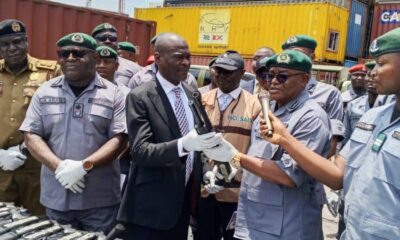 Maritime Agencies2 weeks ago
FRESH ARMS IMPORTATION : Customs Hits Criminal Networks Hard, Intercepts 204 Firearms Routed from Turkey.
-
 Maritime Agencies2 weeks ago
Zoe Maritime Resources Hosts Lagos International Maritime Week (LIMWEEK), 2026.
-
 Maritime Agencies1 week ago
Parts Central Ltd Set To Turn Waterway Waste into Wealth, says Onifade.
-
 Maritime Agencies2 weeks ago
Oyetola Transfers Inland Dry Ports to NPA, Sets Up Committee for NSC–NPERA Transition.
-
 Maritime Agencies1 week ago
CUSTOMS’ ZONE ‘A’ SPORTS EVENT: CGC Adeniyi Highlights Need for Discipline, Teamwork in Customs Operations.
-
 Maritime Agencies4 days ago
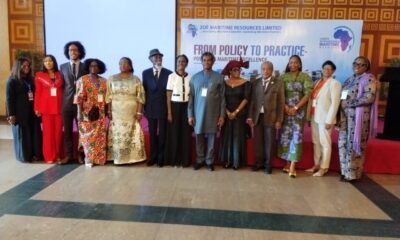
LIMWEEK 2026: Measurable Outcomes Must Guide Policies in Nigeria’s Marine and Blue Economy.