
Maritime Agencies
MAN Oron Rector Charges Cadets To Imbibe The Essence of Blue Economy.

By Izuchukwu Ozoemena
The Rector, Maritime Academy of Nigeria (MAN), Oron, Commodore Duja Emmanuel Effedua, (rtd) says it is significant that the institution’s Blue Economy Week just celebrated coincided with the 2024 Day of Seafarers in Nigeria.
The theme, “The Blue Economy: Issues, Challenges and Opportunities for Nigeria”, the Rector explained, was chosen to bring the cadets of the premier nautical school up to speed with the events and trends in the new dispensation following the recent carving out of the Marine and Blue Economy Ministry from the parent Ministry of Transportation.
Dedicating the programme to Nigerian seafarers and future seafarers in training, Commodore Effedua said the programme is expected to re-calibrate the minds of the cadets regarding what the Blue Economy is all about as much as inspire their confidence anew in the entire Maritime industry.
“Nigeria is developing its blue economy and as cadets and seafarers, it holds the future for most of you. We have taken you through various levels of academic training but at the end of the day, whatever your specialization, you will end up in the marine and blue economy. So, it is important you have the necessary and essential knowledge”, Commodore Effedua told the cadets.
He added that the Blue Economy and its rich potentials have always been there even though the country was “sea blind”.
“So far, we have been able to take you through quality training using the most sophisticated seafaring training assets such as simulators and other equipment. Your future is already laid out for you; just acquaint yourselves with the basic concepts of the blue economy because that is where you will end up upon leaving here.”
The blue economy, he explained, encompasses everything.
“You are aware of the enormous opportunities that lie in navigation, onboard ships, the fishing boats, tug boats and trawlers and all the connecting activities which are so vast. I am just giving you the synopsis.”
He told the cadets that the institution has brought experts and will continue to do so, to tell them all about the marine and blue economy and how to harness the huge potentials embedded in it. He therefore urged them to pay attention, explore, assimilate and grasp opportunities to learn what experts have to say.
“We shall continue to do this exercise often because this is the industry you belong to.”
So far, he said, MAN has been able to take the cadets through quality training using the most sophisticated seafaring training assets such simulators and other equipment.
“Your future is already laid out for you; just acquaint yourselves with the basic concepts of the blue economy because that is where you will end up upon leaving here.”
“So, we have brought experts here and will continue to do so, to tell you about the marine and blue economy and how to harness the vast potentials it holds. So, pay attention, assimilate, explore opportunities, grasp and learn what our experts will take you through as we shall continue to do this exercise often because this is the industry you belong to.
In a presentation entitled ‘Maritime Challenges in the Gulf of Guinea,’ former Chief of Naval Staff, Vice Admiral Dele Joseph Ezeoba explained that no country can comprehensively handle maritime threats on its own as only the coalition known as Global Maritime Partnerships (GMP) is the way to address comprehensive maritime insecurity.
“So far we have been able to take you through quality training using the most sophisticated seafaring training assets such simulators and other equipment; your future is already laid out for you, just acquaint yourselves with the basic concepts of the blue economy because that is where you will end up upon leaving here.
“The blue economy encompasses everything; you are aware of the enormous opportunities that lie in navigation, onboard ships, the fishing boats, tug boats and trawlers and all the connecting activities which are so vast; l am just giving you the synopsis. So we have brought experts here and will continue to do so, to tell you about the marine and blue economy and how to harness the vast potentials it holds. So pay attention, assimilate, explore opportunities,grasp and learn what our experts will take you through, we shall continue to do this exercise often because this is the industry you belong.”
Delivering a paper, ‘Maritime Domain Awareness: A Case Study of Nigeria’s Territorial Waters’, Rear Admiral Austin Oyagha (Rtd) called for greater synergy between the Nigerian Navy and the Nigerian Maritime Administration and Safety Agency (NIMASA) through harmonizing the management and control of critical security infrastructure into one bouquet to ensure greater focus and efficiency. He described as counterproductive the spread of Nigerian Navy’s Falcon Eye, NPA’s C31 and NIMASA’s C4i.
He referred to what he called ungoverned spaces, saying that this reflects lack of coordination usually driven by selfish political considerations. Oyagha said MDA radars are expected to cover the entire space of the nation’s Exclusive Economic Zone (EEZ) without any blind spot. But such full range coverage of the backwaters, he regretted, is not being achieved.
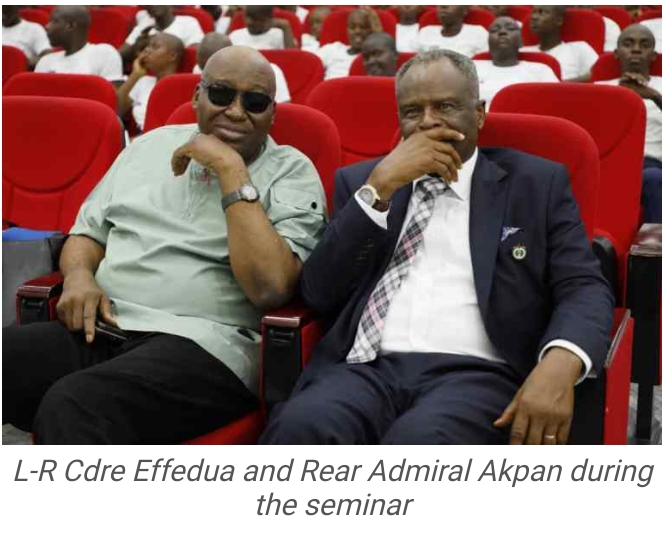
Speaking on ‘The Blue Economy: Imperatives for Nigeria,’ Rear Admiral FD Akpan, observed that for most people in Africa and in particular Nigeria, the ocean is an unfamiliar phenomenon.
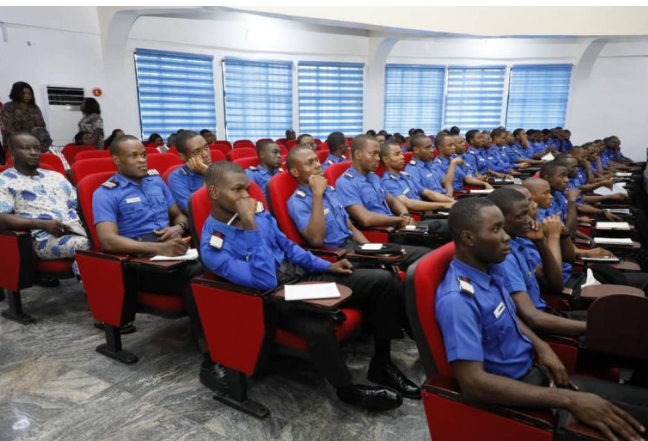
A cross-section of the cadets
“While many live very close to it, they never get to know it, never venture into it and its vastness is a source of admiration and myth to many. Lack of awareness and the potentials and resources available at sea often leads to government in some of the littoral states placing more emphasis on the development on materials/resources on land and becoming more land conscious in their approaches to policy generation and development drives. This tendency is referred to as Sea Blindness or Sea Myopia”.
“Sea Blindness,” he stated, “can be defined as a general ignorance and failure to appreciate the importance of maritime domain by the general public, policy makers, governments and scholars. It is referred to as an inability to appreciate the importance of the seas and naval power, particularly with strategic security and economic prosperity”
“A littoral country with sea blindness is not aware that maritime supremacy is an important foreign policy tool. It is also the inability to quantify in concrete terms the actual potential of the maritime environment based on research and other empirical evidence” Rear Admiral FD Akpan (rtd) said.
Dr. Felicia Mogo, another resource person, called for a sustainable use of the oceans and seas to ensure the sustainability of humanity on planet earth.
In their respective presentations, Dr. Hope Afoke Orivri and Mrs. Ezinne Chinwe Azuna, both veteran maritime journalists, spoke on the ‘Dangers of Marine Plastic Pollution’ and ‘The Art and Seascapes in Nigeria’s Blue Economy’.
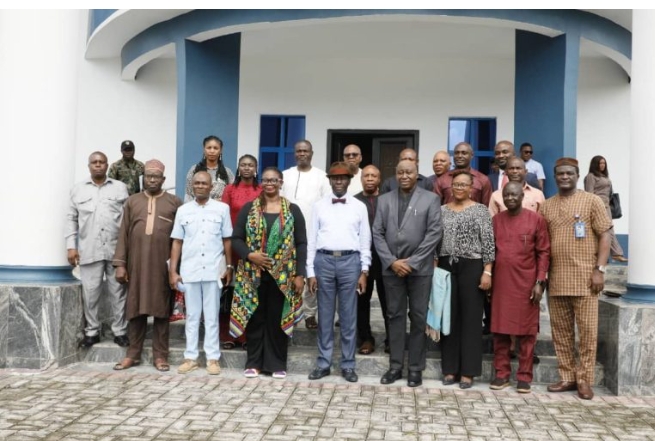
Other paper presenters at the occasion described as one of the best sensitization efforts of MAN Oron in recent times included Dr Eto Gabriel and Dr Kevin Okonna, both senior staff of the institution.






Maritime Agencies
CHANGE OF BATON AT OGUN 1 CUSTOMS: A.A.Ibrahim Succeeds O.O.Afeni, Pledges Intelligence-Driven Enforcement.
By Izuchukwu Ozoemena
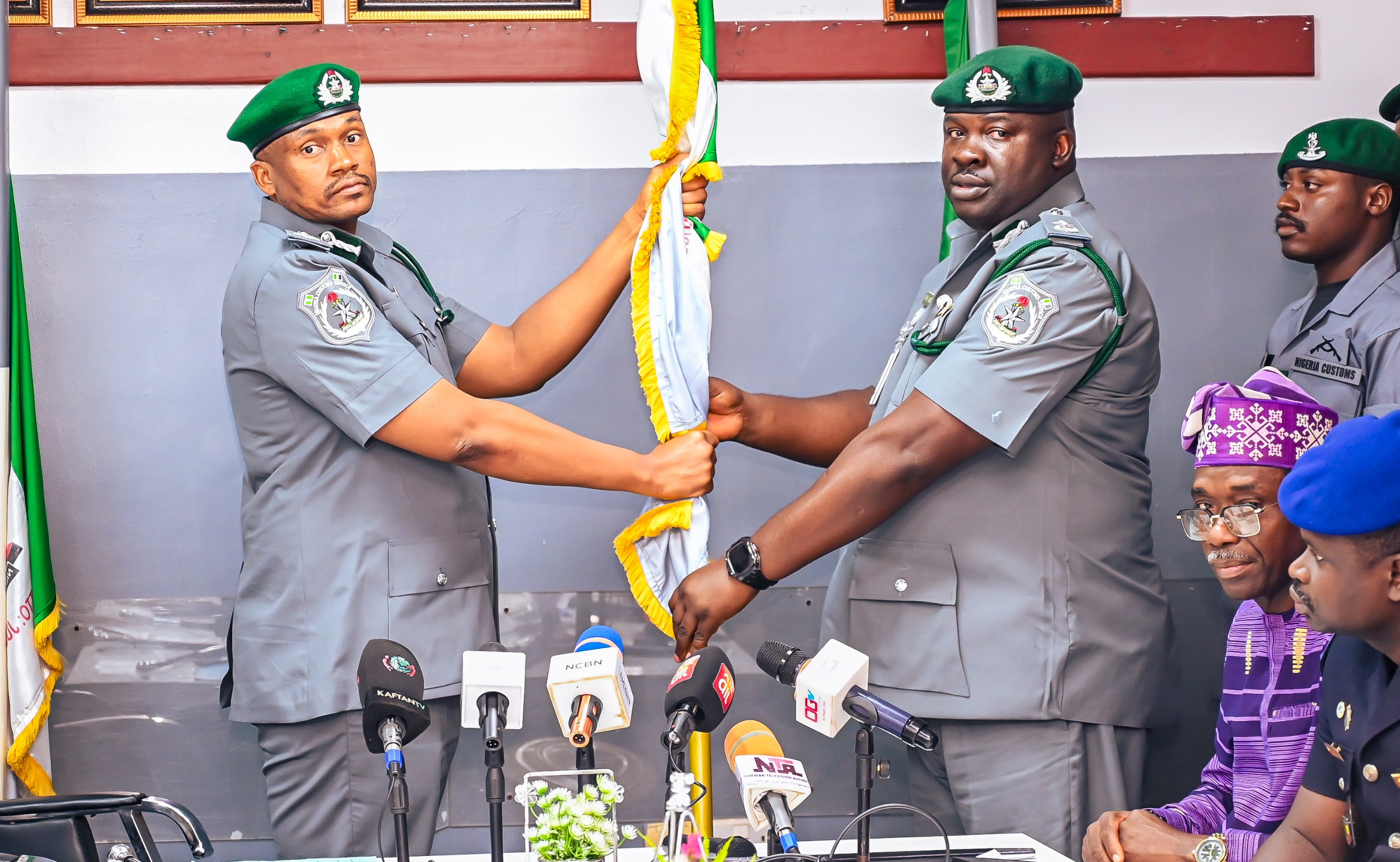
The new Customs Area Controller (CAC), Ogun 1 Customs Command, Deputy Comptroller A.A.Ibrhaim says strict adherence to professionalism, integrity, discipline and ethical conduct in accordance with the Nigeria Customs Service Act, 2023 would be his watchword.
D.C.Ibrahim made the pledge at Idiroko, Ogun State, Wednesday, while taking over the mantle of leadership from Deputy Comptroller O.O.Afeni.
Describing Afeni’s record as a legacy worthy of emulation, Ibrahim commended him for landmark strides in anti-smuggling, revenue generation and stakeholder collaboration.
Ogun I Command, he stated, is a unique and demanding operational environment characterised by extensive borders and vibrant economic activities.
He promised that his administration would deepen the gains already achieved in community relations, operational efficiency, intelligence-led enforcement, corporate social responsibility, trade facilitation and stakeholder collaboration.
Emphasizing the essence of teamwork and adherence to ethical standards, he urged officers and men of the Command to remain disciplined and professional in order to achieve the Command’s objectives.
He told traditional rulers, stakeholders and operators in the border corridor that he was out to maintain an open-door policy aimed at promoting peaceful coexistence and legitimate economic activities, even as he
warned smugglers and economic saboteurs that the area has no place for them.
“Under my leadership, the Command will not tolerate acts of economic sabotage. We shall employ all lawful and legitimate means at our disposal to combat smuggling, protect government revenue and ensure compliance with extant trade laws. Our approach will be firm, fair, professional and intelligence-driven,” Ibrahim pledged.
Describing the Command as strategic, Ibrahim called for support and prayers from all and sundry.
In his valedictory speech earlier, Deputy Comptroller Afeni informed that the Command strengthened operational collaboration with sister security agencies including the DSS, Nigerian Army, Nigeria Police Force, Nigeria Immigration Service, National Drug Law Enforcement Agency and others to combat cross-border crimes.
He said the Command also sustained engagement with traditional rulers, youth leaders and border community associations to build trust and minimise hostility during enforcement operations.
On revenue generation, export and anti-smuggling, he said the Command took difficult but necessary decisions to meet the targets set by the Comptroller-General of Customs, Dr Bashir Adewale Adeniyi.
Afeni disclosed that the Command had a target of ₦545,348,440.12 for the period he was in charge but generated ₦896,539,138 between January and August 2026, thus exceeding the ceiling by ₦350,713,920.82.
He attributed the performance to the dedication, transparency and resilience of officers and men of the Command.
The Command also recorded 31,177 metric tonnes of exports with a Free on Board (FOB) value of ₦4,644,740,110.09 during the period.
Afeni said the figure represented a significant improvement from the corresponding period in 2025, when the Command recorded no export trade.
On anti-smuggling operations, he said the Command recorded 327 seizures between December 4, 2025 and September 29, 2026, with a combined Duty Paid Value (DPV) of ₦14,750,394,251.92.
The seizures included 32,449 parcels of Cannabis Sativa, including Colorado and Ghana Loud; 50 sacks of raw cannabis; 19,525 litres of Premium Motor Spirit (PMS); 8,787 cartons of spaghetti; 11,578 bags of foreign parboiled rice, equivalent to 12 truckloads; 6,453 kegs of vegetable oil; six live pangolins; 2,128 live cartridges; 1,315 Riodin explosives; two revolver pistols; 11 Dane guns; two locally made pistols; five complete sets of camouflage uniforms; 32 camouflage inner wears; 32 camouflage tops; 197 camouflage trousers; and seven foreign-used vehicles, including a 2026 Range Rover P530 Autobiography.
The Command’s collaboration with sister agencies, he announced, also resulted in the handing-over of seized illicit drugs to the NDLEA Idiroko Special Command, while confiscated arms and ammunition were transferred to the National Centre for the Control of Small Arms and Light Weapons (NCCSALW) for necessary action.
The Command’s corporate social responsibility and environmental initiatives executed during his tenure included the sponsorship of the AFENI Cup inter-school football tournament at Iko Gateway Grammar School in July 2026, aimed at promoting discipline and discouraging youth involvement in smuggling.
He also disclosed that the Command emerged as champion in volleyball at the inter-command athletic competitions held in August and September 2026.
As part of its environmental initiatives, the Command launched a Green Border and Environmental Sustainability afforestation programme, during which hundreds of trees were planted along critical border corridors.
Two major infrastructure projects executed under the Comptroller-General’s corporate social responsibility initiative had been completed and would soon be commissioned, Afeni disclosed. These include the complete renovation of Igiri High School, Ijofin in Ipokia Local Government Area covering classroom blocks, the principal’s office and sanitary facilities, as well as a newly constructed jetty at Ijofin to support riverine transportation and local trade.
Afeni attributed the achievements recorded during his tenure to the cooperation of traditional rulers, religious leaders, youths and host communities.
He thanked the Comptroller-General, NCS management, officers and men of the Command and other stakeholders for their support.
Present at the occasion were the Acting Area Controller, PTML Command, Deputy Comptroller Nura Miko; senior Customs officers from various units within Zone A; heads of sister security agencies; freight forwarders; traditional rulers and community leaders. Representatives from the Republic of Benin and other stakeholders also attended.
By Izuchukwu Ozoemena
The Ndigboamaka Progressive Markets Association has officially announced the 3.0 Edition of a sporting collaboration between her and the United Nigeria Airlines. Known as the United Nigeria Airlines Ndigboamaka Traders Cup 2026 (3.0 Edition), the sporting fiesta is part of a fresh initiative to encourage her members and staff of the airline to engage in sporting activities for leisure.
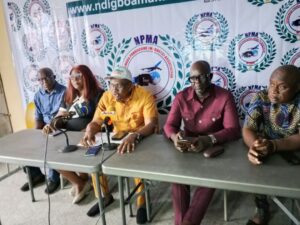
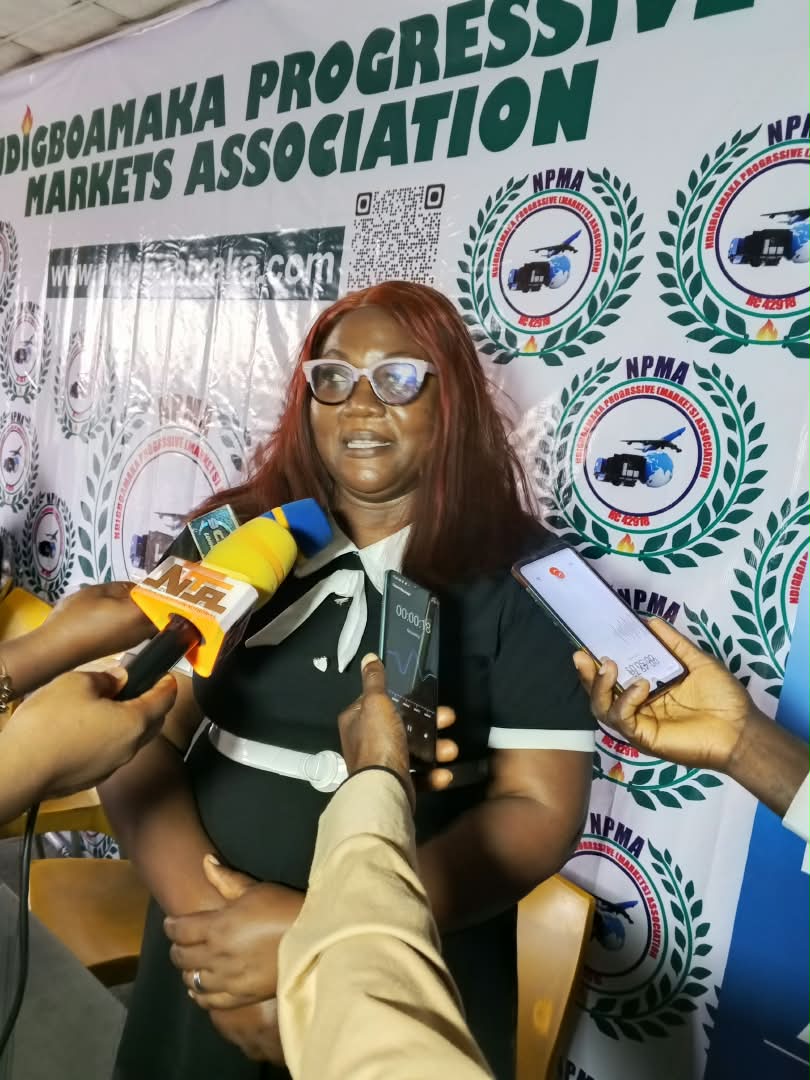
Speaking at the event in Lagos, National President of the traders’ group, Comrade Chinedu Ukatu described the official unveiling as a milestone.
”Today, we are marking another milestone. We are bringing all 58 markets together, not in the marketplace, but on the football pitch under one umbrella of unity.”
”As you all know, Ndigboamaka Progressive Markets Association is the apex body of 58 major markets in Lagos State with over 2 million traders. Our mandate goes beyond trade – we promote unity, peace, welfare and progress of our members and the entire Lagos trading community.
Describing football as a unifying language, he said it serves as a positive engagement and a unifying force for youths in the market, hence the choice.
”We need to promote healthy living among our traders. We want to strengthen brotherhood among markets – Alaba, Trade Fair, Ladipo, Computer Village, Balogun, Lagos Island, ASPMDA and all others.”
”I am therefore very delighted to announce that United Nigeria Airlines, a proudly Nigerian airline led by our National Grand Patron, Prof. Obiora Okonkwo (OFR), has graciously accepted to be the Title Sponsor of this tournament,” Ukatu stated.
”United Nigeria Airlines is an airline that believes in connecting people and businesses – just as we connect markets and traders. Their decision to partner with us shows their deep commitment to grassroots development and the informal sector which is the real engine of Nigeria’s economy.”
The tournament named United Nigeria Airlines Ndigboamaka Traders Cup 2026 has the theme Unity, Enterprise and Healthy Living.
Of 58 affiliate markets,12 qualified market teams are billed to participate for a duration of six weeks.
Grand finale in Lagos featuring trophies, medals and cash prizes will be graced by an expected audience of over 500,000 direct spectators and over 5 million reach via radio and social media.
”This tournament will also be an opportunity to discover football talents among our traders and empower our youths.”
On behalf of the National Executive of Ndigboamaka, Comrade Ukatu thanked the Chairman and Management of United Nigeria Airlines for believing in the vision.
”I also thank all our media partners who have agreed to join us on this journey.”
He called on all market leaders, corporate bodies and well-meaning Nigerians to come and support the laudable project.
Maritime Agencies
Traders’ Umbrella Group Evaluates State of the Nation, Expresses Serious Concerns of the Trading Public.
By Izuchukwu Ozoemena
Following heightening campaign activities preparatory to the 2027 general elections, the Ndigboamaka Progressive Markets Association has taken what it calls a political and economic stand as it affects the Nigerian trader.
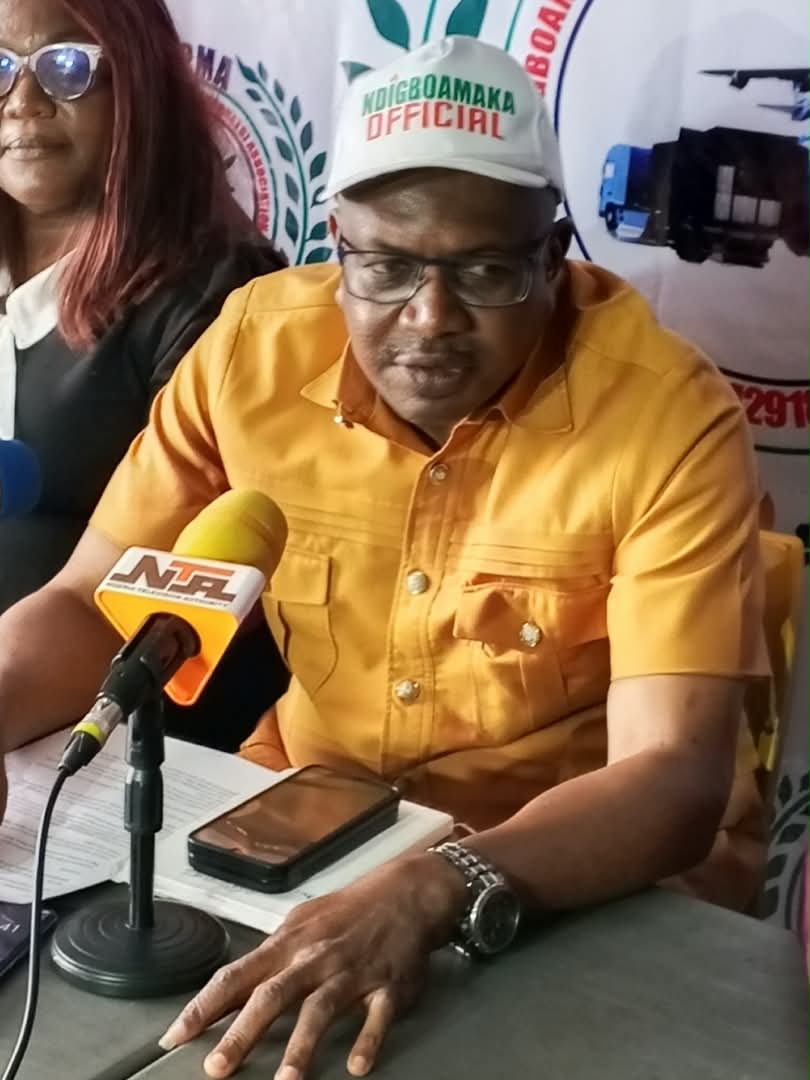
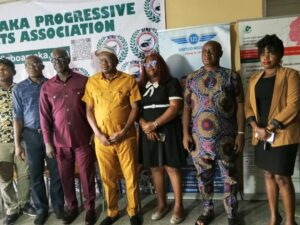
Chief Chinedu Ukatu, President of the traders’ group made the disclosure in Lagos, Monday, while speaking on the state of the nation and issues of grave concern to the Nigerian trading community.
Ukatu explained that as leaders of the largest market association in West Africa representing over 58 major markets and millions of traders in Lagos State, Ndigboamaka Progressive Markets Association cannot remain silent and unconcerned while her members bear the brunt of the current realities of the Nigerian nation.
On the political turf, he described his Association as non-partisan.
”Let us state clearly once again that as an Association, we are non-partisan. We do not belong to any political party. But we will only support and endorse parties and candidates who are willing to accommodate our aims and objectives vis-à-vis protecting the interests of traders.”
”As traders, we desire only one thing: stability. Business thrives where there is peace and predictability.”
While commending the Federal Government on current efforts to secure the nation, the Association singled out insecurity on the highways.
”Lagos to Onitsha, to Kano, to Port Harcourt has become a direct tax on trading. Our members pay heavily to move goods. Trucks are delayed, goods are lost, drivers are attacked.”
Warning that the economy cannot grow when the roads that connect the markets are not safe, Ukatu appealed to the Federal and State Governments to do more to secure the trade corridors.
”The trader is not a politician; he is not interested in party A or party B. He is interested in whether his goods will get to the market safely.”
”We also call for an end to multiple taxation and harassment by non-state and state actors. In Lagos alone, a single container is subjected to over 15 different levies from the port to the shop. This is politically unsustainable.”
Still on the economic state of the nation, the Ndigboamaka Progressive Markets Association Servant-Leader described the Nigerian trader as resilient. However, resilience has a limit, he explained.
”Today, the Nigerian economy is facing a triple challenge: high exchange rate, high cost of energy, and low purchasing power.”
Addressing foreign exchange and imports, he said over 70% of goods in Nigerian markets are imported.
”The volatility of the Naira to the Dollar has made price planning impossible. A trader who orders goods today cannot predict the cost of clearing it tomorrow. We call on the Central Bank of Nigeria to create a special stability window for genuine importers of essential commodities and raw materials.”
Traders, he regretted, run their businesses on diesel and generators.
” The cost of power is now higher than the rent of our shops. We cannot compete with other nations where traders have 24-hour electricity. We urge the Federal Government to fast-track the special industrial and market power projects.”
Decrying mounting inflation and a reduction in purchasing power, the Association boss said their customers now buy less.
”Families are cutting down on everything. When the buyer has no money, the seller cannot sell. We therefore support all policies that bring down food inflation and put money back in the pockets of ordinary Nigerians.”
On rumoured protests regarding Chinese and other foreigners taking over retail trade ordinarily reserved for Nigerians, he clarified that his group never mobilized any trader to protest against Chinese citizens or any other foreigners in Nigeria as Nigeria is a hospitable nation.
”However, as a trade union, we are asking for what is done all over the world. We seek the required legislation and enforcement of the Indigenous Trade Policy as regards retail trade and investment.
The Nigerian Enterprises Promotion Decree of 1972 now replaced by the NIPC Act, he recalled, clearly reserved retail trading for Nigerians.
”Today, we see foreigners moving from wholesale and manufacturing directly into our markets to sell retail, competing with our members who cannot do the same in their countries.”
”We are not asking for xenophobia; we are asking for reciprocity and protection as provided in other climes. We call on the National Assembly and the Federal Government to revisit and strengthen the Local Content and Retail Trade protection laws to save Nigerian traders from extinction,” he demanded.
On political parties now canvassing for votes, the group said the traders would only support candidates or parties that will abide by specific commitments that favour the association.
”For the sake of the millions of traders we represent, we shall only support any Candidate or Party that will assure us of the following:
1. Setting up a joint Federal and State Task Force to address multiple taxation at the ports and on the roads.
2. Improved security on major trade routes, especially the Lagos – Benin – Onitsha corridor.”
Other commitments include providing single-digit interest rate loans for traders through the Bank of Industry and other development banks;
inclusion of market leaders in the formulation of trade and fiscal policies as policy for traders cannot be made without traders.
Enactment and enforcement of a clear Retail Trade Protection Law to regulate foreign participation in the retail space is also a major commitment candidates and parties seeking for votes must abide by, Ndigboamaka Progressive Markets Association stated.


CHANGE OF BATON AT OGUN 1 CUSTOMS: A.A.Ibrahim Succeeds O.O.Afeni, Pledges Intelligence-Driven Enforcement.

SPORTS: Group Unveils United Nigeria Airlines Ndigboamaka Traders’ Cup, 2026.

Traders’ Umbrella Group Evaluates State of the Nation, Expresses Serious Concerns of the Trading Public.

Tantita’s Oil Pipeline Surveillance Yields Huge Dividend, Shoots Nigeria’s Q2 Oil Exports Earnings To $9.39bn.

Ehingbeti Summit: Stakeholders Say Coastal Communities Need Funding for Development.

Ogun 1 Customs Repeats Stern Warning To Smugglers, Confiscates Latest Brand of Range Rover, Other Contrabands.

Unregulated Deployment of Unmanned Vessels Threatens Maritime Security — Navy.

Nigeria Collaborates with Benin Republic to Launch Modernised Joint Customs Border Post.

NPA Emphasizes the Importance of Truck Drivers, Donates 400 Safety Vests to AMATO and NURTW.

MAMAL 2026: FG Targets Globally Competitive Ports As Tantita Urges a ‘Look Beyond Lagos’ in Port Development.

MAMAL 2026: Stakeholders Recommend End -To-End Modernization of Nigeria’s Port System To Achieve Competitiveness.

MAN, Oron Commends MAMAL 2026, Urges Efficient, Competitive and Globally- Respected Maritime Sector.

LIMWEEK 2026: Measurable Outcomes Must Guide Policies in Nigeria’s Marine and Blue Economy.

CUSTOMS’ ZONE ‘A’ SPORTS EVENT: CGC Adeniyi Highlights Need for Discipline, Teamwork in Customs Operations.

Parts Central Ltd Set To Turn Waterway Waste into Wealth, says Onifade.

Oyetola Transfers Inland Dry Ports to NPA, Sets Up Committee for NSC–NPERA Transition.

ABUJA MoU: WE FUNCTION BEHIND A MASK, says Capt Umoren

2023 ELECTIONS:CILT Hosts Seminar on Logistics & Electoral Process

1. EXECUTIVE PLATFORM. AMES 2024: TIME TO CHANGE GOVERNMENT ATTITUDE TOWARDS SHIPPING DEVELOPMENT IS NOW, AMES President Charges FG.
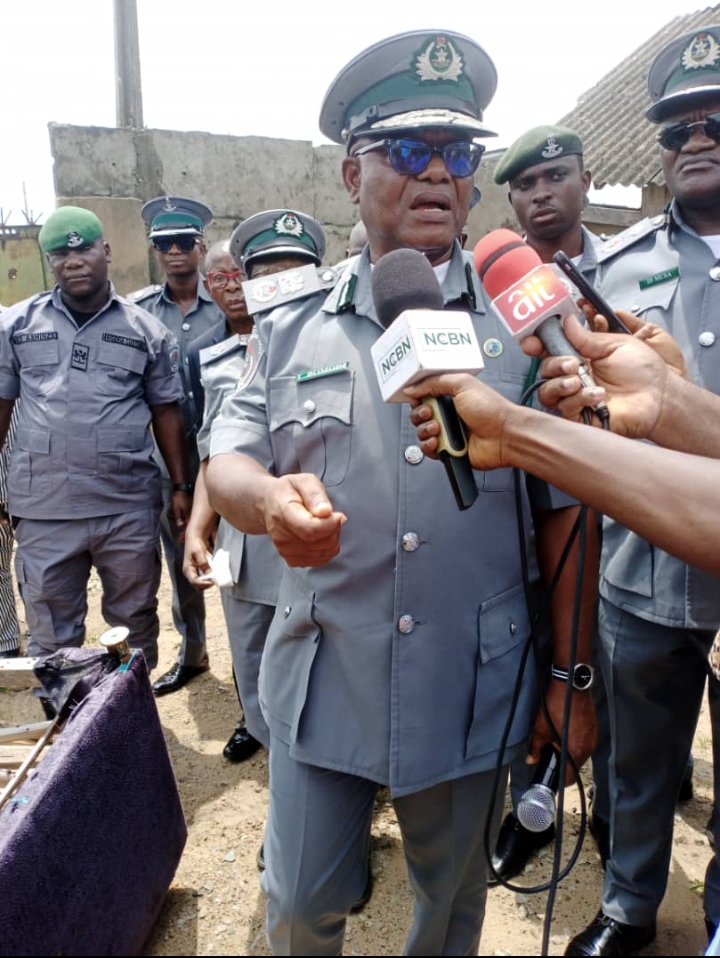
JANUARY-MAY REPORT: Seme Customs Hits N2.6bn, Facilitates ₦35.1bn Exports.

B’ODOGWU TRADE PORTAL: Customs Consolidates, Pilots Form ‘M’ Processing.
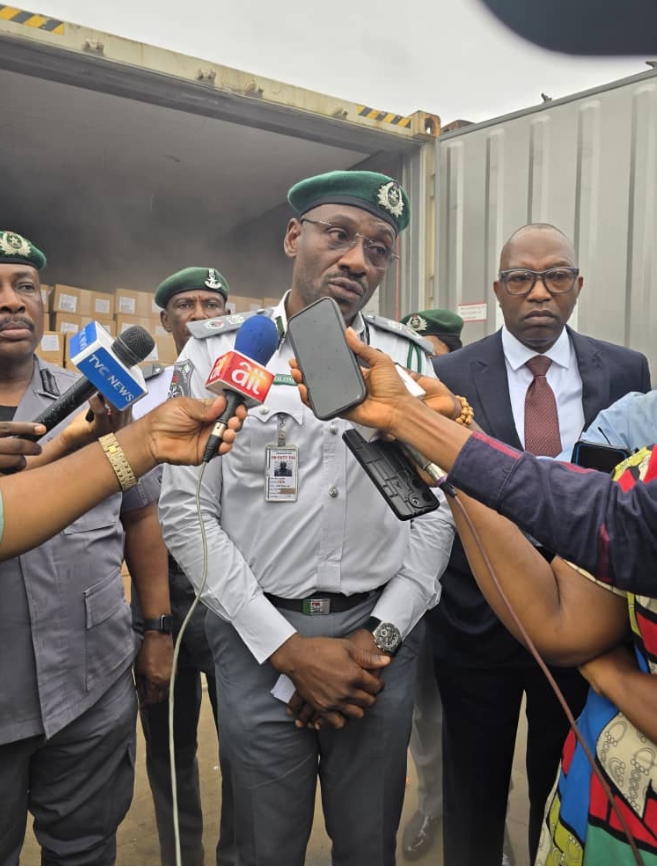
HALF YEAR, 2024: Apapa Customs Nets ₦1.024 Trillion, Records 143% Increase.

B’Odogwu: Apapa Customs Collects ₦161b in 3 Weeks, Assures of Improvements .

APFFLON Seeks Immediate Reform of CRFFN, Replacement of Registrar.

OMIS AWARDS, 2022: Greg Ogbeifun, Industry Gurus For Special Recognition.

PHOTO NEWS: Maritime Capacity Development
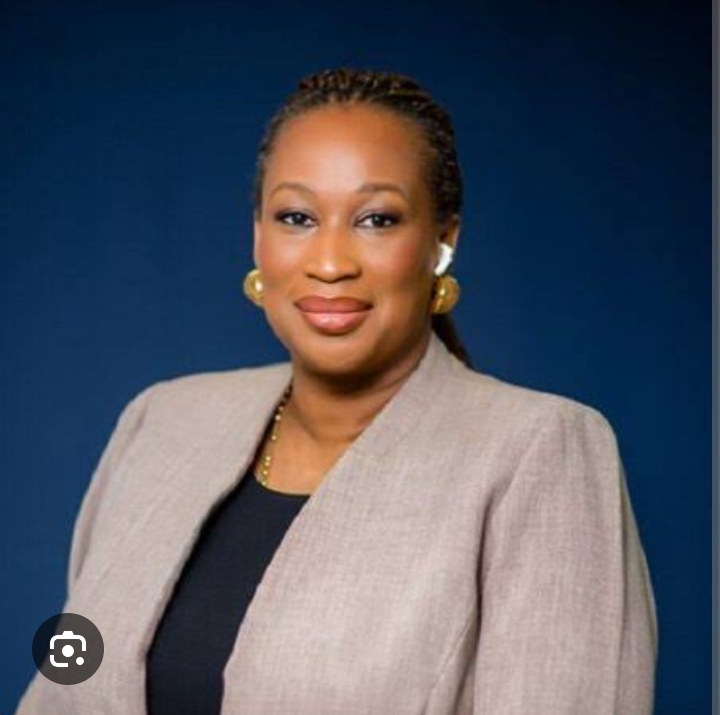
Adesuwa Ladoja Becomes MD/CEO, Lagos Free Zone.

Photo News: Salah Celebration

FG Set To Re-establish National Shipping Line, To Take Advantage of $10 bn Annual Ship Charter Market.

Mama Theresa Enisuoh Due For Burial April 27

Sylvanus Ekpo, ex-Editor, Shipping World Magazine, loses Mum

MAN, ORON: It’s Encomiums Galore From International Seabed Authority (ISA).

-
 Maritime Agencies3 weeks ago
LIMWEEK 2026: Measurable Outcomes Must Guide Policies in Nigeria’s Marine and Blue Economy.
-
 Maritime Agencies3 days ago
Traders’ Umbrella Group Evaluates State of the Nation, Expresses Serious Concerns of the Trading Public.
-
 Maritime Agencies3 weeks ago
Nigeria Collaborates with Benin Republic to Launch Modernised Joint Customs Border Post.
-
 Maritime Agencies3 weeks ago
Unregulated Deployment of Unmanned Vessels Threatens Maritime Security — Navy.
-
 Maritime Agencies3 weeks ago
MAMAL 2026: FG Targets Globally Competitive Ports As Tantita Urges a ‘Look Beyond Lagos’ in Port Development.
-
 Maritime Agencies3 weeks ago
NPA Emphasizes the Importance of Truck Drivers, Donates 400 Safety Vests to AMATO and NURTW.
-
 Maritime Agencies3 weeks ago
MAMAL 2026: Stakeholders Recommend End -To-End Modernization of Nigeria’s Port System To Achieve Competitiveness.
-
 Maritime Agencies3 weeks ago
MAN, Oron Commends MAMAL 2026, Urges Efficient, Competitive and Globally- Respected Maritime Sector.