
Maritime Agencies
ILLEGAL, UNREPORTED, UNREGULATED FISHING: Omatseye Advocates Strict Surveillance of EEZ.

By Izuchukwu Ozoemena
There is need for a total satellite coverage of Nigeran waters, including the expansive Exclusive Economic Zone (EEZ), to regularly monitor fisheries and fishing activities real time. This will discourage illegal fishing and foreign poachers who illegally invade Nigerian waters to deplete fishes therein.
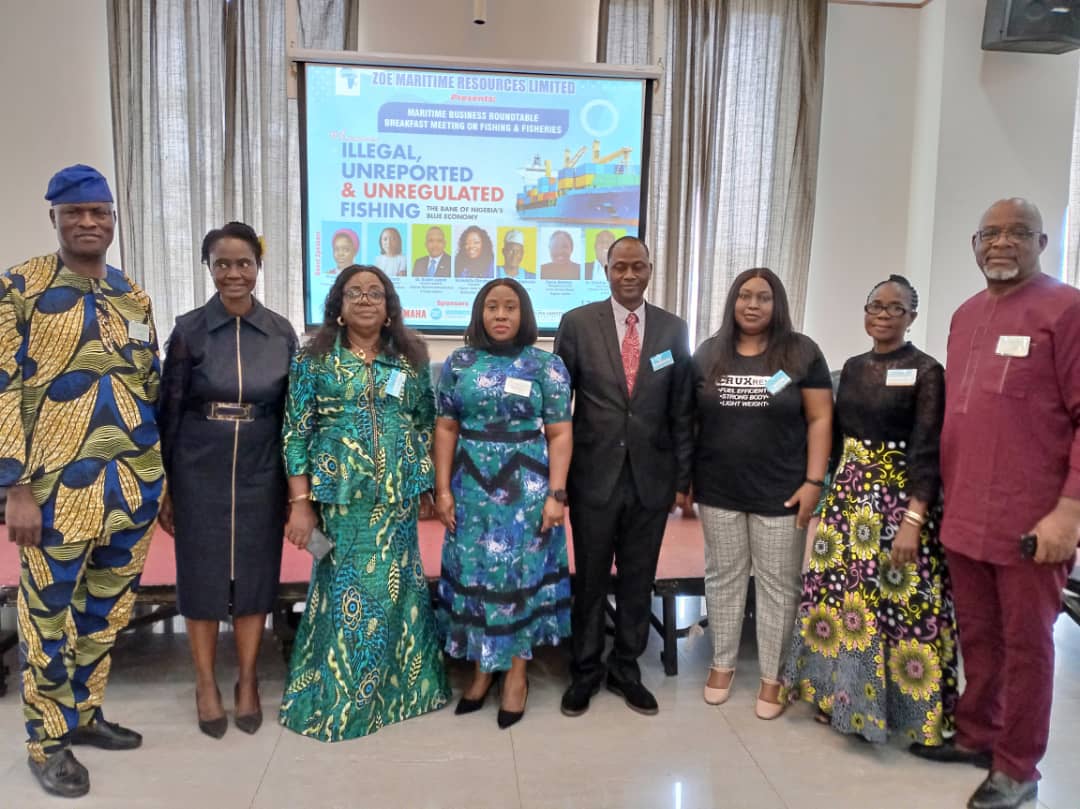
Temi Omatseye, former Director General, Nigerian Maritime Administration and Safety Agency, NIMASA, stated this, Thursday, while contributing to discussions at a breakfast maritime business roundtable on fishing and fisheries organized in Lagos by Zoe Maritime Resources Ltd. He advocated that for proper harnessing of fisheries and associated resources, a new Ministry of Transport and Maritime Affairs should be created instead of domiciling it in the Ministry of Agriculture.
Speaking on the topic “Illegal, Unreported and Unregulated Fishing (IUUF)”, President, Nigerian Trawler Owners Association (NIOA), Mrs. Benedette Okonkwo, deplored the drastic reduction in the number of fishing vessels in Nigeria from 250 in 1983 to only 150 presently.The menace of IUU fishing in Nigeria, she explained, has led to the depletion of fishing trawlers in the country by more than 100 industrial fishing vessels in the last two decades.
She asked the Federal Government to enact decisive and enforceable legislations to grow the fishing industry to compliment strides being recorded under the Blue Economy.
“NITOA has been involved in industrial fishing activities in Nigeria since 1986 when some notable Nigerians initiated the idea of having a unified body to represent its members on issues of mutual interest with a combined fleet of over 250 vessels and over twenty fishing companies which had drastically reduced to 150 vessels with about five presently struggling to survive.”
“There is the need to establish Fisheries Terminal here in Lagos where about 95% of the industrial fishing operators are based. Furthermore government should do well to resuscitate the Export Expansion Grant (EEG) Scheme to make it more robust workable and transparent”.
Trawler owners, she lamented, are overburdened by overzealous government agencies overseeing sea fishing. This is detrimental to the growth of an industry that should be a veritable source of local fish supply and foreign exchange earnings for Nigeria.
It is on record that with a population of about 140 million local demand for fish far outweighs the supply. This means that there is constant demand for fish and fish products which should keep the local fishing industry buoyant. The reality on ground tells a different story.”
Mrs Okonkwo stated that records show a steady decline in local catch and production of fish in Nigeria.
In the 1970s, she explained, domestic production of fish ranged from 600,000 to 700,000 tons.
“By 1983, this dropped to $38.00 tons. In 2000, local catch was 441,337 and today the figure is no better. Responsibility for this decline has been laid at the feet of IUU fishing. This involves trawlers coming from other jurisdictions to sweep the Nigerian coast not only of sizeable fish supplies but also her juveniles,” she lamented.
In her submission, Lagos State Commissioner for Agriculture, Mrs Abisola Olusanya lamented that while fishermen are ageing, the youths who should take over are not showing any interest. Speaking through her representative, Mr Emmanuel Audu, the Commissioner recommended that modern ship boats and improved technology should be made available to attract the youths to the vocation.
By way of intervention on the IUUF menace, Mr. Akanbi Williams of the Nigerian Institute of Oceanography and Marine Research (NIOMR), questioned the veracity of statistics from several international organizations. He stated that they remain fabricated as there are no reports from the Nigerian Navy and the Nigerian Maritime Administration and Safety Agency (NIMASA) to substantiate them. Although the menace of IUU fishing is prevalent in the country and sub-region, Williams acknowledged, it is not at an alarming dimension as being reported.
Speaking from the prism of insurance, the Managing Director of YOA Insurance Brokers, Mrs. Enitan Solarin posited that some of the losses encountered by fishing operators could be covered by insurance.
On her part, Managing Director, YOA Insurance Brokers, Mrs Enitan Solarin spoke on the need to increase insurance awareness in Nigeria’s fishing industry to indemnify operators against losses when they occur. Solarin was represented by Mrs Bolanle Anjorin.
In her welcome address earlier, Barr Oritsematosan Edodo-Emore, Chair, Zoe Maritime Resources Ltd, organizers of the event, explained that as Nigeria begins to develop her blue economy, the challenges of IUU fishing must be tackled headlong.
She paid glowing tributes to guests at the event including the Consul-General, Kingdom of the Netherlands who shared his country’s experience in handling the subject of IUUF.
Fitz Williams Ventures Ltd, YOA Insurance Brokers, Morbod Shipping, Yamaha and Clina-Lancet Laboratories, among others, sponsored the event.






By Izuchukwu Ozoemena
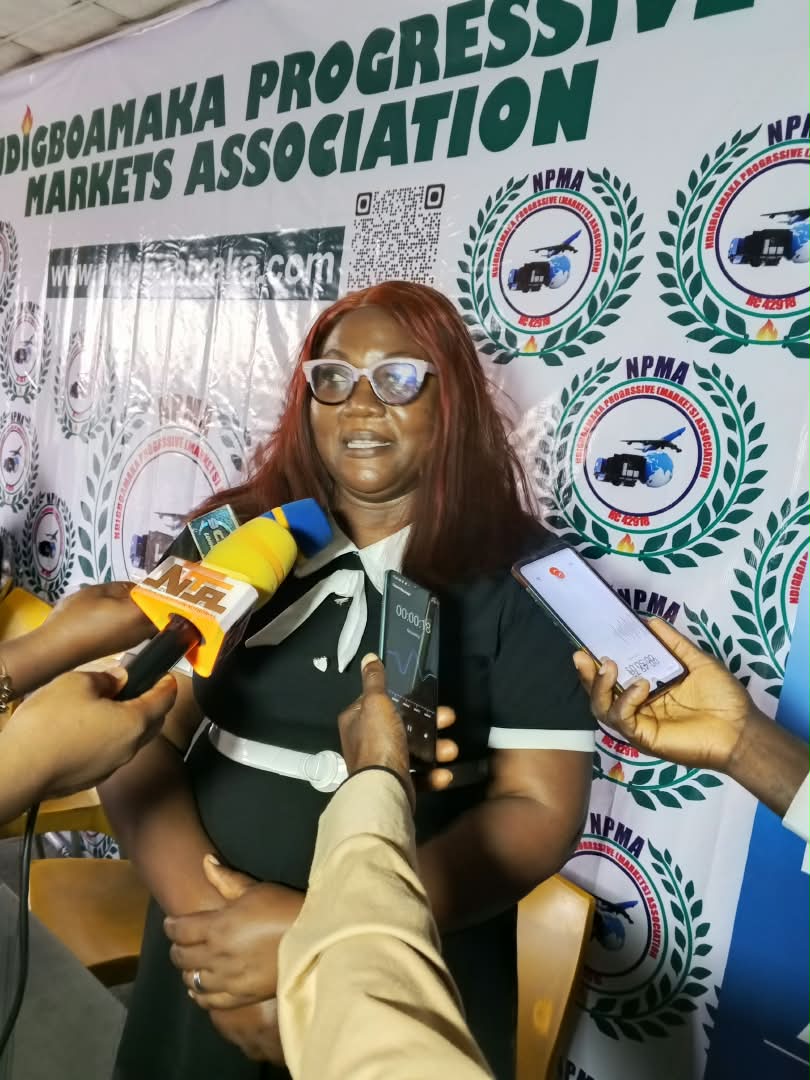
The Ndigboamaka Progressive Markets Association has officially announced the 3.0 Edition of a sporting collaboration between her and the United Nigeria Airlines. Known as the United Nigeria Airlines Ndigboamaka Traders Cup 2026 (3.0 Edition), the sporting fiesta is part of a fresh initiative to encourage her members and staff of the airline to engage in sporting activities for leisure.
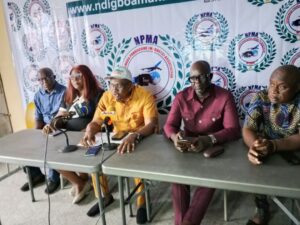
Speaking at the event in Lagos, National President of the traders’ group, Comrade Chinedu Ukatu described the official unveiling as a milestone.
”Today, we are marking another milestone. We are bringing all 58 markets together, not in the marketplace, but on the football pitch under one umbrella of unity.”
”As you all know, Ndigboamaka Progressive Markets Association is the apex body of 58 major markets in Lagos State with over 2 million traders. Our mandate goes beyond trade – we promote unity, peace, welfare and progress of our members and the entire Lagos trading community.
Describing football as a unifying language, he said it serves as a positive engagement and a unifying force for youths in the market, hence the choice.
”We need to promote healthy living among our traders. We want to strengthen brotherhood among markets – Alaba, Trade Fair, Ladipo, Computer Village, Balogun, Lagos Island, ASPMDA and all others.”
”I am therefore very delighted to announce that United Nigeria Airlines, a proudly Nigerian airline led by our National Grand Patron, Prof. Obiora Okonkwo (OFR), has graciously accepted to be the Title Sponsor of this tournament,” Ukatu stated.
”United Nigeria Airlines is an airline that believes in connecting people and businesses – just as we connect markets and traders. Their decision to partner with us shows their deep commitment to grassroots development and the informal sector which is the real engine of Nigeria’s economy.”
The tournament named United Nigeria Airlines Ndigboamaka Traders Cup 2026 has the theme Unity, Enterprise and Healthy Living.
Of 58 affiliate markets,12 qualified market teams are billed to participate for a duration of six weeks.
Grand finale in Lagos featuring trophies, medals and cash prizes will be graced by an expected audience of over 500,000 direct spectators and over 5 million reach via radio and social media.
”This tournament will also be an opportunity to discover football talents among our traders and empower our youths.”
On behalf of the National Executive of Ndigboamaka, Comrade Ukatu thanked the Chairman and Management of United Nigeria Airlines for believing in the vision.
”I also thank all our media partners who have agreed to join us on this journey.”
He called on all market leaders, corporate bodies and well-meaning Nigerians to come and support the laudable project.
Maritime Agencies
Traders’ Umbrella Group Evaluates State of the Nation, Expresses Serious Concerns of the Trading Public.
By Izuchukwu Ozoemena
Following heightening campaign activities preparatory to the 2027 general elections, the Ndigboamaka Progressive Markets Association has taken what it calls a political and economic stand as it affects the Nigerian trader.
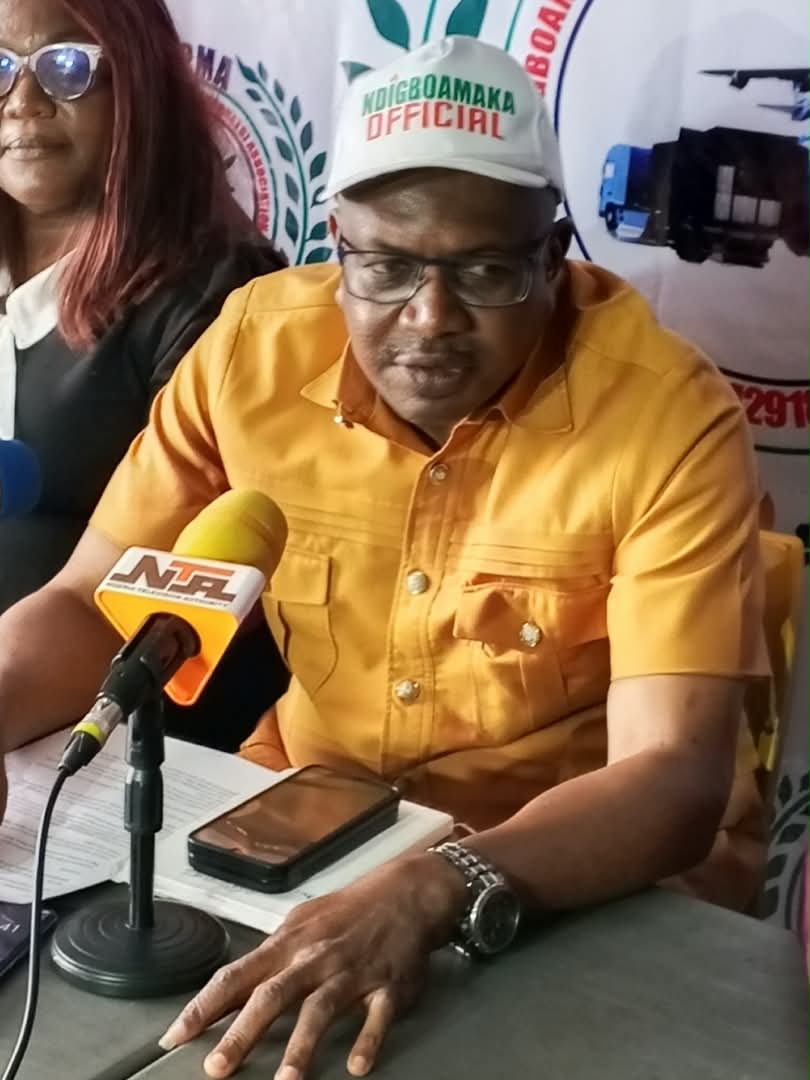
Chief Chinedu Ukatu, President of the traders’ group made the disclosure in Lagos, Monday, while speaking on the state of the nation and issues of grave concern to the Nigerian trading community.
Ukatu explained that as leaders of the largest market association in West Africa representing over 58 major markets and millions of traders in Lagos State, Ndigboamaka Progressive Markets Association cannot remain silent and unconcerned while her members bear the brunt of the current realities of the Nigerian nation.
On the political turf, he described his Association as non-partisan.
”Let us state clearly once again that as an Association, we are non-partisan. We do not belong to any political party. But we will only support and endorse parties and candidates who are willing to accommodate our aims and objectives vis-à-vis protecting the interests of traders.”
”As traders, we desire only one thing: stability. Business thrives where there is peace and predictability.”
While commending the Federal Government on current efforts to secure the nation, the Association singled out insecurity on the highways.
”Lagos to Onitsha, to Kano, to Port Harcourt has become a direct tax on trading. Our members pay heavily to move goods. Trucks are delayed, goods are lost, drivers are attacked.”
Warning that the economy cannot grow when the roads that connect the markets are not safe, Ukatu appealed to the Federal and State Governments to do more to secure the trade corridors.
”The trader is not a politician; he is not interested in party A or party B. He is interested in whether his goods will get to the market safely.”
”We also call for an end to multiple taxation and harassment by non-state and state actors. In Lagos alone, a single container is subjected to over 15 different levies from the port to the shop. This is politically unsustainable.”
Still on the economic state of the nation, the Ndigboamaka Progressive Markets Association Servant-Leader described the Nigerian trader as resilient. However, resilience has a limit, he explained.
”Today, the Nigerian economy is facing a triple challenge: high exchange rate, high cost of energy, and low purchasing power.”
Addressing foreign exchange and imports, he said over 70% of goods in Nigerian markets are imported.
”The volatility of the Naira to the Dollar has made price planning impossible. A trader who orders goods today cannot predict the cost of clearing it tomorrow. We call on the Central Bank of Nigeria to create a special stability window for genuine importers of essential commodities and raw materials.”
Traders, he regretted, run their businesses on diesel and generators.
” The cost of power is now higher than the rent of our shops. We cannot compete with other nations where traders have 24-hour electricity. We urge the Federal Government to fast-track the special industrial and market power projects.”
Decrying mounting inflation and a reduction in purchasing power, the Association boss said their customers now buy less.
”Families are cutting down on everything. When the buyer has no money, the seller cannot sell. We therefore support all policies that bring down food inflation and put money back in the pockets of ordinary Nigerians.”
On rumoured protests regarding Chinese and other foreigners taking over retail trade ordinarily reserved for Nigerians, he clarified that his group never mobilized any trader to protest against Chinese citizens or any other foreigners in Nigeria as Nigeria is a hospitable nation.
”However, as a trade union, we are asking for what is done all over the world. We seek the required legislation and enforcement of the Indigenous Trade Policy as regards retail trade and investment.
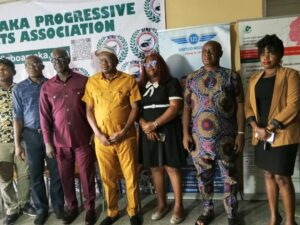
The Nigerian Enterprises Promotion Decree of 1972 now replaced by the NIPC Act, he recalled, clearly reserved retail trading for Nigerians.
”Today, we see foreigners moving from wholesale and manufacturing directly into our markets to sell retail, competing with our members who cannot do the same in their countries.”
”We are not asking for xenophobia; we are asking for reciprocity and protection as provided in other climes. We call on the National Assembly and the Federal Government to revisit and strengthen the Local Content and Retail Trade protection laws to save Nigerian traders from extinction,” he demanded.
On political parties now canvassing for votes, the group said the traders would only support candidates or parties that will abide by specific commitments that favour the association.
”For the sake of the millions of traders we represent, we shall only support any Candidate or Party that will assure us of the following:
1. Setting up a joint Federal and State Task Force to address multiple taxation at the ports and on the roads.
2. Improved security on major trade routes, especially the Lagos – Benin – Onitsha corridor.”
Other commitments include providing single-digit interest rate loans for traders through the Bank of Industry and other development banks;
inclusion of market leaders in the formulation of trade and fiscal policies as policy for traders cannot be made without traders.
Enactment and enforcement of a clear Retail Trade Protection Law to regulate foreign participation in the retail space is also a major commitment candidates and parties seeking for votes must abide by, Ndigboamaka Progressive Markets Association stated.
Maritime Agencies
Ehingbeti Summit: Stakeholders Say Coastal Communities Need Funding for Development.
By Izuchukwu Ozoemena
Maritime stakeholders say to promote sustainable coastal development, attention should be focused on the legal, regulatory, security and investment frameworks required to unlock Nigeria’s blue economy potentials .
Delivering the keynote address at the 4th Ehingbeti Maritime Hub Summit in Lagos, Thursday, President, Maritime Arbitrators Association of Nigeria (MAAN), Chief Jean Chiazor Anishere, SAN, said a dedicated financing mechanism was necessary to address infrastructure deficits and improve the living conditions of people in coastal communities.
Anishere urged Nigeria to explore international financing opportunities through climate funds, development banks and multilateral organisations to scale up coastal resilience and community development.
She said sustained investment in coastal resilience would help strengthen infrastructure, protect livelihoods and create an enabling environment for coastal communities to participate meaningfully in the emerging blue economy.
Nigeria’s blue economy, she stressed, must be underpinned by effective governance as the country needs to establish the legal and institutional conditions required for innovation, investment and sustainable exploitation of marine resources.
There must be a regulatory system that provides security for investors while remaining flexible enough to encourage innovation, environmentally responsible enough to protect marine resources and inclusive enough to benefit coastal populations.
Anishere also advocated improved waste-management infrastructure, sustainable fishing practices, recycling education and environmental stewardship initiatives that directly benefit coastal communities.
Representing the Lagos State Governor, Mr. Babajide Sanwo-Olu, the Permanent Secretary, Lagos State Ministry of Tourism, Arts and Culture, Mrs. Bopo Oyekan-Ismaila said the state remained committed to an inclusive approach to blue economy development.
She noted that while Ehingbeti’s history was closely associated with Lagos Island, the state’s blue economy development agenda would encompass communities across Lagos.
According to her, Governor Sanwo-Olu encouraged participants to collaborate and develop a communiqué capable of advancing the blue economy agenda of Lagos State.
In her speech, the convener of the Ehingbeti Maritime Hub and Founder of the Ocean Ambassadors Foundation, Hon. Olaitan Violet Williams said the Hub was established in 2023 to trace and reconnect with the historical roots of maritime activities in Lagos.
According to Williams, Ehingbeti represented an important chapter in Lagos’ evolution from its early trading history to modern-day Eko.
She identified inland waterways as one of the low-hanging fruits of Nigeria’s blue economy and called for greater investment and stronger legal protection for investors.
She said Nigeria’s estimated 10,000 kilometres of waterways cannot deliver their full economic potential if they remained largely unnavigable.
The Chairman of the occasion and Chairman of the NIWA Governing Board, Alhaji Mukhtar Shehu Shagari, represented by NIWA Board Member, Capt. Tajudeen Alao, commended the Convener for her commitment to the development of Nigeria’s marine and blue economy.
Shagari stressed that coastal communities must remain central to the implementation of blue economy policies, while advocating an appropriate legal framework for the development of Nigeria’s littoral states.
Representing the Flag Officer Commanding, Western Naval Command, Rear Admiral Abubakar Mustapha, Rear Admiral N.C. Okon called for stronger maritime regulation and effective enforcement of existing laws.
Okon identified “sea blindness” as a factor limiting Nigeria’s ability to fully harness its maritime potential and stressed that collaboration among government agencies, coastal communities and development partners was essential.
He noted that a thriving blue economy could not be sustained amid insecurity, environmental degradation, illicit activities and regulatory uncertainty.
The Naval representative reaffirmed the Nigerian Navy’s commitment to providing the secure maritime environment required for commerce, investment and sustainable exploitation of Nigeria’s maritime resources.
Also speaking, Ekeoma Ezeibe, Chairman, Nigerian Council of Registered Insurance Brokers (NCRIB), identified insurance as a critical component of maritime and blue economy development.
She said adequate insurance protection was necessary to safeguard maritime assets, infrastructure and businesses against the multiple risks associated with the sector.
A major highlight of the summit was the official launch of the 28 Inland Waterways Investment Jigsaw, an initiative designed to highlight viable investment opportunities across Nigeria’s inland waterways and provide a structured pathway for private-sector participation.
The initiative is expected to support efforts to identify investment opportunities across the country’s inland waterways while encouraging greater private-sector involvement in water transportation and other marine-related businesses.
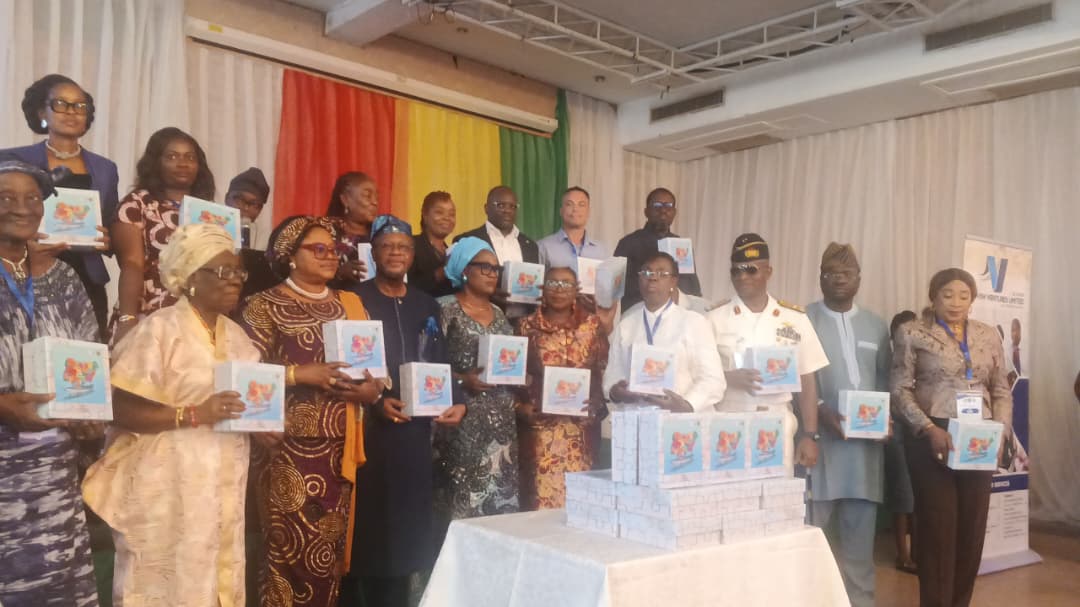
The 4th Ehingbeti Maritime Hub Summit brought together government representatives, maritime professionals, security stakeholders, legal practitioners, insurers, traditional rulers, academics, private-sector operators and representatives of coastal communities.
The summit reaffirmed the need for stronger regulation, maritime security, sustainable financing, infrastructure development and community inclusion as Nigeria works to translate its blue economy potential into sustainable economic and social development.


SPORTS: Group Unveils United Nigeria Airlines Ndigboamaka Traders’ Cup, 2026.

Traders’ Umbrella Group Evaluates State of the Nation, Expresses Serious Concerns of the Trading Public.

Tantita’s Oil Pipeline Surveillance Yields Huge Dividend, Shoots Nigeria’s Q2 Oil Exports Earnings To $9.39bn.

Ehingbeti Summit: Stakeholders Say Coastal Communities Need Funding for Development.

Ogun 1 Customs Repeats Stern Warning To Smugglers, Confiscates Latest Brand of Range Rover, Other Contrabands.

Unregulated Deployment of Unmanned Vessels Threatens Maritime Security — Navy.

Nigeria Collaborates with Benin Republic to Launch Modernised Joint Customs Border Post.

NPA Emphasizes the Importance of Truck Drivers, Donates 400 Safety Vests to AMATO and NURTW.

MAMAL 2026: FG Targets Globally Competitive Ports As Tantita Urges a ‘Look Beyond Lagos’ in Port Development.

MAMAL 2026: Stakeholders Recommend End -To-End Modernization of Nigeria’s Port System To Achieve Competitiveness.

MAN, Oron Commends MAMAL 2026, Urges Efficient, Competitive and Globally- Respected Maritime Sector.

LIMWEEK 2026: Measurable Outcomes Must Guide Policies in Nigeria’s Marine and Blue Economy.

CUSTOMS’ ZONE ‘A’ SPORTS EVENT: CGC Adeniyi Highlights Need for Discipline, Teamwork in Customs Operations.

Parts Central Ltd Set To Turn Waterway Waste into Wealth, says Onifade.

Oyetola Transfers Inland Dry Ports to NPA, Sets Up Committee for NSC–NPERA Transition.

Zoe Maritime Resources Hosts Lagos International Maritime Week (LIMWEEK), 2026.

ABUJA MoU: WE FUNCTION BEHIND A MASK, says Capt Umoren

1. EXECUTIVE PLATFORM. AMES 2024: TIME TO CHANGE GOVERNMENT ATTITUDE TOWARDS SHIPPING DEVELOPMENT IS NOW, AMES President Charges FG.

2023 ELECTIONS:CILT Hosts Seminar on Logistics & Electoral Process
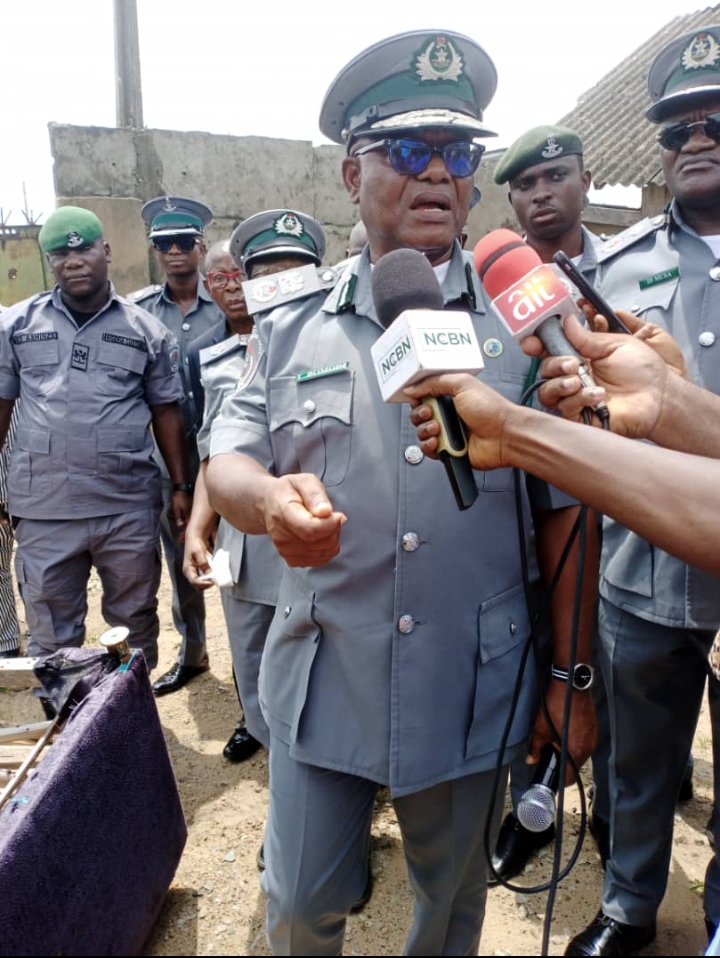
JANUARY-MAY REPORT: Seme Customs Hits N2.6bn, Facilitates ₦35.1bn Exports.

B’ODOGWU TRADE PORTAL: Customs Consolidates, Pilots Form ‘M’ Processing.
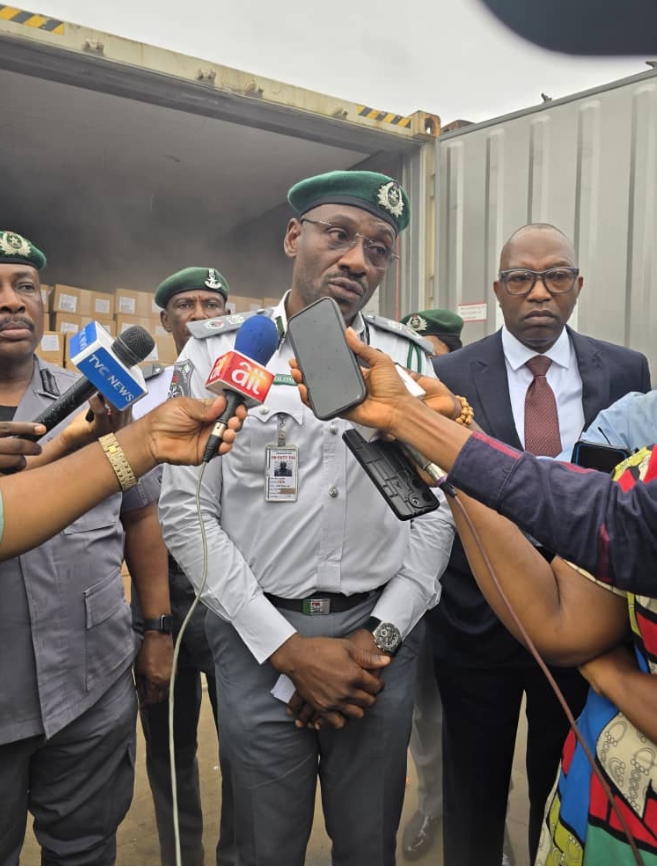
HALF YEAR, 2024: Apapa Customs Nets ₦1.024 Trillion, Records 143% Increase.

B’Odogwu: Apapa Customs Collects ₦161b in 3 Weeks, Assures of Improvements .

APFFLON Seeks Immediate Reform of CRFFN, Replacement of Registrar.

OMIS AWARDS, 2022: Greg Ogbeifun, Industry Gurus For Special Recognition.

PHOTO NEWS: Maritime Capacity Development
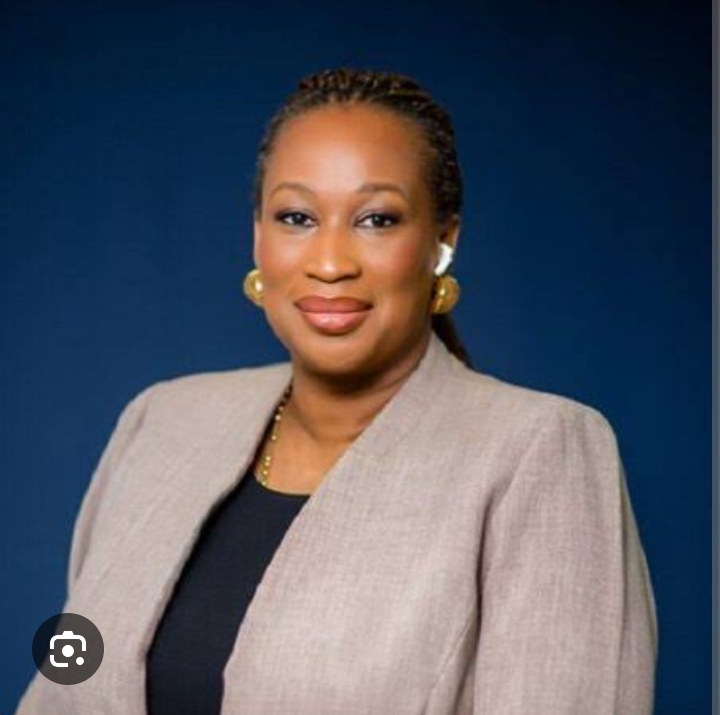
Adesuwa Ladoja Becomes MD/CEO, Lagos Free Zone.

FG Set To Re-establish National Shipping Line, To Take Advantage of $10 bn Annual Ship Charter Market.

Photo News: Salah Celebration

Mama Theresa Enisuoh Due For Burial April 27

Sylvanus Ekpo, ex-Editor, Shipping World Magazine, loses Mum

MAN, ORON: It’s Encomiums Galore From International Seabed Authority (ISA).

-
 Maritime Agencies3 weeks ago
LIMWEEK 2026: Measurable Outcomes Must Guide Policies in Nigeria’s Marine and Blue Economy.
-
 Maritime Agencies3 weeks ago
CUSTOMS’ ZONE ‘A’ SPORTS EVENT: CGC Adeniyi Highlights Need for Discipline, Teamwork in Customs Operations.
-
 Maritime Agencies2 weeks ago
Nigeria Collaborates with Benin Republic to Launch Modernised Joint Customs Border Post.
-
 Maritime Agencies2 weeks ago
Unregulated Deployment of Unmanned Vessels Threatens Maritime Security — Navy.
-
 Maritime Agencies2 weeks ago
NPA Emphasizes the Importance of Truck Drivers, Donates 400 Safety Vests to AMATO and NURTW.
-
 Maritime Agencies2 weeks ago
MAMAL 2026: Stakeholders Recommend End -To-End Modernization of Nigeria’s Port System To Achieve Competitiveness.
-
 Maritime Agencies2 weeks ago
MAMAL 2026: FG Targets Globally Competitive Ports As Tantita Urges a ‘Look Beyond Lagos’ in Port Development.
-
 Maritime Agencies2 weeks ago
MAN, Oron Commends MAMAL 2026, Urges Efficient, Competitive and Globally- Respected Maritime Sector.