
Maritime Agencies
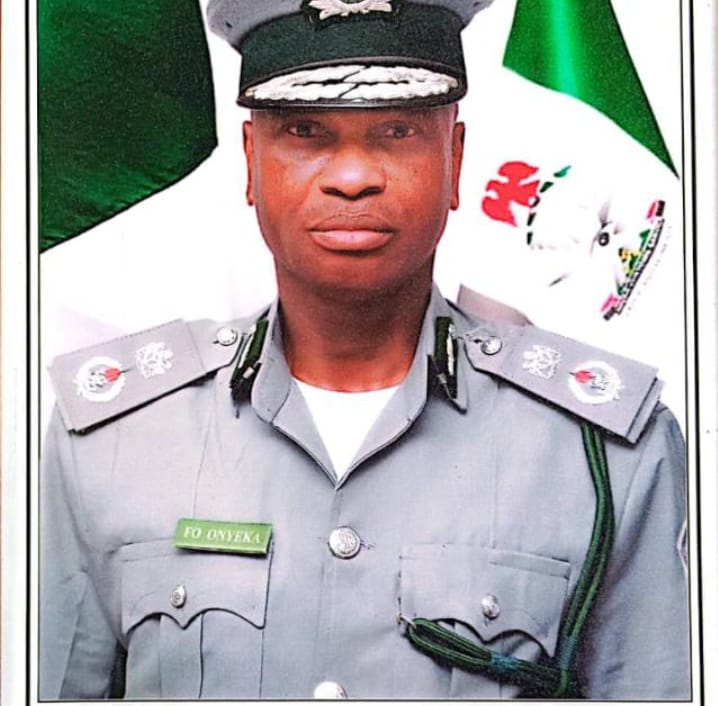
Q1, 2025: Tincan Island Port Customs Collects N347bn, Breaks Record.

By Izuchukwu Ozoemena
The Tincan Island Port Command of the Nigeria Customs Service posted over N347 billion as revenue collection between January and March, 2025, the Customs Area Controller (CAC), Comptroller Frank Onyeka has said.
Comptroller Onyeka who disclosed this to journalists in his office stated that the breakthrough is in furtherance of the Comptroller-General of Customs, Adewale Adeniyi’s directive on consolidating his policy on collaboration and innovation in discharging the core mandate and functions of the Service.
The January, 2025 revenue generation record, the CAC explained, shows a total of ₦116, 412,735,766.23 which represents 24.06% over and above the figure of ₦88, 430,126,122.76 recorded within the corresponding period of 2024.
The disposition for February 2025 also shows that the sum of ₦103,254,292,839.23k was generated, indicating 2.90 % over and above the sum of ₦100,253,187,074.72k realized during the corresponding month of February 2024.
The Command generated the sum of ₦128,268,749,635.00k for March 2025 and this is 10.3% higher than the ₦115,100,000,000.00k generated over the corresponding period of 2024.
The total amount generated for the first quarter of 2025 is thus ₦347,935,672,476.00k which is 12.6% higher than the ₦304,000,000,000.00k generated in the corresponding period of 2024. The CAC of the Comand announced this figure while speaking with a group of journalists at the conference room of the Command.
Comptroller Onyeka also used the occasion to harp on the need for stakeholders to do more honest declarations so that seamless operational environment may exist and all sides may benefit from a much better conducive ecosystem. He was particularly appreciative of the support of the CG of Customs and the positive reviews that the media has so far accorded the Command.
Comptroller Onyeka promised to continue to engage stakholders in every way possible so that there can be more all round improvement in all aspects of their operations.

Maritime Agencies
Customs Unveils Automation of Licenses and Permits, Seeks Full Cooperation from Stakeholders.

By Izuchukwu Ozoemena
Automation of licenses and permits in operations has been described as necessary because it will facilitate the ease of doing business in the maritime sector while encouraging an eventual increase in Customs revenue and the national economy.
Comptroller Ngozi Anosike, Controller, License and Permits stated this in Lagos, Monday, while delivering a welcome address at a stakeholders’ engagement on Automation of License and Permits at the Customs Training College, Ikeja.
According to her, automation and permits will enable importers, clearing and forwarding agents initiate and complete the processes of acquisition and renewal of licenses from anywhere including their offices and homes without physically visiting the Customs Headquarters in Abuja. Officers and men of the License and Permit Unit, the bond seat unit of various Commands, she explained, would be saved some stress too as they would simply click on their systems to get results instead of carrying loads of files from one table to another and from one office to the other.
”Automation will cut the cost of doing business and minimize movement risks for our stakeholders.”
”Automation will minimize, if not eradicate fraudulent practices in the system, as every single document that is uploaded in the course of this process will be automatically rejected by default, if it is fake and accepted if it is genuine. L&P can now view assessments through the B’Odogwu to be sure that any company applying for fresh or renewal of licences or permits is not having unpaid assessments hanging on it. The CGC is poised to sanitize the system and we at L&P Unit are very passionate about this to ensure that the objective is achieved.”
Automation, she added, saves time as stakeholders will have the luxury of using the time they would have expended running from Commands or the Customs Headquarters in Abuja, to achieve other equally useful objectives in their business value chain.

The application of automation will enable an increase in the Custom’s statutory revenue generation as every single license and permit processed results to an increase in fees paid into the coffers of government. Importation is made with the permits, clearing processes are stamped with the licences given and obviously, revenue is generated. So, the more licences and permits are issued or renewed, the more revenue Customs generates to the advantage of the Nigerian economy.
”Automation elicits more efficiency and productivity from the officers as they leverage on the seamlessness of the process to work on more documents in minutes with greater output. The advantages of automation are just endless”.
She appealed to Customs officers especially those in the Licences and Permits Unit to embrace automation in order to achieve the desired objectives. The success of this programme, she explained, adds to the many success stories of the CGC and his management team.
”Their success is our collective success, as officers and men of the Service. I also appeal to our esteemed stakeholders to embrace this automation with both hands because the Service has their interest at heart for this innovative process.”
In the same vein, Anozie appealed to the press to assist in disseminating the information so that the general public and stakeholders would be aware of this stress-free, efficient, money and time saving process.
In his keynote address, the Zone A Coordinator, Assistant Comptroller-General, B. Babandede, said
the event marks the beginning of a new chapter in how the Nigeria Customs Service delivers its licences and permits services to stakeholders.
He said the Comptroller-General of Customs, Bashir Adewale Adeniyi MFR DSM FNIPR FNIIA psc(+) PhD, has approved the full automation of the Licences and Permits processes of the Service as a direct response to the long-standing need to make processes faster, more transparent, and easier for the people.. For many years, he recalled, stakeholders have had to deal with paperwork, long queues, and the uncertainty that comes with manual processing.
”This sensitization exercise is being held across all Zones from today. The goal is simple: to make sure that every Stakeholder understands the new automated system before it is implemented.”
He explained that automation means that stakeholders will no longer go to a Customs office simply to apply for or renew a licence or permit.
” You will be able to do this from your office or even from your phone.
It means your applications will be processed faster. It means you will be able to track the status of your application in real time. And it means that the process will be the same for everyone — fair, consistent, and without the risk of error that comes with manual records.”
For the Customs, automation means better record- keeping, easier supervision, and the ability to serve more stakeholders at once without increasing the burden on officers.
Stakeholders in attendance were requested to take the information back to their colleagues and respective associations.
”The more people understand the new process, the smoother the transition will be.
”Zone ‘A’ is the most active and economically significant Zone in Nigeria. Lagos is the commercial heartbeat of this country which means the volume of trade that passes through this Zone is enormous. That is precisely why it matters so much that we get it right here,” ACG Babandede emphasized.
He cautioned that since a programme of this nature cannot succeed on its own, it is important that everybody collaborate to make it work.
”Your feedback, questions, and honest engagement will help us make it even better. We are not here to lecture; we are here to listen and to work together.”
Clearly stating the objective of the Nigeria Customs Service in this regard, the Zone A Coordinator said “we are not just automating a process; we are transforming the way we serve Nigeria’s trade community. This is a step forward in that direction.”

By Izuchukwu Ozoemena
The recent induction of thirty cadets of the Maritime Academy of Nigeria (MAN), Oron for an on-board training programme at the Maritime Centre of Excellence (MCOE) of the Nigeria LNG Ship Management Limited (NSML), has been described as a celebration of aspiration, collaboration and a shared commitment to shape the next generation of maritime professionals.
NSML’s Managing Director, Engr Abdulkadir Ahmed stated this at the well-attended event, Friday, February 20.
He recalled a strategic agreement the NSML signed with MAN Oron in December 2025 to provide structured training for cadets through her MCOE, a decision he said was not accidental.
”It was a deliberate investment in people, the most critical element in maritime operations, and today, we are witnessing the first fruits of that commitment.This induction is another strong testament to NSML’s unwavering dedication to excellence, capacity development, and industry leadership.”
Over the years, he explained, NSML has built a reputation as a leading provider of maritime and shipping services not only in Nigeria but across the region. Her track record of developing competent and globally competitive seafarers is well established as it continues to stand her out in the industry.
The establishment of the Maritime Centre of Excellence, the MD continued, was anchored on a simple but powerful vision of building a premier maritime training institution that delivers world-class programmes, produces capable professionals, and supports the long-term sustainability of the maritime workforce.

”Through the MCOE, NSML has continued to raise the bar, offering specialised courses, simulator-based training, and professional development pathways that match international best practices.This partnership with MAN Oron strengthens that aspiration; it brings together two institutions that share a common philosophy that the future of the maritime sector depends on how well we train, mentor, and empower young Nigerians. It also reflects the progressive thinking of both organisations to invest consistently in human capital, to strengthen local capacity, and to contribute meaningfully to the growth of Nigeria’s maritime industry.”
”For us in NSML, this initiative aligns squarely with our purpose and our organisational values of developing qualified, competent, and safety-conscious seafarers. This is not just an activity; it is part of the DNA of NSML, it is who we are and why we exist. Every investment we make in training reinforces our commitment to excellence, operational safety, and national development.”
He told the cadets that their induction marks the beginning of a transformative journey as the maritime profession demands discipline, resilience, integrity, and the relentless pursuit of excellence.
”You are stepping into a career that will test you, shape you, and ultimately reward you. NSML and MAN Oron are giving you a solid foundation, but your attitude, effort, and character will determine how far you go.”
He urged the cadets to remain focused as they uphold the highest ethical standards while embracing the opportunity offered them.
He extolled all stakeholders, partners and the MCOE team for their dedication, pointing out that their work ensures that designed programmes remain relevant, competitive and impactful. And to the leadership of MAN Oron, we appreciate the trust and collaboration that brought us to this point.
Ahmed reaffirmed a shared belief with MAN that Nigeria can and must continue to develop world-class maritime professionals.
”NSML is fully committed to that mission, and today’s ceremony reinforces that promise,” he announced.
Apart from Mrs Anasthesia Ogbonna who stood in for H.E. Adegboyega Oyetola, the Marine and Blue Economy Minister, prominent industry players who graced the event included Capt Chamberlain Yusuf, Capt Israel Obadan, Capt Tajudeen Alao and Sam Isichei, member, MAN Governing Council .
Also in attendance were some senior staff of MAN and NSML including Dr. Ekanem of NSML. From MAN were Dr. John Adeyanju, Mr. Peter Netson and Engr. Rakesh Roshan Gupta.
Speaking at the event, the Acting Rector of MAN, Dr. Kevin Okonna described the induction as a turning point in the annals of the nautical college as it reaffirms the special relationship MAN enjoys with NSML.
“Through the execution of the MOU signed on 19th December 2025, our partnership has again ensured the realization of the dreams of another set of 30 seafaring cadets through onboard training opportunities in line with the provisions of the STCW Convention,” Okonna stated.
He stressed that the International Maritime Organization (IMO) had been informed of NSML’s contributions, highlighting Nigeria’s commitment to supplying quality seafarers to the global matitime industry.
Dr. Okonna also linked the initiative to the Renewed Hope Agenda of President Bola Ahmed Tinubu and the Marine and Blue Economy Policy championed by Minister Oyetola, which emphasizes partnerships for seafarer training.
“This induction ceremony is the outcome of the Honourable Minister’s Marine and Blue Economy Policy direction, which promotes partnership with industry stakeholders for onboard training of Nigerian seafaring cadets and supply of globally competitive seafarers,” he said.
The industry implications of the induction is expected to among other things strengthen Nigeria’s contribution to the global supply of certified seafarers, enhance the country’s competitiveness in international maritime trade.
The Acting Rector explained that the development would also support government-backed strategies for blue economy growth, and provide cadets with exposure to international best practices in shipping.
That government representatives and industry stakeholders were in attendance, he noted, demonstrated the need for collaboration and synergy in advancing the country’s capacity in the maritime sector.
Congratulating the cadets, Dr Okonna urged them to always project the good image MAN has acquired over the years.
Customs
Ogun 1 Customs Hosts FAED 2026, Highlights Gains of Cross-Border Cooperation, Economic Empowerment and Entrepreneurial Development.
By Izuchukwu Ozoemena
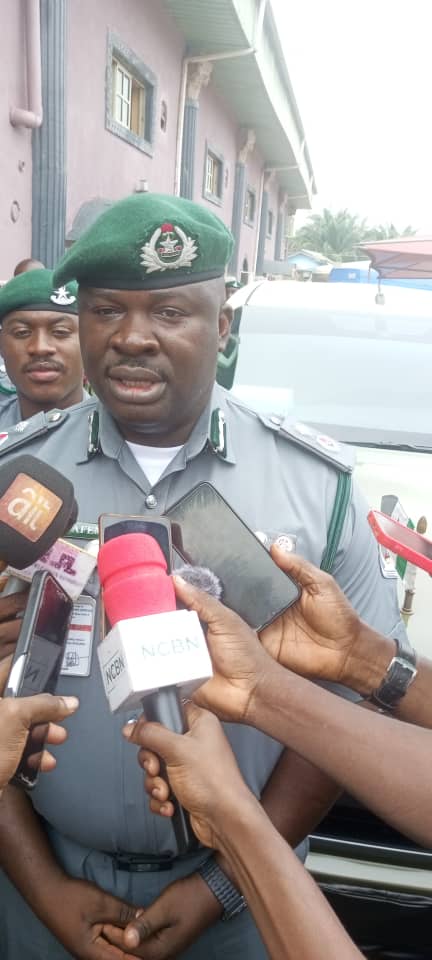
The Acting Customs Area Controller (CAC), Ogun Area 1 Command of the Nigeria Customs Service, Deputy Comptroller O.O.Afeni says the Festival of Arts For Economic Development (FAED) continues to reflect a shared understanding that sustainable border management goes beyond enforcement to encompass cross-border cooperation, economic empowerment and entrepreneurship development within the border communities.
Deputy Comptroller Afeni spoke at the Idiroko Border, Thursday, while declaring open the international colloquium to mark the 5th edition of the Festival of Art for Economic Development to which the Nigeria Customs Service is a strategic partner.
He said: “The theme, ‘Rebranding Borderline Communities through Creative Empowerment and Entrepreneurship,’ aligns with the Nigeria Customs Service’s commitment to supporting legitimate trade, encouraging value addition, and promoting small-scale enterprises as drivers of economic growth and border stability.

Dr Bonny Abisogun Botoku, Executive Producer, FAED.
He acknowledged the important role of the Nigeria–Benin Inter-Border Forum, under the leadership of its Permanent Secretary, Dr. Bonny Abisogun Botoku in advancing preventive diplomacy, structured dialogue and operational cooperation between Nigeria and the Republic of Benin.
”Through the empowerment programmes and entrepreneurship initiatives embedded in this Festival, we see practical pathways to reducing illicit activities, strengthening lawful commerce, and fostering inclusive economic opportunities for our people.”

Deborah Chiamaka Nwangene, one of the graduating trainees.
”The Nigeria Customs Service remains committed to partnerships that promote peaceful borders, resilient economies and sustainable regional integration.”
During a brief press chat, Comptroller Afeni spoke about enforcing government fiscal policies, saying that this must not be by force.
”The citizens must be made to know the reasons we are here. This is a way of showing the communities that we care about them. You can see that we have trained some people in the art of garri- making painting tye and dye (adire), etc. It’s a way of empowering the community.”
On suggestions that the seminar is capable of deepening cordial relationship between Benin and Nigeria, the CAC could not agree less.
”It is the fifth edition. It has been a situation we see the succeeding version getting better than the previous one. Today, I signed many certificates of people graduating. We’re not just training them; we’re empowering them so that we take them off the smuggling realm and make them better citizens.”
In his presentation, the Executive Producer of the Festival, Dr Bonny Abisogun Botoku described it as more than an event.
”It is a movement. It is a statement of belief—that border communities are not problems to be managed, but potentials to be unlocked.”
He recalled that for too long, border communities across Africa have been spoken about only in the language of risks exemplified in smuggling, insecurity, informality and marginalization.
”But those of us who live and work at the borders know a deeper truth. Borders are not just lines on maps. They are meeting points of culture, gateways of trade,
and spaces of shared history.
Sample of garri processed and packaged by a trainee.
”The Nigeria–Benin border is not a dividing line—it is a shared civilization. What we are doing through this Festival is to change the story from suspicion to trust, from survival to enterprise,
from isolation to integration.
Contrary to the widely-held belief that culture only concerns entertainment, he explained, culture is power, identity and economic capital.
”Through art, music, fashion, crafts, food systems, and storytelling, communities rediscover pride, cohesion, and voice.
Culture becomes a language of peace, dialogue, and diplomacy—especially in border spaces where differences must be managed with wisdom.
”This Festival deliberately places culture at the center of development, not at the margins.”
Distinguished guests at the event included the Onitaege of Itaege, HRM Oba Matthew Ademola Abisoye and other respected traditional rulers, government officials and representatives of security agencies. Others were partners from the Republic of Benin, artists, cultural practitioners and trainees.


”NATIONAL SINGLE WINDOW WILL CUT CARGO CLEARANCE TIME BY 75%,” NAGAFF President, Tochukwu Ezisi says.

Customs Unveils Automation of Licenses and Permits, Seeks Full Cooperation from Stakeholders.

SEA EXPERIENCE: NSML Inducts 30 MAN Oron Cadets for On-board Training

Ogun 1 Customs Hosts FAED 2026, Highlights Gains of Cross-Border Cooperation, Economic Empowerment and Entrepreneurial Development.

We’re Ever Proactive In Intercepting Prohibited, Falsely Declared Goods, says Controller Onyeka.

Zone ‘A’ Coordinator, Mohammed Babandede, Visits Apapa Command, Commends Officers’ Sterling Performance.

Freight Forwarders Warn FAAN To Halt New Charges In Airport Cargo Operations or Risk Rumble in the Sector .

Lekki Deepsea Port: The Success Story of the Nigerian Ports Authority.

NAGAFF Pledges Watertight Enforcement, Unveils A More Formidable 100% Compliance Team.

PTML Customs Hands Over Seized Arms and Ammunition, Collects N44.06bn in January.

NAGAFF Compliance Team Set to Relaunch for Stronger Engagement, Enforcement.

WAR AGAINST KILLER DRUGS: Apapa Customs, NDLEA Collaborate To Nab Huge Quantity of ‘Canadian Loud’.

Seme Customs Raids Hideouts, Impounds 200 Bags of Smuggled Rice, Collects N2bn 3 Weeks into 2026.

Lekki Deepsea Port: The Success Story of the Nigerian Ports Authority.

OGUN AREA 1 CUSTOMS: Suspected Armed Drug Traffickers Mount Barricades, Attack Officers. Two Personnel Critically Injured.

KLT Customs Surpasses 2025 Revenue Target By a Wide Margin, Clamps Down on Expired Imports.

1. EXECUTIVE PLATFORM. AMES 2024: TIME TO CHANGE GOVERNMENT ATTITUDE TOWARDS SHIPPING DEVELOPMENT IS NOW, AMES President Charges FG.

2023 ELECTIONS:CILT Hosts Seminar on Logistics & Electoral Process

APFFLON Seeks Immediate Reform of CRFFN, Replacement of Registrar.

OMIS AWARDS, 2022: Greg Ogbeifun, Industry Gurus For Special Recognition.

B’ODOGWU TRADE PORTAL: Customs Consolidates, Pilots Form ‘M’ Processing.

FG Set To Re-establish National Shipping Line, To Take Advantage of $10 bn Annual Ship Charter Market.

INLAND WATERWAYS OFFERS NIGERIA ALTERNATIVE REVENUE SOURCE, Says Sambo

Sylvanus Ekpo, ex-Editor, Shipping World Magazine, loses Mum

PHOTO NEWS: Maritime Capacity Development

Photo News: Salah Celebration

WAR AGAINST OIL THEFT: Tompolo’s Company Nabs VLCC Laden With Crude Oil

MAN, ORON: It’s Encomiums Galore From International Seabed Authority (ISA).

Lilypond Export Command Is Meeting Expectations, Handles 70% of Nigeria’s Total Tonnage of Export Cargo, says CAC Odusanya.
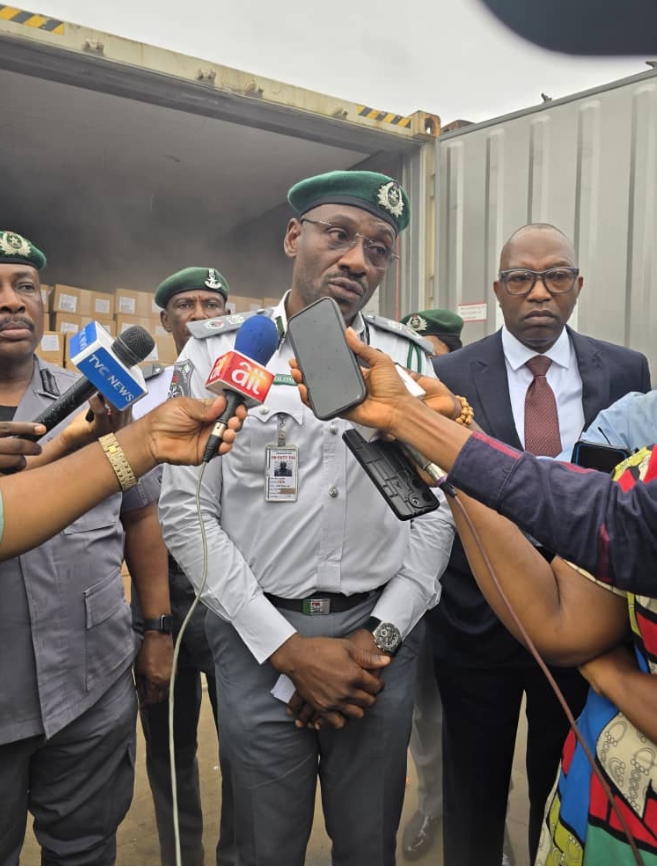
HALF YEAR, 2024: Apapa Customs Nets ₦1.024 Trillion, Records 143% Increase.

BENIN SEAPORT UPDATE: Edo State Government, Host Communities, Conduct Bidders To Inspect Project Site.
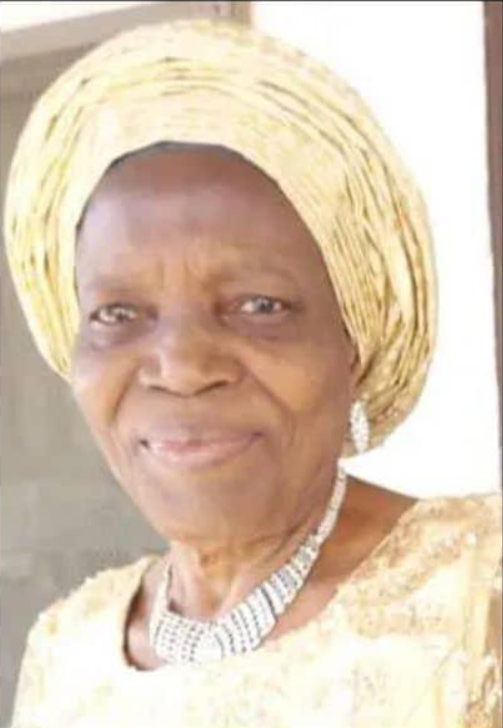
Mama Theresa Enisuoh Due For Burial April 27

-
 Customs3 weeks ago
Freight Forwarders Warn FAAN To Halt New Charges In Airport Cargo Operations or Risk Rumble in the Sector .
-
 Maritime Agencies3 weeks ago
Lekki Deepsea Port: The Success Story of the Nigerian Ports Authority.
-
 Maritime Agencies3 weeks ago
We’re Ever Proactive In Intercepting Prohibited, Falsely Declared Goods, says Controller Onyeka.
-
 Maritime Agencies3 weeks ago
Zone ‘A’ Coordinator, Mohammed Babandede, Visits Apapa Command, Commends Officers’ Sterling Performance.
-
 Customs2 weeks ago
Ogun 1 Customs Hosts FAED 2026, Highlights Gains of Cross-Border Cooperation, Economic Empowerment and Entrepreneurial Development.
-
 Maritime Agencies5 days ago
SEA EXPERIENCE: NSML Inducts 30 MAN Oron Cadets for On-board Training
-
 Maritime Agencies3 days ago
Customs Unveils Automation of Licenses and Permits, Seeks Full Cooperation from Stakeholders.
-
 Personality Interviews1 day ago
”NATIONAL SINGLE WINDOW WILL CUT CARGO CLEARANCE TIME BY 75%,” NAGAFF President, Tochukwu Ezisi says.