
Maritime Agencies
Transform Apapa Port for Employment Generation, Expert Charges Tinubu, Sanwo-Olu

By Izuchukwu Ozoemena
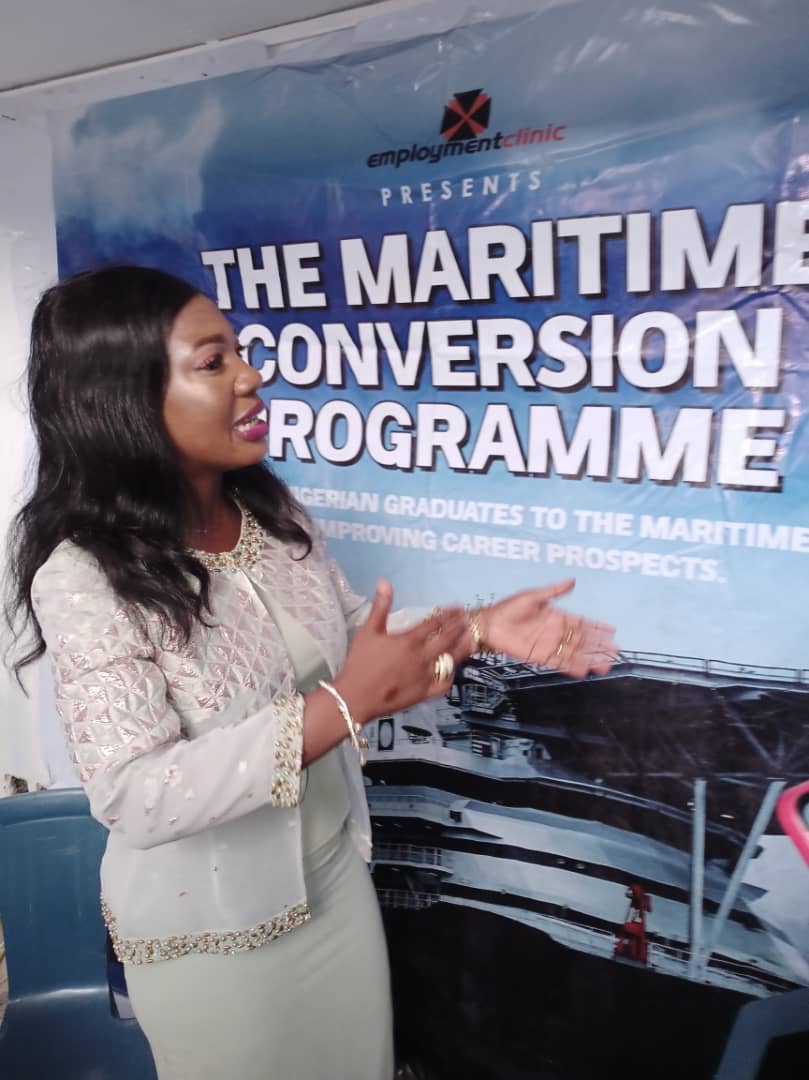
Employment Solutions Strategist, Ms Ronke Kosoko says President-elect Senator Bola Ahmed Tinubu and re-elected Governor Babajide Sanwo-Olu of Lagos State now have ample opportunity to look inwards, rejig and realistically address issues hindering Nigeria from making the best of the huge potentials Apapa Port offers for employment generation and development of the maritime sector.
Kosoko, the Managing Director/CEO, Employment Clinic, stated this, Wednesday, in a chat with maritime journalists at Morlap House, Apapa, Lagos. She recalled with nostalgia what Morlap House in Apapa represents and her pioneering role in Nigeria’s efforts to promote indigenous shipping.
While congratulating the President-elect and re-elected Governor Sanwo-Olu, Kosoko reminded them of the declining status of Apapa Port as promoted by successive administrations. This trend, she stressed, must be reversed quickly so as to lift Apapa Port and environ to the former enviable position as an enabler of employment generation and national economic growth.
She regrets that the new Lekki Deepsea Port recently created operational problems for Apapa Port, terminals and allied businesses by virtually poaching their skilled staff. The void created by this must be urgently filled in order to maintain the usual bubble Apapa Port, terminals and environment are known for.
Kosoko equally advised the incoming President not to wholly rely on what his leutenants would like him to hear. He should appoint only maritime industry experts into key agencies for instant impact and quick turnaround of the sector to create jobs and address the current infrastructure deficits.
Over the last decade, Kosoko noted, the need to realistically resuscitate port business and shipping has become glaring. Nigeria’s maritime industry with all the potentials to replace oil and gas as revenue earner has suffered untold neglect and mismanagement, a development the incoming government should reverse.
“The entire industry is looking forward to Senator Bola Tinubu and Governor Babajide Sanwo-Olu to revive the maritime industry for the good of the country. This is because there has been dichotomy between the state and federal. Now, we want to ensure that the center aligns at some level with the state because if Lagos works, Apapa for instance is affecting the whole nation. If Apapa Port, Tin Can Island Port and Lekki Port work optimally, the state and the entire nation will be better for it,” she stated.
Speaking on the ‘Project One Million Jobs’ in the maritime sector, Kosoko disclosed that the employment initiative which commenced a decade ago is to “connect the dots” between the government and the industry in order to create more job opportunities for the nation’s teeming youths.
“The problem of employment is what pushed us into the ‘Project One Million Jobs’ which has a link with government. The employment part of the industry is a segment, just as infrastructure, policy, appointment issues are segments and if they are not fused together, the maritime economy is not going anywhere.”
“So, the President-elect and the Governor of Lagos State should understand that there is need to pay attention to maritime economy. We have been mandated to interface with the seven agencies under the Ministry of Transportation, and have spoken to the Nigerian Maritime Administration and Safety Agency (NIMASA), the Nigerian Ports Authority (NPA), Nigerian Shippers’Council (NSC) and others. We do not want to go on the journey alone, we need the media along and that is part of the reason we are having this session,” she explained.
Kosoko also introduced the Maritime Conversion Programme which focuses on getting Nigerian graduates into the maritime sector via industrial training and hands-on experience to enhance their career prospects in the industry.
She dwelt on NIMASA’s seafarers’ development programme and the angle of cadets being trained at the Maritime Academy of Nigeria, Oron. She also spoke on the initiative “From Impact To Legacies: Heading to a new Frontier in the Maritime Economy”.








By Izuchukwu Ozoemena
The National Association of Government Approved Freight Forwarders (NAGAFF) has restated that she is not opposed to lawful police activities in the ports. However, such operations, the freight forwarding body demands, must be conducted strictly within the purview of exant laws without turning legitimate clearance of cargo into an avenue for unlawful financial gains.
This assertion is contained in a petition to the Inspector-General of the Police (IGP) by the Association’s 100% Compliance Team over alleged extortion, intimidation, harassment and obstruction of lawful trade by officers of the Marine Police Command operating at Nigerian ports.
In the petition dated August 14, 2026, NAGAFF was specific on Lagos Port Complex Apapa, Tin-Can Island Port, bonded terminals and other designated ports where police officers frequently compromise needed integrity with the intention of making personal gains at the expense of good conduct. The alleged conduct, the Association said, constitutes a growing threat to legitimate trade facilitation as it leads to rising prices of imported goods and the cost of doing business in Nigeria.
NAGAFF, the petition said, is ready to provide documented evidences and witness accounts to buttress allegations of the prevalence of a pattern of misconduct involving Marine Police personnel around the nation’s seaports.
Some police officers, the Association alleged, issue container blockage letters to shipping lines and terminals through the Nigerian Shippers’ Council demanding illegal payments before release orders are issued.
Officers demand money or special documents from freight forwarders, drivers and agents as a condition for cargo release and speedy movement of cargo.
Other allegations include verbal abuses, threats, unlawful arrest and detention, seizure of documents and, in some cases, physical assault.
NAGAFF warned that such anti-trade practices often cause avoidable delays, port congestion and supply-chain disruptions, thus undermining the Federal Government’s Ease of Doing Business policy.
The Association informed the IGP that such illegal payments and charges not approved by exant laws eventually increase logistics costs, with avoidable burdens being passed on to importers, exporters and consumers.
NAGAFF drew attention to the Nigeria Police Act 2020, Corrupt Practices and Other Related Offences Act 2000, Nigerian Ports Authority Act, Customs Service Act 2023 and other statutory and legal documents that do not have any provisions for the irregularities in question.
In global trade, NAGAFF informed the IGP, the alleged activities, if unchecked, could damage Nigeria’s trade competitiveness, discourage investment in the maritime and logistics sectors while eroding public confidence in law enforcement agencies.
NAGAFF therefore urged the IGP to order an immediate investigation aimed at halting what it described as unlawful container blockage, extortion, intimidation and harassment at the affected ports.
To monitor compliance and address misconduct in the ports, NAGAFF recommended that a joint task force involving the Nigeria Police Force, Nigerian Ports Authority (NPA), Nigeria Customs Service (NCS) and NAGAFF should be established in the first instance while disciplinary action is visited against officers found culpable following investigation.
It further requested clear guidelines defining the lawful scope of Marine Police operations at seaports, as well as clearer jurisdictional boundaries between the Maritime Police and the Commissioner of Police (Ports).
“We are not opposed to legitimate Police operations at the ports. We only demand that such operations be conducted strictly within the purview of our extant laws, without turning legitimate cargo clearance into an avenue for unlawful financial gains,” NAGAFF stated.
The petition which was signed by Alhaji Ibrahim Tanko, National Coordinator, 100% Compliance Team on behalf of NAGAFF, was copied to relevant government departments and agencies.
These included the National Security Adviser, the Nigerian Shippers’ Council and the Senate Committee on Customs. Others were the Nigerian Ports Authority, Nigeria Customs Service and the Directorate of State Services (DSS).
Maritime Agencies
NAGAFF Deplores Foreign Domination of Freight Forwarding, Tasks Indigenous Operators to Form Combines.
By Izuchukwu Ozoemena
The National Assembly has been charged to enact a legal framework compelling consolidation by local freight forwarders to ensure they avoid fragmentations which unwittingly expose them to avoidable dominance by their foreign competitors. Pooling resources together as a formidable business entity, it is canvassed, stands to position them to better contribute to national trade and security.
National Secretary-General of the National Association of Government Approved Freight Forwarders (NAGAFF), Godfrey Emeka Nwosu made the call in a policy briefing on the future of freight forwarding in Nigeria, as he describes consolidation as a “strategic imperative” for the industry.

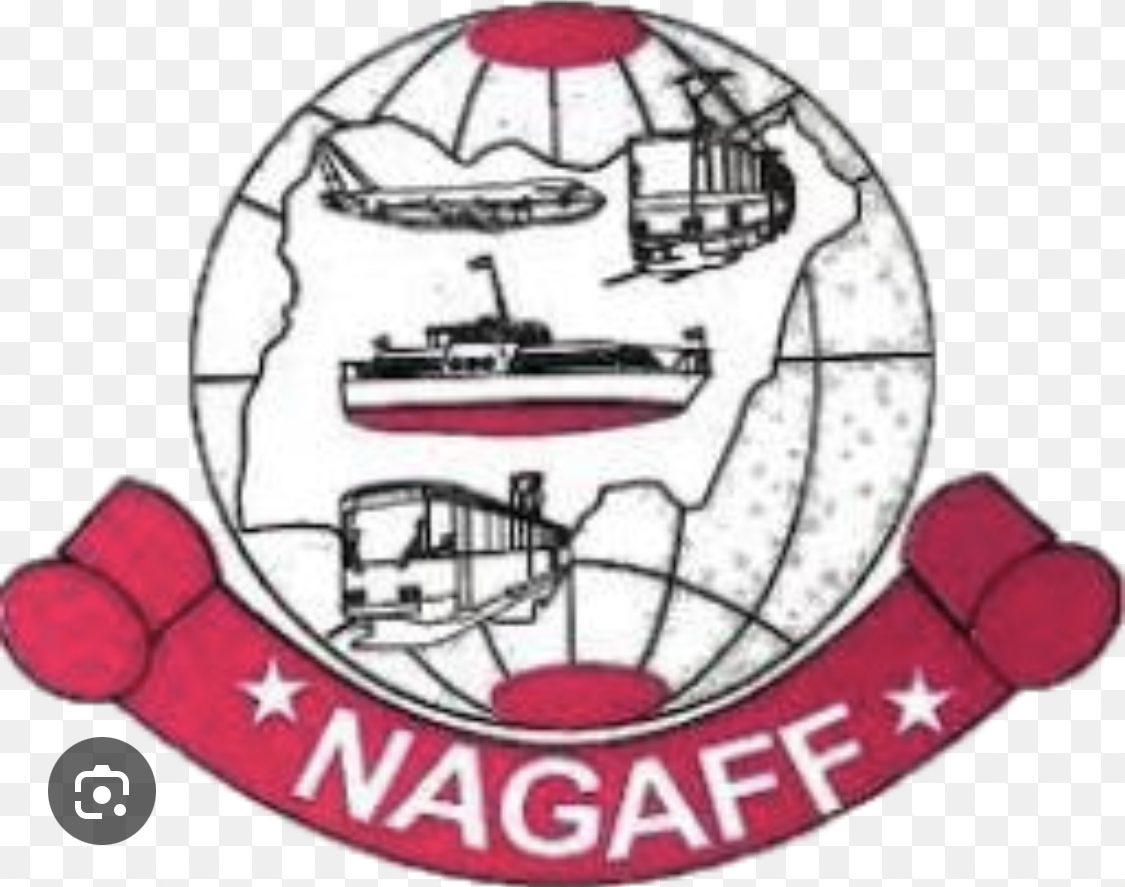
Tochukwu Ezisi, NAGAFF National President
The growing fragmentation of local freight forwarding companies, he painted out, was weakening their capacity to compete with better-capitalized foreign firms. To overcome this development, local operators should urgently embrace consolidation to enable them build stronger and more competitive Nigerian-owned logistics business entities.
Indigenous freight forwarding companies, he canvassed, must come together and consolidate their operations as failure to so could leave them increasingly vulnerable to foreign dominance in Nigeria’s logistics and maritime sector.
It is no longer about the survival of individual freight forwarding entities but about Nigeria’s ability to retain value in-country and internationally to ensure foreign competitors do not render them irrelevant in international trade.
He warned that without stronger indigenous companies, local operators could continue to lose market share and strategic opportunities to foreign competitors.
Going further, the NAGAFF Scribe identified consolidation as a national security imperative as better-organized cargo movements would make it easier for regulatory and security agencies to monitor consignments and detect suspicious activities.
“Consolidated cargo is easier to monitor, reducing risks of smuggling and illicit trade,” he stated.
He called for investment in warehouses, transport corridors and digital cargo management systems, as well as capacity-building programmes for freight forwarders and customs brokers.
This would be complemented by stronger public-private partnerships among government agencies, freight forwarders, shippers and port operators to create an efficient logistics ecosystem.
Nwosu said the freight forwarding sector was a critical enabler of international trade and warned that the dominance of small, fragmented operators had created vulnerabilities that could be exploited by foreign competitors.
According to him, bringing smaller freight forwarding companies together would enable operators to pool resources, cargo volumes, infrastructure and expertise, thereby reducing costs and improving service delivery.
“Consolidating multiple smaller freight forwarding companies into larger, unified firms offers a strategic solution to enhance competitiveness, efficiency and resilience,” he said.
Nwosu explained that consolidation would allow operators to share cargo space and transportation resources, reducing per-unit logistics costs while limiting exposure to under-utilized capacity and empty runs.
He said stronger companies would also be better positioned to invest in warehouses, transportation networks, digital systems and skilled manpower, giving indigenous operators the capacity to compete for larger cargo volumes and contracts.
The NAGAFF official said the benefits would extend beyond freight forwarders to shippers, Customs, port operators and the wider economy.
He said shippers would have access to more affordable and reliable logistics services, while Customs authorities could benefit from more structured cargo movements that would simplify inspection, documentation and clearance.
For port operators, he said, more coordinated cargo evacuation would help improve cargo flow and reduce congestion.
Maritime Agencies
NIWA, Private Agency Target Pollution Elimination, Job Creation To Clean Lagos Waterways.
By Izuchukwu Ozoemena
The National Inland Waterways Authority (NIWA) and PARTS Central Ltd are partnering to clean up the country’s inland waterways by identifying sources of indiscriminate accumulation of waste within the inland waterways and environs. The partnership also involves the removal, recycling and conversion of such waste into economic value.
This initiative expected to promote environmental sustainability and create employment opportunities for communities living along the waterways is in line with the comprehensive environmental reform programme introduced by Bola Oyebamiji, former Managing Director of NIWA.
In a joint statement, NIWA Lagos Area Manager, Engr. Sarat Braimah and Managing Director, PARTS Central Ltd, Henry Olaoluwa Onifade said the Lagos unveiling is aimed at briefing stakeholders in Lagos on the benefits of the initiative and to seek their support and buy-in to ensure it succeeds.
Apart from improving inland waterway navigability by eliminating debris, pollution-related accumulations and obstructions, the nationwide initiative is also expected to enhance the conservation of aquatic biodiversity, some of which remain largely undocumented. It will also contribute significantly to the growth of Nigeria’s fisheries economy.
Minister of Marine and Blue Economy, Adegboyega Oyetola, has consistently emphasized the need to strategically harness the vast potentials of Nigeria’s inland waterways beyond transportation. He has positioned them as key drivers of economic diversification under the blue economy framework.
This arrangement underscores NIWA’s commitment to innovation and sustainable development.


NAGAFF Petitions IGP On Alleged Police Extortion, Harassment At Sea Ports.

NAGAFF Deplores Foreign Domination of Freight Forwarding, Tasks Indigenous Operators to Form Combines.

NIWA, Private Agency Target Pollution Elimination, Job Creation To Clean Lagos Waterways.

Seme Customs Arrests 2, Intercepts Explosives, Expired Noodles As Command’s Revenue Hits N19.8bn.

FOU Zone ‘A’ Customs Recovers over N729m Revenue, Intercepts Smuggled Goods Worth N3.24bn.

Key Industry Stakeholders To Focus on Ports Competitiveness as MARAN Hosts MAMAL.

NAGAFF Tasks Bonded Terminals To Suspend All Illegal Fees Collections, Refund N178m.

CGC Restates Position on Illicit Arms, Unveils Intercepted Weapons and Drugs Worth N373m

Topfield College Clinches Overall Position as Customs’ WASA Sports Event ends in Lagos.

ECTS: PTML Customs Mounts an Awareness Campaign

AfCFTA: Nigeria, Cameroon, Benin To Establish Joint Customs Strategic Steering Committee on Beitbridge Communique.

TRANSQuest MAGAZINE @ 21: With Huge Maritime Endowments, Stakeholders Warn, Nigeria Can’t be Poor, Government Must Realign Her Priorities.

CSR: Customs CG Hosts Apapa Students in Sports, Pledges Sponsorship for Outstanding Young Athletes.

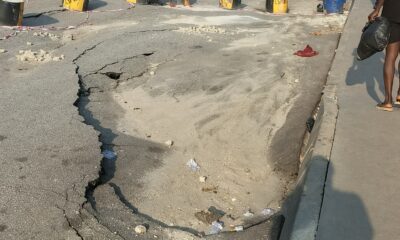
Disaster Imminent in Apapa as Widening Cracks Overtake Liverpool-Marine Road Junction. ………. Stakeholders Send SOS to Government.

Tochukwu Ezisi, NAGAFF President, Bags RATTAWU’s Logistics Excellence Award.

Oyetola Vows to Strengthen Local Capacity, Innovation, Responsible Investments As STARZS Celebrates 40th Anniversary.

ABUJA MoU: WE FUNCTION BEHIND A MASK, says Capt Umoren

1. EXECUTIVE PLATFORM. AMES 2024: TIME TO CHANGE GOVERNMENT ATTITUDE TOWARDS SHIPPING DEVELOPMENT IS NOW, AMES President Charges FG.

2023 ELECTIONS:CILT Hosts Seminar on Logistics & Electoral Process

B’ODOGWU TRADE PORTAL: Customs Consolidates, Pilots Form ‘M’ Processing.

APFFLON Seeks Immediate Reform of CRFFN, Replacement of Registrar.

OMIS AWARDS, 2022: Greg Ogbeifun, Industry Gurus For Special Recognition.
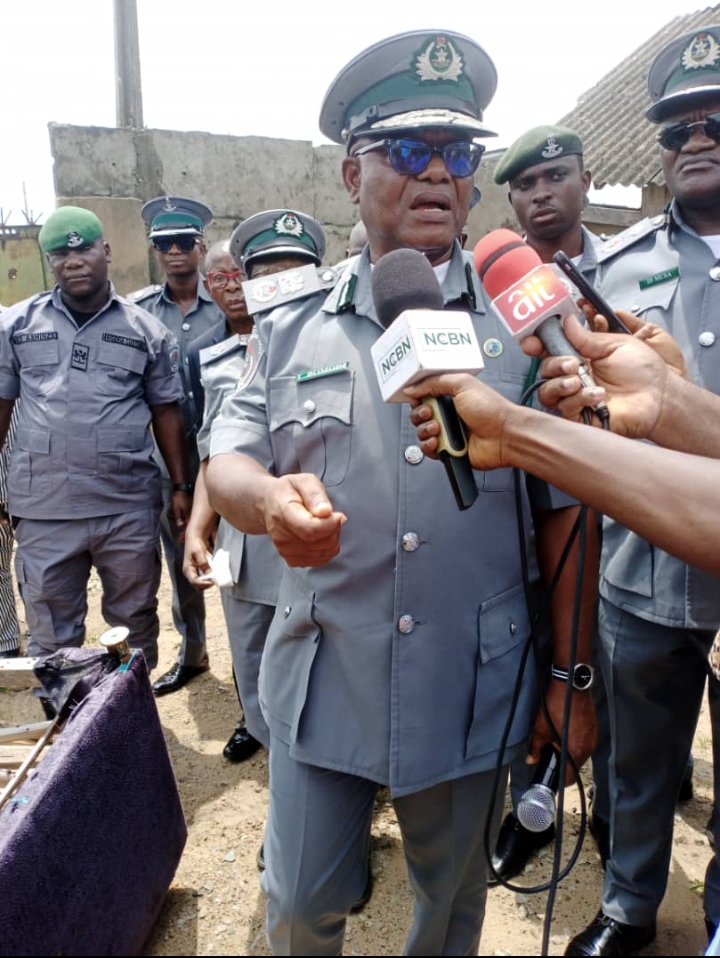
JANUARY-MAY REPORT: Seme Customs Hits N2.6bn, Facilitates ₦35.1bn Exports.
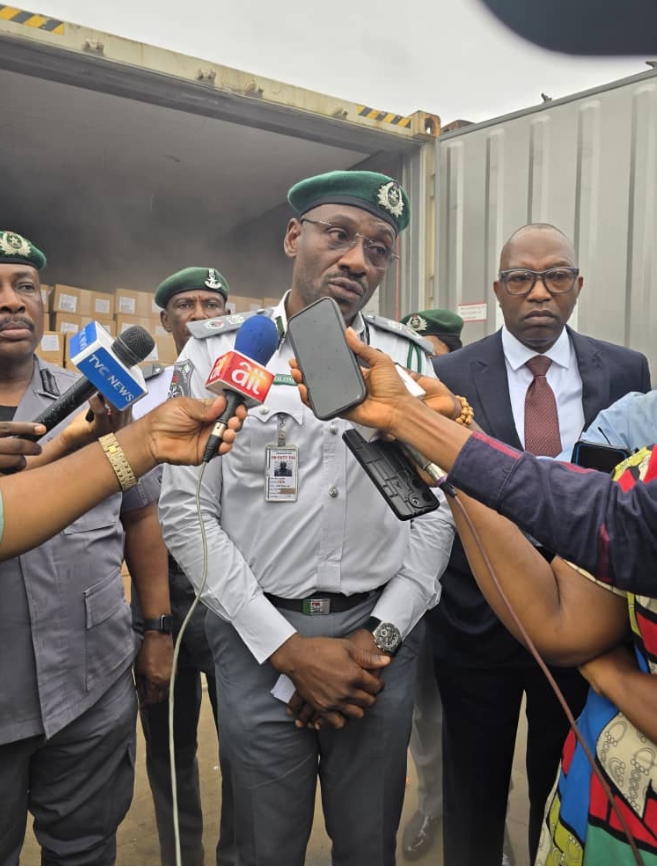
HALF YEAR, 2024: Apapa Customs Nets ₦1.024 Trillion, Records 143% Increase.

B’Odogwu: Apapa Customs Collects ₦161b in 3 Weeks, Assures of Improvements .

PHOTO NEWS: Maritime Capacity Development

FG Set To Re-establish National Shipping Line, To Take Advantage of $10 bn Annual Ship Charter Market.

Photo News: Salah Celebration

Sylvanus Ekpo, ex-Editor, Shipping World Magazine, loses Mum
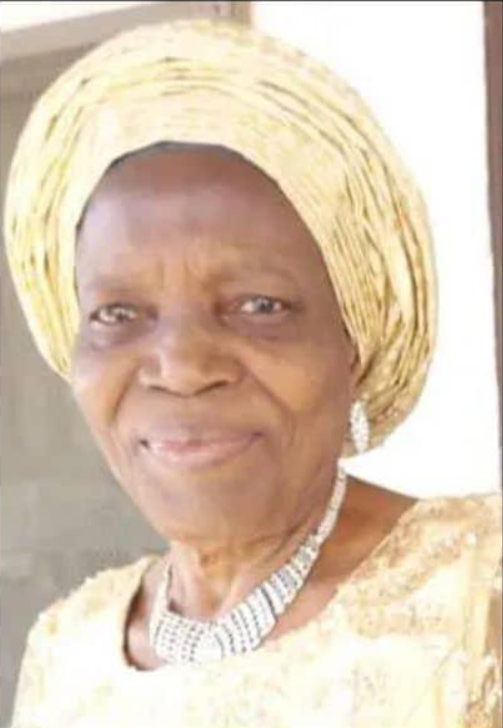
Mama Theresa Enisuoh Due For Burial April 27
Adesuwa Ladoja Becomes MD/CEO, Lagos Free Zone.

MAN, ORON: It’s Encomiums Galore From International Seabed Authority (ISA).

-
 News3 weeks ago
Disaster Imminent in Apapa as Widening Cracks Overtake Liverpool-Marine Road Junction. ………. Stakeholders Send SOS to Government.
-
 Maritime Agencies3 weeks ago
CSR: Customs CG Hosts Apapa Students in Sports, Pledges Sponsorship for Outstanding Young Athletes.
-
 Maritime Agencies3 weeks ago
TRANSQuest MAGAZINE @ 21: With Huge Maritime Endowments, Stakeholders Warn, Nigeria Can’t be Poor, Government Must Realign Her Priorities.
-
 Maritime Agencies3 weeks ago
ECTS: PTML Customs Mounts an Awareness Campaign
-
 Maritime Agencies5 days ago
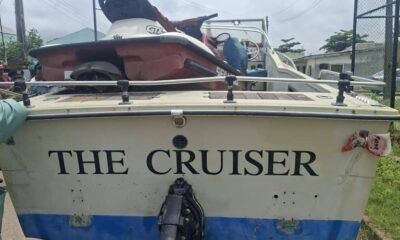
Seme Customs Arrests 2, Intercepts Explosives, Expired Noodles As Command’s Revenue Hits N19.8bn.
-
 Maritime Agencies3 weeks ago
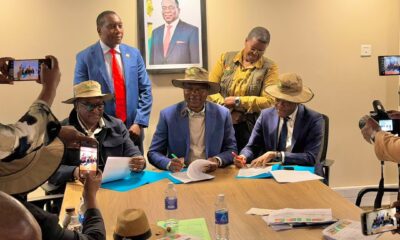
AfCFTA: Nigeria, Cameroon, Benin To Establish Joint Customs Strategic Steering Committee on Beitbridge Communique.
-
 Maritime Agencies2 weeks ago
Topfield College Clinches Overall Position as Customs’ WASA Sports Event ends in Lagos.
-
 Maritime Agencies1 week ago
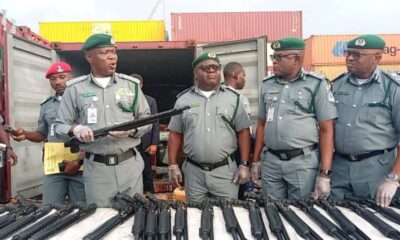
CGC Restates Position on Illicit Arms, Unveils Intercepted Weapons and Drugs Worth N373m