
Maritime Agencies
APFFLON Seeks Immediate Reform of CRFFN, Replacement of Registrar.

By Izuchukwu Ozoemena
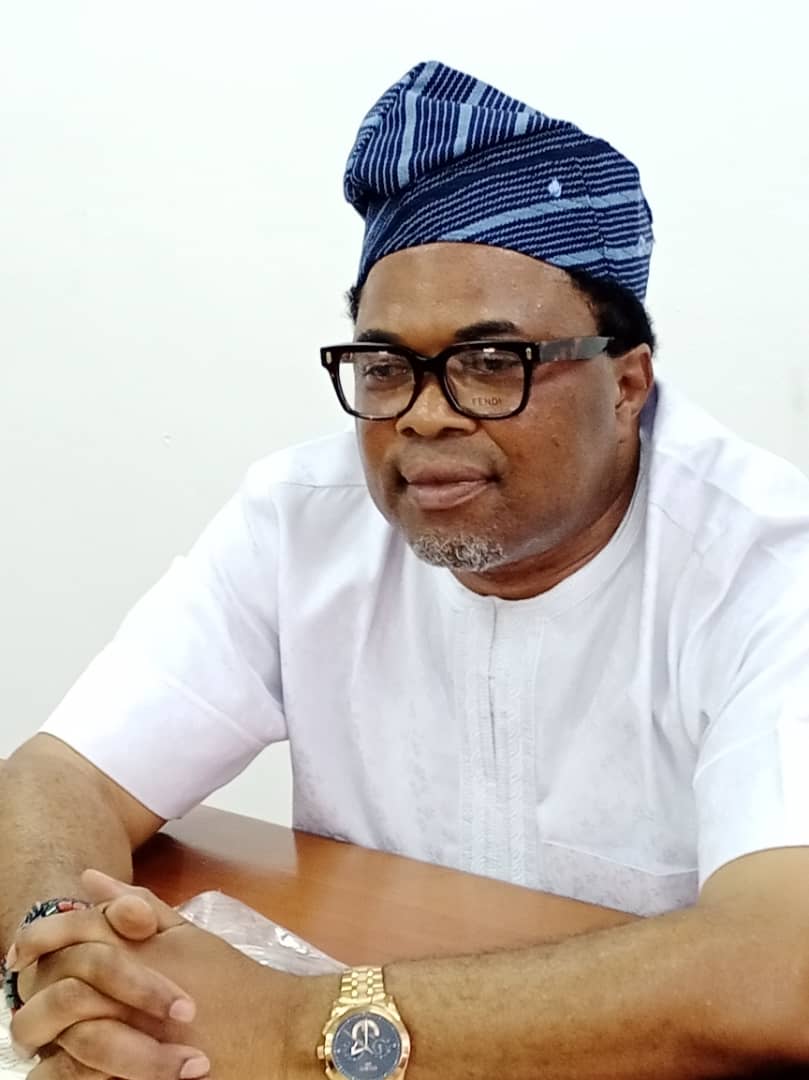
National President, Association of Professional Freight Forwarders and Logistics of Nigeria (APFFLON), Otunba Frank Ogunojemite says the Federal Government should carry out a wholesale reformation of the Council for the Regulation of Freight Forwarding in Nigeria (CRFFN) without delay as it has woefully failed in discharging the responsibilities vested in her by the CRFFN Act. This failure is the reason numerous lapses and confusion continue to bedevil the freight forwarding practice in Nigeria.
Otunba Frank Ogunojemite made the call in Lagos, Thursday, as a guest at a Roundtable organized by the Maritime Reporters Association of Nigeria (MARAN).
He called for immediate replacement of the Registrar who has overstayed his tenure in office so as to pave way for a wholesale reform programme that will, among other expectations, create room for sanity in the Council, reduce numerous complaints of freight forwarders and place premium on training.
“We (concerned freight forwarders) had a meeting sometime ago,” he stated, “and the purpose of the meeting was for a reformation in the industry. We had issues with the CRFFN in the court and we have started processing to come out of court based on the response that things we want should be done in the Council.”
“APFFLON found that a lot of people have violated the Council’s Act. For instance, it is in section 19 of the CRFFN Act that if you do not pay your subscription within six months, you should be deregistered. We found out that so many associations did not pay for years and they have not been deregistered.
“For God’s sake, we are not in animal farm. It is people who claim to be accredited and you have an issue which is supposed to be addressed by the Council and you went to court, which automatically earn you expulsion, and it is not being done. Then you want the Council to be effective when people are violating the Act.”
He specifically referred to the issue of sit-tight in office of the Registrar which needs to be addressed.
“The Registrar is supposed to be leaving the Council because this is his 4th year. He is supposed to have proceeded on terminal leave to hand over. But we do not know the collaboration between the Permanent Secretary and the Registrar that they are keeping them.”
He also regretted that no action has been taken against the CRFFN Registrar despite lots of allegations industry stakeholders have made against him.
“We are just incommunicado. There were several serious complaints leveled against the CRFFN Registrar but no updates on the investigations. It is not accreditation that matters to APFFLON but reformation of the industry. We want to be proud of our industry.”
“We can rate those that have been accredited. What are their achievements? What are they doing? Accreditation is little to APFFLON. What is important is reformation. His tenure is ending, he should proceed on terminal leave; we need reformation. We want the Council to work. We are ashamed to compare our Council with other people’s Council like the lawyers, engineers, etc”.
Picking holes in the running of the International Freight Forwarders Association (FIATA), he revealed that the Council representing Nigerian freight forwarders at the global level is not registered.
“CRFFN is supposed to be an umbrella for all the freight forwarders in Nigeria and it should be representing us at FIATA. There is an extent to which professionals can make decision in the Council because government has half and we have half. So, how do we agree to disagree? So the issue for APFFLON is reformation of the industry.”

Maritime Agencies
Ogun 1 Customs Hits Smugglers Hard 15 Days into New Leadership, Intercepts N3.15 bn Contrabands.
By Izuchukwu Ozoemena
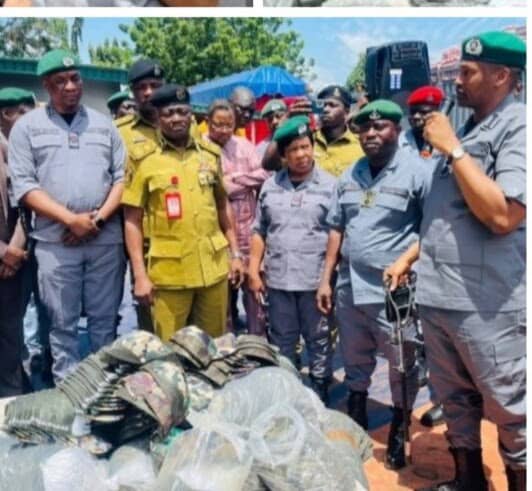
Within 15 days of taking over as the Acting Customs Area Controller, Ogun 1 Customs Command, Deputy Comptroller Abdulhamid Ibrahim has hit the ground running, intercepting 43 consignments of prohibited and improperly imported goods whose Duty Paid Value (DPV) stand at N3.15 billion.
The Acting CAC stated this, Thursday, when he addressed the press at the Command’s headquarters, Idiroko, Ogun State. He pledged his commitment to intensify enforcement operations to prevent prohibited goods from entering the country through Nigeria’s borders with the Republic of Benin.
The seizures, which include foreign rice, pasta, pharmaceutical products, cannabis, petroleum products and 13 exotic vehicles, underscore the command’s renewed offensive against smuggling and other forms of economic sabotage.
Attributing the swift success to intelligence-driven strategies, intensified surveillance and collaboration with sister security agencies and border communities,
he warned smugglers that the Command would not tolerate activities capable of undermining the nation’s economy, public health and national security.
“From the outset, I made it clear that Ogun I Area Command under my watch would not tolerate any form of economic sabotage. We are determined to deploy all lawful means to combat smuggling and enforce compliance with existing trade laws and regulations,” Ibrahim stated.
On October 2, 2026, he explained, trucks conveying large quantities of foreign pasta and condensed milk suspected to have been smuggled into the country were confiscated.
”The first truck contained 2,740 cartons of foreign Siddo Pasta concealed alongside 500 cartons of Oki Condensed Milk, while the second carried 6,000 cartons of foreign Ginny Pasta. The third truck was loaded with 6,500 cartons of foreign Doga Pasta.
The trucks were subsequently moved to the command’s headquarters for physical examination in accordance with Section 227 of the Nigeria Customs Service Act, 2023.”
On October 4, he added, officers intercepted a Dangote truck along the Afamin-Dangote-Itori axis conveying 100 bags of 50kg foreign parboiled rice concealed beneath mica and gypsum stones in an apparent attempt to evade detection.
Yet on October 11, the Command also intercepted a 10-tyre truck containing 321 military camouflage face caps and 27,831 assorted unregistered pharmaceutical products.
The pharmaceutical products included codeine-based cough syrups, injections, eye drops and dietary supplements without registration numbers from the National Agency for Food and Drug Administration and Control (NAFDAC).
Ibrahim deplored the illegal importation of restricted military accessories and unregistered medicines with serious implications for national security and public health respectively.
“These seizures are not merely about confiscating prohibited goods. They are about protecting our citizens, safeguarding public health, defending our national security and ensuring that legitimate businesses are not undermined by illegal trade,” Comptroller Ibrahim said.
The trucks involved in the major interceptions, he disclosed, would be forfeited to the Federal Government in accordance with Section 248 of the Nigeria Customs Service Act, 2023.
Other items seized during the period included 4,013 parcels of cannabis sativa, one wrap of Canadian Loud, 950 litres of Premium Motor Spirit (PMS), 660 bags of 50kg foreign parboiled rice, four bundles of used pneumatic tyres, 106 bales of second-hand clothing, 1,320 pairs of new shoes, 3,700 pairs of used shoes, 252 imported face caps and 1,250 foreign-used bags.
Ogun 1 Command also impounded 13 exotic foreign-used vehicles, including Hyundai Tucson, Honda CR-V, Toyota Venza, Lexus LX 600, Lexus ES 350, Toyota Camry, Toyota Avensis Verso, Peugeot 406, Ford Galaxy and Nissan Almera models.
Ibrahim put the total Duty Paid Value of the 43 seizures at N3,153,591,000, describing the figure as evidence of the command’s determination to frustrate smuggling networks and protect the Nigerian economy.
He expressed particular concern over the interception of cannabis, warning that the substance poses significant risks to young people, public health and national security.
As part of efforts to strengthen inter-agency cooperation, the command formally handed over the seized cannabis to the National Drug Law Enforcement Agency (NDLEA), Idiroko Special Area Command, for further investigation and necessary action.
He attributed the operational successes to the leadership and support of the Comptroller-General of Customs, Bashir Adewale Adeniyi, MFR, who continues to c provide strategic direction and motivation to officers across the country.
As he acknowledged the contributions of sister security agencies, traditional institutions, youths and border communities to the fight against smuggling, he praised his officers and men for being resilient and professional in discharging their duties.
“The message is clear: smugglers and their collaborators should steer clear of Ogun I Area Command. We remain committed to protecting the nation’s economic and security interests with professionalism, integrity and courage,” he warned.
In his intervention, Akande Olasumbo Oluwafemi, the Commander, NDLEA Idiroko Special Area Command, commended the Customs Service for intercepting the prohibited substances and pharmaceutical products.
Oluwafemi described the seizures as an important intervention in efforts to combat drug abuse and disrupt the supply chains through which illicit substances reach consumers.
He expressed concern over the increasing abuse of codeine-based cough syrups among Nigerian youths, noting that products originally intended for legitimate medical use were being misused because of their addictive properties.
“Initially, codeine was something mixed with other ingredients in cough syrups. But because of addiction, our youths now buy a bottle of codeine and swallow the entire contents at once,” he lamented.
He stressed the importance of sustained cooperation between the Customs Service and the NDLEA in identifying, intercepting and preventing the circulation of illicit drugs and unregistered pharmaceutical products.
Maritime Agencies
Lekki Port Customs Confiscates 400kg of Suspected Cannabis Sativa Worth over N2.26bn, Hands over To NDLEA.
By Izuchukwu Ozoemena
The new Acting Customs Area Controller, Lagos Free Trade Zone (LFTZ) Area Command of the Nigeria Customs Service, Deputy Comptroller Olufemi Kukoyi has harped on the importance of inter-agency collaboration as per the directive of the Comptroller -General of the Nigeria Customs Service, Dr Bashir Adewale Adeniyi.
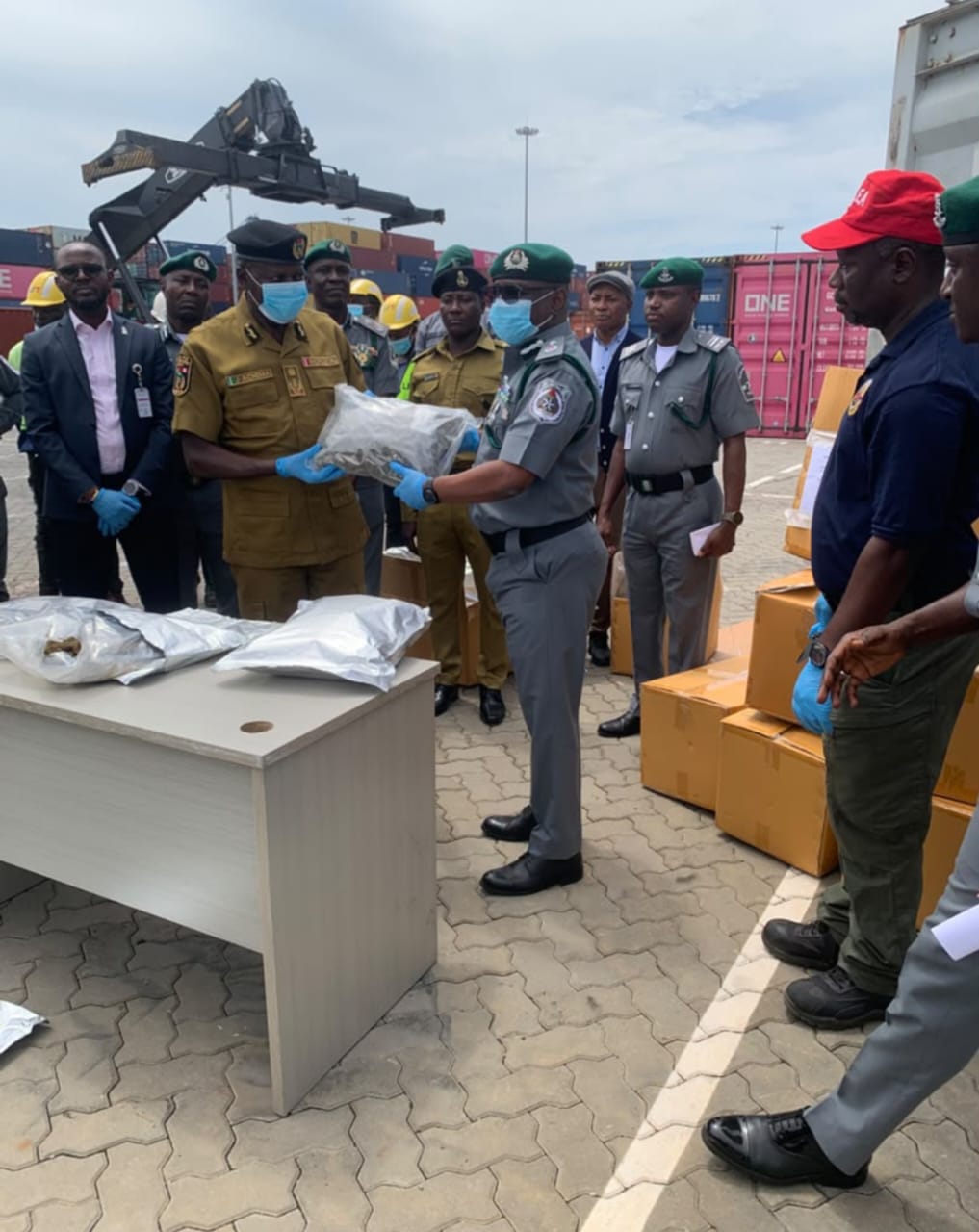
He stated this at the Lekki Port Command, Thursday, while handing over to the National Drug Law Enforcement Agency (NDLEA) a seized container laden with 400 kilograms of suspected Cannabis Sativa.
Acting on credible intelligence, he explained, officers of the Command under his watch intercepted the suspicious container with registration number PRSU1562064, which had arrived at Lekki Deep Sea Port and was, under the Customs transire procedure, destined for a bonded terminal outside the Command through the waterways by barge.
“However, recognizing the potential security implications and the risks associated with allowing a suspicious consignment to leave the port environment, the Command took the proactive decision to step down the container for further scrutiny.
“In line with established Customs procedures and our intelligence-driven enforcement strategy, the container was subjected to non-intrusive inspection through scanning. The scanning report revealed anomalies that necessitated a comprehensive physical examination.
Following from this, a joint examination was conducted at Lekki Freeport Terminal by officers of the Nigeria Customs Service (NCS), National Drug Law Enforcement Agency (NDLEA), Department of State Services (DSS), and National Agency for Food and Drug Administration and Control (NAFDAC), DC kukoyi explained.
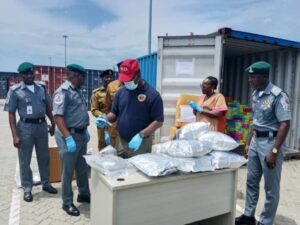
“During the examination, seven pallets of packaged goods were discovered. Upon opening and thoroughly examining the pallets, officers uncovered substances suspected to be illicit narcotics, ingeniously concealed among reams of A4 printing paper in an apparent attempt to evade Customs detection.”
The comprehensive examination revealed 400 packages of substances suspected to be Cannabis Sativa, commonly referred to as “Loud,” with a total weight of 400 kilograms tactically tucked into 798 reams of A4 printing paper which are not prohibited items.
The Duty Paid Value, the Customs boss announced was N2,262,960,000.00.
Kukoyi described the seizure as a significant victory for public safety, national security and eloquent commitment and determination of the sister security agencies to assist the Customs to protect Nigerian society from the devastating consequences of drug trafficking and abuse.
He underscored the destructive impact of illicit drugs on the communities, particularly among young people, noting that beyond their devastating health implications, illicit drugs contribute to addiction, organized crime, insecurity, family disintegration and the erosion of the nation’s productive human capital.
“The successful detection of this consignment before its onward movement from Lekki Port further reinforces the strategic importance of proactive risk management and coordinated border security operations”.
He commended the vigilance, professionalism and dedication of the Command’s officers, the cooperation of the NDLEA Lekki Port Command and other sister agencies like DSS, NAFDAC and the management of Lekki Freeport Terminal throughout the operation.
“This achievement is a practical demonstration of what can be accomplished when government agencies work together with a common purpose, share intelligence and place national interest above institutional boundaries.
“The handover underscores the unwavering resolve of the NCS to safeguarding the nation’s borders, protect public health and security and ensure that the ports and trade corridors are never exploited as gateways for illicit substances and other prohibited goods”.
Receiving the seized items, the Commander of Narcotics (CN), NDLEA Lekki Port Area Command, Jonah Achema, remarked that the collaboration sends a very strong signal that the new CAC is ready to embrace inter-agency collaboration as well as move the counter-narcotic onslaught to the next level.
“It sends the appropriate message to the unscrupulous maritime drug criminals that their operations will only end in the drag net of the Agency.
“The seizure being handed over today, standing at 400 kilograms of Cannabis indica from Thailand is huge by all standards. This is coming after other phenomenal seizures in the Port such as two containers of illicit pharmaceutical opioids (tramadol 225, tramaking royal 250) with a total weight of 46 tonnes and an estimated street value of N35 Billion”.
He assured LFTZ Acting Customs Controller and other sister agencies that the NDLEA remains consistent and unwavering to do everything to sustain the existing collaboration with the Nigeria Customs.
By Izuchukwu Ozoemena
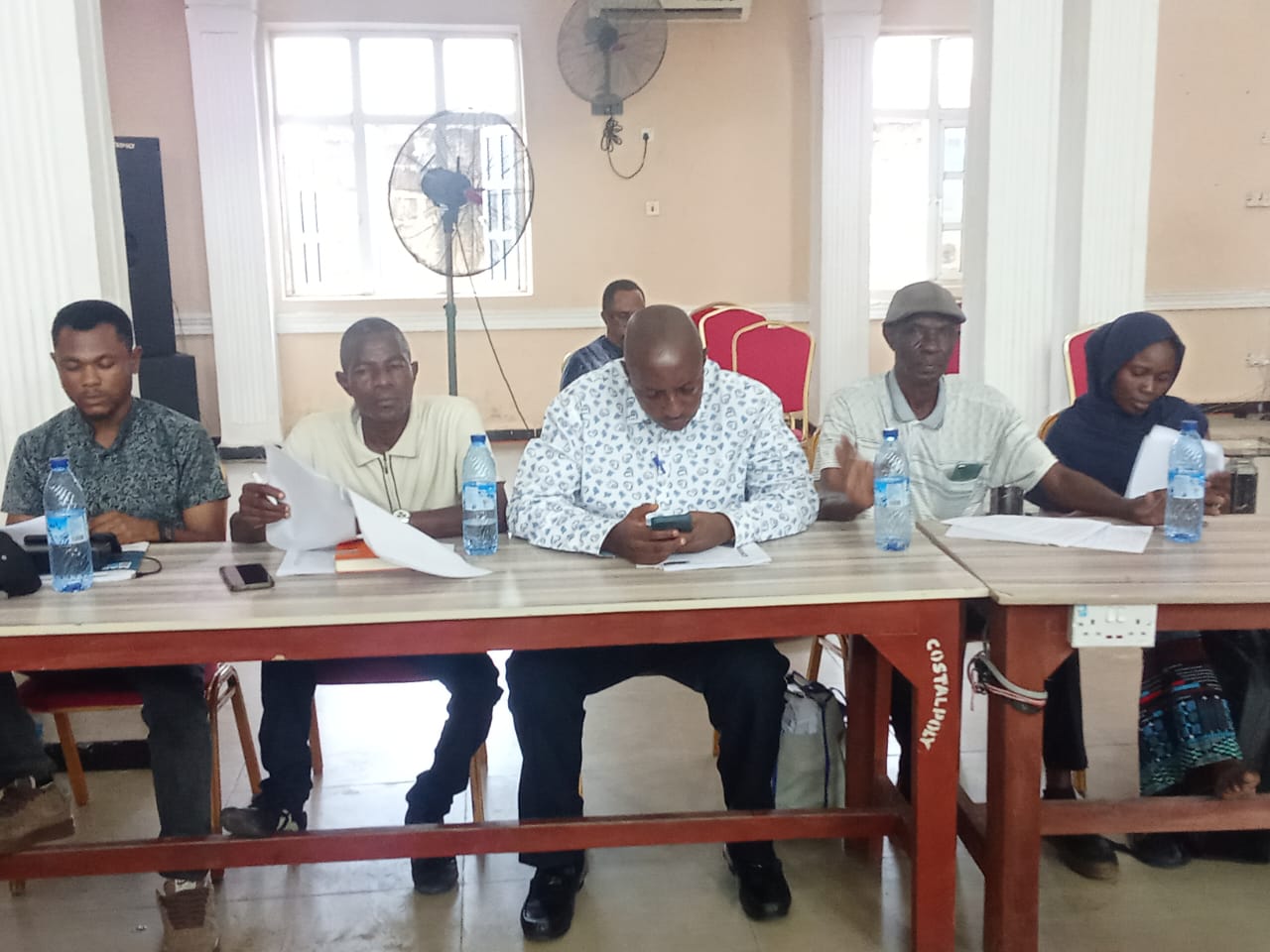
As part of efforts to improve maritime journalists’ grasp of shipping operations, port management and emerging opportunities in Nigeria’s blue economy,
the Maritime Reporters’ Association of Nigeria (MARAN) has undertaken a professional training programme for 20 of its members at the Chartered Institute of Shipping of Nigeria (CISN).
The Graduate Induction Training Programme, which ended on Saturday, October 10, 2026, was designed to equip participants with specialised knowledge of the technical, regulatory and operational aspects of the maritime industry. Upon successful completion of the programme, each participant obtained a Postgraduate Diploma Certificate in Shipping.
The programme forms part of MARAN’s efforts to strengthen the professional competence of its members and improve the quality of reporting on developments across Nigeria’s maritime sector.
The training covered maritime safety and security, integrated marine environment management, shipping and port management, cargo clearance procedures and documentation, as well as the marine and blue economy.
Delivering the first lecture, Mr Patrick Ambakederimo, a lecturer at CISN, examined the principles of maritime safety and security, highlighting their importance to efficient shipping operations, the protection of lives and property, and the sustainability of the maritime industry.
He discussed the identification and management of risks associated with vessel operations, cargo handling and other maritime activities, stressing the need for compliance with established safety regulations, regular inspections, adequate crew training and effective emergency response procedures.
Participants were also exposed to the importance of intelligence sharing, effective surveillance, coordinated security operations and compliance with relevant international maritime security standards.
The lecture further distinguished between maritime safety, which focuses on preventing accidents and operational hazards, and maritime security, which addresses deliberate threats and unlawful activities within the maritime domain.
Delivering another lecture on the integrated approach to marine environment management, Mr Sunday Duru, also of the CISN examined the need for coordinated efforts to protect marine and coastal environments from pressures associated with shipping activities, port operations, coastal development and other maritime-related activities.
He emphasised the importance of collaboration among government agencies, maritime operators, environmental organisations, coastal communities and other stakeholders in addressing environmental challenges.
The session also examined marine pollution, oil spills, improper waste disposal, plastic pollution and the degradation of coastal and marine ecosystems. Participants were introduced to the importance of environmental monitoring, pollution prevention, proper waste management and effective enforcement of environmental regulations.
Other areas covered by the programme included the anatomy of shipping and port management, cargo clearance procedures and documentation, and an overview of the marine and blue economy. These courses were designed to broaden participants’ understanding of the commercial and operational dimensions of shipping, as well as economic opportunities in fisheries, coastal tourism and other ocean-related activities.
Speaking on the programme, MARAN President, Oluyinka Onigbinde, said the association was committed to building a corps of maritime journalists with the technical knowledge and professional competence required to report the industry accurately and effectively.
Onigbinde noted that maritime journalism required more than the ability to gather and write news, explaining that reporters must understand the policies, regulations, commercial transactions and operational processes that shape the industry. He said better-informed journalists would be better positioned to analyse developments, scrutinise decisions by industry stakeholders and explain complex maritime issues to the public.
The MARAN president said the association would sustain its capacity-building efforts by pursuing partnerships with maritime institutions, government agencies and private-sector operators to provide members with access to specialised training and professional development opportunities.
The association , he added, would continue to explore programmes that would expose members to emerging trends in shipping, port operations, maritime security, international trade and the blue economy to ensure that MARAN members remain professionally relevant and equipped to meet the changing demands of maritime reporting.
Onigbinde stressed that continuous training was essential to strengthening the credibility of maritime journalism and improving public understanding of the sector’s contribution to national economic development.
He expressed optimism that the knowledge acquired through the programme would reflect in the quality of reports produced by participants, particularly in their coverage of port efficiency, shipping operations, maritime safety, environmental sustainability and government policies affecting the industry.
The initiative comes amid growing efforts to strengthen Nigeria’s maritime sector, improve port competitiveness, enhance maritime security and unlock the economic potential of the country’s marine resources.
Through the programme, MARAN is seeking to bridge the knowledge gap between journalism and the technical realities of the shipping industry, while positioning its members to deliver more accurate, balanced and informed reports on developments within the maritime sector.


Ogun 1 Customs Hits Smugglers Hard 15 Days into New Leadership, Intercepts N3.15 bn Contrabands.

Lekki Port Customs Confiscates 400kg of Suspected Cannabis Sativa Worth over N2.26bn, Hands over To NDLEA.

MARAN Trains Members at Shipping Institute, Pledges Sustained Capacity Building.

Deputy Comptroller Nkiru Nwala Takes Over C’River, Calabar FTZ and Akwa Ibom Customs Command, Succeeds Comptroller Momodu Dauda.

The Price Of The Byline: When Journalists Cannot Afford To Live

Operation Whirlwind’ Auctions 22,175 Litres of PMS, Deepens Fight Against Petroleum Products Smuggling,

NIGERIA @ 66: AMBO Media Front Pinpoints Signs of a Prosperous Future .

CHANGE OF BATON AT OGUN 1 CUSTOMS: A.A.Ibrahim Succeeds O.O.Afeni, Pledges Intelligence-Driven Enforcement.

SPORTS: Group Unveils United Nigeria Airlines Ndigboamaka Traders’ Cup, 2026.

Traders’ Umbrella Group Evaluates State of the Nation, Expresses Serious Concerns of the Trading Public.

Tantita’s Oil Pipeline Surveillance Yields Huge Dividend, Shoots Nigeria’s Q2 Oil Exports Earnings To $9.39bn.

Ehingbeti Summit: Stakeholders Say Coastal Communities Need Funding for Development.

Ogun 1 Customs Repeats Stern Warning To Smugglers, Confiscates Latest Brand of Range Rover, Other Contrabands.

Unregulated Deployment of Unmanned Vessels Threatens Maritime Security — Navy.

Nigeria Collaborates with Benin Republic to Launch Modernised Joint Customs Border Post.

NPA Emphasizes the Importance of Truck Drivers, Donates 400 Safety Vests to AMATO and NURTW.

ABUJA MoU: WE FUNCTION BEHIND A MASK, says Capt Umoren

2023 ELECTIONS:CILT Hosts Seminar on Logistics & Electoral Process
JANUARY-MAY REPORT: Seme Customs Hits N2.6bn, Facilitates ₦35.1bn Exports.

1. EXECUTIVE PLATFORM. AMES 2024: TIME TO CHANGE GOVERNMENT ATTITUDE TOWARDS SHIPPING DEVELOPMENT IS NOW, AMES President Charges FG.
HALF YEAR, 2024: Apapa Customs Nets ₦1.024 Trillion, Records 143% Increase.

B’Odogwu: Apapa Customs Collects ₦161b in 3 Weeks, Assures of Improvements .

B’ODOGWU TRADE PORTAL: Customs Consolidates, Pilots Form ‘M’ Processing.

APFFLON Seeks Immediate Reform of CRFFN, Replacement of Registrar.

OMIS AWARDS, 2022: Greg Ogbeifun, Industry Gurus For Special Recognition.

PTML Customs Hits Over N350Bn in 9 Months, Intercepts ₦200m Illicit Pharmaceuticals,

PHOTO NEWS: Maritime Capacity Development
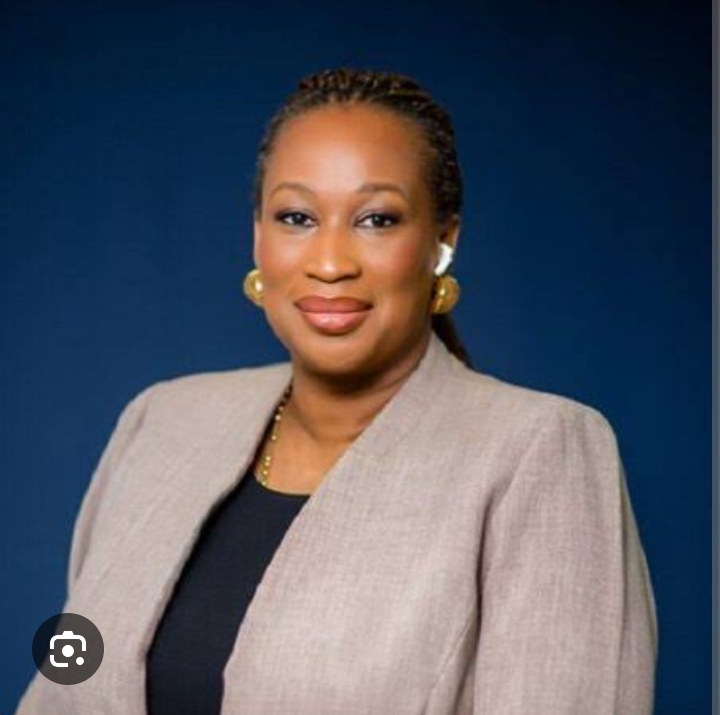
Adesuwa Ladoja Becomes MD/CEO, Lagos Free Zone.

IMPRESSIVE REVENUE DRIVE: Tincan Customs Generates ₦154.3Bn In October.

Photo News: Salah Celebration

FG Set To Re-establish National Shipping Line, To Take Advantage of $10 bn Annual Ship Charter Market.

Information Minister Highlights President Tinubu’s Achievements, says 2025 Is A Year of Consolidation.

-
 Maritime Agencies3 weeks ago
Traders’ Umbrella Group Evaluates State of the Nation, Expresses Serious Concerns of the Trading Public.
-
 Maritime Agencies2 weeks ago
CHANGE OF BATON AT OGUN 1 CUSTOMS: A.A.Ibrahim Succeeds O.O.Afeni, Pledges Intelligence-Driven Enforcement.
-
 Maritime Agencies3 weeks ago
SPORTS: Group Unveils United Nigeria Airlines Ndigboamaka Traders’ Cup, 2026.
-
 Maritime Agencies3 weeks ago
Tantita’s Oil Pipeline Surveillance Yields Huge Dividend, Shoots Nigeria’s Q2 Oil Exports Earnings To $9.39bn.
-
 Maritime Agencies7 days ago
Deputy Comptroller Nkiru Nwala Takes Over C’River, Calabar FTZ and Akwa Ibom Customs Command, Succeeds Comptroller Momodu Dauda.
-
 Maritime Agencies2 weeks ago
NIGERIA @ 66: AMBO Media Front Pinpoints Signs of a Prosperous Future .
-
 Maritime Agencies2 weeks ago
Operation Whirlwind’ Auctions 22,175 Litres of PMS, Deepens Fight Against Petroleum Products Smuggling,
-
 Maritime Agencies6 days ago
MARAN Trains Members at Shipping Institute, Pledges Sustained Capacity Building.