
Maritime Agencies
Customs Unveils Automation of Licenses and Permits, Seeks Full Cooperation from Stakeholders.


By Izuchukwu Ozoemena
Automation of licenses and permits in operations has been described as necessary because it will facilitate the ease of doing business in the maritime sector while encouraging an eventual increase in Customs revenue and the national economy.
Comptroller Ngozi Anosike, Controller, License and Permits stated this in Lagos, Monday, while delivering a welcome address at a stakeholders’ engagement on Automation of License and Permits at the Customs Training College, Ikeja.
According to her, automation and permits will enable importers, clearing and forwarding agents initiate and complete the processes of acquisition and renewal of licenses from anywhere including their offices and homes without physically visiting the Customs Headquarters in Abuja. Officers and men of the License and Permit Unit, the bond seat unit of various Commands, she explained, would be saved some stress too as they would simply click on their systems to get results instead of carrying loads of files from one table to another and from one office to the other.
”Automation will cut the cost of doing business and minimize movement risks for our stakeholders.”
”Automation will minimize, if not eradicate fraudulent practices in the system, as every single document that is uploaded in the course of this process will be automatically rejected by default, if it is fake and accepted if it is genuine. L&P can now view assessments through the B’Odogwu to be sure that any company applying for fresh or renewal of licences or permits is not having unpaid assessments hanging on it. The CGC is poised to sanitize the system and we at L&P Unit are very passionate about this to ensure that the objective is achieved.”
Automation, she added, saves time as stakeholders will have the luxury of using the time they would have expended running from Commands or the Customs Headquarters in Abuja, to achieve other equally useful objectives in their business value chain.

The application of automation will enable an increase in the Custom’s statutory revenue generation as every single license and permit processed results to an increase in fees paid into the coffers of government. Importation is made with the permits, clearing processes are stamped with the licences given and obviously, revenue is generated. So, the more licences and permits are issued or renewed, the more revenue Customs generates to the advantage of the Nigerian economy.
”Automation elicits more efficiency and productivity from the officers as they leverage on the seamlessness of the process to work on more documents in minutes with greater output. The advantages of automation are just endless”.
She appealed to Customs officers especially those in the Licences and Permits Unit to embrace automation in order to achieve the desired objectives. The success of this programme, she explained, adds to the many success stories of the CGC and his management team.
”Their success is our collective success, as officers and men of the Service. I also appeal to our esteemed stakeholders to embrace this automation with both hands because the Service has their interest at heart for this innovative process.”
In the same vein, Anozie appealed to the press to assist in disseminating the information so that the general public and stakeholders would be aware of this stress-free, efficient, money and time saving process.
In his keynote address, the Zone A Coordinator, Assistant Comptroller-General, B. Babandede, said
the event marks the beginning of a new chapter in how the Nigeria Customs Service delivers its licences and permits services to stakeholders.
He said the Comptroller-General of Customs, Bashir Adewale Adeniyi MFR DSM FNIPR FNIIA psc(+) PhD, has approved the full automation of the Licences and Permits processes of the Service as a direct response to the long-standing need to make processes faster, more transparent, and easier for the people.. For many years, he recalled, stakeholders have had to deal with paperwork, long queues, and the uncertainty that comes with manual processing.
”This sensitization exercise is being held across all Zones from today. The goal is simple: to make sure that every Stakeholder understands the new automated system before it is implemented.”
He explained that automation means that stakeholders will no longer go to a Customs office simply to apply for or renew a licence or permit.
” You will be able to do this from your office or even from your phone.
It means your applications will be processed faster. It means you will be able to track the status of your application in real time. And it means that the process will be the same for everyone — fair, consistent, and without the risk of error that comes with manual records.”
For the Customs, automation means better record- keeping, easier supervision, and the ability to serve more stakeholders at once without increasing the burden on officers.
Stakeholders in attendance were requested to take the information back to their colleagues and respective associations.
”The more people understand the new process, the smoother the transition will be.
”Zone ‘A’ is the most active and economically significant Zone in Nigeria. Lagos is the commercial heartbeat of this country which means the volume of trade that passes through this Zone is enormous. That is precisely why it matters so much that we get it right here,” ACG Babandede emphasized.
He cautioned that since a programme of this nature cannot succeed on its own, it is important that everybody collaborate to make it work.
”Your feedback, questions, and honest engagement will help us make it even better. We are not here to lecture; we are here to listen and to work together.”
Clearly stating the objective of the Nigeria Customs Service in this regard, the Zone A Coordinator said “we are not just automating a process; we are transforming the way we serve Nigeria’s trade community. This is a step forward in that direction.”






By Izuchukwu Ozoemena
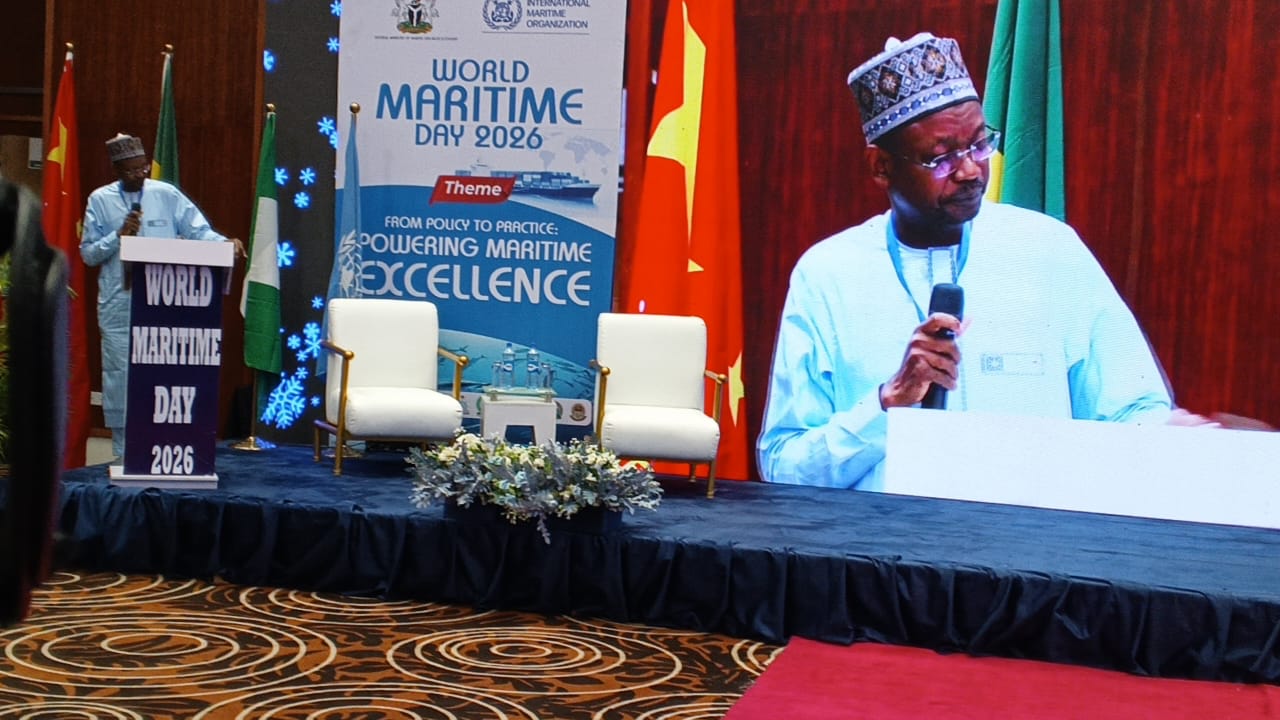
The National Inland Waterways Authority (NIWA) is committed to translate maritime policies into practical results as part of efforts to ensure safer waterways, reliable infrastructure and sustainable economic growth.
NIWA Acting Managing Director, Alhaji Yusuf Girei made the commitment while congratulating stakeholders in his goodwill message during the 2026 World Maritime Day celebration.
This year’s celebration whose theme was“From policy to practice: Powering excellence,” has in attendance was graced the Minister of Marine and Blue Economy, His Excellency Dr. Adegboyega Oyetola, CON; the Ministry’s Permanent Secretary Mrs. Fatima Sugra Mahmood, FSM, MCIPM; Chairperson and Keynote Speaker, Mrs. Mfon Usoro; Directors and Heads of Departments, CEOs of Parastatals under the Ministry, members of the diplomatic corps, industry stakeholders and the media.

“This year’s theme,” Alhaji Girei said, “reminds us that strong policies create value only when they are translated into meaningful action. In the maritime sector, that means safer waterways, reliable infrastructure, environmental stewardship and services that support trade and economic growth.”

He noted that NIWA remains committed to working with State Governments, industry stakeholders, host communities and development partners to improve navigation, strengthen safety standards, modernise facilities and protect the waterways on which many livelihoods depend.
Speaking about excellence in the maritime sector, he described it as a shared responsibility that requires skilled professionals, effective regulation, investment in innovation and a culture that places safety and sustainability at the heart of operations.

“By working together, we can build a maritime sector that is competitive, inclusive and prepared for the future,” he added.

He commended President Bola Ahmed Tinubu, the Minister of Marine and Blue Economy, the Permanent Secretary and all stakeholders whose commitment keeps the maritime industry moving, and urged participants to turn shared ambition into practical results.
The celebration peaked when Alhaji Girei joined in the award presentation for the Primary School Children’s Essay Competition category sponsored by NIWA. The first position went to Idris Jibril Oladimeji of Holy Cross Primary School, Lagos, who won N200,000 cash and a laptop computer. The second position went to Suleiman Aisha of St. Paul’s Anglican School, Lagos Island, who received N150,000 and a laptop computer, while the third position went to Yahaya Aliyah of St. Mathias Girls Primary School, Lagos, who received N100,000 cash and a laptop computer.
On behalf of the Board, Management and Staff of NIWA, he wished all stakeholders a successful World Maritime Day celebration.
Maritime Agencies
NAGAFF President, Chief Ezisi, Visits PTML Customs, Urges Deepened Customs-Freight Forwarders Partnership.
By Izuchukwu Ozoemena
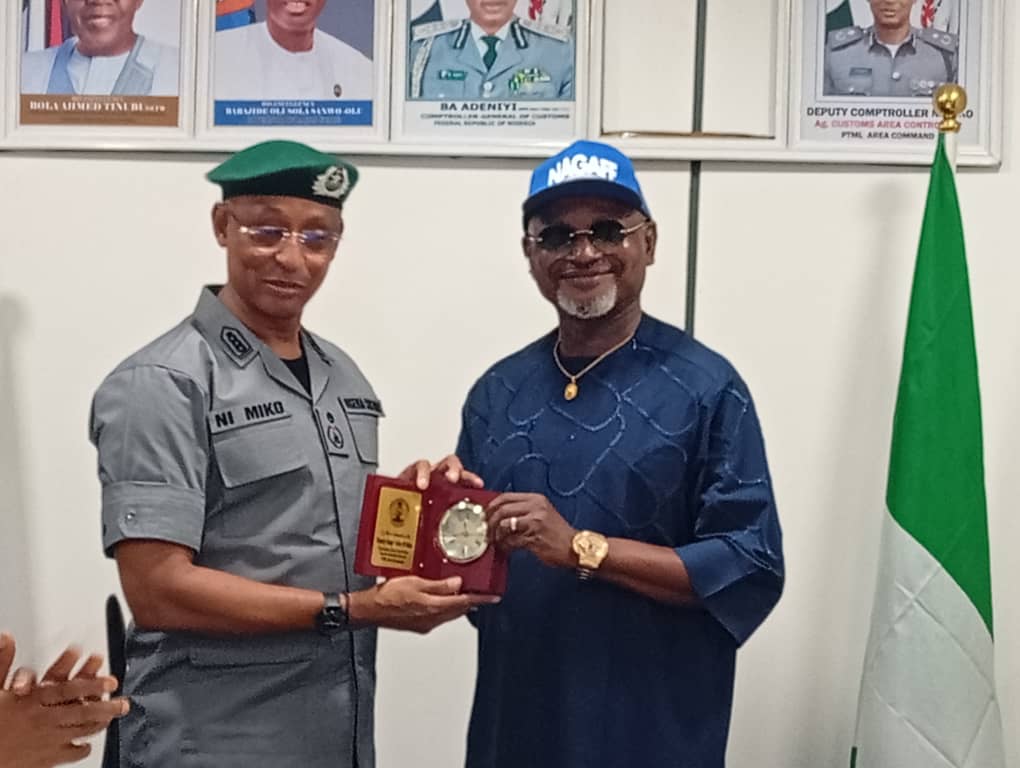
Chief Tochukwu Ezisi, National President, National Association of Government Approved Freight Forwarders (NAGAFF) has given kudos to the Controller of the PTML Command of the Nigeria Customs Service, Comptroller N. I. Miko, for the support extended to freight forwarders at PTML, enjoining him to sustain the tempo and assist the NAGAFF chapter to deepen the relationship for mutual benefits.
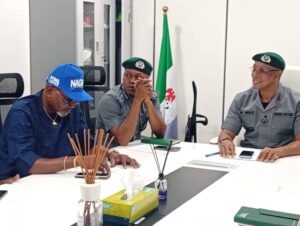
Chief Ezisi made the commendation, Thursday, when he led the association’s high command on a familiarization visit to the Customs Area Controller (CAC) of the PTML Command.
Ezisi who used the opportunity to welcome the CAC to the Customs Command also introduced the newly-elected executive of the NAGAFF PTML Chapter democratically elected to manage its affairs for the next four years.
Describing NAGAFF as a law-abiding organisation which has maintained a longstanding relationship with the Customs Service, Chief Ezisi stressed the importance of collaboration, compliance and professionalism in facilitating legitimate trade.
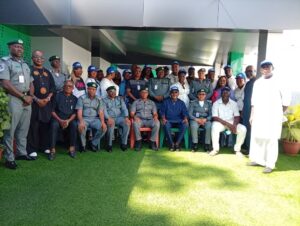
He urged Miko to maintain open communication with the chapter’s leadership and whenever disagreements or operational challenges arose, the national leadership would intervene where necessary to resolve issues.
As in other large organisations, Ezisi acknowledged, members with different dispositions and approaches to matters populate NAGAFF and managing them and their differences remains the hallmark of effective leadership at all times.
He also told the CAC that as a body, NAGAFF has in place an active special intervention outfit, a compliance team with guiding slogan, “If you see something, say something.” This body monitors the activities of her members and other freight forwarders who willingly subvert compliance standards in the line of duties.
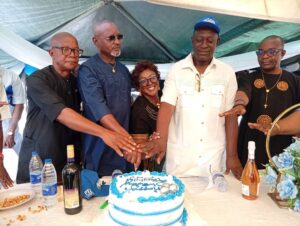
NAGAFF, he explained, is a non-profit association of freight forwarders whose headquarters relies on the contributions and activities of its chapters to fulfill its responsibilities to the industry.
In his response, the Customs Area Controller of the PTML Command, Comptroller Nura Ibrahim Miko, assured NAGAFF members of the Command’s continued cooperation. He described the relationship between Customs officers and freight forwarders at the terminal as very cordial and will always be, going forward.
Miko recalled NAGAFF’s organizational structure, describing it as impressive, particularly the commitment to training and capacity development of members through the NAGAFF Academy .
The PTML Command would continue to support freight forwarders, the CAC pledged as Customs officers and industry operators would continue to deepen the existing harmony and cooperation in the workplace.
He assured that the Command would continue engaging terminal operators on the need to improve the working environment for both Customs officers and freight forwarders.
Miko encouraged freight forwarders to report any shortcomings in the conduct of Customs officers, assuring them that the command would take feedback seriously and work towards improvement.
He also urged stakeholders to acknowledge good performance, emphasising that constructive engagement, mutual respect and collaboration were essential to effective operations.
He reaffirmed his management’s readiness to sustain the healthy relationship with the association and other stakeholders.
Giving a vote of thanks, NAGAFF’s Vice President (Headquarters), Simeon Nwonu, expressed pleasure of the assurance of a continued cordial relationship and accessibility stakeholders associate CAC Miko with right from the Apapa Command.
He thanked Comptroller Miko for the warm reception, expressing confidence that NAGAFF members operating at PTML would benefit from continued engagement.
Maritime Agencies
Ogun 1 Customs Hits Smugglers Hard 15 Days into New Leadership, Intercepts N3.15 bn Contrabands.
By Izuchukwu Ozoemena
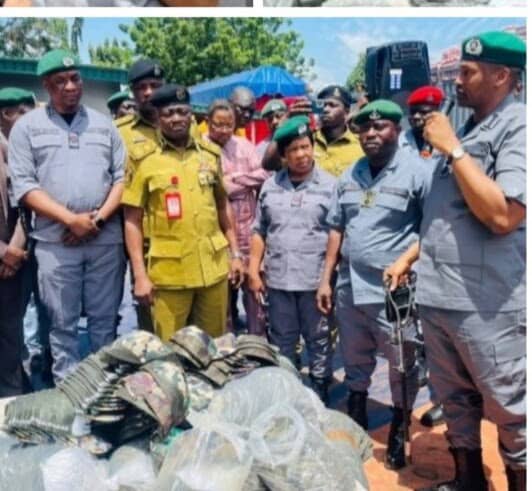
Within 15 days of taking over as the Acting Customs Area Controller, Ogun 1 Customs Command, Deputy Comptroller Abdulhamid Ibrahim has hit the ground running, intercepting 43 consignments of prohibited and improperly imported goods whose Duty Paid Value (DPV) stand at N3.15 billion.
The Acting CAC stated this, Thursday, when he addressed the press at the Command’s headquarters, Idiroko, Ogun State. He pledged his commitment to intensify enforcement operations to prevent prohibited goods from entering the country through Nigeria’s borders with the Republic of Benin.
The seizures, which include foreign rice, pasta, pharmaceutical products, cannabis, petroleum products and 13 exotic vehicles, underscore the command’s renewed offensive against smuggling and other forms of economic sabotage.
Attributing the swift success to intelligence-driven strategies, intensified surveillance and collaboration with sister security agencies and border communities,
he warned smugglers that the Command would not tolerate activities capable of undermining the nation’s economy, public health and national security.
“From the outset, I made it clear that Ogun I Area Command under my watch would not tolerate any form of economic sabotage. We are determined to deploy all lawful means to combat smuggling and enforce compliance with existing trade laws and regulations,” Ibrahim stated.
On October 2, 2026, he explained, trucks conveying large quantities of foreign pasta and condensed milk suspected to have been smuggled into the country were confiscated.
”The first truck contained 2,740 cartons of foreign Siddo Pasta concealed alongside 500 cartons of Oki Condensed Milk, while the second carried 6,000 cartons of foreign Ginny Pasta. The third truck was loaded with 6,500 cartons of foreign Doga Pasta.
The trucks were subsequently moved to the command’s headquarters for physical examination in accordance with Section 227 of the Nigeria Customs Service Act, 2023.”
On October 4, he added, officers intercepted a Dangote truck along the Afamin-Dangote-Itori axis conveying 100 bags of 50kg foreign parboiled rice concealed beneath mica and gypsum stones in an apparent attempt to evade detection.
Yet on October 11, the Command also intercepted a 10-tyre truck containing 321 military camouflage face caps and 27,831 assorted unregistered pharmaceutical products.
The pharmaceutical products included codeine-based cough syrups, injections, eye drops and dietary supplements without registration numbers from the National Agency for Food and Drug Administration and Control (NAFDAC).
Ibrahim deplored the illegal importation of restricted military accessories and unregistered medicines with serious implications for national security and public health respectively.
“These seizures are not merely about confiscating prohibited goods. They are about protecting our citizens, safeguarding public health, defending our national security and ensuring that legitimate businesses are not undermined by illegal trade,” Comptroller Ibrahim said.
The trucks involved in the major interceptions, he disclosed, would be forfeited to the Federal Government in accordance with Section 248 of the Nigeria Customs Service Act, 2023.
Other items seized during the period included 4,013 parcels of cannabis sativa, one wrap of Canadian Loud, 950 litres of Premium Motor Spirit (PMS), 660 bags of 50kg foreign parboiled rice, four bundles of used pneumatic tyres, 106 bales of second-hand clothing, 1,320 pairs of new shoes, 3,700 pairs of used shoes, 252 imported face caps and 1,250 foreign-used bags.
Ogun 1 Command also impounded 13 exotic foreign-used vehicles, including Hyundai Tucson, Honda CR-V, Toyota Venza, Lexus LX 600, Lexus ES 350, Toyota Camry, Toyota Avensis Verso, Peugeot 406, Ford Galaxy and Nissan Almera models.
Ibrahim put the total Duty Paid Value of the 43 seizures at N3,153,591,000, describing the figure as evidence of the command’s determination to frustrate smuggling networks and protect the Nigerian economy.
He expressed particular concern over the interception of cannabis, warning that the substance poses significant risks to young people, public health and national security.
As part of efforts to strengthen inter-agency cooperation, the command formally handed over the seized cannabis to the National Drug Law Enforcement Agency (NDLEA), Idiroko Special Area Command, for further investigation and necessary action.
He attributed the operational successes to the leadership and support of the Comptroller-General of Customs, Bashir Adewale Adeniyi, MFR, who continues to c provide strategic direction and motivation to officers across the country.
As he acknowledged the contributions of sister security agencies, traditional institutions, youths and border communities to the fight against smuggling, he praised his officers and men for being resilient and professional in discharging their duties.
“The message is clear: smugglers and their collaborators should steer clear of Ogun I Area Command. We remain committed to protecting the nation’s economic and security interests with professionalism, integrity and courage,” he warned.
In his intervention, Akande Olasumbo Oluwafemi, the Commander, NDLEA Idiroko Special Area Command, commended the Customs Service for intercepting the prohibited substances and pharmaceutical products.
Oluwafemi described the seizures as an important intervention in efforts to combat drug abuse and disrupt the supply chains through which illicit substances reach consumers.
He expressed concern over the increasing abuse of codeine-based cough syrups among Nigerian youths, noting that products originally intended for legitimate medical use were being misused because of their addictive properties.
“Initially, codeine was something mixed with other ingredients in cough syrups. But because of addiction, our youths now buy a bottle of codeine and swallow the entire contents at once,” he lamented.
He stressed the importance of sustained cooperation between the Customs Service and the NDLEA in identifying, intercepting and preventing the circulation of illicit drugs and unregistered pharmaceutical products.


2026 World Maritime Day: Nigeria Subscribes to Safer Waterways and Excellence.

NAGAFF President, Chief Ezisi, Visits PTML Customs, Urges Deepened Customs-Freight Forwarders Partnership.

Ogun 1 Customs Hits Smugglers Hard 15 Days into New Leadership, Intercepts N3.15 bn Contrabands.

Lekki Port Customs Confiscates 400kg of Suspected Cannabis Sativa Worth over N2.26bn, Hands over To NDLEA.

MARAN Trains Members at Shipping Institute, Pledges Sustained Capacity Building.

Deputy Comptroller Nkiru Nwala Takes Over C’River, Calabar FTZ and Akwa Ibom Customs Command, Succeeds Comptroller Momodu Dauda.

The Price Of The Byline: When Journalists Cannot Afford To Live

Operation Whirlwind’ Auctions 22,175 Litres of PMS, Deepens Fight Against Petroleum Products Smuggling,

NIGERIA @ 66: AMBO Media Front Pinpoints Signs of a Prosperous Future .

CHANGE OF BATON AT OGUN 1 CUSTOMS: A.A.Ibrahim Succeeds O.O.Afeni, Pledges Intelligence-Driven Enforcement.

SPORTS: Group Unveils United Nigeria Airlines Ndigboamaka Traders’ Cup, 2026.

Traders’ Umbrella Group Evaluates State of the Nation, Expresses Serious Concerns of the Trading Public.

Tantita’s Oil Pipeline Surveillance Yields Huge Dividend, Shoots Nigeria’s Q2 Oil Exports Earnings To $9.39bn.

Ehingbeti Summit: Stakeholders Say Coastal Communities Need Funding for Development.

Ogun 1 Customs Repeats Stern Warning To Smugglers, Confiscates Latest Brand of Range Rover, Other Contrabands.

Unregulated Deployment of Unmanned Vessels Threatens Maritime Security — Navy.
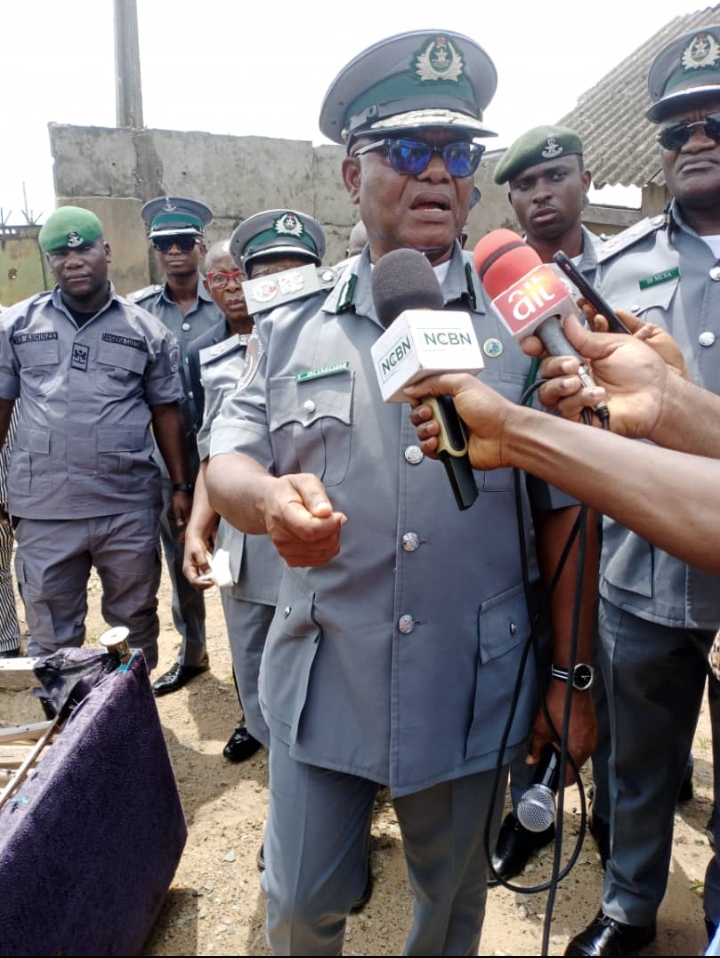
JANUARY-MAY REPORT: Seme Customs Hits N2.6bn, Facilitates ₦35.1bn Exports.

2023 ELECTIONS:CILT Hosts Seminar on Logistics & Electoral Process

ABUJA MoU: WE FUNCTION BEHIND A MASK, says Capt Umoren

1. EXECUTIVE PLATFORM. AMES 2024: TIME TO CHANGE GOVERNMENT ATTITUDE TOWARDS SHIPPING DEVELOPMENT IS NOW, AMES President Charges FG.
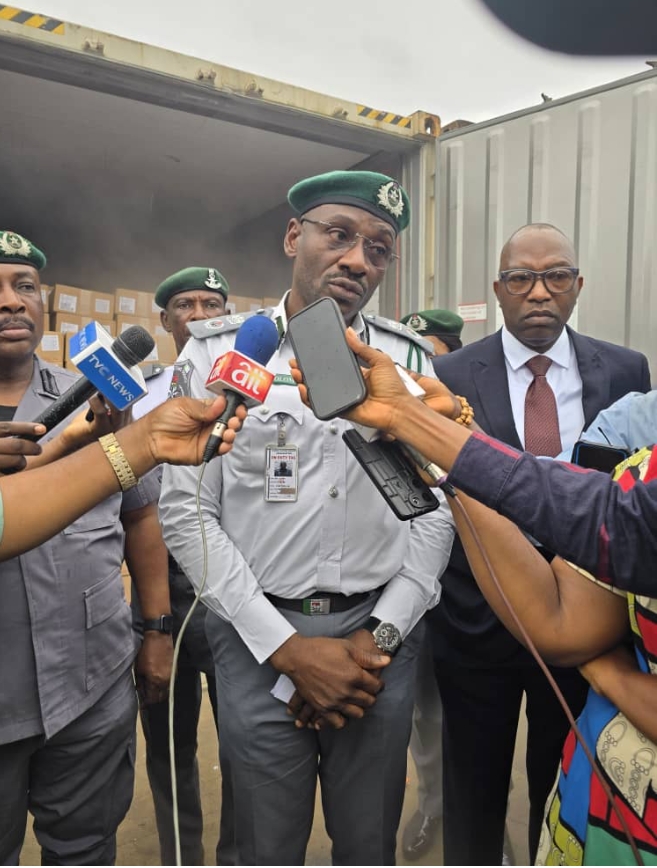
HALF YEAR, 2024: Apapa Customs Nets ₦1.024 Trillion, Records 143% Increase.

B’Odogwu: Apapa Customs Collects ₦161b in 3 Weeks, Assures of Improvements .

B’ODOGWU TRADE PORTAL: Customs Consolidates, Pilots Form ‘M’ Processing.

PTML Customs Hits Over N350Bn in 9 Months, Intercepts ₦200m Illicit Pharmaceuticals,

APFFLON Seeks Immediate Reform of CRFFN, Replacement of Registrar.

OMIS AWARDS, 2022: Greg Ogbeifun, Industry Gurus For Special Recognition.

IMPRESSIVE REVENUE DRIVE: Tincan Customs Generates ₦154.3Bn In October.

PHOTO NEWS: Maritime Capacity Development
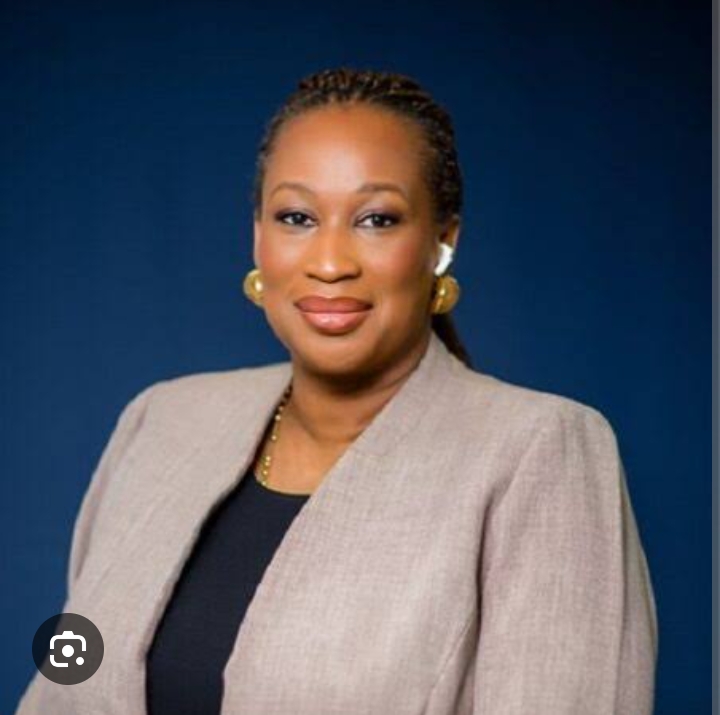
Adesuwa Ladoja Becomes MD/CEO, Lagos Free Zone.

Photo News: Salah Celebration

Information Minister Highlights President Tinubu’s Achievements, says 2025 Is A Year of Consolidation.

FG Set To Re-establish National Shipping Line, To Take Advantage of $10 bn Annual Ship Charter Market.

-
 Maritime Agencies3 weeks ago
Traders’ Umbrella Group Evaluates State of the Nation, Expresses Serious Concerns of the Trading Public.
-
 Maritime Agencies3 weeks ago
CHANGE OF BATON AT OGUN 1 CUSTOMS: A.A.Ibrahim Succeeds O.O.Afeni, Pledges Intelligence-Driven Enforcement.
-
 Maritime Agencies3 weeks ago
SPORTS: Group Unveils United Nigeria Airlines Ndigboamaka Traders’ Cup, 2026.
-
 Maritime Agencies3 weeks ago
Tantita’s Oil Pipeline Surveillance Yields Huge Dividend, Shoots Nigeria’s Q2 Oil Exports Earnings To $9.39bn.
-
 Maritime Agencies2 weeks ago
Deputy Comptroller Nkiru Nwala Takes Over C’River, Calabar FTZ and Akwa Ibom Customs Command, Succeeds Comptroller Momodu Dauda.
-
 Maritime Agencies3 weeks ago
NIGERIA @ 66: AMBO Media Front Pinpoints Signs of a Prosperous Future .
-
 Maritime Agencies2 weeks ago
Operation Whirlwind’ Auctions 22,175 Litres of PMS, Deepens Fight Against Petroleum Products Smuggling,
-
 Maritime Agencies2 weeks ago
MARAN Trains Members at Shipping Institute, Pledges Sustained Capacity Building.