
Maritime Agencies
Ports Competitiveness: NPA Engages Stakeholders, Enumerates Gains of Raised Tariff.


By Izuchukwu Ozoemena
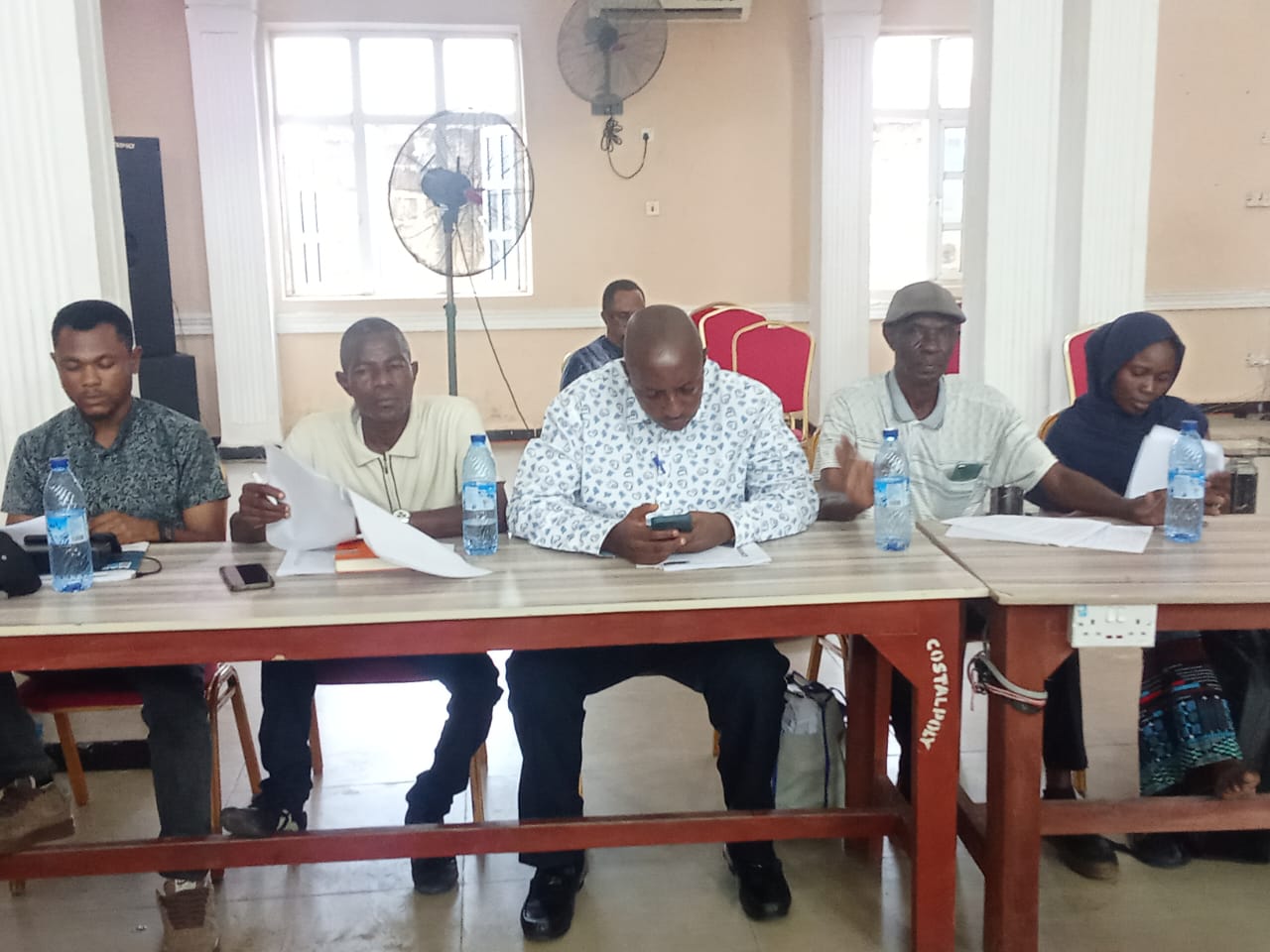
The Nigerian Ports Authority (NPA), Thursday, engaged stakeholders in Lagos to secure their buy-in on the desirability of the proposed 15% tariff hike. The hike, the agency has said, has become necessary as part of a comprehensive arrangement to raise funds to reposition her to be able to effectively play her role and satisfy the expectations of the business community in Nigeria and beyond in modern shipping operations. More funds raised from the tariffs, observers say, will improve the agency’s competitiveness as well as enable her overcome problems of poor services, inadequate and decaying infrastructure, poor remuneration, etc.
Addressing the stakeholders who turned out in their numbers, NPA Managing Director, Dr Abubakar Dantsoho who was represented by Olalekan Badmus, Executive Director, Marine and Operations, stated that the engagement was important so as to carry industry players and everybody along as implementation is being contemplated.
In his submission, a stakeholder, Joshua Asanga, agreed with the proposed increment. The value of the present tariff the NPA has operated for over 32 years, he recalled, has become completely eroded by inflation rate which stands at about 35% presently. Asanga listed port management liabilities which include wages, fuelling and maintenance of machines and other tradition areas of expenditure which have not been adjusted for over 30 years to accommodate increasing costs and operational changes. The NPA, he noted, needs funds for improved infrastructure, robust ICT for Port Community System, rehabilitation of obsolete jetties and quay aprons, procurement of tug boats and other operational platforms that promote port efficiency.
Speaking in the same vein, Damian Ukaga, another stakeholder, used the deplorable condition of the jetties at the Marina and Kirikiri Lighter Terminal in Lagos as illustrations in his argument that it has become necessary to raise funds to rehabilitate critical but ageing port facilities spread across Nigeria.
NPA rates, he added, should be able to cover the modernization and upgrading of these critical facilities so as to guarantee efficiency and minimal returns on investment while promoting sustainable trade a
and economic development.
The forum agreed that existing facilities have become outdated, lacking specific attention to rising costs, labour costs, consumables and overhead expenditures needed to operate seaports in the modern sense. They fear that running the ports on the old tariff would perpetuate poor services, inadequate infrastructure, poor remuneration, obsolete facilities, equipments and general infrastructure. NPA’s tariff review will boost and add impetus to the commencement of actual work on ports reconstruction and modernization plans already concluded.
Secondly, the tariff review and implementation provides necessary guarantees to fund the acquisition and urgent deployment of the ICT backbone of the Ports Community System, in pursuance of the implementation of the National Single Window.
Furthermore, the increased revenue to be generated from the tariff review will buoy the agency’s capacity to embark on the maintenance of critical facilities that will open up the Eastern Ports, reconstruct the collapsed Escravos Breakwaters and address numerous challenges posed by the Port Harcourt, Onne and Calabar ports.
Achieving these, it was unanimously canvassed, translates to increased vessel and cargo traffic for the Nigerian Ports Authority.

By Izuchukwu Ozoemena
As part of efforts to improve maritime journalists’ grasp of shipping operations, port management and emerging opportunities in Nigeria’s blue economy,
the Maritime Reporters’ Association of Nigeria (MARAN) has undertaken a professional training programme for 20 of its members at the Chartered Institute of Shipping of Nigeria (CISN).
The Graduate Induction Training Programme, which ended on Saturday, October 10, 2026, was designed to equip participants with specialised knowledge of the technical, regulatory and operational aspects of the maritime industry. Upon successful completion of the programme, each participant obtained a Postgraduate Diploma Certificate in Shipping.
The programme forms part of MARAN’s efforts to strengthen the professional competence of its members and improve the quality of reporting on developments across Nigeria’s maritime sector.
The training covered maritime safety and security, integrated marine environment management, shipping and port management, cargo clearance procedures and documentation, as well as the marine and blue economy.
Delivering the first lecture, Mr Patrick Ambakederimo, a lecturer at CISN, examined the principles of maritime safety and security, highlighting their importance to efficient shipping operations, the protection of lives and property, and the sustainability of the maritime industry.
He discussed the identification and management of risks associated with vessel operations, cargo handling and other maritime activities, stressing the need for compliance with established safety regulations, regular inspections, adequate crew training and effective emergency response procedures.
Participants were also exposed to the importance of intelligence sharing, effective surveillance, coordinated security operations and compliance with relevant international maritime security standards.
The lecture further distinguished between maritime safety, which focuses on preventing accidents and operational hazards, and maritime security, which addresses deliberate threats and unlawful activities within the maritime domain.
Delivering another lecture on the integrated approach to marine environment management, Mr Sunday Duru, also of the CISN examined the need for coordinated efforts to protect marine and coastal environments from pressures associated with shipping activities, port operations, coastal development and other maritime-related activities.
He emphasised the importance of collaboration among government agencies, maritime operators, environmental organisations, coastal communities and other stakeholders in addressing environmental challenges.
The session also examined marine pollution, oil spills, improper waste disposal, plastic pollution and the degradation of coastal and marine ecosystems. Participants were introduced to the importance of environmental monitoring, pollution prevention, proper waste management and effective enforcement of environmental regulations.
Other areas covered by the programme included the anatomy of shipping and port management, cargo clearance procedures and documentation, and an overview of the marine and blue economy. These courses were designed to broaden participants’ understanding of the commercial and operational dimensions of shipping, as well as economic opportunities in fisheries, coastal tourism and other ocean-related activities.
Speaking on the programme, MARAN President, Oluyinka Onigbinde, said the association was committed to building a corps of maritime journalists with the technical knowledge and professional competence required to report the industry accurately and effectively.
Onigbinde noted that maritime journalism required more than the ability to gather and write news, explaining that reporters must understand the policies, regulations, commercial transactions and operational processes that shape the industry. He said better-informed journalists would be better positioned to analyse developments, scrutinise decisions by industry stakeholders and explain complex maritime issues to the public.
The MARAN president said the association would sustain its capacity-building efforts by pursuing partnerships with maritime institutions, government agencies and private-sector operators to provide members with access to specialised training and professional development opportunities.
The association , he added, would continue to explore programmes that would expose members to emerging trends in shipping, port operations, maritime security, international trade and the blue economy to ensure that MARAN members remain professionally relevant and equipped to meet the changing demands of maritime reporting.
Onigbinde stressed that continuous training was essential to strengthening the credibility of maritime journalism and improving public understanding of the sector’s contribution to national economic development.
He expressed optimism that the knowledge acquired through the programme would reflect in the quality of reports produced by participants, particularly in their coverage of port efficiency, shipping operations, maritime safety, environmental sustainability and government policies affecting the industry.
The initiative comes amid growing efforts to strengthen Nigeria’s maritime sector, improve port competitiveness, enhance maritime security and unlock the economic potential of the country’s marine resources.
Through the programme, MARAN is seeking to bridge the knowledge gap between journalism and the technical realities of the shipping industry, while positioning its members to deliver more accurate, balanced and informed reports on developments within the maritime sector.
Maritime Agencies
Deputy Comptroller Nkiru Nwala Takes Over C’River, Calabar FTZ and Akwa Ibom Customs Command, Succeeds Comptroller Momodu Dauda.

By Izuchukwu Ozoemena
Partnerships built on fairness, transparency, mutual respect and compliance with the law remain the fulcrum on which effective customs administration revolve .
Deputy Comptroller of Customs Nkiru Nwala, made this observation Wednesday at the Customs House in Calabar while taking over as the Acting Customs Area Controller of the Cross River/Calabar Free Trade Zone/Akwa Ibom Area Command.
Nkiru Nwala, a former Public Relations Officer (PRO) of the Apapa Area Command of the Nigeria Customs Service (NCS), vowed to strengthen revenue generation, legitimate trade facilitation and anti-smuggling operations.
Describing the Command as strategic to Nigeria’s revenue generation, trade facilitation and border security, she appreciated the Comptroller -General of Customs Dr Bashir Adewale Adeniyi and the Management for finding her worthy to be at the helm.
The Command caters for customs operations at the Calabar Sea Port, the Calabar Free Trade Zone, international border activities and commercial corridors across Cross River and Akwa Ibom states.
Outlining her priorities, Nwala identified revenue generation and compliance, trade facilitation, border and economic security, as well as professionalism and partnership as the key areas of focus of her administration.
She pledged to strengthen revenue collection in line with the Nigeria Customs Service Act 2023, encourage voluntary compliance and ease legitimate trade while ensuring strict enforcement against smuggling and other activities threatening Nigeria’s economic and security interests.
The acting controller particularly highlighted the Mfum–Ekok border corridor as an area requiring sustained attention to curb smuggling and strengthen border security.
She also called for stronger collaboration with sister government and security agencies, traditional institutions, the Nigerian Ports Authority, Free Trade Zone operators, licensed customs agents, businesses and other stakeholders.
Nwala acknowledged the contributions of her predecessor, Comptroller Momodu Giwah Dauda, and pledged to consolidate the achievements recorded during his tenure.
She said her administration would pursue improved revenue performance, more responsive trade facilitation, firmer enforcement and stronger stakeholder engagement.
The acting controller urged officers and men of the command, stakeholders and host communities to support her administration, assuring them of her commitment to integrity, legitimate trade facilitation and the protection of Nigeria’s borders.
Safeguarding the nation’s economic and security interests, she added, would remain top on her priorities.

BY YUSUF BABALOLA
Last week, the Nigerian media industry was confronted with a painful reality that is becoming increasingly difficult to ignore: journalists who spend their lives reporting the crises, triumphs and struggles of society are themselves struggling to survive.
Within days, the industry lost two journalists to illness, while another was reported missing. Beyond the immediate grief, these incidents raise a much bigger and uncomfortable question: who takes care of the people who spend their lives taking care of society’s information needs?
Journalists are often at the forefront of campaigns for better healthcare, improved working conditions, higher wages and stronger social protection for workers across different sectors of the economy. They report the suffering of families who cannot afford medical treatment, expose gaps in the healthcare system and interrogate government policies that affect the vulnerable.
But behind the camera, microphone, notebook and computer screen is another vulnerable population – the journalist.
The recent death of Mr Ben Ameh, a gentle and unassuming journalist who had spent years contributing to the profession, has once again brought that vulnerability into sharp focus.
Ameh, according to information available to colleagues, underwent eye surgery but subsequently developed complications and died while recuperating. The circumstances surrounding his death deserve proper documentation and should not be reduced to speculation. But the tragedy has nevertheless generated a difficult conversation among colleagues about the ability of journalists to access timely and quality healthcare when illness strikes.
For many media workers, the problem is not necessarily the absence of medical expertise. It is often the inability to afford it.
And that distinction matters. A medical condition that might be treatable can become life-threatening when a patient delays treatment because of cost, lacks adequate insurance coverage, cannot afford a specialist or is forced to depend on contributions from friends and colleagues.

That is the frightening reality confronting many journalists today.
The story of Chuks Nwanne, who died on Saturday, October 3, 2026, is even more painful because colleagues and friends were already mobilising to save his life.
Nwanne was a course mate at Pan-Atlantic University. He fell ill, reportedly recovered at a point, but was subsequently scheduled for surgery abroad. The family and friends initially considered India but had to change the destination to Egypt because of the cost of treatment and other considerations.
Money was being raised. Friends, family members and acquaintances were contributing what they could. But time, as it often does in medical emergencies, was unforgiving.
Nwanne was scheduled to travel to Egypt for the surgery. He died in the early hours of the day he was expected to leave.
A message circulated among those close to him captured the heartbreak of the situation: he was supposed to be flown to Egypt for surgery, but died before the journey could begin.
The tragedy is not simply that a journalist died, it is that people were still trying to raise the resources needed to give him a chance to live.
His death raises a question that should concern the entire media industry: **how many journalists can actually afford a serious medical emergency without turning to public appeals, colleagues, friends and family?
This is where the conversation must move beyond condolences. For years, journalists have been expected to work under difficult conditions. They are expected to attend events, chase breaking news, make calls, investigate allegations, meet deadlines, produce online stories and still deliver compelling newspaper copy.
The newsroom does not stop because a journalist is sick. The deadline does not disappear because a reporter cannot afford medication. The story does not wait because a journalist’s child has school fees to pay.
And the salary does not necessarily reflect the demands of the job. This is the contradiction at the heart of Nigeria’s media industry.
Journalists routinely report on minimum wage negotiations, pension reforms, healthcare workers’ demands, bank workers’ conditions, industrial disputes and the welfare of public servants. Yet inside many newsrooms, the welfare question remains largely unresolved.
For instance, how many media organisations provide comprehensive health insurance for their journalists?
How many provide adequate life insurance?
How many pay living wages that can realistically cover food, accommodation, transportation, children’s education and healthcare?
How many provide meaningful allowances for journalists who spend their own money travelling to events, making telephone calls, moving around the city and gathering information?
And perhaps most painfully: how many journalists are still owed salaries while being expected to maintain the same level of professional commitment?
These are not merely labour questions, they are questions about the survival and sustainability of journalism itself.
A poorly paid journalist is not simply an unhappy employee. He or she is a professional operating under enormous financial pressure while carrying a public responsibility.
The consequences can be profound. A journalist who cannot pay rent is worried about eviction. A journalist whose children need school fees is under pressure.
A journalist battling illness without insurance is vulnerable. A journalist who spends a significant portion of his salary on transportation and data has less money available for food and healthcare.
And a journalist who is owed months of salary is effectively being asked to perform a critical public service without the economic foundation required to sustain a decent life.
This is why the deaths of journalists like Ameh and Nwanne should provoke more than social-media tributes. The media industry needs to examine its own house.
Government has a responsibility to create an environment in which workers can access affordable healthcare and decent social protection. But media owners and managers also have a responsibility to protect the people whose labour sustains their newspapers, television stations, radio stations and digital platforms.
The argument that the media business is difficult is understandable. Advertising revenues are under pressure. Production costs are rising. Digital disruption has transformed the traditional business model. Many organisations are struggling to remain profitable.
But journalists cannot be expected to carry the burden of an industry’s economic crisis indefinitely. There must be a point at which the survival of the business and the survival of its workers are treated as connected objectives.
A media organisation cannot claim to be defending workers’ rights in society while its own employees cannot afford basic healthcare. It cannot demand excellence from reporters who are struggling to feed their families.
It cannot insist on speed, exclusivity and productivity while ignoring the physical and psychological cost of maintaining such pressure.
And it cannot wait until a journalist dies before remembering that there was a human being behind the byline.
The situation also demands a conversation among journalists themselves. Professional associations, unions, media owners, editors and regulators need to examine whether there should be minimum welfare standards for journalists, including health insurance, pension coverage, life insurance, timely payment of salaries and appropriate field allowances.
Media houses may also need to explore collective health insurance arrangements that can provide affordable coverage for their workers and immediate families.
Because illness does not discriminate between senior editors and junior reporters. Neither does death.
Today, it is Ameh and Nwanne, Tomorrow, it could be another journalist whose name appears on the front page, followed by condolences from colleagues who had no idea how difficult the person’s final months or weeks had been.
The industry must therefore ask itself a painful question: are journalists becoming casualties of the profession they have spent their lives serving?
These men and women have contributed to the development of Nigeria’s economy by reporting on businesses, exposing corruption, tracking public expenditure, analysing government policies, reporting investment opportunities and giving citizens information necessary for democratic participation.
They have also helped strengthen Nigeria’s democracy by holding institutions and public officials to account.
Yet many of them remain economically vulnerable. They report the economy but cannot afford the economy they report about.
They investigate the cost of living but struggle with their own cost of living. They report hospitals but sometimes cannot afford hospital bills.
They report education but struggle to pay their children’s school fees, they report housing but cannot afford decent accommodation, they defend workers’ rights while their own welfare remains precarious.
That contradiction cannot continue indefinitely. The deaths of Ameh and Nwanne should therefore become more than two entries in the long list of journalists who have passed away, rather, they should become a moment of reflection for the Nigerian media industry.
The question should not only be what caused their deaths? We should also ask: could better welfare, timely medical intervention, health insurance or stronger financial protection have changed the outcome?
Those questions may not always have easy answers. And in the absence of medical evidence, nobody should speculate about the specific causes of individual deaths.
But the broader question is legitimate and urgent. Who cares for the journalists?
If journalism is essential to democracy, then the people who practise it deserve more than applause when they die. They deserve decent pay while they are alive.
They deserve healthcare before they fall critically ill. They deserve insurance before disaster strikes.
They deserve housing they can afford, education for their children and working conditions that recognise them as human beings rather than merely bylines, reporters’ numbers or content producers.
The Nigerian media industry has spent decades telling the stories of people who need help.
Perhaps it is time to tell its own story. Perhaps it is time for the industry to admit that behind the professionalism, resilience and commitment of Nigerian journalists is a growing welfare crisis.
And perhaps the most important tribute we can pay to colleagues who have died is not another condolence message.
It is to make sure that the next journalist who falls ill does not have to launch a public appeal before being able to afford treatment. Because journalists should not have to become fundraisers before they can become patients.
And they certainly should not have to become headlines before society remembers that they, too, are human beings.
YUSUF BABALOLA is a journalist, he writes from Lagos
Can be reached through babalolayusufabiola@gmail.com or 08061520468


MARAN Trains Members at Shipping Institute, Pledges Sustained Capacity Building.

Deputy Comptroller Nkiru Nwala Takes Over C’River, Calabar FTZ and Akwa Ibom Customs Command, Succeeds Comptroller Momodu Dauda.

The Price Of The Byline: When Journalists Cannot Afford To Live

Operation Whirlwind’ Auctions 22,175 Litres of PMS, Deepens Fight Against Petroleum Products Smuggling,

NIGERIA @ 66: AMBO Media Front Pinpoints Signs of a Prosperous Future .

CHANGE OF BATON AT OGUN 1 CUSTOMS: A.A.Ibrahim Succeeds O.O.Afeni, Pledges Intelligence-Driven Enforcement.

SPORTS: Group Unveils United Nigeria Airlines Ndigboamaka Traders’ Cup, 2026.

Traders’ Umbrella Group Evaluates State of the Nation, Expresses Serious Concerns of the Trading Public.

Tantita’s Oil Pipeline Surveillance Yields Huge Dividend, Shoots Nigeria’s Q2 Oil Exports Earnings To $9.39bn.

Ehingbeti Summit: Stakeholders Say Coastal Communities Need Funding for Development.

Ogun 1 Customs Repeats Stern Warning To Smugglers, Confiscates Latest Brand of Range Rover, Other Contrabands.

Unregulated Deployment of Unmanned Vessels Threatens Maritime Security — Navy.

Nigeria Collaborates with Benin Republic to Launch Modernised Joint Customs Border Post.

NPA Emphasizes the Importance of Truck Drivers, Donates 400 Safety Vests to AMATO and NURTW.

MAMAL 2026: FG Targets Globally Competitive Ports As Tantita Urges a ‘Look Beyond Lagos’ in Port Development.

MAMAL 2026: Stakeholders Recommend End -To-End Modernization of Nigeria’s Port System To Achieve Competitiveness.

ABUJA MoU: WE FUNCTION BEHIND A MASK, says Capt Umoren

2023 ELECTIONS:CILT Hosts Seminar on Logistics & Electoral Process
JANUARY-MAY REPORT: Seme Customs Hits N2.6bn, Facilitates ₦35.1bn Exports.

1. EXECUTIVE PLATFORM. AMES 2024: TIME TO CHANGE GOVERNMENT ATTITUDE TOWARDS SHIPPING DEVELOPMENT IS NOW, AMES President Charges FG.
HALF YEAR, 2024: Apapa Customs Nets ₦1.024 Trillion, Records 143% Increase.

B’Odogwu: Apapa Customs Collects ₦161b in 3 Weeks, Assures of Improvements .

B’ODOGWU TRADE PORTAL: Customs Consolidates, Pilots Form ‘M’ Processing.

APFFLON Seeks Immediate Reform of CRFFN, Replacement of Registrar.

OMIS AWARDS, 2022: Greg Ogbeifun, Industry Gurus For Special Recognition.

PTML Customs Hits Over N350Bn in 9 Months, Intercepts ₦200m Illicit Pharmaceuticals,

PHOTO NEWS: Maritime Capacity Development

Adesuwa Ladoja Becomes MD/CEO, Lagos Free Zone.

Photo News: Salah Celebration

FG Set To Re-establish National Shipping Line, To Take Advantage of $10 bn Annual Ship Charter Market.
Mama Theresa Enisuoh Due For Burial April 27

Information Minister Highlights President Tinubu’s Achievements, says 2025 Is A Year of Consolidation.

-
 Maritime Agencies2 weeks ago
Traders’ Umbrella Group Evaluates State of the Nation, Expresses Serious Concerns of the Trading Public.
-
 Maritime Agencies2 weeks ago
CHANGE OF BATON AT OGUN 1 CUSTOMS: A.A.Ibrahim Succeeds O.O.Afeni, Pledges Intelligence-Driven Enforcement.
-
 Maritime Agencies3 weeks ago
Ehingbeti Summit: Stakeholders Say Coastal Communities Need Funding for Development.
-
 Maritime Agencies2 weeks ago
SPORTS: Group Unveils United Nigeria Airlines Ndigboamaka Traders’ Cup, 2026.
-
 Maritime Agencies2 weeks ago
Tantita’s Oil Pipeline Surveillance Yields Huge Dividend, Shoots Nigeria’s Q2 Oil Exports Earnings To $9.39bn.
-
 Maritime Agencies1 week ago
NIGERIA @ 66: AMBO Media Front Pinpoints Signs of a Prosperous Future .
-
 Maritime Agencies1 week ago
Operation Whirlwind’ Auctions 22,175 Litres of PMS, Deepens Fight Against Petroleum Products Smuggling,
-
 Maritime Agencies3 days ago
MARAN Trains Members at Shipping Institute, Pledges Sustained Capacity Building.