
Transport
CARGO EVACUATION: Minister Tasks NPA on Lekki Deepsea Port

By Izuckwukwu Ozoemena
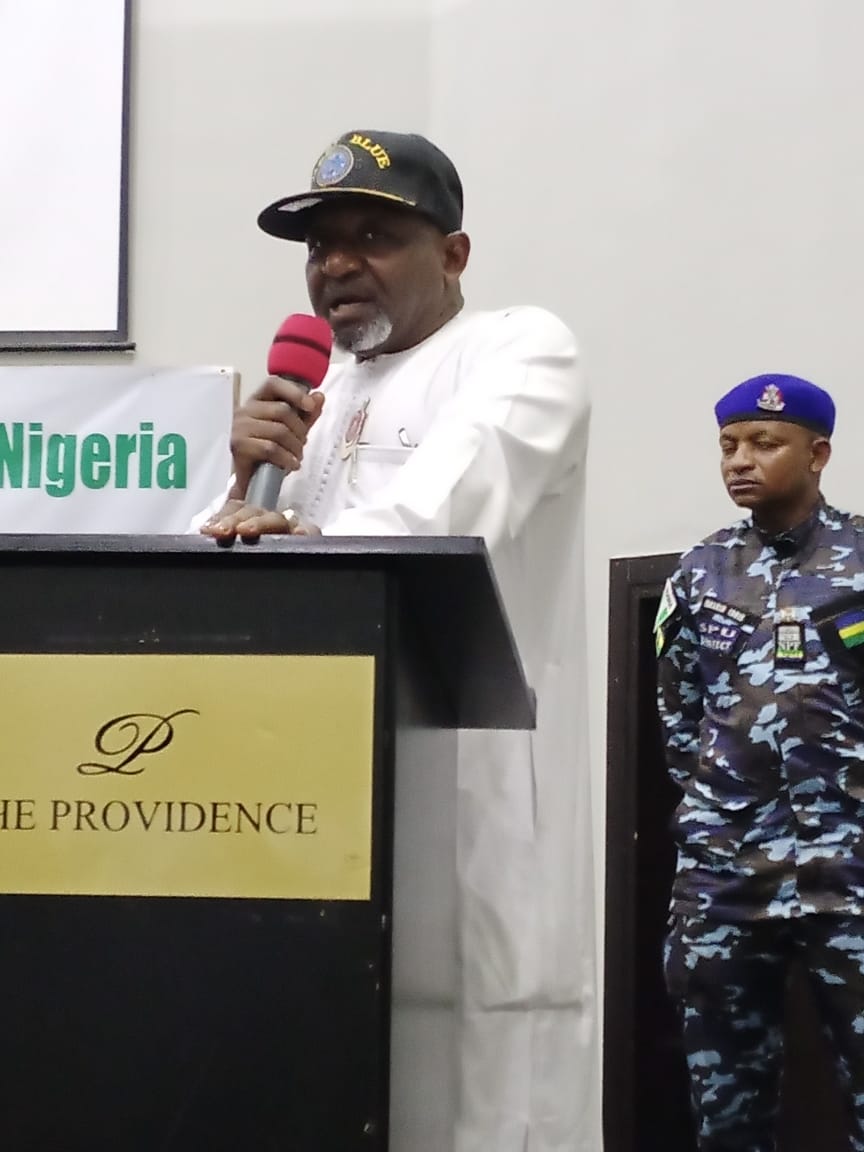
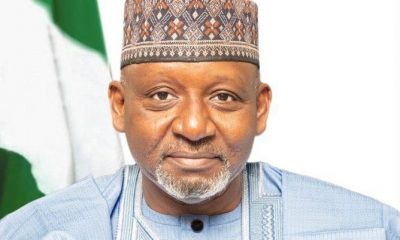
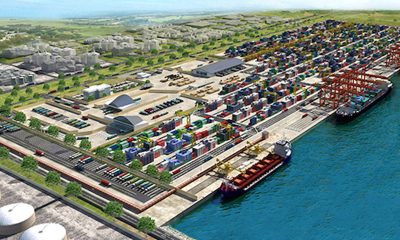
Transportation Minister, Engr Muazu Sambo has charged the Nigerian Ports Authority (NPA) to ensure no cargo movement in and out of new Lekki Deepsea Port takes place unless rail services are available. This is to prevent a possible replication of the Apapa and Tincan ports experience whereby cargo movement has continued to suffer avoidable hitches with valued stakeholders unduly suffering for no fault of theirs.
The Minister was speaking in Lagos, Friday, as special guest at an event hosted by the Maritime Reporters Association of Nigeria (MARAN) to commemorate her 34th anniversary.
Engr Sambo was emphatic that he had instructed the NPA not to allow movement of cargo by road from Lekki Deepsea Port to the hinterland when full operations commence in the new port next year.
Permitting cargo movement by road to and from the Lekki Deepsea Port, he stated, wold amount to replicating the ugly Apapa experience in the Lekki-Epe axis of the State. As an alternative, NPA should encourage the use of barges in the interim, the Minister said, as this stands to generate a lot of jobs for people fabricating the barges locally while building capacity for Nigerians.
“Lekki Deepsea Port, I have told them (the NPA) that I don’t want them to move goods to that port or from that port by road. There is no reason we should have another Apapa at the Lekki-Epe axis. I will not accept it. I have told NPA that. To start with, we must do barging; let us do barge operations that will generate a lot of jobs for people who construct barges and so on and at the same time build capacity for our people.”
He recalled that he recently visited the Customs Comptroller General, Col Hameed Ali (Rtd) where he appealed o the Service hat te scanning room in Apapa Port be relocated as it obstructs rail line connection to te port. “The reason he gave me was that we (the Ministry) was supposed to have made payment to decontaminate the place and thereafter, they will come and remove the pavements. I came back to the Ministry, made inquiries. Iwas told that the Ministry had made tat payment long time ago. So, my intention is to go back with evidence to show the CG that we have made payment a long time ago and there is o reason that building should still be standing because I don’t understand why and how it should take an age to remove it.
“I am also happy to have noted that during my visit to the DG, he told me that one of the issues they have is that they have scanners at the port but those scanners were not commissioned. Only a week or two ago, I think the Minister of Finance went to commission them. So, when I go back next week, I will say to him now that the scanners have been commissioned, I hope that we are going to see a lot of improvement in the clearin process.
On the ease of doing business in the port, the Minister said he was considering ports community system as a strategy that will aid cargo evacuation.
“Talking about the clearing process and the ease of doing business in our ports, one of the things I’m also pursuing is the port community system. That is the surest way of taking cargo out of our ports within a matter of hours. If other African countries have port community system working, why can’t we have it in Nigeria?”
On the relevance of the Customs in port business, he enjoined planners of events to ensure the agency is carried along at all times.
“I want to appeal to our maritime reporters, whenever you convene an event like this, make sure that the Customs are always represented by all meanseven if you have to drag them by a long rope.”
Sambo regretted the pains he had as a manager at the National Inland Waterways Authority, NIWA, that the inland waterways transportation mode was never developed. But as the current Minister in charge of the agency, he stated, he has mapped out two projects to bring a turnaround. These include creating a trans-shipment hub at the Lagos Marina and putting in place a channels management.
“That is the one that is supposed to serve as a hub from Marina. When ships come into the harbour, they do trans-shipment into barges or specialized vessels that can travel over a maximum of two to three eters draught all through the inter-coastal routes to Warri and Onitsha.”
“The other one is channels management, the company, the Chinese investors that are willing and have the capacity to manage the channel. I have told my people in the Ministry that if I don’t have these two projects off the ground, people are going to cry. I will make examples with some people if these two projects don’t take off by next year.”
“So, when we combine the alternatives, then we can now tell haulage people that you can no lonegr take petroleum products by road; you can no longer take construction materials by road; you can no longer take cement by road so that our roads will last longer.
On the Deep Blue Project, the Minister disclosed that it was responsible for protecting Nigeria’s maritime domain. For more than one year President Buhari launched itin Lagos, he recalled, “we have not heard of any reported case of piracy in our maritime domain”>
“I think that is an achievement in the sense that in the next one year or two, if we’re able to convince IMO and the Lloyds of this world, then our insurance costs for imported goods into Nigeria will be much lower because right now, they pay what is called war insurance risk.”
The MARAN 34th anniversary event was graced by an array of key players in the maritime sector including the Transportation Minister, Engr Sambo, NIMASA DG Dr Bashir Jamoh, Barr Hassan Bello, former Executive Secretary, Nigerian Shippers’ Council, Chief Remi Ogungbemi of AMATO and Mr Damilola Emmanuel, General Manager, Lagos Waterways Authority, LASWA. Others included the President General of the Maritime Workers Union of Nigeria, Prince Adewale Adeyanju, former NIMASA DG, Dr Ade Dosunmu and Dr Bolaji Akinola, ex-MARAN President and renowned maritime publisher.
Those represented include Capt Emmanuel Iheanacho, Barr Jean Chiazor Anishere, SAN; Seaports Terminal Operators Association of Nigeria, APMT and others.








By Izuchukwu Ozoemena
The recent induction of thirty cadets of the Maritime Academy of Nigeria (MAN), Oron for an on-board training programme at the Maritime Centre of Excellence (MCOE) of the Nigeria LNG Ship Management Limited (NSML), has been described as a celebration of aspiration, collaboration and a shared commitment to shape the next generation of maritime professionals.
NSML’s Managing Director, Engr Abdulkadir Ahmed stated this at the well-attended event, Friday, February 20.
He recalled a strategic agreement the NSML signed with MAN Oron in December 2025 to provide structured training for cadets through her MCOE, a decision he said was not accidental.
”It was a deliberate investment in people, the most critical element in maritime operations, and today, we are witnessing the first fruits of that commitment.This induction is another strong testament to NSML’s unwavering dedication to excellence, capacity development, and industry leadership.”
Over the years, he explained, NSML has built a reputation as a leading provider of maritime and shipping services not only in Nigeria but across the region. Her track record of developing competent and globally competitive seafarers is well established as it continues to stand her out in the industry.
The establishment of the Maritime Centre of Excellence, the MD continued, was anchored on a simple but powerful vision of building a premier maritime training institution that delivers world-class programmes, produces capable professionals, and supports the long-term sustainability of the maritime workforce.

”Through the MCOE, NSML has continued to raise the bar, offering specialised courses, simulator-based training, and professional development pathways that match international best practices.This partnership with MAN Oron strengthens that aspiration; it brings together two institutions that share a common philosophy that the future of the maritime sector depends on how well we train, mentor, and empower young Nigerians. It also reflects the progressive thinking of both organisations to invest consistently in human capital, to strengthen local capacity, and to contribute meaningfully to the growth of Nigeria’s maritime industry.”
”For us in NSML, this initiative aligns squarely with our purpose and our organisational values of developing qualified, competent, and safety-conscious seafarers. This is not just an activity; it is part of the DNA of NSML, it is who we are and why we exist. Every investment we make in training reinforces our commitment to excellence, operational safety, and national development.”
He told the cadets that their induction marks the beginning of a transformative journey as the maritime profession demands discipline, resilience, integrity, and the relentless pursuit of excellence.
”You are stepping into a career that will test you, shape you, and ultimately reward you. NSML and MAN Oron are giving you a solid foundation, but your attitude, effort, and character will determine how far you go.”
He urged the cadets to remain focused as they uphold the highest ethical standards while embracing the opportunity offered them.
He extolled all stakeholders, partners and the MCOE team for their dedication, pointing out that their work ensures that designed programmes remain relevant, competitive and impactful. And to the leadership of MAN Oron, we appreciate the trust and collaboration that brought us to this point.
Ahmed reaffirmed a shared belief with MAN that Nigeria can and must continue to develop world-class maritime professionals.
”NSML is fully committed to that mission, and today’s ceremony reinforces that promise,” he announced.
Apart from Mrs Anasthesia Ogbonna who stood in for H.E. Adegboyega Oyetola, the Marine and Blue Economy Minister, prominent industry players who graced the event included Capt Chamberlain Yusuf, Capt Israel Obadan, Capt Tajudeen Alao and Sam Isichei, member, MAN Governing Council .
Also in attendance were some senior staff of MAN and NSML including Dr. Ekanem of NSML. From MAN were Dr. John Adeyanju, Mr. Peter Netson and Engr. Rakesh Roshan Gupta.
Speaking at the event, the Acting Rector of MAN, Dr. Kevin Okonna described the induction as a turning point in the annals of the nautical college as it reaffirms the special relationship MAN enjoys with NSML.
“Through the execution of the MOU signed on 19th December 2025, our partnership has again ensured the realization of the dreams of another set of 30 seafaring cadets through onboard training opportunities in line with the provisions of the STCW Convention,” Okonna stated.
He stressed that the International Maritime Organization (IMO) had been informed of NSML’s contributions, highlighting Nigeria’s commitment to supplying quality seafarers to the global matitime industry.
Dr. Okonna also linked the initiative to the Renewed Hope Agenda of President Bola Ahmed Tinubu and the Marine and Blue Economy Policy championed by Minister Oyetola, which emphasizes partnerships for seafarer training.
“This induction ceremony is the outcome of the Honourable Minister’s Marine and Blue Economy Policy direction, which promotes partnership with industry stakeholders for onboard training of Nigerian seafaring cadets and supply of globally competitive seafarers,” he said.
The industry implications of the induction is expected to among other things strengthen Nigeria’s contribution to the global supply of certified seafarers, enhance the country’s competitiveness in international maritime trade.
The Acting Rector explained that the development would also support government-backed strategies for blue economy growth, and provide cadets with exposure to international best practices in shipping.
That government representatives and industry stakeholders were in attendance, he noted, demonstrated the need for collaboration and synergy in advancing the country’s capacity in the maritime sector.
Congratulating the cadets, Dr Okonna urged them to always project the good image MAN has acquired over the years.
Customs
Freight Forwarders Warn FAAN To Halt New Charges In Airport Cargo Operations or Risk Rumble in the Sector .

By Izuchukwu Ozoemena
If the recent arbitrary increase in charges by the Federal Airports Authority of Nigeria (FAAN) is not reviewed, cargo operations across airports nationwide risk disruption, prompting huge losses in government revenue, airports freight forwarders have warned.
Leaders of major associations operating at the nation’s airports stated this in Lagos, Tuesday. The associations included the National Association of Government Approved Freight Forwarders (NAGAFF), the Association of Nigerian Licensed Customs Agents (ANLCA), African Professionals Freight Forwarders and Logistics of Nigeria (APFFLON) and NAFFAC.
Featuring at the briefing, among others, were Dr. Segun Musa, Deputy National President of NAGAFF in charge of Air and Logistics, and Mr. Tope Akindele, Chairman, Airport Chapter of ANLCA.
Speaking on behalf of the groups, Dr. Musa traced the controversy to an agreement reached with FAAN in 2010 over the collection of a seven-naira-per-kilogram levy on cargo, which, according to him, was tied to the allocation of land for the development of a cargo village at the airport.
He explained that prior to that agreement, FAAN had been collecting two naira per kilogram, a charge the freight forwarders had challenged on the grounds that FAAN, having concessioned cargo operations to companies such as NAHCO and SAHCOL, was not directly provding cargo handling services.
He said the associations had formally written FAAN at the time, arguing that the two-naira charge was illegal, a move that led to prolonged negotiations that reportedly lasted for about two weeks and disrupted activities at the airport. According to him, an eventual compromise was the introduction of the seven-naira charge in exchange for the allocation of land to build a cargo village, a deal he said formed the basis for the current arrangement.
“The seven naira we are talking about is attached to this land. It is like rent on this land,” Musa said, insisting that FAAN had no right to impose fresh charges without first engaging stakeholders. He argued that, just as the Nigerian Ports Authority (NPA) relates with terminal operators after concessioning the seaports, FAAN should deal with its concessionaires rather than directly imposing charges on operators.
The freight forwarders also raised financial concerns, claiming that FAAN had already made substantial sums from the seven-naira levy over the years. Musa said that in 2010 alone, FAAN collected over one billion naira from the charge and that from 2010 to date, the cumulative amount would be far higher than the value of the land allocated for the cargo village.
The immediate trigger for the latest dispute, according to the associations, is FAAN’s decision to increase the existing charges without consultation, a move they said was followed by a threat letter warning of possible demolition of their secretariats. The groups described this as coercive and counterproductive, stressing that they were not opposed to a review of charges but it must be done through dialogue.
Instead of imposing higher fees, they argued, FAAN should work with operators to create an enabling environment that would increase cargo throughput, which in turn raise revenue. “The more cargo we have, the more revenue they generate,” Musa said, adding that the present approach would only hurt all parties involved.
Mr. Tope Akindele, Chairman of ANLCA Airport Chapter, said the ongoing standoff had already begun to affect revenue generation. He noted that cargo activities had slowed in recent days because many operators were staying away from work in protest. According to him, if a concessionaire that used to make about one billion naira weekly is now making roughly half of that, continued disruption could lead to even worse outcomes for government revenue.
He stressed that the associations were not trying to sabotage government earnings, noting that any revenue yet to be paid due to the slowdown would still be collected once normal operations resume. “We want government daily revenue to continue. We are not frustrating government revenue. We are ready to continue paying, but let us dialogue within the shortest time so our job can commence,” he said.
Akindele also argued that globally, increments in charges are usually benchmarked around 25 per cent, adding that this was the standard the associations were willing to consider. Beyond that, he said, stakeholders should jointly explore ways to increase cargo volume rather than rely solely on higher levies.
Other speakers at the briefing raised concerns about what they described as multiple layers of charges on the same cargo. They pointed out that cargo handlers and airlines already collect various fees per kilogram, which are ultimately linked to FAAN, and argued that imposing additional charges on freight forwarders amounts to double or even triple taxation within the same cargo chain.
One of the speakers claimed that aside payments to cargo handlers and airlines, some charges could reach as high as 30 naira per kilogram in certain instances, warning that piling more levies on operators would further increase the cost of doing business and weaken the competitiveness of Nigeria’s air cargo sector.
The associations also recalled that the original dispute over the legality of the levy had not been fully resolved in court, but was set aside in favour of a mutual understanding aimed at keeping the industry running. They warned that if FAAN proceeds unilaterally or attempts to formalise the new charges without broad stakeholder agreement, the matter could return to the courts.
The freight forwarders called on the Minister of Aviation to intervene and prevail on FAAN to open talks with stakeholders. They stressed that they were not protesting, not carrying placards, and not seeking confrontation, but were instead asking for engagement that would lead to a mutually beneficial resolution.
They warned that if cargo operations at airports across the country were to grind to a halt, the wider economy would suffer, describing such a scenario as a “lose-lose” situation for operators and government alike. Despite the tension, they said they had advised members nationwide to continue working and avoid actions that could escalate the situation.
The associations assured the Federal Government that once negotiations begin, normal operations would resume immediately, with the existing status quo maintained pending the outcome of discussions. They also reiterated their willingness to work with FAAN and other government agencies to grow cargo volumes and, by extension, government revenue.
“We are here to appeal. We are not here to threaten or to protest or to cause a breakdown of law and order,” Musa said. He added that most operators depend on daily airport activities to feed their families and sustain their businesses.
By Izuchukwu Ozoemena
For the umpteenth time, the Ports Terminal Multi-services Limited (PTML) Command of the Nigeria Customs Service has made it clear that it remains a no-go area for unlawful trade under any guise.
As a Command, the PTML Customs has an unshaken commitment to implement the Revised Kyoto Convention, which is a World Customs Organisation (WCO) instrument for trade facilitation while using available manpower and technology to exercise the required control for import and export trade.
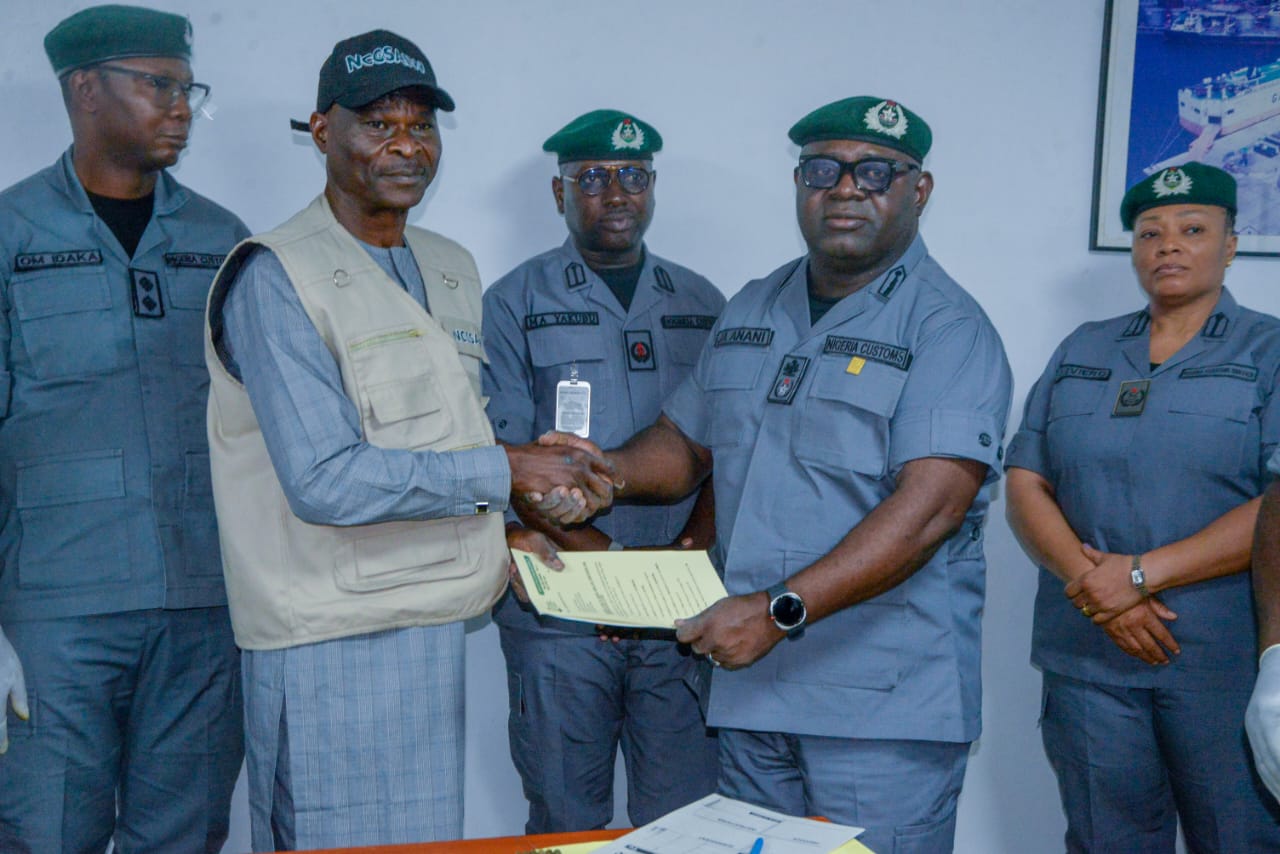
The Customs Area Controller, Comptroller Joe Anani stated this at the Command Headquarters in Apapa, Friday, while handing-over seized arms and ammunition to the National Centre for the Control of Small Arms and Light Weapons (NCCSALW).
The seizures consist of five (5) pistols of different makes, one (1) Crossman pump master rifle, 132 Remington live cartridges, 51 9 mm Lugar live ammunition and four (4) 9mm magazines.
Others were forty (40) 9mm, NIM FC 30-30 blank and hollow ammunition and one hundred and eighteen (118) of 9mm empty shells.
”These arms and ammunition were uncovered in 25 different occasions by our officers during the examination of imported vehicles between 2022 to 2025.”
”These seizures are a fallout of the collective due diligence of the Command and other sister agencies in the port.”
The handing-over, he explained, follows the approval of the Comptroller General of Customs, Bashir Adewale Adeniyi, MFR psc(+).
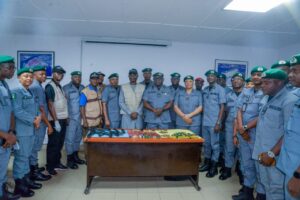
Present at the event was the South- West Coordinator, National Center for the Control of Small Arms and Light Weapons (NCCSALW) and his entourage. Others were the Management of Port and Terminal Multi-services Limited, sectional heads and heads of other sister agencies.
He explained that under the NCS Modernisation Project which was pioneered by the PTML Command, the Unified Customs Management System (UCMS), also known as B’Odogwu, has raised the bar for productivity.
”I am pleased to announce that this Command will receive scanners soon as part of the modernisation project and our capacity to detect concealments, like these arms and ammunition would be greatly enhanced.”
Appreciating the Command’s compliant stakeholders for their cooperation at all times, he described them as l part of the Command’s success story.
The CAC announced that two days to the end of January, 2026, the PTML Command collected a total revenue of ₦44,058,849,416.65. This figure surpasses N40,497,594,223.89 realized in January, 2025 by N3,561,255,192.76, marking an 8.8% increase in revenue.
On behalf of the CGC, Comptroller Joe Anani formally handed over the seizures to the National Center for the Control of Small Arms and Light Weapons (NCCSALW) for appropriate action.


MARAN to Honour NAGAFF President, High Chief Tochukwu Ezisi as Patron.

Apapa Customs in Historic Revenue Boost, Nets N28 Billion In One Day.

COUNTDOWN TO 2027 ELECTIONS: Customs Hands Over 399 Seized Rifles To NCCSALW .

Ex-NPA MD, Hadiza Bala Usman, Set To Deliver Keynote Address At MAMAL 2026.

NAGAFF Petitions IGP On Alleged Police Extortion, Harassment At Sea Ports.

NAGAFF Deplores Foreign Domination of Freight Forwarding, Tasks Indigenous Operators to Form Combines.

NIWA, Private Agency Target Pollution Elimination, Job Creation To Clean Lagos Waterways.

Seme Customs Arrests 2, Intercepts Explosives, Expired Noodles As Command’s Revenue Hits N19.8bn.

FOU Zone ‘A’ Customs Recovers over N729m Revenue, Intercepts Smuggled Goods Worth N3.24bn.

Key Industry Stakeholders To Focus on Ports Competitiveness as MARAN Hosts MAMAL.

NAGAFF Tasks Bonded Terminals To Suspend All Illegal Fees Collections, Refund N178m.

CGC Restates Position on Illicit Arms, Unveils Intercepted Weapons and Drugs Worth N373m

Topfield College Clinches Overall Position as Customs’ WASA Sports Event ends in Lagos.

ECTS: PTML Customs Mounts an Awareness Campaign

AfCFTA: Nigeria, Cameroon, Benin To Establish Joint Customs Strategic Steering Committee on Beitbridge Communique.

TRANSQuest MAGAZINE @ 21: With Huge Maritime Endowments, Stakeholders Warn, Nigeria Can’t be Poor, Government Must Realign Her Priorities.

ABUJA MoU: WE FUNCTION BEHIND A MASK, says Capt Umoren

1. EXECUTIVE PLATFORM. AMES 2024: TIME TO CHANGE GOVERNMENT ATTITUDE TOWARDS SHIPPING DEVELOPMENT IS NOW, AMES President Charges FG.

2023 ELECTIONS:CILT Hosts Seminar on Logistics & Electoral Process

B’ODOGWU TRADE PORTAL: Customs Consolidates, Pilots Form ‘M’ Processing.

APFFLON Seeks Immediate Reform of CRFFN, Replacement of Registrar.

OMIS AWARDS, 2022: Greg Ogbeifun, Industry Gurus For Special Recognition.
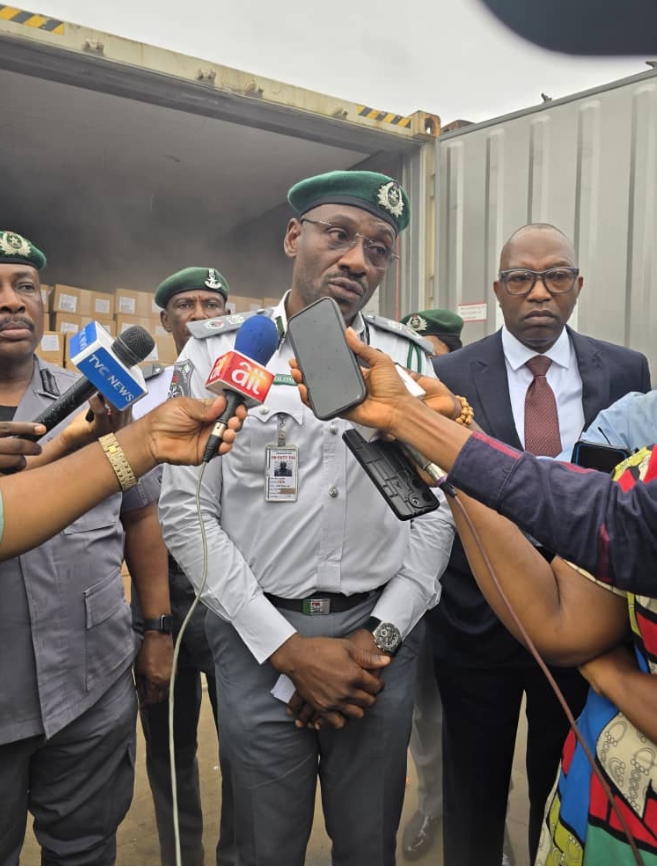
HALF YEAR, 2024: Apapa Customs Nets ₦1.024 Trillion, Records 143% Increase.
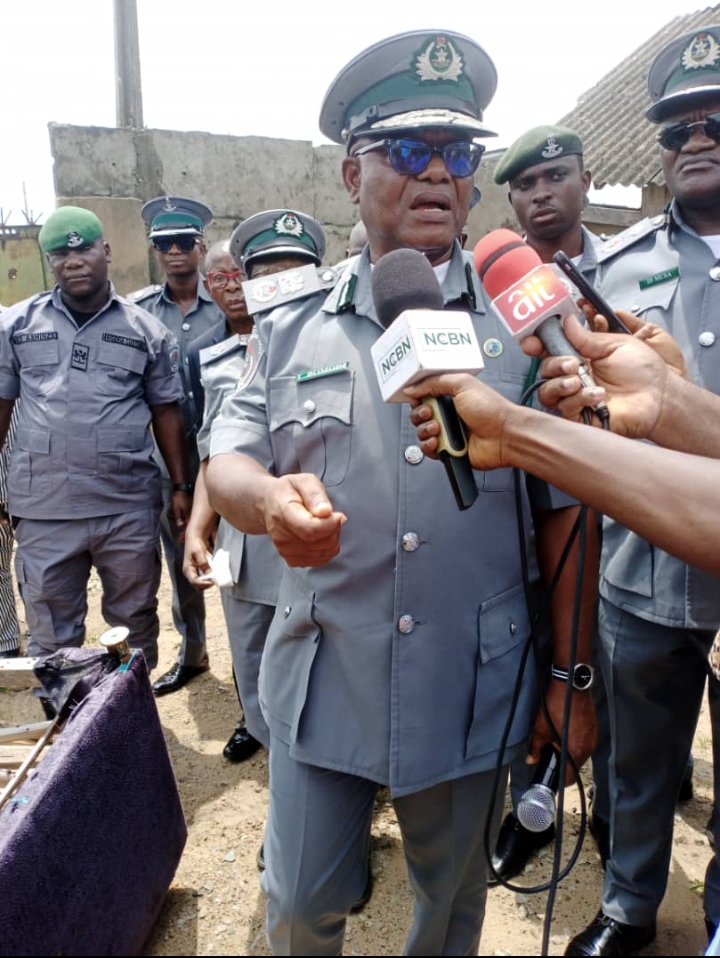
JANUARY-MAY REPORT: Seme Customs Hits N2.6bn, Facilitates ₦35.1bn Exports.

B’Odogwu: Apapa Customs Collects ₦161b in 3 Weeks, Assures of Improvements .

PHOTO NEWS: Maritime Capacity Development

FG Set To Re-establish National Shipping Line, To Take Advantage of $10 bn Annual Ship Charter Market.

Photo News: Salah Celebration

Sylvanus Ekpo, ex-Editor, Shipping World Magazine, loses Mum
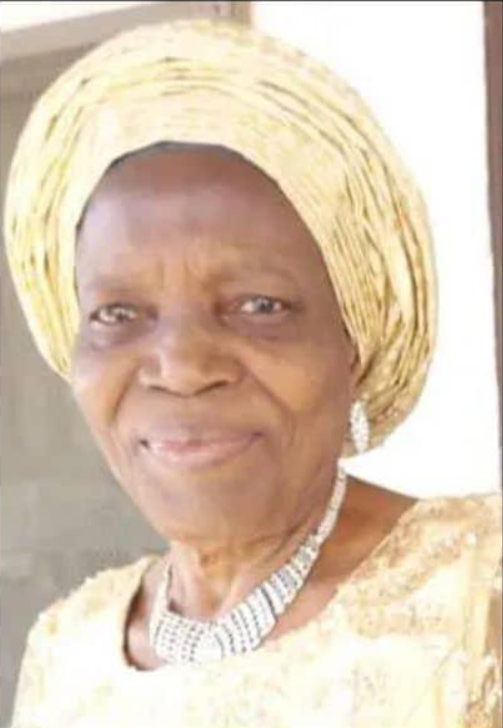
Mama Theresa Enisuoh Due For Burial April 27
Adesuwa Ladoja Becomes MD/CEO, Lagos Free Zone.

MAN, ORON: It’s Encomiums Galore From International Seabed Authority (ISA).

-
 Maritime Agencies3 weeks ago
ECTS: PTML Customs Mounts an Awareness Campaign
-
 Maritime Agencies1 week ago
Seme Customs Arrests 2, Intercepts Explosives, Expired Noodles As Command’s Revenue Hits N19.8bn.
-
 Maritime Agencies3 weeks ago
AfCFTA: Nigeria, Cameroon, Benin To Establish Joint Customs Strategic Steering Committee on Beitbridge Communique.
-
 Maritime Agencies3 weeks ago
Topfield College Clinches Overall Position as Customs’ WASA Sports Event ends in Lagos.
-
 Maritime Agencies2 weeks ago
CGC Restates Position on Illicit Arms, Unveils Intercepted Weapons and Drugs Worth N373m
-
 Maritime Agencies2 weeks ago
NAGAFF Tasks Bonded Terminals To Suspend All Illegal Fees Collections, Refund N178m.
-
 Maritime Agencies2 weeks ago
FOU Zone ‘A’ Customs Recovers over N729m Revenue, Intercepts Smuggled Goods Worth N3.24bn.
-
 Maritime Agencies2 weeks ago
Key Industry Stakeholders To Focus on Ports Competitiveness as MARAN Hosts MAMAL.